



《中国康复理论与实践》 ›› 2022, Vol. 28 ›› Issue (9): 1096-1103.doi: 10.3969/j.issn.1006-9771.2022.09.014
马玉宝1,王晨曦2,高维广3,樊志娇1,马全胜1,孙凤龙1( )
收稿日期:2022-04-11
修回日期:2022-07-08
出版日期:2022-09-25
发布日期:2022-10-08
通讯作者:
孙凤龙
E-mail:sunfenglong@ccmu.edu.cn
作者简介:马玉宝(1983-),男,汉族,辽宁朝阳市人,博士,副教授,主要研究方向:肌骨康复,运动损伤康复。|孙凤龙(1974-),男,汉族,山东莱芜市人,硕士,主任医师,主要研究方向:关节外科与术后康复。
基金资助:
MA Yubao1,WANG Chenxi2,GAO Weiguang3,FAN Zhijiao1,MA Quansheng1,SUN Fenglong1()
Received:2022-04-11
Revised:2022-07-08
Published:2022-09-25
Online:2022-10-08
Contact:
SUN Fenglong
E-mail:sunfenglong@ccmu.edu.cn
Supported by:摘要:
目的 观察体表感觉训练对前交叉韧带重建术(ACLR)后患者步行功能的影响。
方法 2021年1月至11月,北京康复医院ACLR后住院患者56例随机分为对照组和试验组,各28例。对照组每天常规康复训练45 min,试验组每天常规康复训练30 min、体表感觉训练15 min,共8周。干预前后检测患者足偏角和患侧足底七区冲量百分比。
结果 干预后,两组健、患侧足偏角均显著减少(t > 4.615, P < 0.001),试验组患侧足偏角更小(t = 2.263, P < 0.05)。干预后,两组足跟内侧区和足跟外侧区冲量百分比显著增加(t > 4.221, P < 0.001),试验组更高(t > 3.651, P < 0.01);两组中足区、前足中部区和前足外部区冲量百分比明显减少(t > 3.174, P < 0.01),试验组前足中部区和前足外部区冲量百分比更少(t > 2.366, P < 0.05);试验组前足内侧区和足趾区冲量百分比明显减少(t > 3.508, P < 0.01),但与对照组比较无显著性差异(t < 1.608, P > 0.05)。
结论 体表感觉训练可进一步改善ACLR后患者步行中的足偏角和患侧冲量分布,优化足底各区域负荷模式。
中图分类号:
马玉宝,王晨曦,高维广,樊志娇,马全胜,孙凤龙. 体表感觉训练对前交叉韧带重建术后患者足偏角和足底冲量的影响[J]. 《中国康复理论与实践》, 2022, 28(9): 1096-1103.
MA Yubao,WANG Chenxi,GAO Weiguang,FAN Zhijiao,MA Quansheng,SUN Fenglong. Effects of surface sensation training on foot deflection and plantar impulse after anterior cruciate ligament reconstruction[J]. 《Chinese Journal of Rehabilitation Theory and Practice》, 2022, 28(9): 1096-1103.
表1
两组一般资料"
| 项目 | 对照组 (n = 28) | 试验组 (n = 28) | χ2/t值 | P值 |
|---|---|---|---|---|
| 性别(男/女)/n | 13/15 | 12/16 | 0.072 | 0.788 |
| 年龄/岁 | 30.23±7.76 | 30.43±7.43 | 0.102 | 0.919 |
| 身高/m | 1.69±0.09 | 1.72±0.08 | 0.660 | 0.420 |
| 体质量/kg | 68.60±9.68 | 69.30±11.10 | 1.614 | 0.209 |
| BMI/kg·m-2 | 23.79±1.94 | 23.40±2.00 | 1.088 | 0.281 |
| 患病部位(左/右) /n | 11/17 | 13/15 | 0.292 | 0.589 |
| 术后时间(≤ 7周/> 7周) /n | 16/12 | 13/15 | 0.644 | 0.422 |
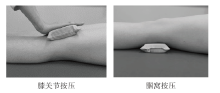
图1
任务1"
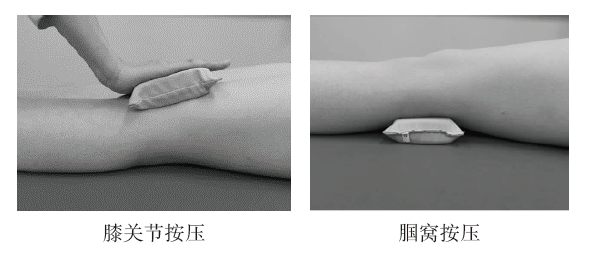
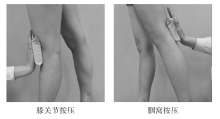
图2
任务2"
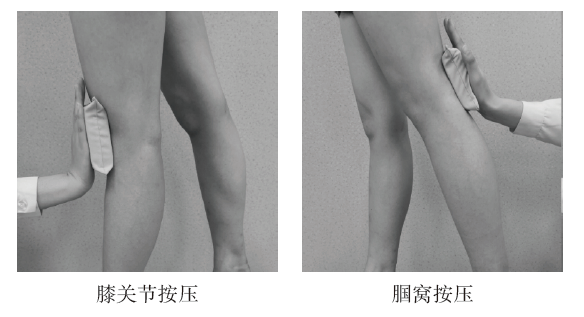
图3
任务3"
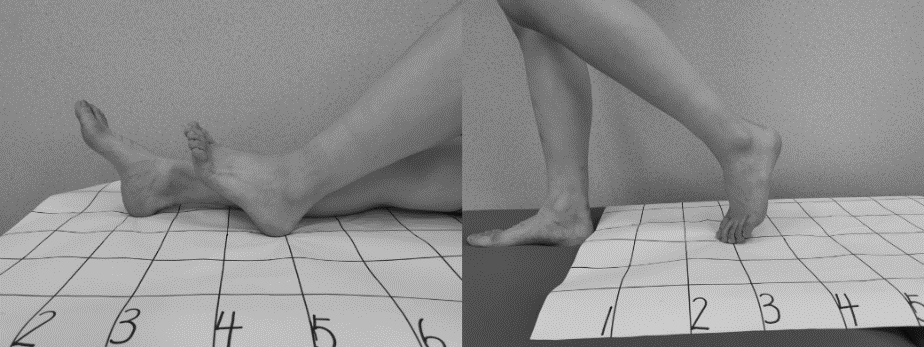
图4
任务4"
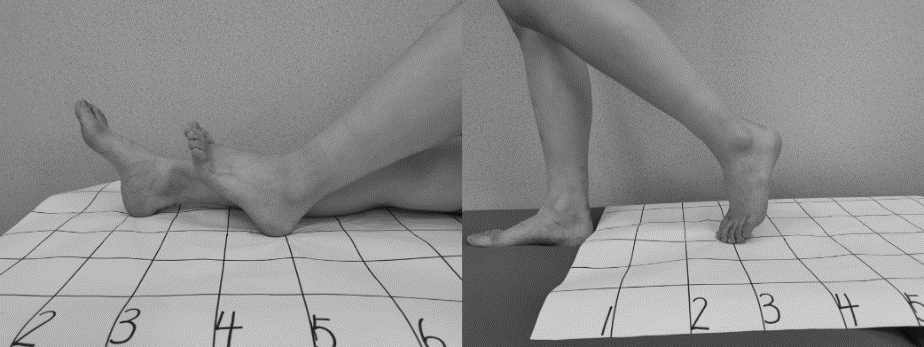
图5
任务5"
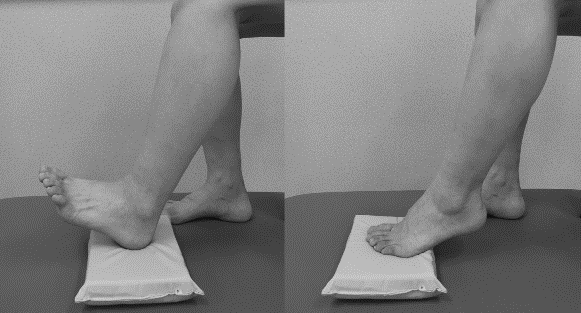
图6
任务6"
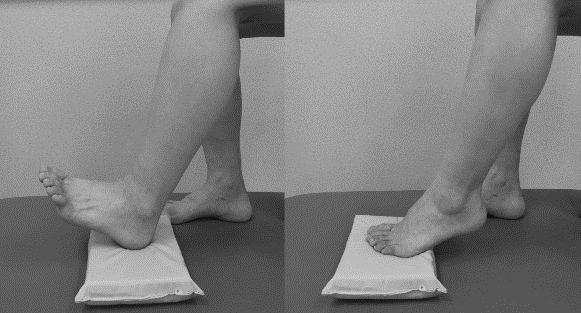
图7
任务7"
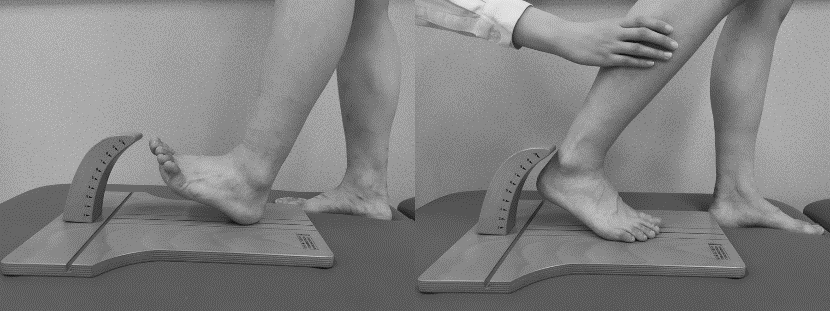
图8
任务8"
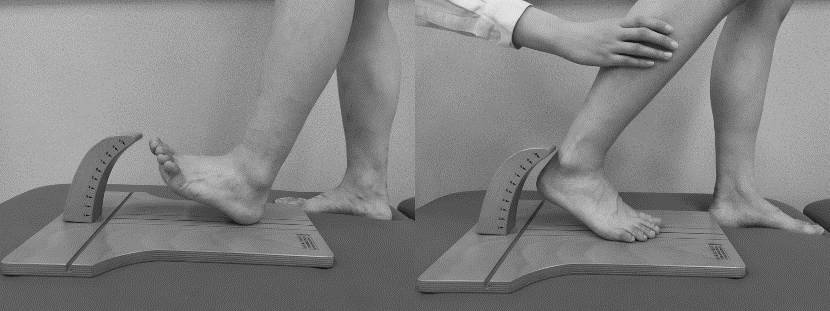
表2
干预前后两组健侧足偏角比较 单位:°"
| 组别 | n | 干预前 | 干预后 | t值 | P值 |
|---|---|---|---|---|---|
| 对照组 | 28 | 12.26±3.65 | 9.94±1.96 | 4.615 | < 0.001 |
| 试验组 | 28 | 13.20±2.42 | 9.49±2.51 | 9.490 | < 0.001 |
| t值 | 1.179 | 0.779 | |||
| P值 | 0.243 | 0.439 |
表3
干预前后两组患侧足偏角比较 单位:°"
| 组别 | n | 干预前 | 干预后 | t值 | P值 |
|---|---|---|---|---|---|
| 对照组 | 28 | 14.14±3.25 | 11.21±2.19 | 5.561 | < 0.001 |
| 试验组 | 28 | 14.48±3.52 | 9.69±2.29 | 8.793 | < 0.001 |
| t值 | 0.388 | 2.623 | |||
| P值 | 0.699 | 0.011 |
表4
干预前后两组足跟内侧冲量百分比比较"
| 组别 | n | 干预前 | 干预后 | t值 | P值 |
|---|---|---|---|---|---|
| 对照组 | 28 | 13.54±2.51 | 15.61±2.77 | 4.221 | < 0.001 |
| 试验组 | 28 | 13.23±3.33 | 19.13±2.97 | 24.603 | < 0.001 |
| t值 | 0.414 | 4.749 | |||
| P值 | 0.680 | < 0.001 |
表5
干预前后两组足跟外侧冲量百分比比较"
| 组别 | n | 干预前 | 干预后 | t值 | P值 |
|---|---|---|---|---|---|
| 对照组 | 28 | 11.03±2.27 | 15.61±2.94 | 12.624 | < 0.001 |
| 试验组 | 28 | 11.75±3.65 | 18.51±3.22 | 20.377 | < 0.001 |
| t值 | 0.920 | 3.651 | |||
| P值 | 0.362 | 0.001 |
表6
干预前后两组中足冲量百分比比较"
| 组别 | n | 干预前 | 干预后 | t值 | P值 |
|---|---|---|---|---|---|
| 对照组 | 28 | 14.96±4.99 | 11.18±5.49 | 7.676 | < 0.001 |
| 试验组 | 28 | 13.89±5.17 | 9.83±5.08 | 15.434 | < 0.001 |
| t值 | 0.811 | 0.990 | |||
| P值 | 0.420 | 0.362 |
表7
干预前后两组前足内侧冲量百分比比较"
| 组别 | n | 干预前 | 干预后 | t值 | P值 |
|---|---|---|---|---|---|
| 对照组 | 28 | 11.21±2.43 | 10.56±2.51 | 1.655 | 0.190 |
| 试验组 | 28 | 12.64±3.68 | 9.45±2.84 | 9.795 | < 0.001 |
| t值 | 1.773 | 1.608 | |||
| P值 | 0.081 | 0.113 |
表8
干预前后两组前足中部冲量百分比比较"
| 组别 | n | 干预前 | 干预后 | t值 | P值 |
|---|---|---|---|---|---|
| 对照组 | 28 | 28.00±3.10 | 26.64±2.74 | 3.174 | 0.004 |
| 试验组 | 28 | 27.01±3.62 | 24.35±3.01 | 9.551 | < 0.001 |
| t值 | 1.136 | 3.080 | |||
| P值 | 0.260 | 0.003 |
表9
干预前后两组前足外部冲量百分比比较"
| 组别 | n | 干预前 | 干预后 | t值 | P值 |
|---|---|---|---|---|---|
| 对照组 | 28 | 12.81±1.44 | 10.54±1.82 | 7.915 | < 0.001 |
| 试验组 | 28 | 12.61±2.29 | 9.44±1.79 | 10.348 | < 0.001 |
| t值 | 0.401 | 2.366 | |||
| P值 | 0.690 | 0.021 |
表10
干预前后两组足趾冲量百分比比较"
| 组别 | n | 干预前 | 干预后 | t值 | P值 |
|---|---|---|---|---|---|
| 对照组 | 28 | 8.88±4.04 | 9.29±3.63 | 1.153 | 0.136 |
| 试验组 | 28 | 8.46±3.61 | 9.86±3.31 | 3.508 | 0.001 |
| t值 | 0.424 | 0.632 | |||
| P值 | 0.673 | 0.530 |
| [1] | ŚMIGIELSKI R, ZDANOWICZ U, DRWIĘGA M, et al. The anatomy of the anterior cruciate ligament and its relevance to the technique of reconstruction[J]. Bone Joint J, 2016, 98B(8): 1020-1026. |
| [2] |
FILBAY S R, GRINDEM H. Evidence-based recommendations for the management of anterior cruciate ligament (ACL) rupture[J]. Best Pract Res Clin Rheumatol, 2019, 33(1): 33-47.
doi: S1521-6942(19)30019-1 pmid: 31431274 |
| [3] |
YAO S, FU B S, YUNG P S. Graft healing after anterior cruciate ligament reconstruction (ACLR)[J]. Asia Pac J Sports Med Arthrosc Rehabil Technol, 2021, 25: 8-15.
doi: 10.1016/j.asmart.2021.03.003 pmid: 34094881 |
| [4] |
GOETZ G, DE VILLIERS C, SADOGHI P, et al. Allograft for anterior cruciate ligament reconstruction (ACLR): a systematic review and meta-analysis of long-term comparative effectiveness and safety. Results of a health technology assessment[J]. Arthrosc Sports Med Rehabil, 2020, 2(6): e873-e891.
doi: 10.1016/j.asmr.2020.07.003 |
| [5] |
SLATER L V, HART J M, KELLY A R, et al. Progressive changes in walking kinematics and kinetics after anterior cruciate ligament injury and reconstruction: a review and meta-analysis[J]. J Athl Train, 2017, 52(9): 847-860.
doi: 10.4085/1062-6050-52.6.06 |
| [6] |
BUCKTHORPE M, DANELON F, LA ROSA G, et al. Recommendations for hamstring function recovery after ACL reconstruction[J]. Sports Med, 2020, 51(4): 607-624.
doi: 10.1007/s40279-020-01400-x |
| [7] |
PANG M, YANG L, OUYANG H, et al. Dual-task exercise reduces cognitive-motor interference in walking and falls after stroke[J]. Stroke, 2018, 49(12): 2990-2998.
doi: 10.1161/STROKEAHA.118.022157 pmid: 30571419 |
| [8] |
MIKO S C, SIMON J E, MONFORT S M, et al. Postural stability during visual-based cognitive and motor dual-tasks after ACLR[J]. J Sci Med Sport, 2021, 24(2): 146-151.
doi: 10.1016/j.jsams.2020.07.008 pmid: 32773174 |
| [9] | VAN DE WINCKEL A, DE PATRE D, RIGONI M, et al. Exploratory study of how Cognitive Multisensory Rehabilitation restores parietal operculum connectivity and improves upper limb movements in chronic stroke[J]. Sci reports, 2020, 10(1): 1-11. |
| [10] |
GIORDANO K, CHAPUT M, ANZ A, et al. Knee kinetics in baseball hitting and return to play after ACL reconstruction[J]. Int J Sports Med, 2021, 42(9): 847-852.
doi: 10.1055/a-1236-4102 |
| [11] |
GUIOTTO A, CINIGLIO A, SPOLAOR F, et al. Reliability and repeatability of ACL quick check: a methodology for on field lower limb joint kinematics and kinetics assessment in sport applications[J]. Sensors (Basel), 2021, 22(1): 259.
doi: 10.3390/s22010259 |
| [12] | MARZETTI E, RABINI A, PICCININI G, et al. Neurocognitive therapeutic exercise improves pain and function in patients with shoulder impingement syndrome: a single-blind randomized controlled clinical trial[J]. Eur J Phys Rehabil Med, 2014, 50(3): 255. |
| [13] |
PARK J. The effects of plantar perception training on balance and falls efficacy of the elderly with a history of falls: a single-blind, randomized controlled trial[J]. Arch Gerontol Geriatr, 2018, 77: 19-23.
doi: 10.1016/j.archger.2018.03.014 |
| [14] |
NAKANO H, NOZAKI M, UETA K, et al. Effect of a plantar perceptual learning task on walking stability in the elderly: a randomized controlled trial[J]. Clin Rehabil, 2013, 27(7): 608-615.
doi: 10.1177/0269215512471062 pmid: 23405022 |
| [15] | 姜焯文. 基于静动态平衡能力的人体稳定性评价方法研究[D]. 天津: 天津科技大学, 2020. |
| JIANG Z W. Study on the method of human stability evaluation based on the static and dynamic balance[D]. Tianjin: Tianjin University of Science and Technology, 2020. | |
| [16] | 曹方园, 徐俊凯, 胡海, 等. 跑步时足偏角对胫骨冲击影响的探索性研究[J]. 医用生物力学, 2019, 34(2): 207-212. |
| CAO F Y, XU J K, HU H, et al. Exploration study about influence of foot progression angle on tibial shock during running[J]. J Med Biomed, 2019, 34(2): 207-212. | |
| [17] | 潘永雄, 陈锦, 王大伟, 等. 足底压力测试系统的常用步态分析指标[J]. 临床医学工程, 2018, 25(9): 1267-1269. |
| PAN Y X, CHEN J, WANG D W, et al. The common gait analysis indicators of plantar pressure system[J]. Clin Med Engineer, 2018, 25(9): 1267-1269. | |
| [18] | 顾琳燕, 邱华平, 张晟宇, 等. 正常人群步行足偏角与年龄特征分析[J]. 生物医学工程学杂志, 2018, 35(1): 45-48. |
| GU L Y, QIU H P, ZHANG S Y, et al. Analysis of the relevance of age and toe out angle of normal adults' gait[J]. J Biomed Engineer, 2018, 35(1): 45-48. | |
| [19] | 吴剑, 李建设. 人体行走时步态的生物力学研究进展[J]. 中国运动医学杂志, 2002(3): 305-307. |
| WU J, LI J S. Progress in biomechanics of human gait during walking[J]. Chin J Sports Med, 2002(3): 305-307. | |
| [20] |
TAZAWA M, SOHMIYA M, WADA N, et al. Toe-out angle changes after total knee arthroplasty in patients with varus knee osteoarthritis[J]. Knee Surg Sports Traumatol Arthrosc, 2014, 22(12): 3168-3173.
doi: 10.1007/s00167-014-2841-8 |
| [21] |
BEHLING A V, MANZ S, VON TSCHARNER V, et al. Pronation or foot movement: what is important[J]. J Sci Med Sport, 2020, 23(4): 366-371.
doi: 10.1016/j.jsams.2019.11.002 |
| [22] | 黄红拾, 敖英芳, 郭秦炜, 等. 前交叉韧带重建术影响步行时足底压力时相特征初步研究[J]. 中国运动医学杂志, 2014, 33(3): 189-192. |
| HUANG H S, AO Y F, GUO Q W, et al. Preliminary study on the change in temporal plantar pressure during walking after ACL reconstruction[J]. Chin J Sports Med, 2014, 33(3): 189-192. | |
| [23] | 李玉周, 王婧怡, 胡英琪. 前交叉韧带重建术后短期足底压力分布及平衡特征研究[J]. 体育科学, 2020, 40(5): 52-59. |
| LI Y Z, WANG J Y, HU Y Q. Short-term plantar pressure distribution and balance after anterior cruciate ligament reconstruction[J]. Sports Sci, 2020, 40(5): 52-59. | |
| [24] | 杜天舒, 成西侠, 张春礼, 等. 前交叉韧带损伤患者动态足底压力变化[J]. 中国运动医学杂志, 2016, 35(6): 520-526. |
| DU T S, CHENG X X, ZHANG C L, et al. Change in plantar pressure of patients with anterior cruciate ligament deficient during walking[J]. Chin J Sports Med, 2016, 35(6): 520-526. | |
| [25] | 黄浩然, 陈俊, 王思哲, 等. 足部空间姿态评估分析系统在ACL重建前后步态分析中的应用[J]. 中国骨与关节损伤杂志, 2018, 33(12): 1255-1258. |
| HAUNG H R, CHEN J, WANG S Z, et al. Analysis of gait before and after anterior cruciate ligament reconstruction using foot space pose assessment system[J]. Chin J Bone Joint Injury, 2018, 33(12): 1255-1258. | |
| [26] | 张燊. 足部功能训练对足弓形态及跑步生物力学影响的研究[D]. 上海: 上海体育学院, 2020. |
| ZHANG S. The effects of the functional foot exercise on the arch shape and running biomechanics[D]. Shanghai: Shanghai University of Sport, 2020. | |
| [27] |
ZHANG Z, WANG L, HU K, et al. Characteristics of plantar loads during walking in patients with knee osteoarthritis[J]. Med Sci Monit, 2017, 23: 5714-5719.
doi: 10.12659/MSM.905136 |
| [28] |
GENC Y, GULTEKIN A, DUYMUS T M, et al. Pedobarography in the assessment of postoperative calcaneal fracture pressure with gait[J]. J Foot Ankle Surg, 2016, 55(1): 99-105.
doi: 10.1053/j.jfas.2015.07.018 pmid: 26364236 |
| [29] |
REES H W. Management of osteoarthritis of the hip[J]. J Am Acad Orthop Surg, 2020, 28(7): e288-e291.
doi: 10.5435/JAAOS-D-19-00416 |
| [30] |
LEE S, BAE S, JEON D, et al. The effects of cognitive exercise therapy on chronic stroke patients' upper limb functions, activities of daily living and quality of life[J]. J Phys Ther Sci, 2015, 27(9): 2787-2791.
doi: 10.1589/jpts.27.2787 pmid: 26504294 |
| [31] | DE PATRE D, VAN DE WINCKEL A, PANTÉ F, et al. Visual and motor recovery after "Cognitive Therapeutic Exercises" in cortical blindness: a case study[J]. J Neur Phys Ther, 2017, 41(3): 164-172. |
| [32] |
MORIOKA S, FUJITA H, HIYAMIZU M, et al. Effects of plantar perception training on standing posture balance in the old old and the very old living in nursing facilities: a randomized controlled trial[J]. Clin Rehabil, 2011, 25(11): 1011-1020.
doi: 10.1177/0269215510395792 pmid: 21504952 |
| [33] |
NAKANO H, NOZAKI M, UETA K, et al. Effect of a plantar perceptual learning task on walking stability in the elderly: a randomized controlled trial[J]. Clin Rehabil, 2013, 27(7): 608-615.
doi: 10.1177/0269215512471062 pmid: 23405022 |
| [1] | 岳圆, 张通, 刘元旻, 王亚囡. 下肢外骨骼机器人对卒中后小脑性共济失调患者平衡和步行功能的影响[J]. 《中国康复理论与实践》, 2026, 32(1): 23-29. |
| [2] | 张子昂, 陈静, 沈孟茹, 耿宗晓, 韩雪, 赵旭, 徐磊. 不同运动模式对脑卒中患者步行及平衡功能的效果比较[J]. 《中国康复理论与实践》, 2025, 31(8): 896-905. |
| [3] | 周天添, 张通, 张琦, 梁艳华, 张燕庆, 岳青, 李思佳. Lokomat机器人辅助步行训练对偏瘫儿童下肢运动功能的效果[J]. 《中国康复理论与实践》, 2025, 31(6): 711-720. |
| [4] | 苏盼盼, 叶朋, 卢倩, 何川, 陆晓. 视觉剥夺训练联合本体感觉训练对脑卒中偏瘫患者平衡功能的效果[J]. 《中国康复理论与实践》, 2025, 31(3): 254-263. |
| [5] | 樊志娇, 靳岚琦, 黄志彬, 李依格, 姚思含, 马玉宝. 神经肌肉电刺激对前交叉韧带重建术后患者股四头肌肌力和步行功能的效果[J]. 《中国康复理论与实践》, 2025, 31(2): 242-248. |
| [6] | 王月, 张通, 刘惠林, 刘建华, 朱晓敏, 赵军. 外部注意焦点的康复策略对脑卒中后步行功能的影响[J]. 《中国康复理论与实践》, 2025, 31(10): 1206-1213. |
| [7] | 赵玮婧, 尤红, 唐佐虹, 李永平, 文明明, 刘虹, 包娟. 视觉反馈平衡训练联合数字化跑台对脑梗死患者步行功能的效果[J]. 《中国康复理论与实践》, 2025, 31(10): 1214-1226. |
| [8] | 谢丹丹, 陈善佳, 雷蕾, 余果, 余佳慧, 赵嘉培, 何晓阔. 健康人和脑卒中患者视觉反馈步行训练后脑激活特征的功能性近红外光谱技术研究[J]. 《中国康复理论与实践》, 2024, 30(9): 1074-1081. |
| [9] | 周易文, 钟亚平, 魏梦力, 王海锋, 余绍华, 桂辉贤. 基于运动员前交叉韧带重建术后步态数据分析重返运动的风险[J]. 《中国康复理论与实践》, 2024, 30(8): 948-956. |
| [10] | 唐乐天, 黄兆欣, 刘超, 肖晓飞. 前交叉韧带重建术后患者高血流限制训练康复效果的系统综述[J]. 《中国康复理论与实践》, 2024, 30(7): 789-796. |
| [11] | 沈培鑫, 罗心, 车欣恒, 刘延浩, 毛德伟, 宋祺鹏. 本体感觉神经肌肉促进技术对老年膝骨关节炎患者步行时关节负荷效果的随机对照试验[J]. 《中国康复理论与实践》, 2024, 30(7): 854-860. |
| [12] | 徐冬艳, 王卫宁, 潘力, 刘罡, 刘加鹏, 吴毅, 朱玉连. 基于丰富环境理论的多感官反馈步态训练对脑卒中患者步行功能的效果[J]. 《中国康复理论与实践》, 2024, 30(5): 526-534. |
| [13] | 熊杏秀, 张正辉, 邓春燕, 李云波, 陈镇鹏, 李元杰, 宋景. 减重结合功能性电刺激对脑卒中患者下肢运动功能的疗效[J]. 《中国康复理论与实践》, 2024, 30(5): 554-559. |
| [14] | 梁晓笑, 郑洁皎, 吴雪娇, 陈茜, 张廷宇, 顾秋怡. 虚拟现实训练对老年特发性正常压力脑积水患者平衡与步行功能的影响[J]. 《中国康复理论与实践》, 2024, 30(4): 424-430. |
| [15] | 郑建玲, 刘惠林, 朱琳, 顾彬, 颜如秀, 赵圻, 宋鲁平. 早期悬吊保护下智能助行训练对脑卒中后运动和行走功能的效果[J]. 《中国康复理论与实践》, 2024, 30(4): 431-436. |
| 阅读次数 | ||||||
|
全文 |
|
|||||
|
摘要 |
|
|||||
|
||
