



《中国康复理论与实践》 ›› 2024, Vol. 30 ›› Issue (7): 778-788.doi: 10.3969/j.issn.1006-9771.2024.07.005
温艳飞, 杨露, 班玥, Ykabaru Daniela BERBESI NORIEGA, 张郝琪, 王丽( ), 刘华()
收稿日期:2024-05-24
修回日期:2024-06-18
出版日期:2024-07-25
发布日期:2024-08-07
通讯作者:
刘华,E-mail: liuhua@cupes.edu.cn;
王丽,E-mail: wangli@cupes.edu.cn作者简介:温艳飞(2001-),女,汉族,山东聊城市人,硕士研究生,主要研究方向:运动损伤的预防与康复。
基金资助:
WEN Yanfei, YANG Lu, BAN Yue, Ykabaru Daniela BERBESI NORIEGA, ZHANG Haoqi, WANG Li(), LIU Hua()
Received:2024-05-24
Revised:2024-06-18
Published:2024-07-25
Online:2024-08-07
Contact:
LIU Hua, E-mail: Supported by:摘要:
目的 基于《国际功能、残疾和健康分类》(ICF)框架,系统评价运动疗法对慢性非特异性颈痛(CNSNP)患者身体结构、功能、活动和参与等方面的干预效果。
方法 构建PICO架构,系统检索CBM、万方、维普、中国知网、Cochrane Library、Embase、PubMed和Web of Science等中、英文数据库,纳入有关运动疗法干预CNSNP患者的随机对照试验,时间范围为建库至2024年3月。采用Cochrane偏倚风险评估工具和物理治疗证据数据库(PEDro)量表对纳入文献进行质量评价,采用GRADE对结局指标进行证据质量评价,采用RevMan 5.3进行数据合并和分析,采用Stata 18.0进行偏倚风险评估。
结果 最终纳入11篇文献,共668例患者。PEDro量表评分5~8分。运动疗法类型包括肌力训练、稳定性训练、本体感觉训练、瑜伽和普拉提等;对照组包括空白对照、物理因子治疗和健康教育。运动疗法可显著增加患者颅椎角(SMD = 0.84, 95%CI 0.42~1.26, P < 0.001),降低疼痛视觉模拟量表评分(SMD = -2.05, 95%CI -2.58~-1.52, P < 0.001),提高压力疼痛阈值(MD = 112.27, 95%CI 75.03~149.50, P < 0.001),提高颈椎前屈(SMD = 1.24, 95%CI 0.34~2.15, P = 0.007)、侧屈(SMD = 1.52, 95%CI 0.40~2.65, P = 0.008)关节活动度,提高颈深屈肌耐力(SMD = 1.02, 95%CI 0.10~1.94, P = 0.03),改善颈椎关节位置觉(SMD = -1.00, 95%CI -1.47~-0.53, P < 0.001),但对于改善后屈(SMD = 0.85, 95%CI -1.04~2.75, P = 0.38)、旋转(SMD = 1.65, 95%CI -0.35~3.65, P = 0.11)关节活动度的效果不显著;运动疗法还能降低患者颈椎功能障碍指数评分(MD = -11.88, 95%CI -16.09~-7.68, P < 0.001),对健康调查简表评分效果不显著(MD = 19.04, 95%CI -3.00~41.08, P = 0.09)。
结论 运动疗法可以改善CNSNP患者的异常姿势、疼痛、前屈和侧屈运动、颈屈肌耐力和关节位置觉,改善功能障碍,但对提高颈部后屈和旋转运动,改善生活质量方面仍需进一步的研究。
中图分类号:
温艳飞, 杨露, 班玥, Ykabaru Daniela BERBESI NORIEGA, 张郝琪, 王丽, 刘华. ICF框架下运动疗法对慢性非特异性颈痛效果的Meta分析[J]. 《中国康复理论与实践》, 2024, 30(7): 778-788.
WEN Yanfei, YANG Lu, BAN Yue, Ykabaru Daniela BERBESI NORIEGA, ZHANG Haoqi, WANG Li, LIU Hua. Effect of exercise therapy on chronic nonspecific neck pain: a meta-analysis based on ICF[J]. Chinese Journal of Rehabilitation Theory and Practice, 2024, 30(7): 778-788.
表1
运动疗法干预CNSNP系统综述的PICO架构"
| 人群(Population) | 干预(Intervention) | 比较(Comparison) | 结局(Outcome) |
|---|---|---|---|
| 健康状况与功能障碍 CNSNP (MG30.02慢性原发性肌肉骨骼疼痛) 感觉运动功能障碍 b260 本体感受功能 b280 痛觉 b710 关节活动功能 b715 关节稳定功能 b730 肌肉力量功能 b740 肌肉耐力功能 姿势异常 s710 头颈部的结构 s720 肩部的结构 心理功能障碍 b134 睡眠 b130 能量和驱力功能 b152 情绪功能 日常生活活动能力障碍 d166 阅读 d230 进行日常事务 d410 改变身体的基本姿势 d475 驾驶 d640 做家务 d910 社区生活 d920 娱乐和休闲 病程≥ 3个月 年龄≥ 18岁 | 干预场所 医院 家庭社区 工作场所 学校 干预人员 物理治疗师 大学研究人员 社区卫生人员 干预措施 运动疗法 干预方案 类型 频率 持续时间 | 试验组和对照组比较 | 姿势(CVA) s710头颈部结构 疼痛(VAS、PPTs) b280痛觉 关节活动度(颈椎ROM) b710关节活动功能 肌肉耐力(颈深屈肌耐力) b740肌肉耐力功能 本体感觉(关节位置觉) b260本体感受功能 d429改变和保持身体姿势 活动和参与(NDI) d499活动,未特指的 d899主要生活领域,未特指的 生活质量(SF-36) b130能量和驱力功能 d570照顾个人的健康 |
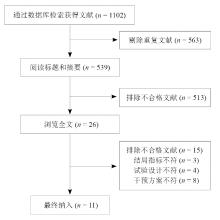
图 1
文献筛选流程图"
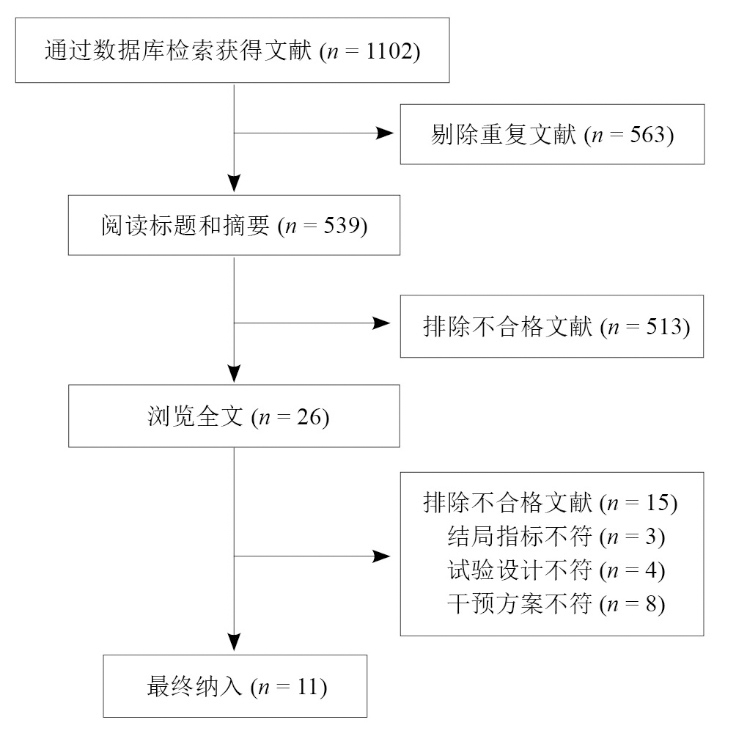
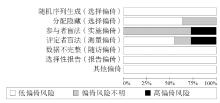
图2
偏倚风险比例"
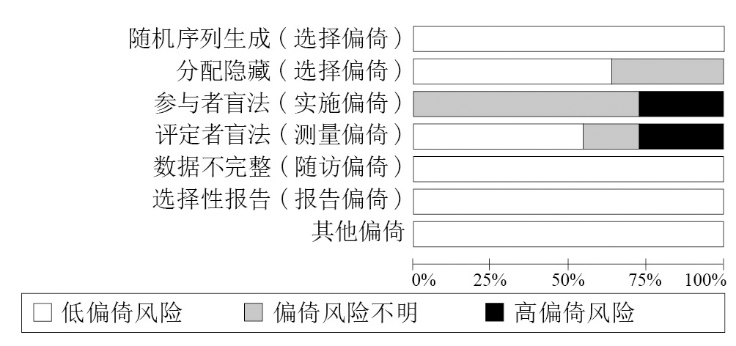
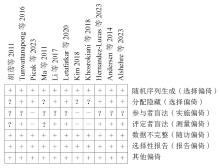
图 3
纳入文献偏倚评估"

表2
纳入文献PEDro量表评分"
| 纳入文献 | 资格标准 | 随机分配 | 分配隐藏 | 基线相似 | 被试施盲 | 治疗师施盲 | 评估者施盲 | 被试流失率≤15% | 意向性分析 | 组间统计比较 | 变异性测量 | 总分 |
|---|---|---|---|---|---|---|---|---|---|---|---|---|
| Alshehre等[ | √ | √ | √ | √ | √ | √ | √ | √ | √ | 8 | ||
| Andersen等[ | √ | √ | √ | √ | √ | √ | √ | √ | 7 | |||
| Hernandez-Lucas等[ | √ | √ | √ | √ | √ | √ | √ | √ | 7 | |||
| Khosrokiani等[ | √ | √ | √ | √ | √ | √ | 5 | |||||
| Kim[ | √ | √ | √ | √ | √ | √ | 5 | |||||
| Letafatkar等[ | √ | √ | √ | √ | √ | √ | √ | √ | √ | 8 | ||
| Li等[ | √ | √ | √ | √ | √ | √ | √ | √ | √ | 8 | ||
| Ma等[ | √ | √ | √ | √ | √ | √ | 5 | |||||
| Picak等[ | √ | √ | √ | √ | √ | √ | 5 | |||||
| Tunwattanapong等[ | √ | √ | √ | √ | √ | √ | √ | √ | √ | 8 | ||
| 胡鸢等[ | √ | √ | √ | √ | √ | √ | √ | 6 |
表 3
纳入文献基本特征"
| 纳入文献 | 国家 | n | 年龄/岁 | 干预人员 | 干预场所 | 干预措施 | 干预周期 | 结局 | |||||
|---|---|---|---|---|---|---|---|---|---|---|---|---|---|
| T | C | T | C | T | C | ||||||||
| Alshehre等[ | 沙特阿拉伯 | 30 | 30 | 42.1±4.5 | 44.2±4.8 | 物理治疗师 | 医院和工作场所 | 综合运动训练(肌力、牵伸、耐力)+人体工程学+健康教育 | 人体工程学+健康教育 | 每周2次,共8周 | 身体结构:未提及 身体功能:数字分级量表评分降低 活动和参与:NDI评分降低,生活质量改善 | ||
| Andersen等[ | 丹麦 | 24 | 23 | 44±13 | 45±11 | 物理治疗师 | 工作场所 | 稳定性训练 | 空白对照 | 每周3次,共10周 | 身体结构:未提及 身体功能:PPTs提高 活动和参与:未提及 | ||
| Hernandez-Lucas等[ | 西班牙 | 18 | 17 | 51.9±7.8 | 51.4±11.3 | 物理治疗师 | 医院 | 肌力训练+本体感觉训练 | 空白对照 | 每周2次,共8周 | 身体结构:未提及 身体功能:VAS评分降低,颈部肌肉耐力增强 活动和参与:未提及 | ||
| Khosrokiani等[ | 伊朗 | 15 | 15 | 36.07±5.59 | 37.60±5.58 | 物理治疗师 | 医院 | 方向-运动控制训练 | 健康教育 | 每周3次,共6个月 | 身体结构:未提及 身体功能:VAS评分降低,颈部肌肉耐力增强,关节位置觉改善,关节活动度增加 活动和参与:NDI评分降低 | ||
| Kim[ | 韩国 | 18 | 20 | 20.8±1.2 | 21.1±1.2 | 大学研究人员 | 学校 | 瑜伽 | 空白对照 | 每周2次,共8周 | 身体结构:未提及 身体功能:VAS评分降低 活动和参与:未提及 | ||
| Letafatkar等[ | 伊朗 | 24 | 24 | 34.27±2.72 | 34.60±3.30 | 物理治疗师 | 医院 | 综合运动训练(本体感觉、肌力和稳定性训练)+健康教育 | 健康教育 | 每周3~5次,共8周 | 身体结构:CVA增加 身体功能:VAS评分降低 活动和参与:NDI评分降低 | ||
| Li等[ | 中国 | 组1:36 组2:32 | 34 | 组1:35.6±7.9 组2:33.7±9.0 | 34.1±8.2 | 物理治疗师 | 医院 | 组1:渐进抗阻训练 组2:固定抗阻训练 | 健康教育 | 每周4次,共6周 | 身体结构:未提及 身体功能:VAS评分降低,PPTs提高,颈部肌力增加 活动和参与:NDI评分降低 | ||
| Ma等[ | 中国 | 15 | 15 | 34.2±10.3 | 30.0±10.3 | 社区卫生人员 | 工作场所和家庭社区 | 肌力训练+牵伸训练+健康教育 | 健康教育 | 每次20 min,共6周 | 身体结构:未提及 身体功能:VAS评分降低 活动和参与:NDI评分降低 | ||
| Picak等[ | 土耳其 | 24 | 25 | 31.54±5.23 | 29.40±5.24 | 物理治疗师 | 医院 | 普拉提 | 健康教育 | 每周3次,共6周 | 身体结构:CVA增加 身体功能:VAS评分降低,颈部肌肉耐力增加,关节活动度增加,关节位置觉改善 活动和参与:NDI评分降低 | ||
| Tunwattanapong等[ | 泰国 | 48 | 48 | 34.2±9.0 | 36.5±8.7 | 物理治疗师 | 医院 | 牵伸训练+健康教育 | 健康教育 | 每周5次,共4周 | 身体结构:未提及 身体功能:VAS评分降低 活动和参与:功能障碍程度改善;生活质量提高 | ||
| 胡鸢等[ | 中国 | 65 | 68 | 40.63±10.20 | 41.81±9.27 | 物理治疗师 | 医院 | 稳定性训练 | 物理因子治疗 | 每周3次,共6周 | 身体结构:未提及 身体功能:VAS评分降低 活动和参与:NDI评分降低 | ||
表4
Meta分析结果"
| 结局指标 | 纳入研究数/n | 异质性检验 | 效应模型 | Meta分析结果 | |||
|---|---|---|---|---|---|---|---|
| I²值/% | P值 | MD (95%CI) | SMD (95%CI) | P值 | |||
| CVA[ | 2 | 8 | 0.300 | 固定效应模型 | 0.84 (0.42, 1.26) | < 0.001 | |
| VAS[ | 9 | 85 | < 0.001 | 随机效应模型 | -2.05 (-2.58, -1.52) | < 0.001 | |
| PPTs[ | 2 | 58 | 0.090 | 随机效应模型 | 112.27 (75.03, 149.50) | < 0.001 | |
| 关节活动度(前屈)[ | 2 | 67 | 0.080 | 随机效应模型 | 1.24 (0.34, 2.15) | 0.007 | |
| 关节活动度(后屈)[ | 2 | 92 | < 0.001 | 随机效应模型 | 0.85 (-1.04, 2.75) | 0.380 | |
| 关节活动度(侧屈)[ | 2 | 76 | 0.040 | 随机效应模型 | 1.52 (0.40, 2.65) | 0.008 | |
| 关节活动度(旋转)[ | 2 | 91 | < 0.001 | 随机效应模型 | 1.65 (-0.35, 3.65) | 0.110 | |
| 颈深屈肌耐力[ | 3 | 77 | 0.010 | 随机效应模型 | 1.02 (0.10, 1.94) | 0.030 | |
| 关节位置觉[ | 2 | 12 | 0.290 | 固定效应模型 | -1.00 (-1.47, -0.53) | < 0.001 | |
| NDI[ | 7 | 95 | < 0.001 | 随机效应模型 | -11.88 (-16.09, -7.68) | < 0.001 | |
| 生活质量[ | 2 | 95 | < 0.001 | 随机效应模型 | 19.04 (-3.00, 41.08) | 0.090 | |
图4
发表偏倚漏斗图"
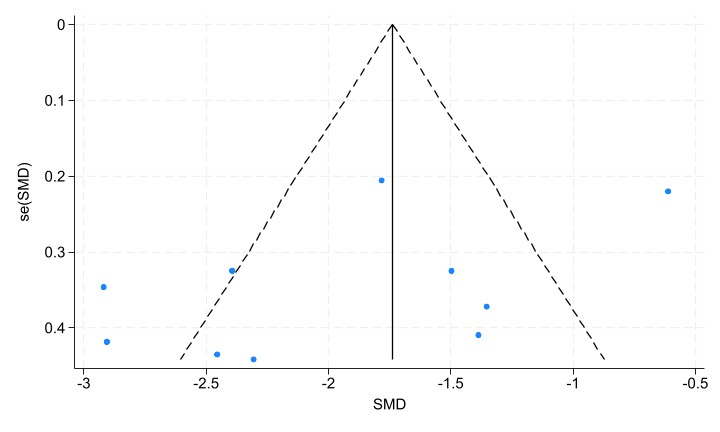
表5
各指标GRADE证据质量"
| 结局指标 | 纳入研究数/n | 研究的局限性 | 不一致性 | 间接性 | 不精确性 | 发表偏倚 | 证据质量 |
|---|---|---|---|---|---|---|---|
| VAS[ | 9 | 不严重 | 严重 | 不严重 | 不严重 | 不严重 | 中级 |
| NDI[ | 7 | 不严重 | 严重 | 不严重 | 不严重 | 不严重 | 中级 |
| 颈深屈肌耐力[ | 3 | 严重 | 严重 | 严重 | 严重 | 不严重 | 极低级 |
| [1] | COLLABORATORS G N P. Global, regional, and national burden of neck pain, 1990-2020, and projections to 2050: a systematic analysis of the Global Burden of Disease Study 2021[J]. Lancet Rheumatol, 2024, 6(3): e142-e155. |
| [2] |
BORGHOUTS J A J, KOES B W, BOUTER L M. The clinical course and prognostic factors of non-specific neck pain: a systematic review[J]. Pain, 1998, 77(1): 1-13.
doi: 10.1016/S0304-3959(98)00058-X pmid: 9755013 |
| [3] | 黄梅忠, 王诗忠. 慢性非特异性颈痛的治疗现状[J]. 中国康复医学杂志, 2021, 36(9): 1190-1194. |
| [4] | XIA W, LIU J, LIU C, et al. Burden of neck pain in general population of China, 1990-2019: an analysis for the Global Burden of Disease Study 2019[J]. J Glob health, 2024, 14: 04066. |
| [5] |
DIELEMAN J L, CAO J, CHAPIN A, et al. US health care spending by payer and health condition, 1996-2016[J]. JAMA, 2020, 323(9): 863-884.
doi: 10.1001/jama.2020.0734 pmid: 32125402 |
| [6] | 龙露, 王三荣, 虞乐华. 非特异性颈痛康复治疗进展[J]. 中国康复医学杂志, 2022, 37(1): 125-130. |
| [7] | GENEEN L J, MOORE R A, CLARKE C, et al. Physical activity and exercise for chronic pain in adults: an overview of Cochrane Reviews[J]. Cochrane Database Syst Rev, 2017, 1(1): CD011279. |
| [8] | PICO-ESPINOSA O J, ABOAGYE E, CÔTÉ P, et al. Deep tissue massage, strengthening and stretching exercises, and a combination of both compared with advice to stay active for subacute or persistent non-specific neck pain: a cost-effectiveness analysis of the Stockholm Neck trial (STONE)[J]. Musculoskelet Sci Pract, 2020, 46: 102109. |
| [9] | BLANPIED P R, GROSS A R, ELLIOTT J M, et al. Neck Pain: Revision 2017[J]. J Orthop Sports Phys Ther, 2017, 47(7): A1-A83. |
| [10] | CHILDS J D, CLELAND J A, ELLIOTT J M, et al. Neck pain: clinical practice guidelines linked to the International Classification of Functioning, Disability, and Health from the Orthopedic Section of the American Physical Therapy Association[J]. J Orthop Sports Phys Ther, 2008, 38(9): A1-A34. |
| [11] |
BIER J D, SCHOLTEN-PEETERS W G M, STAAL J B, et al. Clinical Practice Guideline for Physical Therapy Assessment and Treatment in Patients with Nonspecific Neck Pain[J]. Phys Ther, 2018, 98(3): 162-171.
doi: 10.1093/ptj/pzx118 pmid: 29228289 |
| [12] |
邱卓英, 李伦, 陈迪, 等. 基于世界卫生组织国际健康分类家族康复指南研究:理论架构和方法体系[J]. 中国康复理论与实践, 2020, 26(2): 125-135.
doi: 10.3969/j.issn.1006-9771.2020.02.001 |
| QIU Z Y, LI L, CHEN D, et al. Research on rehabilitation guidelines using World Health Organization Family International Classifications: framework and approaches[J]. Chin J Rehabil Theory Pract, 2020, 26(2): 125-135. | |
| [13] | KAZEMINASAB S, NEJADGHADERI S A, AMIRI P, et al. Neck pain: global epidemiology, trends and risk factors[J]. BMC Musculoskelet Disord, 2022, 23(1): 26. |
| [14] | ORANIZATION W H. International Classification of Diseases 11th Revision[EB/OL]. (2024-01-01) [2024-05-29]. https://icd.who.int/browse/2024-01/mms/en. |
| [15] |
CASHIN A G, MCAULEY J H. Clinimetrics: Physiotherapy Evidence Database (PEDro) scale[J]. J Physiother, 2020, 66(1): 59.
doi: S1836-9553(19)30092-X pmid: 31521549 |
| [16] | ALSHEHRE Y M, MOHAMED S H P, NAMBI G, et al. Effectiveness of physical exercise on pain, disability, job stress, and quality of life in office workers with chronic non-specific neck pain: a randomized controlled trial[J]. Healthcare, 2023, 11(16): 2286. |
| [17] |
ANDERSEN C H, ANDERSEN L L, ZEBIS M K, et al. Effect of scapular function training on chronic pain in the neck/shoulder region: a randomized controlled trial[J]. J Occup Rehabil, 2014, 24(2): 316-324.
doi: 10.1007/s10926-013-9441-1 pmid: 23832167 |
| [18] | HERNANDEZ-LUCAS P, LEIRÓS-RODRÍGUEZ R, LOPEZ-BARREIRO J, et al. Effects of exercise therapy using elastic bands on strength and pain in women with non-specific neck pain: a randomised controlled trial[J]. Heliyon, 2023, 9(11): e22237. |
| [19] |
KHOSROKIANI Z, LETAFATKAR A, SOKHANGUEI Y. Long-term effect of direction-movement control training on female patients with chronic neck pain[J]. J Bodyw Mov Ther, 2018, 22(1): 217-224.
doi: S1360-8592(17)30128-6 pmid: 29332749 |
| [20] | KIM S D. Effects of yogic exercise on nonspecific neck pain in university students[J]. Complement Ther Clin Pract, 2018, 31: 338-342. |
| [21] | LETAFATKAR A, RABIEI P, ALAMOOTI G, et al. Effect of therapeutic exercise routine on pain, disability, posture, and health status in dentists with chronic neck pain: a randomized controlled trial[J]. Int Arch Occup Environ Health, 2020, 93(3): 281-290. |
| [22] | LI X, LIN C N, LIU C C, et al. Comparison of the effectiveness of resistance training in women with chronic computer-related neck pain: a randomized controlled study[J]. Int Arch Occup Environ Health, 2017, 90(7): 673-683. |
| [23] | MA C, SZETO G P, YAN T, et al. Comparing biofeedback with active exercise and passive treatment for the management of work-related neck and shoulder pain: a randomized controlled trial[J]. Arch Phys Med Rehabil, 2011, 92(6): 849-858. |
| [24] | PICAK G S, YESILYAPRAK S S. Effects of clinical Pilates exercises in patients with chronic nonspecific neck pain: a randomized clinical trial[J]. Irish J Med Sci, 2023, 192(3): 1205-1214. |
| [25] |
TUNWATTANAPONG P, KONGKASUWAN R, KUPTNIRATSAIKUL V. The effectiveness of a neck and shoulder stretching exercise program among office workers with neck pain: a randomized controlled trial[J]. Clin Rehabil, 2016, 30(1): 64-72.
doi: 10.1177/0269215515575747 pmid: 25780258 |
| [26] | 胡鸢, 秦江, 唐金树. 颈椎稳定性训练治疗慢性非特异性颈痛的疗效分析[J]. 中华物理医学与康复杂志, 2011, 33(10): 785-787. |
| [27] |
RANI B, PAUL A, CHAUHAN A, et al. Is neck pain related to sagittal head and neck posture?: a systematic review and meta-analysis[J]. Indian J Orthop, 2023, 57(3): 371-403.
doi: 10.1007/s43465-023-00820-x pmid: 36825268 |
| [28] |
MOHAMED A A, JAN Y K, RAOOF N A, et al. Effect of biofeedback corrective exercise on reaction time and central somatosensory conduction time in patients with forward head posture and radiculopathy: a randomized controlled study[J]. J Chiropr Med, 2022, 21(1): 39-50.
doi: 10.1016/j.jcm.2022.01.001 pmid: 35747615 |
| [29] | YANG S, BOUDIER-REVÉRET M, YI Y G, et al. Treatment of chronic neck pain in patients with forward head posture: a systematic narrative review[J]. Healthcare (Basel), 2023, 11(19): 2604. |
| [30] | BENEKA A, MALLIOU P, GIOFTSIDOU A. Neck pain and office workers: an exercise program for the workplace[J]. ACSM Health Fit J, 2014, 18(3): 18-24. |
| [31] | RUIVO R M, PEZARAT-CORREIA P, CARITA A I. Effects of a resistance and stretching training program on forward head and protracted shoulder posture in adolescents[J]. J Manipulative Physiol Ther, 2017, 40(1): 1-10. |
| [32] | LEE S M, LEE C H, O'SULLIVAN D, et al. Clinical effectiveness of a Pilates treatment for forward head posture[J]. J Phys Ther Sci, 2016, 28(7): 2009-2013. |
| [33] | DE ZOETE R M J. Exercise therapy for chronic neck pain: tailoring person-centred approaches within contemporary management[J]. J Clin Med, 2023, 12(22): 7108. |
| [34] | MUELLER J, WEINIG J, NIEDERER D, et al. Resistance, motor control, and mindfulness-based exercises are effective for treating chronic nonspecific neck pain: a systematic review with meta-analysis and dose-response meta-regression[J]. J Orthop Sports Phys Ther, 2023, 53(8): 420-459. |
| [35] | 王彩霞, 黄媛馨, 王林. 运动疗法在慢性疼痛中的研究进展[J]. 中国疼痛医学杂志, 2024, 30(4): 296-301. |
| WANG C X, HUANG Y X, WANG L. The progress of exercise therapy in chronic pain[J]. Chin J Pain Med, 2024, 30(4): 296-301. | |
| [36] |
KIRKPATRICK D R, MCENTIRE D M, HAMBSCH Z J, et al. Therapeutic basis of clinical pain modulation[J]. Clin Transl Sci, 2015, 8(6): 848-856.
doi: 10.1111/cts.12282 pmid: 25962969 |
| [37] | XIE Y F, JUN D, THOMAS L, et al. Comparing central pain processing in individuals with non-traumatic neck pain and healthy individuals: a systematic review and meta-analysis[J]. J Pain, 2020, 21(11-12): 1101-1124. |
| [38] | MOHAMMAD A, THAKUR P, KUMAR R, et al. Biological markers for the effects of Yoga as a complementary and alternative medicine[J]. J Complement Integr Med, 2019, 16(1): 20180094. |
| [39] | HESBY B B, HARTVIGSEN J, RASMUSSEN H, et al. Electronic measures of movement impairment, repositioning, and posture in people with and without neck pain: a systematic review[J]. Syst Rev, 2019, 8(1): 220. |
| [40] | ABDEL-AZIEM A A, MOHAMED R R, DRAZ A H, et al. The effect of McKenzie protocol vs. deep neck flexor and scapulothoracic exercises in subjects with chronic neck pain: a randomized controlled study[J]. Eur Rev Med Pharmacol Sci, 2022, 26(9): 3138-3150. |
| [41] | BERNAL-UTRERA C, GONZALEZ-GEREZ J J, ANARTE-LAZO E, et al. Manual therapy versus therapeutic exercise in non-specific chronic neck pain: a randomized controlled trial[J]. Trials, 2020, 21(1): 682. |
| [42] | KASHFI P, KARIMI N, PEOLSSON A, et al. The effects of deep neck muscle-specific training versus general exercises on deep neck muscle thickness, pain and disability in patients with chronic non-specific neck pain: protocol for a randomized clinical trial (RCT)[J]. BMC Musculoskelet Disord, 2019, 20(1): 540. |
| [43] | ESPÍ-LÓPEZ G V, AGUILAR-RODRÍGUEZ M, ZARZOSO M, et al. Efficacy of a proprioceptive exercise program in patients with nonspecific neck pain: a randomized controlled trial[J]. Eur J Phys Rehabil Med, 2021, 57(3): 397-405. |
| [44] | ALSHAHRANI M S, TEDLA J S, REDDY R S, et al. Effectiveness of hydrogalvanic bath on improving pain, disability, and quality of life in individuals with chronic nonspecific neck pain: a randomized controlled trial[J]. Evid Base Complemen Alter Med, 2020, 2020: 7974816. |
| [45] | JONES L B, JADHAKHAN F, FALLA D. The influence of exercise on pain, disability and quality of life in office workers with chronic neck pain: a systematic review and meta-analysis[J]. Appl Ergon, 2024, 117: 104216. |
| [46] | KANG T, KIM B. Cervical and scapula-focused resistance exercise program versus trapezius massage in patients with chronic neck pain: a randomized controlled trial[J]. Medicine (Baltimore), 2022, 101(39): e30887. |
| [47] | XIE Y H, LIAO M X, WANG M Y, et al. Traditional Chinese mind and body exercises for neck pain: a meta-analysis of randomized controlled trials[J]. Pain Res Manag, 2021, 2021: 5426595. |
| [1] | 刘华, 王丽媛, 马欣, 李静, 王丽. 基于OBE-CDIO模式运动康复训练教程课程改革的效果[J]. 《中国康复理论与实践》, 2026, 32(3): 270-275. |
| [2] | 王志伟, 孟丽君, 武雨, 刘健, 达朝锦, 延泽萍, 吴世彩. 全膝关节置换术后患者疼痛、运动恐惧、社会参与与膝关节功能的关系:基于伦理公平性视角下的网络分析[J]. 《中国康复理论与实践》, 2026, 32(3): 364-372. |
| [3] | 中国康复医学会康复医学教育专业委员会运动康复学组, 钱菁华, 廖远朋, 王琳, 张秋霞, 保文莉, 张海峰. 基于世界卫生组织康复胜任力架构构建运动康复本科专业实习体系[J]. 《中国康复理论与实践》, 2026, 32(2): 241-248. |
| [4] | 陈健, 李哲恒, 王定宣. 基于世界卫生组织康复胜任力架构的中国运动康复专业人才培养现状分析[J]. 《中国康复理论与实践》, 2026, 32(1): 110-116. |
| [5] | 吴澄, 章云枫, 王卫宁, 余克威, 张艳正, 沈嘉蓉, 吴毅. 肘腕功能支具对脑卒中偏瘫患者足底压力和平衡功能的效果[J]. 《中国康复理论与实践》, 2026, 32(1): 30-39. |
| [6] | 魏婧怡, 王潇婧, 王冉, 卫晨, 马赛, 刘西花. 针刺同步言语训练对卒中后运动性失语患者的效果[J]. 《中国康复理论与实践》, 2025, 31(9): 1000-1008. |
| [7] | 高云汉, 侯闪闪, 汪鑫煜, 朱崇田. 基于功能性近红外光谱探讨脑机接口对脑卒中患者上肢运动功能障碍的效果[J]. 《中国康复理论与实践》, 2025, 31(9): 1066-1073. |
| [8] | 苏本跃, 刘文瑶, 宗文杰, 王保乾, 盛敏. 基于自适应时序对齐的智能下肢假肢运动意图识别[J]. 《中国康复理论与实践》, 2025, 31(9): 1101-1115. |
| [9] | 叶绿, 陈悦琳, 刘雨霏. 儿童身体活动与脑健康的认知神经科学研究技术范式与进展:Scoping综述[J]. 《中国康复理论与实践》, 2025, 31(8): 889-895. |
| [10] | 王晓锋, 胡梦巧, 汪嫣, 魏坤, 徐文竹, 任丹, 马晔. 外骨骼机器人辅助步态训练对脑卒中和脊髓损伤下肢功能康复效果的系统综述[J]. 《中国康复理论与实践》, 2025, 31(8): 914-921. |
| [11] | 梁斐, 陈西梅, 戚静, 王淑荣, 梁永胜. 残疾大学生功能、职业胜任力与职业发展:基于ICF和RCF[J]. 《中国康复理论与实践》, 2025, 31(8): 922-929. |
| [12] | 李莎, 邱卓英. 智力与发展性残疾儿童言语和语言功能特点及教育课程和康复方案:基于ICF的研究[J]. 《中国康复理论与实践》, 2025, 31(8): 930-938. |
| [13] | 吕雪琴, 张通, 刘惠林, 刘建华, 李达, 王华伟. 术前运动对脑室-腹腔分流术患者的效果[J]. 《中国康复理论与实践》, 2025, 31(8): 958-964. |
| [14] | 杨亚茹, 邱卓英, 陈迪, 王忠彦, 张萌, 宋桂芸. 运用ICF构建残疾标准的理论架构与方法体系[J]. 《中国康复理论与实践》, 2025, 31(7): 745-754. |
| [15] | 吕雪丽, 杨亚茹, 邱卓英, 王忠彦, 田益凡, 刘叶, 李晨, 陈迪. 基于ICF和ICD-11的中国6种视力残疾相关标准比较研究[J]. 《中国康复理论与实践》, 2025, 31(7): 755-762. |
| 阅读次数 | ||||||
|
全文 |
|
|||||
|
摘要 |
|
|||||
|
||
