



《中国康复理论与实践》 ›› 2025, Vol. 31 ›› Issue (12): 1398-1413.doi: 10.3969/j.issn.1006-9771.2025.12.004
刘东斐, 颜会义, 杨帆( ), 张帅
), 张帅
收稿日期:2025-09-01
修回日期:2025-10-17
出版日期:2025-12-25
发布日期:2025-12-29
通讯作者:
杨帆
E-mail:610204995@qq.com
作者简介:刘东斐(1998-),男,汉族,山西长治市人,博士研究生,主要研究方向:运动行为与健康促进。
基金资助:
LIU Dongfei, YAN Huiyi, YANG Fan(), ZHANG Shuai
Received:2025-09-01
Revised:2025-10-17
Published:2025-12-25
Online:2025-12-29
Contact:
YANG Fan
E-mail:610204995@qq.com
Supported by:摘要:
目的 系统评价运动干预对唐氏综合征儿童青少年多维度健康指标的影响。
方法 检索中国知网、万方数据库、维普、中国生物医学文献数据库、Web of Science、PubMed、Cochrane Library、Embase等数据库关于运动干预对唐氏综合征儿童青少年健康效果的文献,检索时限从建库至2025年8月10日,依据PICOS原则进行文献筛选,运用Cochrane偏倚风险评估工具进行文献质量评价,采用Stata 18.0和RevMan 5.4进行统计分析与发表偏倚检验。
结果 共纳入30篇文献,涉及32项研究,1 057例受试者。Meta分析结果显示,与对照组相比,运动干预可以改善唐氏综合征儿童青少年的身体成分、平衡功能、粗大运动技能和下肢肌肉力量(P < 0.05)。亚组分析提示,12~24周、每周1~2次、每次≤ 30 min的抗阻训练方案在改善体质量指数方面效果更佳;24~36周、每周3~4次、每次30~60 min的有氧运动方案在降低体脂率方面效果更佳;≤ 12周、每周3~4次、每次30~60 min的有氧运动方案在提升静态平衡功能方面效果更佳,而每次≤ 30 min的有氧运动方案在提升动态平衡和功能平衡方面效果最佳;≤ 12周、每周3~4次、每次> 60 min的有氧运动方案在促进粗大运动功能发展方面效果更佳;≤ 12周、每周3~4次、每次≤ 30 min的振动训练方案在增强膝关节屈伸肌群力量方面效果更佳。
结论 运动干预可安全有效地改善唐氏综合征儿童青少年身体成分、平衡功能、粗大运动技能和下肢肌肉力量。针对不同健康结局,存在效果更优的特定运动类型和剂量参数。
中图分类号:
刘东斐, 颜会义, 杨帆, 张帅. 运动干预对唐氏综合征儿童青少年多维健康结局影响的Meta分析[J]. 《中国康复理论与实践》, 2025, 31(12): 1398-1413.
LIU Dongfei, YAN Huiyi, YANG Fan, ZHANG Shuai. Effect of exercise interventions on multidimensional health outcomes in children and adolescents with Down syndrome: a meta-analysis[J]. Chinese Journal of Rehabilitation Theory and Practice, 2025, 31(12): 1398-1413.
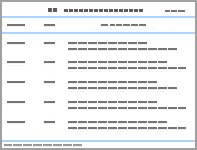
表1
PICO架构"
| 人群(Population) | 干预 (Intervention) | 比较(Comparison) | 结局(Outcome) |
|---|---|---|---|
| 唐氏综合征儿童与青少年 核心特征:经核型分析(如21-三体、易位型、嵌合型)或依据公认的临床诊断标准明确诊断为唐氏综合征的个体 年龄3~19岁 | 任何形式的规律身体活动 干预形式:有氧运动、抗阻运动、振动运动、虚拟现实训练、联合运动 干预方案:干预周期、干预频率、单次干预时长 | 与对照组比较 不同干预周期、频率、时长比较 不同运动方式比较 | 身体成分 腰围、BMI、体脂率、脂肪量、瘦体重 平衡功能 静态平衡、动态平衡、功能平衡 粗大运动技能 力量和敏捷性、位移技能、物体操控技能 下肢肌肉力量 膝屈肌、膝伸肌、髋屈肌、髋伸肌、髋关节外展肌、踝关节跖屈肌 |
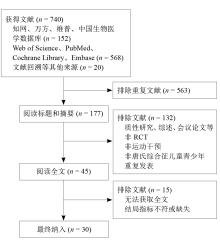
图1
文献筛选流程图"

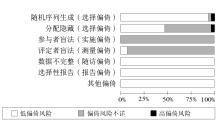
图2
偏倚风险比例"

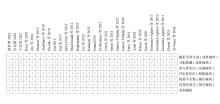
图3
纳入文献偏倚评估"

表2
纳入文献基本特征"
| 纳入文献 | 国家 | 年龄/岁 | n | 对照措施 | 干预措施 | 运动类型 | 周期 | 频率/周-1 | 时间/min | 结局 指标 | 文献质量评分 | |
|---|---|---|---|---|---|---|---|---|---|---|---|---|
| T(女) | C(女) | |||||||||||
| Cherni等[ | 突尼斯 | 14.4±1.30 | 15 | 10 | 日常生活 | 太极 | ① | 6周 | 3 | 45 | A、B | |
| Suarez-Villadat等[ | 西班牙 | 16~17 | 21(6) | 16(7) | 日常生活 | 足球 | ① | 21周 | 3 | 90 | A、B | |
| Al-Nemr等[ | 埃及 | 8~10 | 20 | 20 | 物理治疗 | 普拉提 | ② | 12周 | 3 | 45 | B、C | |
| Kilany 等[ | 埃及 | 8.5±1.7 | 50 | 50 | 饮食调整 | 跑步 | ① | 12周 | 3 | 45 | A | |
| Azab等[ | 埃及 | 7~9 | 16 | 15 | 物理治疗 | 蹦床 | ① | 12周 | 2 | 15 | B、D | |
| Raghupathy等[ | 印度 | 6~10 | 18 | 18 | 神经肌肉 | 舞蹈 | ① | 6周 | 3 | 60 | B、D | |
| Naczk等[ | 波兰 | 约14 | 11 | 11 | 日常生活 | 游泳 | ① | 33周 | 3 | 70~90 | A | |
| Suarez-Villadat等[ | 西班牙 | 12~15 | 15(7) | 30(13) | 日常生活 | 游泳 | ① | 36周 | 3 | 50 | A | |
| Alsakhawi等[ | 埃及 | 4~6 | 15 | 15 | 传统物理治疗 | 跑步 | ① | 8周 | 3 | 30 | B | |
| Alsakhawi等[ | 埃及 | 4~6 | 15 | 15 | 传统物理治疗 | 核心稳定训练 | ② | 8周 | 3 | 30 | B | |
| Eid [ | 埃及 | 8~10 | 15(6) | 15(7) | 传统物理治疗 | 振动训练 | ③ | 24周 | 3 | 15~20 | B、D | |
| Seron等[ | 巴西 | 15.5±2.7 | 16(5) | 10(6) | 日常生活 | 有氧运动 | ① | 12周 | 3 | 50 | A | |
| Seron等[ | 巴西 | 15.5±2.7 | 15(5) | 10(6) | 日常生活 | 抗阻训练 | ② | 12周 | 2 | 50 | A | |
| Ferry等[ | 罗马尼亚 | 13~19 | 20(10) | 22(8) | 日常生活 | 体能训练 | ⑤ | 48周 | 2 | 60 | A | |
| González-Agüero等[ | 西班牙 | 12~18 | 11(3) | 13(4) | 日常生活 | 振动训练 | ③ | 20周 | 3 | 15~20 | A | |
| Lin等[ | 中国 | 13~18 | 46 | 46 | 日常生活 | 跑步机和VR | ⑤ | 6周 | 3 | 25 | A、D、C | |
| González-Agüero等[ | 西班牙 | 10~19 | 13(7) | 14(5) | 日常生活 | 抗阻训练 | ② | 21周 | 2 | 20~30 | A | |
| MacDonald等[ | 美国 | 9~18 | 22 | 8 | 日常生活 | 自行车 | ① | 5 d | 75 | D、B | ||
| El-Meniawy等[ | 埃及 | 9.34±0.62 | 15 | 15 | 悬吊疗法 | 跑步机训练 | ① | 12周 | 3 | 20 | B | |
| González-Agüero等[ | 西班牙 | 10~19 | 13(7) | 14(5) | 日常生活 | 抗阻训练 | ② | 21周 | 2 | 20~30 | A | |
| Ulrich等[ | 美国 | 8~15 | 34 | 27 | 日常生活 | 自行车 | ① | 5 d | —— | 75 | A、D、B | |
| Eid等[ | 沙特阿拉伯 | 9~12 | 15 | 16 | 传统物理治疗 | 抗阻训练 | ② | 12周 | 3 | 15 | B | |
| Kakejani等[ | 伊朗 | 9~11 | 10 | 11 | 日常生活 | 体育游戏 | ⑤ | 12周 | 3 | 45 | C | |
| Álvareza等[ | 智利 | 6~12 | 9 | 7 | 日常生活 | 虚拟现实训练 | ④ | 5周 | 2 | 20 | C | |
| Kaya等[ | 土耳其 | 4~14 | 17 | 17 | 家庭锻炼计划 | 马术 | ① | 6周 | 1 | 30 | B | |
| Ghaeeni等[ | 塔吉克斯坦 | 8~13 | 8 | 8 | 日常生活 | 核心稳定训练 | ② | 8周 | 3 | 45~60 | B | |
| Ortiz-Ortiz等[ | 墨西哥 | 8~16 | 13 | 9 | 日常生活 | 抗阻训练 | ② | 16周 | 5 | 40~55 | A | |
| Emara [ | 埃及 | 10~12 | 15(7) | 15(6) | 传统物理治疗 | 振动训练 | ③ | 12周 | 3 | 9 | D | |
| Aly等[ | 埃及 | 6~10 | 15(4) | 15(5) | 传统物理治疗 | 核心稳定性训练 | ② | 8周 | 3 | 45~60 | B | |
| 于浩等[ | 中国 | 11~18 | 15 | 15 | 常规活动 | 虚拟现实训练 | ④ | 8周 | 3 | 40 | B、D | |
| 孙诗雅[ | 中国 | 5.80±1.40 | 11 | 11 | 传统物理治疗 | 康复踏车 | ① | 24周 | 1 | 30 | B、C | |
| 庞世博[ | 中国 | 9~15 | 10 | 10 | 常规活动 | 篮球 | ① | 10周 | 3 | 45 | C | |
表3
运动干预对唐氏综合征儿童青少年身体成分影响的Meta分析"
| 身体成分 | 文献数/n | 样本量/n | Meta结果 | 异质性检验结果 | ||||
|---|---|---|---|---|---|---|---|---|
| SMD | 95%CI | P值 | I2值/% | 效应模型 | P值 | |||
| 腰围 | 4 | 133 | -0.439 | -0.796~-0.082 | 0.016 | 8.5 | 固定 | 0.350 |
| BMI | 14 | 575 | -0.463 | -0.671~-0.254 | < 0.001 | 29.1 | 固定 | 0.145 |
| 体脂率 | 7 | 258 | -0.453 | -0.706~-0.200 | < 0.001 | 0.0 | 固定 | 0.507 |
| 脂肪量 | 3 | 78 | -1.221 | -1.730~-0.712 | < 0.001 | 30.4 | 固定 | 0.238 |
| 瘦体重 | 3 | 73 | 1.071 | 0.320~1.822 | 0.005 | 57.8 | 随机 | 0.093 |
表4
运动干预对唐氏综合征儿童青少年平衡功能影响的Meta分析"
| 平衡功能 | 文献数/n | 样本量/n | Meta结果 | 异质性检验结果 | |||||
|---|---|---|---|---|---|---|---|---|---|
| SMD | 95%CI | P值 | I2值/% | 效应模型 | P值 | ||||
| 静态平衡 | 4 | 193 | 0.913 | 0.243~1.582 | 0.008 | 75.5 | 随机 | 0.003 | |
| 动态平衡 | 前后稳定性 | 6 | 192 | -1.388 | -1.976~-0.800 | < 0.001 | 69.8 | 随机 | 0.005 |
| 内外侧稳定性 | 6 | 192 | -1.492 | -1.819~-1.166 | < 0.001 | 45.7 | 固定 | 0.101 | |
| 总体稳定性 | 6 | 192 | -1.631 | -1.964~-1.297 | < 0.001 | 43.5 | 固定 | 0.115 | |
| 功能平衡 | 6 | 182 | 1.272 | 0.304~2.239 | 0.010 | 87.9 | 随机 | < 0.001 | |
表5
运动干预对唐氏综合征儿童青少年粗大运动技能影响的Meta分析"
| 运动技能 | 文献数/n | 样本量/n | Meta结果 | 异质性检验结果 | ||||
|---|---|---|---|---|---|---|---|---|
| SMD | 95%CI | P值 | I2值/% | 效应模型 | P值 | |||
| 力量和敏捷性 | 3 | 169 | 1.326 | 0.259~2.393 | 0.015 | 88.2 | 随机 | < 0.001 |
| 位移技能 | 4 | 93 | 1.210 | 0.763~1.658 | < 0.001 | 0.0 | 固定 | 0.721 |
| 物体操控技能 | 4 | 93 | 1.356 | 0.618~2.094 | < 0.001 | 58.0 | 随机 | 0.068 |
| 综合评分 | 5 | 134 | 0.986 | 0.622~1.350 | < 0.001 | 21.4 | 固定 | 0.275 |
表6
运动干预对唐氏综合征儿童青少年下肢肌肉力量影响的Meta分析"
| 肌肉力量 | 文献数/n | 样本量/n | Meta结果 | 异质性检验结果 | ||||
|---|---|---|---|---|---|---|---|---|
| SMD | 95%CI | P值 | I2值/% | 效应模型 | P值 | |||
| 膝屈肌 | 7 | 395 | 0.901 | 0.572~1.231 | < 0.001 | 54.4 | 随机 | 0.025 |
| 膝伸肌 | 7 | 395 | 0.821 | 0.610~1.032 | < 0.001 | 37.5 | 固定 | 0.119 |
| 髋屈肌 | 4 | 183 | 0.807 | 0.503~1.112 | < 0.001 | 44.0 | 固定 | 0.147 |
| 髋伸肌 | 4 | 183 | 1.124 | 0.501~1.746 | < 0.001 | 69.5 | 随机 | 0.020 |
| 髋关节外展肌 | 4 | 183 | 0.826 | 0.522~1.131 | < 0.001 | 32.2 | 固定 | 0.219 |
| 踝关节跖屈肌 | 4 | 183 | 0.676 | 0.376~0.976 | < 0.001 | 0.0 | 固定 | 0.456 |
表7
运动干预对唐氏综合征儿童青少年BMI影响的亚组分析"
| 分组 | SMD | 95%CI | P值 | P交互值 | 异质性 | |
|---|---|---|---|---|---|---|
| I2值/% | P值 | |||||
| 干预形式 | ||||||
| 有氧运动 | -0.246 | -0.627~0.136 | 0.207 | 0.121 | 44.8 | 0.107 |
| 抗阻运动 | -0.734 | -0.819~-0.296 | < 0.001 | 0.0 | 0.383 | |
| 联合运动 | -0.558 | -1.100~-0.367 | < 0.001 | 0.0 | 0.940 | |
| 干预周期 | ||||||
| 4~12周 | -0.478 | -0.831~-0.125 | 0.008 | 0.028 | 54.5 | 0.052 |
| 12~24周 | -0.634 | -0.980~-0.288 | < 0.001 | 0.0 | 0.995 | |
| 24~36周 | -0.237 | -1.309~0.836 | 0.666 | 75.1 | 0.045 | |
| 干预频率 | ||||||
| 每周1~2次 | -0.635 | -0.972~-0.298 | < 0.001 | 0.553 | 0.0 | 0.717 |
| 每周3~4次 | -0.480 | -0.756~-0.203 | 0.001 | 31.1 | 0.191 | |
| 单次干预时间 | ||||||
| 0~30 min | -0.744 | -1.056~-0.433 | < 0.001 | 0.006 | 0.0 | 0.094 |
| 30~60 min | -0.378 | -0.699~-0.056 | 0.021 | 32.8 | 0.190 | |
| > 60 min | -0.354 | -0.846~0.139 | 0.159 | 48.6 | 0.120 | |
表8
运动干预对唐氏综合征儿童青少年体脂率影响的亚组分析"
| 分组 | SMD | 95%CI | Z值 | P值 | P交互值 | 异质性 | |
|---|---|---|---|---|---|---|---|
| I2值/% | P值 | ||||||
| 干预周期 | |||||||
| 4~12周 | -0.555 | -0.946~-0.164 | 2.78 | 0.008 | 0.478 | 2.1 | 0.360 |
| 24~36周 | -0.698 | -1.211~-0.185 | 2.67 | 0.005 | 0.0 | 0.764 | |
| 干预频率 | |||||||
| 每周1~2次 | -0.546 | -1.554~0.462 | 1.06 | 0.288 | 0.891 | 72.9 | 0.055 |
| 每周3~4次 | -0.504 | -0.864~-0.144 | 2.74 | 0.006 | 0.0 | 0.696 | |
| 单次干预时间 | |||||||
| 30~60 min | -0.517 | -0.926~-0.107 | 2.47 | 0.013 | 0.735 | 24.8 | 0.263 |
| > 60 min | -0.404 | -0.769~-0.039 | 2.17 | 0.030 | 0.0 | 0.557 | |
表9
运动干预对唐氏综合征儿童青少年静态平衡影响的亚组分析"
| 分组 | SMD | 95%CI | Z值 | P值 | P交互值 | 异质性 | |
|---|---|---|---|---|---|---|---|
| I2值/% | P值 | ||||||
| 单次干预时间 | |||||||
| 30~60 min | 1.974 | 1.203~2.745 | 5.02 | < 0.001 | 0.031 | 0.0 | 0.401 |
| > 60 min | 0.337 | 0.008~0.667 | 2.01 | 0.045 | 0.0 | 0.618 | |
表10
运动干预对唐氏综合征儿童青少年动态平衡影响的亚组分析"
| 分组 | SMD | 95%CI | Z值 | P值 | P交互值 | 异质性 | |
|---|---|---|---|---|---|---|---|
| I2值/% | P值 | ||||||
| 干预形式 | |||||||
| 有氧运动 | -1.874 | -2.475~-1.218 | 5.76 | < 0.001 | 0.763 | 87.5 | 0.005 |
| 抗阻运动 | -1.598 | -2.050~-1.147 | 6.94 | < 0.001 | 0.0 | 0.993 | |
| 单次干预时间 | |||||||
| 0~30 min | -1.674 | -2.070~-1.225 | 7.64 | < 0.001 | 0.840 | 66.0 | 0.032 |
| 30~60 min | -1.603 | -2.146~-1.061 | 5.79 | < 0.001 | 0.0 | 0.908 | |
表11
运动干预对唐氏综合征儿童青少年功能平衡影响的亚组分析"
| 分组 | SMD | 95%CI | Z值 | P值 | P交互值 | 异质性 | |
|---|---|---|---|---|---|---|---|
| I2值/% | P值 | ||||||
| 干预频率 | |||||||
| 每周1~2次 | 0.685 | 0.144~1.225 | 2.48 | 0.013 | 0.447 | 0.0 | 0.567 |
| 每周3~4次 | 1.604 | 0.083~3.125 | 3.07 | 0.039 | 92.1 | < 0.001 | |
| 单次干预时间 | |||||||
| 0~30 min | 1.553 | 0.498~2.609 | 2.89 | 0.004 | 0.488 | 83.2 | < 0.001 |
| 30~60 min | 0.716 | -1.622~3.054 | 0.60 | 0.548 | 94.7 | < 0.001 | |
表12
运动干预对唐氏综合征儿童青少年粗大运动技能影响的亚组分析"
| 分组 | SMD | 95%CI | Z值 | P值 | P交互值 | 异质性 | |
|---|---|---|---|---|---|---|---|
| I2值/% | P值 | ||||||
| 干预频率 | |||||||
| 每周1~2次 | 0.650 | -0.011~1.312 | 1.93 | 0.054 | 0.374 | 4.1 | 0.307 |
| 每周3~4次 | 1.132 | 0.696~1.568 | 5.09 | < 0.001 | 23.9 | 0.269 | |
| 单次干预时间 | |||||||
| 30~60 min | 0.650 | -0.011~1.312 | 1.93 | 0.054 | 0.374 | 4.1 | 0.307 |
| > 60 min | 1.132 | 0.696~1.568 | 5.09 | < 0.001 | 23.9 | 0.269 | |
表13
运动干预对唐氏综合征儿童青少年粗大膝屈肌肌肉力量影响的亚组分析"
| 分组 | SMD | 95%CI | Z值 | P值 | P交互值 | 异质性 | |
|---|---|---|---|---|---|---|---|
| I2值/% | P值 | ||||||
| 干预形式 | |||||||
| 有氧运动 | 0.641 | 0.354~0.927 | 4.38 | < 0.001 | 0.004 | 31.1 | 0.214 |
| 振动运动 | 0.933 | 0.397~1.468 | 3.41 | 0.001 | 0.0 | 0.574 | |
| 单次干预时间 | |||||||
| 0~30 min | 0.844 | 0.541~1.147 | 5.45 | < 0.001 | 0.044 | 0.0 | 0.894 |
| > 60 min | 0.591 | 0.280~0.902 | 3.73 | < 0.001 | 41.7 | 0.161 | |
表14
运动干预对唐氏综合征儿童青少年粗大膝伸肌肌肉力量影响的亚组分析"
| 分组 | SMD | 95%CI | Z值 | P值 | P交互值 | 异质性 | |
|---|---|---|---|---|---|---|---|
| I2值/% | P值 | ||||||
| 干预形式 | |||||||
| 有氧运动 | 0.729 | 0.439~1.109 | 4.93 | < 0.001 | 0.460 | 53.3 | 0.073 |
| 振动运动 | 1.135 | 0.586~1.684 | 4.05 | < 0.001 | 0.0 | 0.573 | |
| 单次干预时间 | |||||||
| 0~30 min | 0.874 | 0.569~1.179 | 5.62 | < 0.001 | 0.644 | 0.0 | 0.540 |
| > 60 min | 0.679 | 0.366~0.993 | 4.24 | < 0.001 | 62.1 | 0.048 | |
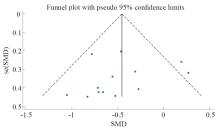
图4
纳入文献发表偏倚评价"

| [1] |
EID M A. Effect of whole-body vibration training on standing balance and muscle strength in children with Down syndrome[J]. Am J Phys Med Rehabil, 2015, 94(8): 633-643.
doi: 10.1097/PHM.0000000000000224 |
| [2] | 于浩, 杨晓东, 王疆娜, 等. 虚拟现实训练对唐氏综合征青少年平衡和下肢肌力的影响[J]. 中国康复医学杂志, 2023, 38(2): 237-240. |
| [3] | AZAB A R, MAFMOUD W S, BASHA M A, et al. Distinct effects of trampoline-based stretch-shortening cycle exercises on muscle strength and postural control in children with Down syndrome: a randomized controlled study[J]. Eur Rev Med Pharmacol Sci, 2022, 26(6): 1952-1962. |
| [4] |
SUAREZ-VILLADAT B, LUNA-OLIVA L, ACEBES C, et al. The effect of swimming program on body composition levels in adolescents with Down syndrome[J]. Res Dev Disabil, 2020, 102: 103643.
doi: 10.1016/j.ridd.2020.103643 |
| [5] |
IGLESIAS‐DÍAZ L, LÓPEZ‐ORTIZ S, GARCÍA‐CHICO C, et al. Lifting limits: the impact of strength training in down syndrome: a systematic review and meta-analysis[J]. J Intellect Disabil Res, 2025, 69(9): 781-794.
doi: 10.1111/jir.v69.9 |
| [6] |
YAMANAKA E, INAYAMA T, OHKAWARA K, et al. The association between obesity and sedentary behavior or daily physical activity among children with Down's syndrome aged 7-12 years in Japan: a cross-sectional study[J]. Heliyon, 2020, 6(9): e04861.
doi: 10.1016/j.heliyon.2020.e04861 |
| [7] |
PÉREZ C A, CARRAL J M C, COSTAS A Á, et al. Water-based exercise for adults with Down syndrome: findings from a preliminary study[J]. Int J Ther Rehabil, 2018, 25(1): 20-28.
doi: 10.12968/ijtr.2018.25.1.20 |
| [8] | SUAREZ-VILLADAT B, VEIGA O L, VILLAGRA A, et al. Changes in body composition and physical fitness in adolescents with Down syndrome: The UP & DOWN Longitudinal study[J]. Child Obes, 2019, 15(6): 397-405. |
| [9] | CHERNI A, OUERGHI N, JEBABLI N, et al. A Tai Chi program improves physical performance measures in adolescents with Down syndrome and enhances their parents' psychological well-being: a randomized controlled trial[J]. Adapt Phys Activ Q, 2025, 42(2): 228-246. |
| [10] | SUAREZ-VILLADAT B, CORREDEIRA R, VEIGA M, et al. Psychosocial behavior, motor learning, and health-related physical fitness in young people with Down syndrome: development of an adapted soccer program[J]. Int J Dev Disabil, 2025. DOI: 10.1080/20473869.2025.2462913 |
| [11] |
AL-NEMR A, REFFAT S. Effect of Pilates exercises on balance and gross motor coordination in children with Down syndrome[J]. Acta Neurol Belg, 2024, 124(5): 1499-1505.
doi: 10.1007/s13760-024-02517-w |
| [12] |
KILANY A, ELHADIDY M E, GANEM M M F, et al. Diet and physical activity modification: impact on adaptive behavior and biochemical measures of children with Down syndrome[J]. Int J Dev Disabil, 2024, 70(6): 1082-1091.
doi: 10.1080/20473869.2024.2383807 pmid: 39564196 |
| [13] |
RAGHUPATHY M K, DIVYA M, KARTHIKBABU S. Effects of traditional Indian dance on motor skills and balance in children with Down syndrome[J]. J Mot Behav, 2022, 54(2): 212-221.
doi: 10.1080/00222895.2021.1941736 |
| [14] |
NACZK A, GAJEWSKA E, NACZK M. Effectiveness of swimming program in adolescents with Down syndrome[J]. Int J Environ Res Public Health, 2021, 18(14): 7441.
doi: 10.3390/ijerph18147441 |
| [15] |
ALSAKHAWI R S, ELSHAFEY M A. Effect of core stability exercises and treadmill training on balance in children with Down syndrome: randomized controlled trial[J]. Adv Ther, 2019, 36(9): 2364-2373.
doi: 10.1007/s12325-019-01024-2 pmid: 31301057 |
| [16] |
SERON B B, SILVA R A C, GREGUOL M. Effects of two programs of exercise on body composition of adolescents with Down syndrome[J]. Rev Paul Pediatr, 2014, 32(1): 92-98.
doi: 10.1590/S0103-05822014000100015 |
| [17] |
FERRY B, GAVRIS M, TIFREA C, et al. The bone tissue of children and adolescents with Down syndrome is sensitive to mechanical stress in certain skeletal locations: a 1-year physical training program study[J]. Res Dev Disabil, 2014, 35(9): 2077-2084.
doi: 10.1016/j.ridd.2014.05.004 pmid: 24878629 |
| [18] |
GONZÁLEZ-AGÜERO A, MATUTE-LLORENTE A, GÓMEZ-CABELLO A, et al. Effects of whole body vibration training on body composition in adolescents with Down syndrome[J]. Res Dev Disabil, 2013, 34(5): 1426-1433.
doi: 10.1016/j.ridd.2013.01.023 |
| [19] |
LIN H C, WUANG Y P. Strength and agility training in adolescents with Down syndrome: a randomized controlled trial[J]. Res Dev Disabil, 2012, 33(6): 2236-2244.
doi: 10.1016/j.ridd.2012.06.017 |
| [20] |
GONZÁLEZ‐AGÜERO A, VICENTE‐RODRÍGUEZ G, GÓMEZ‐CABELLO A, et al. A 21‐week bone deposition promoting exercise programme increases bone mass in young people with Down syndrome[J]. Dev Med Child Neurol, 2012, 54(6): 552-556.
doi: 10.1111/dmcn.2012.54.issue-6 |
| [21] |
MACDONALD M, ESPOSITO P, HAUCK J, et al. Bicycle training for youth with Down syndrome and autism spectrum disorders[J]. Focus Autism Other Dev Disabl, 2012, 27(1): 12-21.
doi: 10.1177/1088357611428333 |
| [22] |
EL-MENIAWY G H, KAMAL H M, ELSHEMY S A. Role of treadmill training versus suspension therapy on balance in children with Down syndrome[J]. Egypt J Med Hum Genet, 2012, 13(1): 37-43.
doi: 10.1016/j.ejmhg.2011.10.001 |
| [23] |
GONZÁLEZ-AGÜERO A, VICENTE-RODRÍGUEZ G, GÓMEZ-CABELLO A, et al. A combined training intervention programme increases lean mass in youths with Down syndrome[J]. Res Dev Disabil, 2011, 32(6): 2383-2388.
doi: 10.1016/j.ridd.2011.07.024 |
| [24] |
ULRICH D A, BURGHARDT A R, LLOYD M, et al. Physical activity benefits of learning to ride a two-wheel bicycle for children with Down syndrome: a randomized trial[J]. Phys Ther, 2011, 91(10): 1463-1477.
doi: 10.2522/ptj.20110061 pmid: 21852519 |
| [25] | EID M A, ALY S M, HUNEIF M A, et al. Effect of isokinetic training on muscle strength and postural balance in children with Down's syndrome[J]. Int J Disabil Dev Educ, 2017, 40(2): 127-133. |
| [26] |
KAKEJANI H, FARSI A, ABDOLI B, et al. The game-based training improves fundamental movement skills in children with Down syndrome[J]. Int J Disabil Dev Educ, 2025, 72(1): 77-91.
doi: 10.1080/1034912X.2024.2344007 |
| [27] | ÁLVAREZA N G, MORTECINOSB A V, RODRÍGUEZB V Z, et al. Effect of an intervention based on virtual reality on motor development and postural control in children with Down syndrome[J]. Rev Chil Pediatr, 2018, 89(6): 747-752. |
| [28] |
KAYA Y, SAKA S, TUNCER D. Effect of hippotherapy on balance, functional mobility, and functional independence in children with Down syndrome: randomized controlled trial[J]. Eur J Pediatr, 2023, 182(7): 3147-3155.
doi: 10.1007/s00431-023-04959-5 pmid: 37186034 |
| [29] | GHAEENI S, BAHARI Z, KHAZAEI A A. Effect of core stability training on static balance of the children with Down syndrome[J]. Phys Treat Specif Phys Ther J, 2015, 5(1): 49-54. |
| [30] | ORTIZ-ORTIZ M, TERRAZAS-ORDORICA K I, CANO-RODRÍGUEZ L E, et al. Effect of an intensive physical conditioning program on body composition and isometric strength in children with Down syndrome[J]. J Phys Educ Sport, 2019, 19: 897-902. |
| [31] | EMARA H A. Effects of whole body vibration on body composition and muscle strength of children with Down syndrome[J]. Int J Ther Rehabil Res, 2016, 5(4): 1. |
| [32] | ALY S M, ABONOUR A A. Effect of core stability exercise on postural stability in children with Down syndrome[J]. Health Sci, 2016, 5(10): 213-222. |
| [33] | 孙诗雅. 探究康复踏车训练对唐氏综合征儿童相关运动功能的影响[J]. 中国科技期刊数据库医药, 2024(10): 0107-0111. |
| SUN S Y. Exploring the effect of rehabilitation bicycle training on related motor functions in children with Down's syndrome[J]. Chin Sci Tech Periodicals Database Med, 2024(10): 0107-0111. | |
| [34] | 庞世博. 小篮球干预对唐氏综合征儿童体适能与基本动作技能的影响[D]. 海口: 海南师范大学, 2023. |
| PANG S B. Effects of a mini-basketball intervention on physical fitness and fundamental motor skills in children with Down syndrome[D]. Haikou: Hainan Normal University, 2023. | |
| [35] |
CAI W, BAEK S S. Effects of 24‐week basketball programme on body composition and functional fitness on adults with Down syndrome[J]. J Intellect Disabil Res, 2022, 66(12): 939-951.
doi: 10.1111/jir.v66.12 |
| [36] |
MARTÍNEZ-ESPINOSA R M, MOLINA VILA M D, REIG GARCIA-GALBIS M. Evidences from clinical trials in Down syndrome: diet, exercise and body composition[J]. Int J Environ Res Public Health, 2020, 17(12): 4294.
doi: 10.3390/ijerph17124294 |
| [37] |
PTOMEY L T, WILLIS E A, SHERMAN J R, et al. Exploring the effectiveness of an 18‐month weight management intervention in adults with Down syndrome using propensity score matching[J]. J Intellect Disabil Res, 2020, 64(3): 221-233.
doi: 10.1111/jir.v64.3 |
| [38] |
MAIANO C, HUE O, LEPAGE G, et al. Do exercise interventions improve balance for children and adolescents with Down syndrome? A systematic review[J]. Phys Ther, 2019, 99(5): 507-518.
doi: 10.1093/ptj/pzz012 pmid: 31089706 |
| [39] |
CAPIO C M, MAK T C T, TSE M A, et al. Fundamental movement skills and balance of children with Down syndrome[J]. J Intellect Disabil Res, 2018, 62(3): 225-236.
doi: 10.1111/jir.v62.3 |
| [40] |
MATUTE-LLORENTE A, GONZÁLEZ-AGÜERO A, GÓMEZ-CABELLO A, et al. Effect of whole body vibration training on bone mineral density and bone quality in adolescents with Down syndrome: a randomized controlled trial[J]. Osteoporos Int, 2015, 26(10): 2449-2459.
doi: 10.1007/s00198-015-3159-1 |
| [41] |
SHERMAN S R, JACKSON R, LIMA N S, et al. Blunted exercise pressor response to isometric knee extension and post-exercise ischemia in individuals with Down syndrome[J]. Med Sci Sports Exerc, 2025, 57(4): 876-883.
doi: 10.1249/MSS.0000000000003619 |
| [1] | 魏婧怡, 王潇婧, 王冉, 卫晨, 马赛, 刘西花. 针刺同步言语训练对卒中后运动性失语患者的效果[J]. 《中国康复理论与实践》, 2025, 31(9): 1000-1008. |
| [2] | 高云汉, 侯闪闪, 汪鑫煜, 朱崇田. 基于功能性近红外光谱探讨脑机接口对脑卒中患者上肢运动功能障碍的效果[J]. 《中国康复理论与实践》, 2025, 31(9): 1066-1073. |
| [3] | 苏本跃, 刘文瑶, 宗文杰, 王保乾, 盛敏. 基于自适应时序对齐的智能下肢假肢运动意图识别[J]. 《中国康复理论与实践》, 2025, 31(9): 1101-1115. |
| [4] | 杨同念, 任杰, 肖辉. 儿童青少年身体活动对焦虑的效果:系统综述的系统综述[J]. 《中国康复理论与实践》, 2025, 31(8): 883-888. |
| [5] | 叶绿, 陈悦琳, 刘雨霏. 儿童身体活动与脑健康的认知神经科学研究技术范式与进展:Scoping综述[J]. 《中国康复理论与实践》, 2025, 31(8): 889-895. |
| [6] | 王晓锋, 胡梦巧, 汪嫣, 魏坤, 徐文竹, 任丹, 马晔. 外骨骼机器人辅助步态训练对脑卒中和脊髓损伤下肢功能康复效果的系统综述[J]. 《中国康复理论与实践》, 2025, 31(8): 914-921. |
| [7] | 吕雪琴, 张通, 刘惠林, 刘建华, 李达, 王华伟. 术前运动对脑室-腹腔分流术患者的效果[J]. 《中国康复理论与实践》, 2025, 31(8): 958-964. |
| [8] | 杜雯倩, 张旭, 陈继伟, 王兴, 朱昆. 运动干预对帕金森病冻结步态效果的Meta分析[J]. 《中国康复理论与实践》, 2025, 31(7): 781-789. |
| [9] | 孙婉婷, 艾丽皮乃·亚森, 龚翔, 肖悦, 甘兆丹, 刘铭洁, 曾兰婷, 马姝玥, 鲁俊, 许光旭. 基于运动序列学习探讨高频重复经颅磁刺激对脑卒中患者上肢功能的效果[J]. 《中国康复理论与实践》, 2025, 31(7): 812-821. |
| [10] | 唐丽, 戈晓珍, 刘杰, 张焱, 王金荣, 左雪冰, 王国栋. 冠状动脉临界病变患者心肺能力与运动后心率恢复的相关性[J]. 《中国康复理论与实践》, 2025, 31(7): 838-845. |
| [11] | 蔡勇刚, 张腾, 刘天钦, 王建芬, 高晓慧, 杜晓新. 听力障碍儿童认知抑制特征分析[J]. 《中国康复理论与实践》, 2025, 31(7): 853-861. |
| [12] | 邵雪云. 肥胖儿童身体活动与功能和心理-行为健康:政策架构与健康行为干预模式[J]. 《中国康复理论与实践》, 2025, 31(6): 642-649. |
| [13] | 武砀, 张青, 吴佳洺, 贾文蓉, 武爱红, 武剑. 融合教育背景下特殊需要儿童参与身体活动的支持保障系统研究[J]. 《中国康复理论与实践》, 2025, 31(6): 650-657. |
| [14] | 刘璇, 高玲, 褚凤明, 陈杰, 张明. 脑机接口联合上肢康复机器人对脑卒中患者上肢功能的影响[J]. 《中国康复理论与实践》, 2025, 31(6): 703-710. |
| [15] | 周天添, 张通, 张琦, 梁艳华, 张燕庆, 岳青, 李思佳. Lokomat机器人辅助步行训练对偏瘫儿童下肢运动功能的效果[J]. 《中国康复理论与实践》, 2025, 31(6): 711-720. |
| 阅读次数 | ||||||
|
全文 |
|
|||||
|
摘要 |
|
|||||
|
||
