



《中国康复理论与实践》 ›› 2025, Vol. 31 ›› Issue (12): 1478-1488.doi: 10.3969/j.issn.1006-9771.2025.12.013
• 应用研究 • 上一篇
王丽莎, 袁子文, 蔡昂, 杨博, 姚烨, 闫晓婷, 乔晋( )
)
收稿日期:2025-01-13
修回日期:2025-10-16
出版日期:2025-12-25
发布日期:2025-12-29
通讯作者:
乔晋
E-mail:qiaojn123@163.com
作者简介:王丽莎(1989-),女,汉族,陕西西安市人,硕士,主治医师、讲师,主要研究方向:中西医结合康复、肿瘤康复。
基金资助:
WANG Lisha, YUAN Ziwen, CAI Ang, YANG Bo, YAO Ye, YAN Xiaoting, QIAO Jin()
Received:2025-01-13
Revised:2025-10-16
Published:2025-12-25
Online:2025-12-29
Contact:
QIAO Jin
E-mail:qiaojn123@163.com
Supported by:摘要:
目的 探讨康复科从服务付费(FFS)支付方式转变为疾病诊断相关分组(DRG)支付后的费用及结构变化情况。
方法 收集2018年5月至2024年5月西安交通大学第一附属医院康复科患者病案首页信息,共16 827例,分析康复患者住院费用的影响因素。
结果 患者总治疗费占比超过50%,中医治疗和西医治疗费用占比基本持平。中药药品费用占比小幅上升,西药占比逐年下降,总药品(中药加西药)占比从2018年18.2%持续下降至2024年9.2%。在16 827例患者中,并发有高血压的人次最多,占51.94%;功能障碍分类中,运动障碍患者占比最大,占59.14%;病种分类中脑卒中患者人数最多,占49.44%。不同年度下各病种日均住院费用从2023年(实行DRG支付方式)开始明显下降,且2024年最低。不同年度各病种住院人次可见主要病种还是脑卒中,除6大常见病种外的“其他病种”人次逐年递增。影响康复患者康复治疗费的主要因素为住院天数(β = 0.66)和病种(β = -0.43)。
结论 康复科患者住院总费明显下降,中医相关费用占比小幅度增长,总药占比持续下降,康复治疗费用占比稳步保持。DRG支付体系顺利过渡。
中图分类号:
王丽莎, 袁子文, 蔡昂, 杨博, 姚烨, 闫晓婷, 乔晋. 2018年至2024年康复科16 827例患者住院费用分析[J]. 《中国康复理论与实践》, 2025, 31(12): 1478-1488.
WANG Lisha, YUAN Ziwen, CAI Ang, YANG Bo, YAO Ye, YAN Xiaoting, QIAO Jin. Hospitalization costs of 16 827 patients in rehabilitation department from 2018 to 2024[J]. Chinese Journal of Rehabilitation Theory and Practice, 2025, 31(12): 1478-1488.
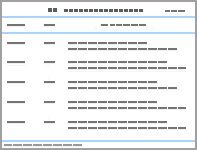
表1
次均住院费用及占比"
| 项目 | 详细项目 | 次均住院费用/元 | 费用均值/元 | 占比/% |
|---|---|---|---|---|
| 总费用 | 12377.75(9377.69, 17465.69) | 14574.92 | 100.00 | |
| 综合医疗服务费用 | 1537(1134, 2164) | 1924.46 | 13.20 | |
| 一般医疗服务费 | 980(720, 1330) | 1070.62 | 7.35 | |
| 一般治疗操作费 | 73(4, 399.8) | 380.69 | 2.61 | |
| 护理费 | 360(253, 515) | 473.14 | 3.25 | |
| 总诊断费用 | 1655.5(1010.5, 2586) | 2077.44 | 14.25 | |
| 实验诊断费 | 998.5(679.5, 1445.5) | 1220.14 | 8.37 | |
| 影像学诊断费 | 330(0, 870) | 564.06 | 3.87 | |
| 临床诊断项目费 | 34(30, 277) | 293.24 | 2.01 | |
| 治疗费用 | 6769(4155, 9653) | 7316.39 | 50.20 | |
| 西医治疗费 | 3121(1454, 5313) | 3757.90 | 25.78 | |
| 中医治疗费 | 3360(1793, 4818) | 3558.49 | 24.42 | |
| 中药费 | 39.05(0, 269.83) | 182.48 | 1.25 | |
| 中成药 | 0(0, 75) | 71.51 | 0.49 | |
| 草药 | 0(0, 102.49) | 110.97 | 0.76 | |
| 西药费 | 700.8(221.42, 2117.25) | 1917.98 | 13.16 | |
| 抗生素 | 0(0, 0) | 164.91 | 1.13 | |
| 其他药物 | 700.8(221.42, 2117.25) | 1753.07 | 12.03 | |
| 治疗用耗材 | 39(0, 447.84) | 417.37 | 2.86 | |
| 其他 | - | 738.8 | 5.07 |

图1
不同年份西医治疗费与中医治疗费占比趋势"

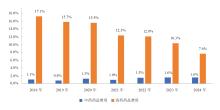
图2
不同年份西药费与中药费占比趋势"

表2
不同人口信息的人均住院费用和日均费用比较"
| 分组 | n | 人均住院费用 | 日均费用 | χ2值a | P值a | χ2值b | P值b | |
|---|---|---|---|---|---|---|---|---|
| 性别 | 男 | 10722 | 12900.28 (9752.51, 18507.99) | 918.63 (750.36, 1144.76) | 222.129 | < 0.001 | 34.488 | < 0.001 |
| 女 | 6105 | 11655.50 (8804.43, 15665.35) | 898.17 (731.79, 1098.46) | |||||
| 年龄 | < 18岁 | 152 | 12575.72 (8742.74, 16727.42) | 708.40 (553.92, 914.91) | 16.083 | 0.003 | 234.234 | < 0.001 |
| 18~40岁 | 2053 | 12855.93 (9075.78, 19045.05) | 872.12 (707.78, 1087.01) | |||||
| 40~60岁 | 5930 | 12349.04 (9362.17, 17586.65) | 895.57 (729.79, 1101.17) | |||||
| 60~80岁 | 6965 | 12276.73 (9421.50, 16769.39) | 927.42 (764.28, 1140.20) | |||||
| > 80岁 | 1727 | 12451.20 (9457.91, 18364.01) | 979.34 (780.76, 1262.61) | |||||
| 支付方式 | 居民医保 | 10435 | 11613.43 (8893.15, 14930.02) | 902.35 (739.04, 1110.58) | 1138.060 | < 0.001 | 55.029 | < 0.001 |
| 职工医保 | 3825 | 13517.29 (9934.94, 18805.59) | 905.98 (754.15, 1105.66) | |||||
| 其他 | 31 | 17888.51 (11764.11, 24607.03) | 972.11 (747.41, 1219.13) | |||||
| 自费 | 2536 | 17090.17 (9819.94, 23134.24) | 950.79 (723.95, 1218.11) | |||||
| 入院病情 | 一般 | 16236 | 12287.92 (9304.60, 17156.06) | 904.61 (739.64, 1109.60) | 233.792 | < 0.001 | 444.107 | < 0.001 |
| 重 | 472 | 19624.43 (11838.05, 30227.73) | 1408.65 (994.49, 1940.52) | |||||
| 危 | 97 | 15337.60 (10950.57, 27686.46) | 1211.21 (913.62, 2071.30) | |||||
| 急 | 22 | 12373.37 (10095.45, 24811.32) | 913.82 (717.27, 1337.35) | |||||
| 住院天数 | < 7 d | 5142 | 9129.65 (6314.85, 11607.69) | 977.94 (793.28, 1210.68) | 5784.982 | < 0.001 | 344.305 | < 0.001 |
| 7~14 d | 6466 | 12590.86 (10219.08, 15869.692) | 868.90 (727.92, 1052.22) | |||||
| 14~21 d | 4282 | 18074.84 (12865.16, 24158.94) | 905.54 (722.87, 1131.23) | |||||
| 21 d | 937 | 20433.78 (15966.16, 27582.815) | 912.49 (717.39, 1211.92) |
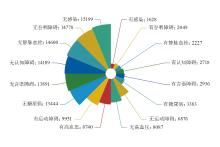
图3
不同并发症及功能障碍患者人数"

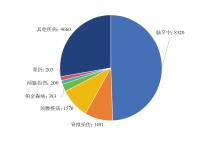
图4
不同病种患者人数"

表3
各年不同病种患者住院总费用均值"
| 年度 | 脑卒中(n = 8320) | 脊髓损伤(n = 1491) | 颈腰椎病(n = 1570) | 帕金森病(n = 383) | 颅脑损伤(n = 200) | 骨折(n = 203) |
|---|---|---|---|---|---|---|
| 2018 | 13912.53±9213.81 | 19632.55±10065.03 | 10147.33±3462.20 | 12917.92±11353.78 | 14453.94±5106.41 | 11654.43±5539.36 |
| 2019 | 15041.76±8360.39 | 22466.96±8683.95 | 9751.17±3382.46 | 12466.91±15715.16 | 16945.23±8420.92 | 14071.52±6014.58 |
| 2020 | 15047.99±8676.09 | 23139.98±9930.72 | 10348.28±3867.18 | 8984.43±5249.60 | 26975.71±23404.12 | 15041.13±12372.52 |
| 2021 | 14723.47±7250.47 | 22855.46±11710.77 | 9928.08±3779.58 | 9555.73±7397.83 | 20564.74±14825.50 | 14591.46±6779.92 |
| 2022 | 15070.92±6804.31 | 21132.30±10406.49 | 9755.62±4196.88 | 9054.11±6660.28 | 30257.32±24162.39 | 12756.33±10113.50 |
| 2023 | 14148.85±7609.79 | 19086.02±11257.62 | 8432.15±3464.41 | 8972.54±4925.76 | 19069.63±11041.43 | 11020.70±7279.84 |
| 2024 | 11181.88±4462.94 | 22293.74±65255.24 | 7508.31±2637.75 | 7091.09±2782.32 | 21061.22±3567.91 | 7280.41±5276.38 |
| F值 | 186.886 | 85.893 | 95.195 | 3.915 | 14.839 | 11.728 |
| P值 | < 0.001 | < 0.001 | < 0.001 | 0.688 | 0.022 | 0.048 |

图5
各年度不同病种患者人数占比趋势"

表4
影响康复费用的多元线性回归分析"
| 项目 | 非标准化系数 | 标准系数β | t值 | P值 | VIF | |
|---|---|---|---|---|---|---|
| B | SD | |||||
| (常量) | 127.40 | 3.31 | 38.55 | < 0.001 | ||
| 年度 | 0.58 | 0.23 | 0.02 | 2.57 | 0.010 | 1.21 |
| 性别 | -0.47 | 0.78 | 0.00 | -0.61 | 0.545 | 1.04 |
| 年龄分组 | -6.66 | 0.45 | -0.09 | -14.72 | < 0.001 | 1.14 |
| 患者来源 | 1.86 | 0.67 | 0.02 | 2.77 | 0.006 | 1.08 |
| 入院途径 | -0.60 | 1.39 | 0.00 | -0.43 | 0.664 | 1.02 |
| 入院天数 | 48.23 | 0.49 | 0.66 | 98.73 | < 0.001 | 1.37 |
| 入院病情 | -9.19 | 1.53 | -0.04 | -6.01 | < 0.001 | 1.05 |
| 支付方式 | 3.58 | 0.38 | 0.06 | 9.50 | < 0.001 | 1.18 |
| 病种 | -10.88 | 0.16 | -0.43 | -68.37 | < 0.001 | 1.25 |
| 高血压 | -1.21 | 0.79 | -0.01 | -1.52 | 0.128 | 1.16 |
| 糖尿病 | -3.47 | 0.96 | -0.02 | -3.62 | < 0.001 | 1.09 |
| 感染 | -0.54 | 1.33 | 0.00 | -0.41 | 0.683 | 1.14 |
| 使用抗生素 | -6.05 | 1.27 | -0.03 | -4.75 | < 0.001 | 1.14 |
| 静脉血栓 | 2.07 | 1.10 | 0.01 | 1.88 | 0.060 | 1.03 |
| 认知障碍 | 0.83 | 1.12 | 0.01 | 0.74 | 0.459 | 1.26 |
| 吞咽障碍 | 6.20 | 1.23 | 0.03 | 5.04 | < 0.001 | 1.19 |
| 言语障碍 | 2.07 | 1.06 | 0.01 | 1.94 | 0.052 | 1.20 |
| 运动障碍 | 6.23 | 0.79 | 0.05 | 7.92 | < 0.001 | 1.10 |
| [1] |
CIEZA A, KWAMIE A, MAGAQA Q, et al. Framing rehabilitation through health policy and systems research: priorities for strengthening rehabilitation[J]. Health Res Policy Syst, 2022, 20(1): 101.
doi: 10.1186/s12961-022-00903-5 |
| [2] | HTWE O, YULIAWIRATMAN B S, TANNOR A Y, et al. Barriers and facilitators for increased accessibility to quality rehabilitation services in low- and middle-income countries: a systematic review[J]. Eur J Phys Rehabil Med, 2024, 60(3): 514-522. |
| [3] |
BACHANI A M, BENTLEY J A, KAUTSAR H, et al. Suggesting global insights to local challenges: expanding financing of rehabilitation services in low and middle-income countries[J]. Front Rehabil Sci, 2024, 5: 1305033.
doi: 10.3389/fresc.2024.1305033 |
| [4] |
NEILL R, KAUTSAR H, TRUJILLO A. Is economic growth enough to propel rehabilitation expenditures? An empirical analysis of country panel data and policy implications[J]. BMC Public Health, 2024, 24(1): 1154.
doi: 10.1186/s12889-024-18601-y pmid: 38658878 |
| [5] | 陈勇, 贾晓倩, 牛雨婷, 等. DRG支付方式下分级诊疗现状与策略研究[J]. 中国医院, 2023, 27(10): 44-48. |
| CHEN Y, JIA X Q, NIU Y T, et al. Research on the current situation and strategies of the hierarchical medical system under the DRG payment mode[J]. Chin Hosp, 2023, 27(10): 44-48. | |
| [6] | 刘博, 李祥飞, 朱晓伟, 等. 基于间断时间序列分析的医院DRG付费改革成效评价研究[J]. 中国医院, 2024, 28(4): 2-5. |
| LIU B, LI X F, ZHU X W, et al. Evaluation study of the effectiveness of hospital DRG payment reform based on interrupted time series analysis[J]. Chin. Hosp, 2024, 28(4): 2-5. | |
| [7] |
WEI A, REN J, FENG W. The impact of DRG on resource consumption of inpatient with ischemic stroke[J]. Front Public Health, 2023, 11: 1213931.
doi: 10.3389/fpubh.2023.1213931 |
| [8] |
王娜, 李悦. 不同医疗卫生机构的基本医疗保险支付方式选择模式探究[J]. 卫生软科学, 2020, 34(2): 70-73.
doi: 10.3969/j.issn.1003-2800.2020.02.014 |
| [9] | 胡耀岭, 徐洋洋. 我国医疗保险支付政策多元博弈分析[J]. 江西社会科学, 2022, 42(9): 39-48. |
| [10] |
刘京宇, 杨延砚, 张元鸣飞, 等. 2022年度国家康复医疗服务与质量安全报告[J]. 中国康复理论与实践, 2024, 30(2): 125-140.
doi: 10.3969/j.issn.1006-9771.2024.02.001 |
| LIU J Y, YANG Y Y, ZHANG Y M F, et al. 2022 Country Report on Medical Rehabilitation Services, Quality and Safety in Health Care System[J]. Chin J Rehabil Theory Pract, 2024, 30(2): 125-140. | |
| [11] | 王青云. «中医药康复服务能力提升工程实施方案(2021-2025年)»印发[J]. 中医药管理杂志, 2021, 29(1): 134. |
| [12] | 况贞勇, 赵翔. 基本医疗保险下自付费用公平性研究[J]. 重庆社会科学, 2024(2): 101-115. |
| [13] | 施文凯, 朱坤. 中国医疗保障财政支出:现状、问题与对策[J]. 财政科学, 2022(10): 72-81. |
| SHI W K, ZHU K. Fiscal expenditure of medical security in china: status quo, problems and suggestions[J]. Fisc Sci, 2022, (10): 72-81. | |
| [14] |
王玉珠, 代涛. 基于卫生政策三角形理论的我国分级诊疗政策执行偏差及对策研究[J]. 卫生软科学, 2021, 35(5): 32-36.
doi: 10.3969/j.issn.1003-2800.2021.05.008 |
| WANG Y Z, DAI T. Study on implementation deviation and countermeasures of hierarchical diagnosis and treatment policy based on health policy triangle theory[J]. Soft Sci Health, 2021, 35(5): 32-36. | |
| [15] |
YANG G, ZHANG X, XU Z, et al. Social medical insurances, choices of medical institutions and the 'siphon effect' in the health service market: evidence from 2021 Yangtze River Delta Region of China[J]. Risk Manag Healthc Policy, 2024, 17: 1287-1299.
doi: 10.2147/RMHP.S458178 |
| [16] | 谢海梅, 公雪, 王云红, 等. DRG付费模式下评价及控制分解住院方法探索[J]. 中国卫生经济, 2024, 43(3): 72-77. |
| XIE H M, GONG X, WANG Y H, et al. An initial study of evaluating and controlling decomposed hospitalization under DRG payment[J]. Chin Health Econ, 2024, 43(3): 72-77. | |
| [17] | 李晶泉. 医联体视域下的分级诊疗制度建设研究:以浙江实践为蓝本[J]. 卫生经济研究, 2022, 39(5): 49-52. |
| LI J Q. Research on the construction of hierarchical medical system from the perspective of medical alliance: based on Zhejiang practice[J]. Health Econ Res, 2022, 39(5): 49-52. | |
| [18] | 罗斯, 章明兰. "国考"背景下公立医院运营分析开展与指标体系建立的研究[J]. 财经界, 2024(34): 51-53. |
| [19] | 丁玲丽, 李兰, 杜江波, 等. 基于国家三级公立医院绩效考核的全面预算管理研究[J]. 中国卫生质量管理, 2024, 31(7): 63-66. |
| DING L L, LI L, DU J C, et al. Comprehensive budget management based on performance appraisal of national tertiary public hospitals[J]. CHQM, 2024, 31(07): 63-66. | |
| [20] | 张元鸣飞, 张华, 杨延砚, 等. 2016—2020年我国综合医院康复医学科医疗服务与质量安全趋势分析:基于国家医疗质量管理与控制信息系统数据[J]. 中国康复医学杂志, 2023, 38(10): 1417-1421. |
| ZHANG Y M F, ZHANG H, YANG Y Y, et al. Analysis of trends in medical services and quality safety in rehabilitation medicine departments of general hospitals in China from 2016 to 2020: based on data from the National Medical Quality Management and Control Information System[J]. Chin J Rehabil Med, 2023, 38(10): 1417-1421. | |
| [21] |
张元鸣飞, 杨延砚, 张娜, 等. 2021年度国家康复医学专业医疗服务与质量安全报告[J]. 中国康复理论与实践, 2022, 28(12): 1365-1379.
doi: 10.3969/j.issn.1006-9771.2022.12.001 |
| ZHANG Y M F, YANG Y Y, ZHANG N, et al. 2021 National Report on Rehabilitation Medicine Services, Quality and Safety in Medical Care System[J]. Chin J Rehabil Theory Pract, 2022, 28(12): 1365-1379. | |
| [22] |
刘京宇, 杨延砚, 张元鸣飞, 等. 2023年度国家康复医学专业医疗服务与质量安全报告[J]. 中国康复理论与实践, 2025, 31(1): 1-20.
doi: 10.3969/j.issn.1006-9771.2025.01.001 |
| LIU J Y, YANG Y Y, ZHANG Y M F, et al. 2023 National Report on Rehabilitation Medicine Services, Quality and Safety in Medical Care System[J]. Chin J Rehabil Theory Pract, 2025, 31(01): 1-20. | |
| [23] | 吴妮, 周晓媛, 王寓凡. DRG付费下康复患者住院费用和住院天数的影响因素研究:基于双反应变量多水平模型[J]. 卫生经济研究, 2024, 41(6): 72-77. |
| WU N, ZHOU X Y, WANG Y F. Study on the influencing factors of hospitalization costs and hospitalization days of rehabilitation patients under DRG payment: based on two-response variable multilevel model[J]. Health Econ Res, 2024, 41(6): 72-77. | |
| [24] | LIU Y, WANG G, QIN T G, et al. Comparison of diagnosis-related groups (DRG)-based hospital payment system design and implementation strategies in different countries: the case of ischemic stroke[J]. Biosci Trends, 2024, 18(1): 1-10. |
| [25] |
TANG X, ZHANG X, CHEN Y, et al. Variations in the impact of the new case-based payment reform on medical costs, length of stay, and quality across different hospitals in China: an interrupted time series analysis[J]. BMC Health Serv Res, 2023, 23(1): 568.
doi: 10.1186/s12913-023-09553-x pmid: 37264450 |
| [26] | 任嘉宁, 冯文. 某市康复科住院患者再入院特征与规律研究[J]. 中国医院管理, 2023, 43(5): 45-48,76. |
| REN J N, FENG W. A study on the readmission characteristics and patterns of inpatients in rehabilitation department in a city[J]. Chin Hosp Manag, 2023, 43(05): 45-48, 76. | |
| [27] |
HILKENS N A, CASOLLA B, LEUNG T W, et al. Stroke[J]. Lancet, 2024, 403(10446): 2820-2836.
doi: 10.1016/S0140-6736(24)00642-1 pmid: 38759664 |
| [28] |
CAMPBELL B C V, DE SILVA D A, MACLEOD M R, et al. Ischaemic stroke[J]. Nat Rev Dis Primers, 2019, 5(1): 70.
doi: 10.1038/s41572-019-0118-8 pmid: 31601801 |
| [29] |
KWAKKEL G, STINEAR C, ESSERS B, et al. Motor rehabilitation after stroke: European Stroke Organisation (ESO) consensus-based definition and guiding framework[J]. Eur Stroke J, 2023, 8(4): 880-894.
doi: 10.1177/23969873231191304 |
| [30] | 燕铁斌. 推进国际功能、残疾和健康分类康复组合(ICF-RS)的临床应用及其功能等级转化研究[J]. 中国康复医学杂志, 2022, 37(10): 1297-1300. |
| [31] |
胡志活, 吴孟杰, 陈芷莹, 等. 基于ICF构建综合性职业康复服务流程:理论架构与方法[J]. 中国康复理论与实践, 2024, 30(12): 1383-1390.
doi: 10.3969/j.issn.1006-9771.2024.12.003 |
| HU Z H, WU M J, CHEN Z Y, et al. Reconstruction of comprehensive vocational rehabilitation service process based on ICF: conceptual framework and approaches[J]. Chin J Rehabil Theory Pract, 2024, 30(12): 1383-1390. | |
| [32] |
KINOSHITA S, ABO M, OKAMOTO T. Effectiveness of ICF-based multidisciplinary rehabilitation approach with serial assessment and discussion using the ICF rehabilitation set in a convalescent rehabilitation ward[J]. Int J Rehabil Res, 2020, 43(3): 255-260.
doi: 10.1097/MRR.0000000000000421 pmid: 32496283 |
| [1] | 蒋娜, 卫宁, 曾艳玲, 张倩, 益筱哲, 陈万强, 景玉珍, 寄婧, 郭旭升, 裴泓波, 王建云. 康复患者次均住院费用影响因素的分析:基于分位数回归模型[J]. 《中国康复理论与实践》, 2024, 30(4): 397-403. |
| [2] | 肖晓飞, 刘妤姝, 杨亚茹, 邱卓英. 世界卫生组织康复胜任力架构在康复科学教育体系和课程开发中的应用[J]. 《中国康复理论与实践》, 2023, 29(11): 1261-1267. |
| [3] | 王雪,张淑燕. 脑梗死患者住院费用结构分析:基于结构变动度和灰色关联法[J]. 《中国康复理论与实践》, 2020, 26(1): 115-119. |
| [4] | 李春艳;卢守四. 2008 年~2010 年神经康复科住院患者用药分析[J]. 《中国康复理论与实践》, 2011, 17(9): 882-883. |
| [5] | 陈庆华;代新年;单守勤;侯方高;胡西;尤阳. 疗养院康复科在“康复进社区”中发展模式的探讨[J]. 《中国康复理论与实践》, 2009, 15(10): 990-991. |
| [6] | 钱兴皋;许慧岚. 驻军医院康复科设立社区康复服务站的做法和体会[J]. 《中国康复理论与实践》, 2009, 15(04): 392-392. |
| [7] | 胡坚勇;徐琳峰 . 综合医院康复科建设的难点和对策 [J]. 《中国康复理论与实践》, 2004, 10(02): 127-128. |
| [8] | 刘永斌;丁海曙;张济川;金德闻;封锦华;王广志;丁辉 . 康复与康复工程 [J]. 《中国康复理论与实践》, 2000, 6(03): 126-130. |
| [9] | 陈燕;黄东锋 . 康复科护士的继续教育与考核初探 [J]. 《中国康复理论与实践》, 1999, 5(01): 45-45. |
| 阅读次数 | ||||||
|
全文 |
|
|||||
|
摘要 |
|
|||||
|
||
