



《中国康复理论与实践》 ›› 2020, Vol. 26 ›› Issue (2): 210-214.doi: 10.3969/j.issn.1006-9771.2020.02.012
张子华1,2,庞博1,赵盼超1,纪仲秋1( )
收稿日期:2019-09-12
修回日期:2019-10-27
出版日期:2020-02-25
发布日期:2020-03-19
通讯作者:
纪仲秋
E-mail:jizhongqiu61@bnu.edu.cn
作者简介:张子华(1983-),男,汉族,辽宁锦州市人,博士研究生,教授,主要研究方向:运动生物力学及老年平衡与跌倒。
ZHANG Zi-hua1,2,PANG Bo1,ZHAO Pan-chao1,JI Zhong-qiu1()
Received:2019-09-12
Revised:2019-10-27
Published:2020-02-25
Online:2020-03-19
Contact:
JI Zhong-qiu
E-mail:jizhongqiu61@bnu.edu.cn
摘要:
由三维步态分析设备测试得出的客观数据在实际评价时复杂且难以解释,为解决这一问题,步态指数随之提出。本文对目前临床最常见应用的步态评价指数进行分析,讨论其计算方法、优点和局限性。步态偏差指数(GDI)和步态外形分数(GPS)是应用最多的两个指数,但GDI运算复杂。吉莱特步态指数(GGI)参数选取的客观性差,应用范围单一。肌电数据在步态模式的完整评估中至关重要,但目前与步态指数的结合并不紧密。除GGI外,其他指数的研究都未讨论步速对步态指数的影响。
中图分类号:
张子华,庞博,赵盼超,纪仲秋. 步态测量评价研究进展:步态指数的应用[J]. 《中国康复理论与实践》, 2020, 26(2): 210-214.
ZHANG Zi-hua,PANG Bo,ZHAO Pan-chao,JI Zhong-qiu. Progress in Gait Measurement and Evaluation: Application of Gait Index (review)[J]. 《Chinese Journal of Rehabilitation Theory and Practice》, 2020, 26(2): 210-214.
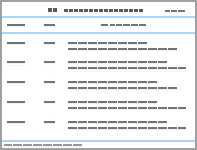
表1
相关指数选取计算参数方法"
| 第一作者 及年份 | 指数 | 参数选取 |
|---|---|---|
| Schutte[ (2000) | GGI(NI) | 16个参数包括两个种类:3种时空参数(站立阶段时间百分比、归一化速度和节律)和13类运动学参数(骨盆倾斜度均值、PTR、骨盆旋转均值、屈髋最小角度、屈髋范围、摆动期髋外展峰值、髋关节旋转均值、脚触地瞬时屈膝角度、屈膝峰值时刻、屈膝角度范围、支撑期踝关节跖屈背屈峰值角度、摆动期踝关节跖屈背屈峰值角度和步向角) |
| Novacheck[ (2002) | HFI | 3个运动学参数和1个动力学参数:MPT、TR、HEST、H3(该曲线是由屈到伸后期髋关节屈肌力的峰值) |
| Schwartz[ (2008) | GDI | 9个参数:骨盆冠状面、矢状面和水平面数据,髋关节冠状面、矢状面和水平面数据,膝关节屈伸数据,踝关节跖背屈数据和步向角 |
| Baker[ (2009) | GPS | 9个运动参数(骨盆和髋关节在三个平面上的角度,膝关节和踝关节在矢状面上角度和步向角)提供GVSs,GPS通常在柱状图中显示9个GVSs,从而生成MAP,GPS以单一数值呈现,GVSs是对GPS的辅助解释 |
| Rozumalski[ (2011) | GDI-Kinetic | 9个步态特征动力学参数:髋关节矢状面和额状面力矩,膝踝矢状面和冠状面力矩,踝关节矢状面和额状面力矩以及髋膝踝关节功率 |
| [1] |
Chehab E F, Andriacchi T P, Favre J. Speed, age, sex, and body mass index provide a rigorous basis for comparing the kinematic and kinetic profiles of the lower extremity during walking[J]. J Biomech, 2017, 58:11-20.
doi: S0021-9290(17)30213-0 pmid: 28501342 |
| [2] | Guzik A, Drużbicki M, Przysada G, et al. The use of the Gait Variability Index for the evaluation of individuals after a stroke[J]. Acta Bioeng Biomech, 2018, 20(2):171-177. |
| [3] |
Caserta A, Morgan P, Williams C. Identifying methods for quantifying lower limb changes in children with idiopathic toe walking: a systematic review[J]. Gait Posture, 2019, 67:181-186.
doi: S0966-6362(18)30573-3 pmid: 30347291 |
| [4] |
Guzik A, Drużbicki M, Przysada G, et al. Validity of the Gait Variability Index for individuals after a stroke in a chronic stage of recovery[J]. Gait Posture, 2019, 68:63-67.
doi: 10.1016/j.gaitpost.2018.11.014 |
| [5] |
Wellmon R, Degano A, Rubertone J A, et al. Interrater and intrarater reliability and minimal detectable change of the Wisconsin Gait Scale when used to examine videotaped gait in individuals post-stroke[J]. Arch Physiother, 2015, 5:11.
doi: 10.1186/s40945-015-0011-z pmid: 29340180 |
| [6] |
Tibarewala D N, Ganguli S. Use of a gait abnormality index for locomotion efficiency evaluation[J]. J Biomed Eng, 1979, 1(4):263-264.
doi: 10.1016/0141-5425(79)90162-6 |
| [7] | Bogey R A, Barnes L A, Perry J. A computer algorithm for defining the group electromyographic profile from individual gait profiles[J]. Arch Phys Med Rehabil, 1993, 74(3):286-291. |
| [8] |
Kerrigan D C, Viramontes B E, Corcoran P J, et al. Measured versus predicted vertical displacement of the sacrum during gait as a tool to measure biomechanical gait performance[J]. Am J Phys Med Rehabil, 1995, 74(1):3-8.
doi: 10.1097/00002060-199501000-00002 |
| [9] |
Kerrigan D C, Thirunarayan M A, Sheffler L R, et al. A tool to assess biomechanical gait efficiency: a preliminary clinical study[J]. Am J Phys Med Rehabil, 1996, 75(1):3-8.
doi: 10.1097/00002060-199601000-00003 |
| [10] | 张子华, 纪仲秋, 庞博, 等. 老年人步态稳定性、步态评价与跌倒风险的研究进展[J]. 中国康复理论与实践, 2019, 25(7):793-796. |
| [11] |
Schreiber C, Armand S, Moissenet F. Influence of normative data's walking speed on the computation of conventional gait indices[J]. J Biomech, 2018, 76:68-73.
doi: S0021-9290(18)30388-9 pmid: 29853318 |
| [12] |
Guzik A, Drużbicki M, Maistrello L, et al. Relationship between observational Wisconsin Gait Scale, Gait Deviation Index, and Gait Variability Index in individuals poststroke[J]. Arch Phys Med Rehabil, 2019, 100(9):1680-1687.
doi: 10.1016/j.apmr.2018.12.031 |
| [13] |
Schutte L M, Narayanan U, Stout J L, et al. An index for quantifying deviations from normal gait[J]. Gait Posture, 2000, 11(1):25-31.
pmid: 10664482 |
| [14] |
Cimolin V, Galli M. Summary measures for clinical gait analysis: a literature review[J]. Gait Posture, 2014, 39(4):1005-1010.
doi: 10.1016/j.gaitpost.2014.02.001 |
| [15] | Novacheck T F, Trost J P, Schwartz M H. Intramuscular psoas lengthening improves Dynamic Hip Function in children with cerebral palsy[J]. J Pediatr Orthop, 2002, 22(2):158-164. |
| [16] |
Schwartz M H, Rozumalski A. The gait deviation index: a new comprehensive index of gait pathology[J]. Gait Posture, 2008, 28(3):351-357.
doi: 10.1016/j.gaitpost.2008.05.001 pmid: 18565753 |
| [17] |
Kobsar D, Charlton J M, Hunt M A, et al. Individuals with knee osteoarthritis present increased gait pattern deviations as measured by a knee-specific gait deviation index[J]. Gait Posture, 2019, 72:82-88.
doi: S0966-6362(19)30395-9 pmid: 31173950 |
| [18] |
Baker R, Mcginley J L, Schwartz M H, et al. The gait profile score and movement analysis profile[J]. Gait Posture, 2009, 30(3):265-269.
doi: 10.1016/j.gaitpost.2009.05.020 |
| [19] |
Rozumalski A, Schwartz M H. The GDI-Kinetic: a new index for quantifying kinetic deviations from normal gait[J]. Gait Posture, 2011, 33(4):730-732.
doi: 10.1016/j.gaitpost.2011.02.014 pmid: 21454078 |
| [20] |
Schreiber C, Armand S, Moissenet F. Influence of normative data's walking speed on the computation of conventional gait indices[J]. J Biomech, 2018, 76:68-73.
doi: S0021-9290(18)30388-9 pmid: 29853318 |
| [21] |
Gorton G E, Abel M F, Oeffinger D J, et al. A prospective cohort study of the effects of lower extremity orthopaedic surgery on outcome measures in ambulatory children with cerebral palsy[J]. J Pediatr Orthop, 2009, 29(8):903-909.
doi: 10.1097/BPO.0b013e3181c11c0c |
| [22] |
McMulkin M L, MacWilliams B A. Application of the Gillette Gait Index, Gait Deviation Index and Gait Profile Score to multiple clinical pediatric populations[J]. Gait Posture, 2015, 41(2):608-612.
doi: 10.1016/j.gaitpost.2015.01.005 pmid: 25623856 |
| [23] |
Kainz H, Graham D, Edwards J, et al. Reliability of four models for clinical gait analysis[J]. Gait Posture, 2017, 54:325-331.
doi: S0966-6362(17)30113-3 pmid: 28411552 |
| [24] |
Ammann-Reiffer C, Bastiaenen C H G, Van Hedel H J A. Measuring change in gait performance of children with motor disorders: assessing the Functional Mobility Scale and the Gillette Functional Assessment Questionnaire walking scale[J]. Dev Med Child Neurol, 2019, 61(6):717-724.
doi: 10.1111/dmcn.14071 pmid: 30341775 |
| [25] |
Michnik R, Nowakowska K, Jurkojć J. Motor functions assessment method based on energy changes in gait cycle[J]. Acta Bioeng Biomech, 2017, 19(4):63-75.
pmid: 29507442 |
| [26] | Mañago M M, Cameron M, Schenkman M. Association of the Dynamic Gait Index to fall history and muscle function in people with multiple sclerosis[J]. Disabil Rehabil, 2019, 3:1-6. |
| [27] |
Cimolin V, Condoluci C, Costici P F, et al. A proposal for a kinetic summary measure: the Gait Kinetic Index[J]. Comput Methods Biomech Biomed Engin, 2019, 22(1):94-99.
doi: 10.1080/10255842.2018.1536750 |
| [28] |
Matsunaga N, Ito T, Noritake K, et al. Correlation between the Gait Deviation Index and skeletal muscle mass in children with spastic cerebral palsy[J]. J Phys Ther Sci, 2018, 30(9):1176-1179.
doi: 10.1589/jpts.30.1176 pmid: 30214121 |
| [29] |
Cahill-Rowley K, Rose J. Toddle temporal-spatial deviation index: assessment of pediatric gait[J]. Gait Posture, 2016, 49:226-231.
doi: S0966-6362(16)30119-9 pmid: 27454230 |
| [30] | Alcantara, Alonso C C, Speciali A C, et al. The use of the Gait Deviation Index for the evaluation post-stroke hemiparetic subjects[J]. Medical Express, 2017, 4(3):1-5. |
| [31] |
Correa K P, Devetak G F, Martello S K, et al. Reliability and minimum detectable change of the Gait Deviation Index (GDI) in post-stroke patients[J]. Gait posture, 2019, 53:29-34.
doi: 10.1016/j.gaitpost.2016.12.012 |
| [32] |
Rasmussen H M, Nielsen D B, Pedersen N W, et al. Gait Deviation Index, Gait Profile Score and Gait Variable Score in children with spastic cerebral palsy: Intra-rater reliability and agreement across two repeated sessions[J]. Gait Posture, 2015, 42(2):133-137.
doi: 10.1016/j.gaitpost.2015.04.019 pmid: 26043670 |
| [33] |
Fukuchi C A, Duarte M. Gait Profile Score in able-bodied and post-stroke individuals adjusted for the effect of gait speed[J]. Gait Posture, 2019, 69:40-45.
doi: 10.1016/j.gaitpost.2019.01.018 |
| [34] |
Sims D T, Burden A, Payton C, et al. A quantitative description of self-selected walking in adults with achondroplasia using the Gait Profile Score[J]. Gait Posture, 2019, 68:150-154.
doi: S0966-6362(18)30505-8 pmid: 30476692 |
| [35] |
Morel E, Allali G, Laidet M, et al. Gait Profile Score in multiple sclerosis patients with low disability[J]. Gait Posture, 2017, 51:169-173.
doi: S0966-6362(16)30616-6 pmid: 27776271 |
| [36] |
Christian J, Kröll J, Schwameder H. Comparison of the Classifier Oriented Gait Score and the Gait Profile Score based on imitated gait impairments[J]. Gait Posture, 2017, 55:49-54.
doi: S0966-6362(17)30119-4 pmid: 28411445 |
| [37] |
Barton G J, Hawken M B, Scott M A, et al. Leaving hip rotation out of a conventional 3D gait model improves discrimination of pathological gait in cerebral palsy: a novel neural network analysis[J]. Gait Posture, 2019, 70:48-52.
doi: S0966-6362(18)31839-3 pmid: 30822655 |
| [38] |
Yen Y M, Lewis C L, Kim Y J. Understanding and treating the snapping hip[J]. Sports Med Arthrosc Rev, 2015, 23(4):194-199.
doi: 10.1097/JSA.0000000000000095 |
| [39] |
Mallet C, Simon A L, Ilharreborde B, et al. Intramuscular psoas lengthening during single-event multi-level surgery fails to improve hip dynamics in children with spastic diplegia. Clinical and kinematic outcomes in the short- and medium-terms[J]. Orthop Traumatol Surg Res, 2016, 102(4):501-506.
doi: 10.1016/j.otsr.2016.01.022 |
| [40] |
Schweizer K, Romkes J, Coslovsky M, et al. The influence of muscle strength on the Gait Profile Score (GPS) across different patients[J]. Gait Posture, 2014, 39(1):80-85.
doi: 10.1016/j.gaitpost.2013.06.001 pmid: 23810568 |
| [1] | 魏晨婧, 段金娟, 丛燕, 孙凤娇, 蔡红波. 轮椅坐垫评估-适配-评价方法构建[J]. 《中国康复理论与实践》, 2025, 31(9): 1092-1100. |
| [2] | 苏本跃, 刘文瑶, 宗文杰, 王保乾, 盛敏. 基于自适应时序对齐的智能下肢假肢运动意图识别[J]. 《中国康复理论与实践》, 2025, 31(9): 1101-1115. |
| [3] | 杨同念, 任杰, 肖辉. 儿童青少年身体活动对焦虑的效果:系统综述的系统综述[J]. 《中国康复理论与实践》, 2025, 31(8): 883-888. |
| [4] | 叶绿, 陈悦琳, 刘雨霏. 儿童身体活动与脑健康的认知神经科学研究技术范式与进展:Scoping综述[J]. 《中国康复理论与实践》, 2025, 31(8): 889-895. |
| [5] | 王晓锋, 胡梦巧, 汪嫣, 魏坤, 徐文竹, 任丹, 马晔. 外骨骼机器人辅助步态训练对脑卒中和脊髓损伤下肢功能康复效果的系统综述[J]. 《中国康复理论与实践》, 2025, 31(8): 914-921. |
| [6] | 杜雯倩, 张旭, 陈继伟, 王兴, 朱昆. 运动干预对帕金森病冻结步态效果的Meta分析[J]. 《中国康复理论与实践》, 2025, 31(7): 781-789. |
| [7] | 曹静, 刘晶, 张晓燕, 高少宇. 基于世界卫生组织康复胜任力架构构建中小学特殊教育教师胜任力评价指标体系[J]. 《中国康复理论与实践》, 2025, 31(6): 621-627. |
| [8] | 顾逸青, 程舒芃, 李勇强, 毛二莉, 励建安. 成年气管切开患者拔管的直接策略与堵管策略对比的系统综述[J]. 《中国康复理论与实践》, 2025, 31(6): 666-673. |
| [9] | 吴晓晖, 蒋雷, 朱静茹, 解利辉. 深度学习在老年人轻度认知障碍诊断中应用的Scoping综述[J]. 《中国康复理论与实践》, 2025, 31(6): 674-681. |
| [10] | 潘义, 厚双龙, 温晓妮. 经皮迷走神经刺激在成年人执行功能中应用的Scoping综述[J]. 《中国康复理论与实践》, 2025, 31(5): 520-528. |
| [11] | 王梅, 朱文平. 身体活动干预2型糖尿病患者的健康效益:系统综述的系统综述[J]. 《中国康复理论与实践》, 2025, 31(5): 553-560. |
| [12] | 陈传艺, 齐刘心, 李爱华, 倪燕, 孙威, 王疆娜. 基于矢量编码技术痉挛型脑性瘫痪儿童平地行走时的下肢协调性和变异性特征[J]. 《中国康复理论与实践》, 2025, 31(5): 613-620. |
| [13] | 叶绿, 常晶, 凌海润. 网络行为成瘾的运动干预效果:系统综述的系统综述[J]. 《中国康复理论与实践》, 2025, 31(4): 431-440. |
| [14] | 刘芳超, 张元鸣飞, 武美奇, 周谋望, 李涛. 人工智能人体关键点检测技术在步态运动学分析中的效度[J]. 《中国康复理论与实践》, 2025, 31(3): 249-253. |
| [15] | 朱志强, 徐巧玲, 邵雪云. 肥胖和超重儿童参与身体活动的健康效益:系统综述的系统综述[J]. 《中国康复理论与实践》, 2025, 31(3): 296-305. |
| 阅读次数 | ||||||
|
全文 |
|
|||||
|
摘要 |
|
|||||
|
||
