



《中国康复理论与实践》 ›› 2025, Vol. 31 ›› Issue (11): 1354-1364.doi: 10.3969/j.issn.1006-9771.2025.11.012
• 辅助技术 • 上一篇
刘晨1, 董理权2, 闫媚2, 江华1( )
)
收稿日期:2025-07-10
修回日期:2025-09-10
出版日期:2025-11-25
发布日期:2025-11-26
通讯作者:
江华
E-mail:jxtjj@126.com
作者简介:刘晨(1996-),女,汉族,河北邢台市人,博士研究生,主要研究方向:辅助技术、全民健康。
基金资助:
LIU Chen1, DONG Liquan2, YAN Mei2, JIANG Hua1()
Received:2025-07-10
Revised:2025-09-10
Published:2025-11-25
Online:2025-11-26
Contact:
JIANG Hua
E-mail:jxtjj@126.com
Supported by:摘要:
目的 了解我国功能障碍人群辅助器具适配度现状,识别未满足的辅具需求及影响辅助器具使用态度的关键因素。
方法 基于全球辅助技术快速筛查项目中国区调查数据,选取北京、安徽、福建、湖北、四川和陕西的5 935例功能障碍者作为研究对象,分析辅助器具适配情况,结合技术接受模型建立理论分析框架,并采用多元线性回归分析辅助器具使用态度的影响因素。
结果 功能障碍人群的康复辅助器具使用率为65.9%,且存在多重功能障碍现象。视力障碍人群适配度高(68.44%),沟通障碍人群适配度最低(1.52%);农村地区、老年人的适配度较低。辅助器具满意度水平整体较高(4.11±0.71)。家庭环境无障碍水平(B = 0.396, P < 0.001)、公共环境无障碍水平(B = 0.204, P < 0.001)、辅助器具功能效用性(B = 0.204, P < 0.001)和获取距离(B < -0.112, P < 0.01)是影响辅助器具使用满意度的关键因素,而支付主体的影响并不显著(P > 0.05)。
结论 我国功能障碍人群的辅助器具适配存在显著的结构性失衡和群体差异,对多重功能障碍现象的关注不足,非适配群体仍有大量未满足的辅具需求;辅具使用的整体满意度较高,但影响因素复杂。应持续完善无障碍环境建设,推动个性化适配服务,并优化辅助器具服务网络,以提升辅助器具的适配精准度和使用持续性,促进功能障碍人群的主观福祉。
中图分类号:
刘晨, 董理权, 闫媚, 江华. 功能障碍人群辅助器具适配度评价及影响因素分析[J]. 《中国康复理论与实践》, 2025, 31(11): 1354-1364.
LIU Chen, DONG Liquan, YAN Mei, JIANG Hua. Evaluation of assistive device adaptation and analysis of influencing factors among people with dysfunction[J]. Chinese Journal of Rehabilitation Theory and Practice, 2025, 31(11): 1354-1364.
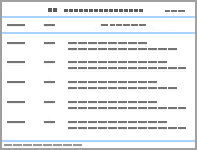
表1
功能障碍人群辅助器具适配度情况"
| 类别 | 正在使用对应辅具 | 未使用对应辅具 | 合计/n | ||
|---|---|---|---|---|---|
| n | % | n | % | ||
| 移动障碍 | 640 | 39.05 | 999 | 60.95 | 1639 |
| 视力障碍 | 3255 | 68.44 | 1501 | 31.56 | 4756 |
| 听力障碍 | 87 | 7.17 | 1127 | 92.83 | 1214 |
| 沟通障碍 | 8 | 1.52 | 518 | 98.48 | 526 |
| 记忆障碍 | 37 | 2.45 | 1475 | 97.55 | 1512 |
| 自理障碍 | 78 | 12.19 | 562 | 87.81 | 640 |
表2
功能障碍人群辅助器具适配度群体差异情况"
| 维度 | 适配情况 | 居住地 | 性别 | 年龄 | ||||
|---|---|---|---|---|---|---|---|---|
| 城市 | 农村 | 男性 | 女性 | < 18岁 | 18~60岁 | > 60岁 | ||
| 移动障碍 | 正在使用对应辅具 | 404 | 236 | 299 | 341 | 4 | 78 | 558 |
| 未使用对应辅具 | 571 | 428 | 425 | 574 | 19 | 191 | 789 | |
| 合计 | 975 | 664 | 724 | 915 | 23 | 269 | 1347 | |
| 视力障碍 | 正在使用对应辅具 | 2505 | 750 | 1576 | 1679 | 239 | 1576 | 1440 |
| 未使用对应辅具 | 664 | 837 | 638 | 863 | 77 | 463 | 961 | |
| 合计 | 3169 | 1587 | 2214 | 2542 | 316 | 2039 | 2401 | |
| 听力障碍 | 正在使用对应辅具 | 58 | 29 | 50 | 37 | 2 | 16 | 69 |
| 未使用对应辅具 | 564 | 563 | 540 | 587 | 16 | 176 | 935 | |
| 合计 | 622 | 592 | 590 | 624 | 18 | 192 | 1004 | |
| 沟通障碍 | 正在使用对应辅具 | 8 | 0 | 5 | 3 | 1 | 2 | 5 |
| 未使用对应辅具 | 224 | 294 | 253 | 265 | 29 | 101 | 388 | |
| 合计 | 232 | 294 | 258 | 268 | 30 | 103 | 393 | |
| 记忆障碍 | 正在使用对应辅具 | 27 | 10 | 13 | 24 | 1 | 7 | 29 |
| 未使用对应辅具 | 918 | 557 | 567 | 908 | 31 | 278 | 1166 | |
| 合计 | 945 | 567 | 580 | 932 | 32 | 285 | 1195 | |
| 自理障碍 | 正在使用对应辅具 | 54 | 24 | 28 | 50 | 2 | 27 | 49 |
| 未使用对应辅具 | 269 | 293 | 262 | 300 | 19 | 132 | 411 | |
| 合计 | 323 | 317 | 290 | 350 | 21 | 159 | 460 | |
表3
不同特征功能障碍人群辅助器具综合满意度情况"
| 项目 | n | 辅具满意度 | F值/t值 | P值 |
|---|---|---|---|---|
| 移动障碍 | 8.110a | < 0.001 | ||
| 没有困难 | 2026 | 4.14±0.71 | ||
| 有些困难 | 451 | 4.07±0.71 | ||
| 非常困难 | 95 | 3.89±0.72 | ||
| 完全不能 | 31 | 3.70±0.61 | ||
| 视力障碍 | 5.520a | < 0.001 | ||
| 没有困难 | 250 | 3.95±0.70 | ||
| 有些困难 | 2225 | 4.13±0.71 | ||
| 非常困难 | 119 | 4.12±0.63 | ||
| 完全不能 | 9 | 3.70±0.73 | ||
| 听力障碍 | 6.390a | < 0.001 | ||
| 没有困难 | 2305 | 4.13±0.71 | ||
| 有些困难 | 241 | 3.96±0.66 | ||
| 非常困难 | 44 | 3.87±0.71 | ||
| 完全不能 | 13 | 4.05±0.65 | ||
| 沟通障碍 | 3.320a | 0.019 | ||
| 没有困难 | 2484 | 4.12±0.70 | ||
| 有些困难 | 84 | 3.94±0.70 | ||
| 非常困难 | 30 | 3.84±0.62 | ||
| 完全不能 | 5 | 4.06±0.89 | ||
| 记忆障碍 | 8.447a | < 0.001 | ||
| 没有困难 | 2219 | 4.14±0.71 | ||
| 有些困难 | 357 | 3.96±0.65 | ||
| 非常困难 | 24 | 3.90±0.49 | ||
| 完全不能 | 3 | 3.44±0.38 | ||
| 自理障碍 | 13.192a | < 0.001 | ||
| 没有困难 | 2395 | 4.14±0.70 | ||
| 有些困难 | 139 | 3.82±0.64 | ||
| 非常困难 | 42 | 3.83±0.72 | ||
| 完全不能 | 27 | 3.83±0.62 | ||
| 年龄 | 21.700a | < 0.001 | ||
| < 18岁 | 185 | 4.30±0.64 | ||
| 18~60岁 | 1206 | 4.17±0.69 | ||
| > 60岁 | 1212 | 4.02±0.71 | ||
| 性别 | -0.930b | 0.353 | ||
| 女 | 1320 | 4.10±0.72 | ||
| 男 | 1283 | 4.12±0.69 | ||
| 户籍 | -1.559b | 0.119 | ||
| 农村 | 757 | 4.07±0.70 | ||
| 城市 | 1846 | 4.12±0.70 |
表4
社会影响、便利条件对辅助器具综合满意度的影响"
| 变量 | n | 辅具满意度 | F值 | P值 |
|---|---|---|---|---|
| 辅助器具支付主体 | 3.350 | 0.003 | ||
| 政府 | 96 | 3.85±0.64 | ||
| 非政府组织/慈善机构 | 16 | 3.96±0.79 | ||
| 雇主/学校 | 1 | 3.00±0.00 | ||
| 保险 | 3 | 4.44±0.51 | ||
| 自付 | 2056 | 4.12±0.71 | ||
| 家人/朋友 | 420 | 4.15±0.70 | ||
| 其他 | 11 | 3.85±0.79 | ||
| 辅助器具获取距离 | 2.660 | 0.021 | ||
| < 5 km | 2014 | 4.14±0.71 | ||
| 6~25 km | 431 | 4.03±0.64 | ||
| 26~50 km | 50 | 3.95±0.56 | ||
| 51~100 km | 9 | 4.03±0.73 | ||
| > 100 km | 20 | 4.31±0.66 | ||
| 不清楚 | 79 | 4.00±0.81 |
表5
感知易用性、感知有用性和辅助器具综合满意度的相关性分析"
| 因素 | r值 | P值 |
|---|---|---|
| 家庭环境无障碍水平评价 | 0.603 | < 0.001 |
| 公共环境无障碍水平评价 | 0.549 | < 0.001 |
| 辅助器具功能效用性评价 | 0.562 | < 0.001 |
表6
功能障碍人群辅助器具综合满意度影响因素的多元线性回归分析"
| 因素 | B | SE | β | t值 | P值 | 95%CI |
|---|---|---|---|---|---|---|
| 家庭环境无障碍水平 | 0.396 | 0.028 | 0.303 | 14.001 | < 0.001 | 0.341~0.452 |
| 公共环境无障碍水平 | 0.204 | 0.024 | 0.182 | 8.335 | < 0.001 | 0.156~0.252 |
| 辅助器具功能效用性 | 0.204 | 0.027 | 0.181 | 7.465 | < 0.001 | 0.150~0.257 |
| 辅助器具支付主体 | ||||||
| 政府 | 0.035 | 0.062 | 0.009 | 0.560 | 0.576 | -0.087~0.157 |
| 非政府组织/慈善机构 | 0.032 | 0.159 | 0.004 | 0.204 | 0.838 | -0.279~0.343 |
| 雇主/学校 | -0.070 | 0.047 | -0.002 | -1.483 | 0.138 | -0.163~0.023 |
| 保险 | 0.122 | 0.098 | 0.006 | 1.250 | 0.211 | -0.069~0.314 |
| 家人/朋友 | 0.056 | 0.030 | 0.029 | 1.865 | 0.062 | -0.003~0.114 |
| 其他 | -0.126 | 0.164 | -0.012 | -0.771 | 0.442 | -0.447~0.195 |
| 辅助器具获取距离 | ||||||
| 6~25 km | -0.112 | 0.029 | -0.059 | -3.894 | < 0.001 | -0.168~-0.055 |
| 26~50 km | -0.203 | 0.072 | -0.039 | -2.834 | 0.005 | -0.344~-0.062 |
| 51~100 km | 0.135 | 0.176 | 0.011 | 0.765 | 0.445 | -0.211~0.481 |
| > 100 km | 0.107 | 0.102 | 0.013 | 1.053 | 0.292 | -0.092~0.307 |
| 不清楚 | 0.013 | 0.076 | 0.002 | 0.170 | 0.865 | -0.136~0.162 |
表7
剔除仅使用眼镜的功能障碍人群辅助器具综合满意度影响因素的多元线性回归分析"
| 因素 | B | SE | β | t值 | P值 | 95%CI |
|---|---|---|---|---|---|---|
| 家庭环境无障碍水平 | 0.500 | 0.054 | 0.392 | 9.240 | < 0.001 | 0.394~0.607 |
| 公共环境无障碍水平 | 0.165 | 0.050 | 0.158 | 3.322 | < 0.001 | 0.067~0.263 |
| 辅助器具功能效用性 | 0.178 | 0.052 | 0.162 | 3.409 | < 0.001 | 0.075~0.281 |
| 辅助器具支付主体 | ||||||
| 政府 | 0.141 | 0.074 | 0.068 | 1.911 | 0.057 | -0.004~0.286 |
| 非政府组织/慈善机构 | 0.011 | 0.197 | 0.002 | 0.056 | 0.955 | -0.377~0.399 |
| 保险 | 0.009 | 0.081 | 0.001 | 0.110 | 0.913 | -0.150~0.168 |
| 家人/朋友 | 0.090 | 0.057 | 0.053 | 1.580 | 0.115 | -0.022~0.203 |
| 其他 | 0.188 | 0.222 | 0.026 | 0.851 | 0.395 | -0.247~0.624 |
| 辅助器具获取距离 | ||||||
| 6~25 km | -0.063 | 0.060 | -0.033 | -1.056 | 0.292 | -0.181~0.055 |
| 26~50 km | -0.200 | 0.101 | -0.046 | -1.985 | 0.048 | -0.398~-0.002 |
| 51~100 km | -0.584 | 0.112 | -0.033 | -5.201 | < 0.001 | -0.804~-0.363 |
| > 100 km | 0.118 | 0.117 | 0.019 | 1.011 | 0.313 | -0.112~0.348 |
| 不清楚 | -0.030 | 0132 | -0.007 | -0.228 | 0.819 | -0.290~0.230 |
| [1] | United Nations. Sustainable Development Goals (SDGs)[EB/OL]. (2021-05-03) [2025-06-10]. https://sdgs.un.org/goals. |
| [2] |
TEBBUTT E, BRODMANN R, BORG J, et al. Assistive products and the sustainable development goals (SDGs)[J]. Glob Health, 2016, 12: 79.
doi: 10.1186/s12992-016-0220-6 |
| [3] | World Health Organization. Priority assistive products list[R]. Geneva: World Health Organization, 2016. |
| [4] |
JIMÉNEZ-ARBERAS E, DÍEZ E. Psychosocial impact of assistive devices and other technologies on deaf and hard of hearing people[J]. Int J Environ Res Public Health, 2021, 18(14): 7259.
doi: 10.3390/ijerph18147259 |
| [5] |
GIESBRECHT E M, SMITH E M, MORTENSON W B, et al. Needs for mobility devices, home modifications and personal assistance among Canadians with disabilities[J]. Health Rep, 2017, 28(8): 9-15.
pmid: 29044443 |
| [6] | ITOH S, MIWA H, WU V X, et al. Acceptance of care technologies to support activities of daily living by middle-aged and older adults in Japan: a cross-sectional study[J]. Int J Nurs Stud Adv, 2021, 3: 100042. |
| [7] | World Health Organization, United Nations Children's Fund. Global report on assistive technology[R]. Geneva: World Health Organization, 2022. |
| [8] | DE WITTE L, VAN DER VAART R. Inequities in access to assistive technology: a call for action[J]. Lancet Pub Health, 2025, 10(1): e4-e5. |
| [9] |
董理权, 李晞, 徐进, 等. "互联网+"智能化辅助器具评估与适配服务体系构建研究[J]. 中国康复理论与实践, 2019, 25(6): 724-728.
doi: 10.3969/j.issn.1006-9771.2019.06.019 |
| DONG L Q, LI X, XU J, et al. Construction of assistive products service system using internet plus and artificial intelligence[J]. Chin J Rehabil Theory Pract, 2019, 25(6): 724-728. | |
| [10] |
JIANG H, LIU C, WU X, et al. The development of assistive product policies in China from the perspective of the assistive product industry[J]. Disabil Rehabil Assist Technol, 2023, 18(8): 1266-1280.
doi: 10.1080/17483107.2022.2143582 |
| [11] | 张小雪, 陶静, 张腾宇. 我国康复辅助器具配置服务信息化的现状和发展[J]. 中国康复医学杂志, 2024, 39(10): 1542-1547. |
| [12] |
YU S, LUO D, ZHU Y, et al. Factors influencing utilisation of assistive devices by the elderly in China: a community-based cross-sectional study[J]. Public Health, 2022, 213: 12-18.
doi: 10.1016/j.puhe.2022.09.002 pmid: 36332412 |
| [13] |
CHEN P, WANG B, HU Z, et al. The demand for assistive technology, services, and satisfaction self-reports among people with disabilities in China[J]. Disabil Rehabil Assist Technol, 2025, 20(5): 1199-1208.
doi: 10.1080/17483107.2024.2442711 |
| [14] | 毛艾琳, 江华, 董理权, 等. 我国老年人辅助器具需求及满意度调查分析[J]. 中国康复医学杂志, 2024, 39(10): 1491-1494, 1506. |
| [15] | 饶千宜, 王俊, 白定群, 等. 医养结合机构老年人辅助器具使用现状及影响因素分析[J]. 中国康复医学杂志, 2024, 39(2): 232-237. |
| [16] | 余诗畦, 朱莹, 杨力凝, 等. 重庆市社区老年人康复辅具使用与需求现状调查[J]. 中国康复医学杂志, 2024, 39(12): 1870-1873. |
| [17] | 郝晓宁, 许金鹏, 郑研辉. 残疾老人辅助器具支付意愿的影响机制分析:基于Logit-ISM模型[J]. 卫生经济研究, 2022, 39(12): 17-21, 25. |
| HAO X N, XU J P, ZHENG Y H. Analysis of the mechanisms influencing the willingness to pay for assistive devices for the elderly with disabilities: based on Logit-ISM model[J]. Health Econ Res, 2022, 39(12): 17-21, 25. | |
| [18] |
陈盼盼, 王炳龙, 董理权, 等. 成都肢体残疾人未满足辅助技术需求及其相关因素[J]. 中国康复理论与实践, 2024, 30(5): 598-605.
doi: 10.3969/j.issn.1006-9771.2024.05.015 |
| CHEN P P, WANG B L, DONG L Q, et al. Unmet needs for assistive technology and its related factors for persons with physical disabilities in Chengdu, China[J]. Chin J Rehabil Theory Pract, 2024, 30(5): 598-605. | |
| [19] |
MAO A, JIANG H, DONG L, et al. Assistive products for older adults in China: self-reported need, services, and satisfaction[J]. Disabil Rehabil Assist Technol, 2024, 19(8): 3006-3014.
doi: 10.1080/17483107.2024.2338134 |
| [20] | 王妍, 矫非桐. 老年康复辅助器具使用及弃用的因素调查分析[J]. 吉林医药学院学报, 2021, 42(1): 30-31. |
| [21] |
ZHANG W, EIDE A H, PRYOR W, et al. Measuring self-reported access to assistive technology using the WHO rapid assistive technology assessment (rATA) questionnaire: protocol for a multi-country study[J]. Int J Environ Res Public Health, 2021, 18(24): 13336.
doi: 10.3390/ijerph182413336 |
| [22] | World Health Organization. Measuring access to assistive technology in countries. World Health Organization[EB/OL]. (2022-05-15) [2025-10-21]. https://www.who.int/tools/ata-toolkit/rata#:-:text=Measuring%20access%20to%20assistive%20technology%20in%20countries%20The,user%20satisfaction%2C%20and%20barriers%20to%20accessing%20assistive%20technology. |
| [23] |
DAVIS F D. Perceived usefulness, perceived ease of use, and user acceptance of information technology[J]. MIS Q, 1989, 13(3): 319-340.
doi: 10.2307/249008 |
| [24] |
SHIN H R, UM S R, YOON H J, et al. Comprehensive senior technology acceptance model of daily living assistive technology for older adults with frailty: cross-sectional study[J]. J Med Internet Res, 2023, 25: e41935.
doi: 10.2196/41935 |
| [25] | 周川力, 肖育才, 寇璇. 公共服务满意度对纳税遵从意愿的影响: 基于良性互动的税收征纳关系视角[J]. 西南民族大学学报(人文社会科学版), 2024, 45(12): 117-129. |
| ZHOU C L, XIAO Y C, KOU X. The impact of public service satisfaction on tax compliance willingness: based on the perspective of benign interaction in tax collection and administration relationships[J]. J Southwest Minzu Univ (Humanit Soc Sci), 2024, 45(12): 117-129. | |
| [26] | 郑浩生. 公众参与与农村居民公共服务质量评价[J]. 华南农业大学学报(社会科学版), 2024, 23(1): 25-34. |
| ZHENG H S. Public participation and rural residents' public service quality evaluation[J]. J South China Agric Univ (Soc Sci Ed), 2024, 23(1): 25-34. | |
| [27] |
闫媚, 江华, 董理权, 等. 中国辅助技术的需求、供给和满意度研究: 基于快速辅助技术评估数据[J]. 中国康复理论与实践, 2023, 29(4): 373-380.
doi: 10.3969/j.issn.1006-9771.2023.04.001 |
| YAN M, JIANG H, DONG L Q, et al. Demand, supply and satisfaction of assistive technology in China based on rapid assistive technology assessment data[J]. Chin J Rehabil Theory Pract, 2023, 29(4): 373-380. | |
| [28] |
BORG J, MULLER S, EIDE A H, et al. Need equality and access equity to assistive products across genders and locations in 29 countries: a cross-sectional study[J]. Front Public Health, 2025, 13: 1581048.
doi: 10.3389/fpubh.2025.1581048 |
| [29] |
BIGONNESSE C, MAHMOOD A, CHAUDHURY H, et al. The role of neighborhood physical environment on mobility and social participation among people using mobility assistive technology[J]. Disabil Soc, 2018, 33(6): 866-893.
doi: 10.1080/09687599.2018.1453783 |
| [30] | 杨立雄, 李晞, 董理权, 等. 全国辅助器具服务网络建设研究[J]. 残疾人研究, 2020, (1): 61-71. |
| YANG L X, LI X, DONG L Q, et al. Research on the construction of national assistive technology service network[J]. Disabil Res, 2020, (1): 61-71. | |
| [31] | 吴世彩, 孟丽君. 运动功能障碍人群健康视域下的伦理关怀研究[J]. 伦理学研究, 2023, (4): 103-110. |
| [32] |
ROOKS-ELLIS D L, RYAN J, FLOYD K, et al. Assistive technology and rural settings: a scoping review of the literature[J]. J Spec Educ Technol, 2025, 40(2): 138-151.
doi: 10.1177/01626434241289955 |
| [33] | 高嘉敏, 郑晓瑛. 中国听力残疾老年人辅助器具使用现状及其影响因素分析[J]. 中国公共卫生, 2021, 37(8): 1261-1266. |
| GAO J M, ZHENG X Y. Use of hearing aids and assistive listening devices and its influencing factors among the elderly with disabling hearing loss in China[J]. Chin J Public Health, 2021, 37(8): 1261-1266. | |
| [34] |
GARÇON L, KHASNABIS C, WALKER L, et al. Medical and assistive health technology: meeting the needs of aging populations[J]. Gerontologist, 2016, 56(Suppl 2): S293-S302.
doi: 10.1093/geront/gnw005 |
| [35] | 孙祁, 胡姣, 施望喜, 等. 面向失能老人的康复辅助器具适配现状及需求分析: 以湖北省为例[C]. 成都: 生命关怀与智慧康养系列学术研讨会, 2024. |
| [36] | PANDA S, KAUR N. Leaving no one behind: achieving the sustainable development goals through accessibility for people with disabilities[J]. Int J Educ Commun Technol, 2024, 4(1): 16-26. |
| [37] |
邱服冰, 杨亚茹. 深圳市公共体育场馆无障碍设施建设与辅助技术应用[J]. 中国康复理论与实践, 2023, 29(12): 1465-1472.
doi: 10.3969/j.issn.1006-9771.2023.12.011 |
| QIU F B, YANG Y R. Accessible facilities construction and assistive technology application of public sports venues in Shenzhen, Guangdong, China[J]. Chin J Rehabil Theory Pract, 2023, 29(12): 1465-1472. | |
| [38] |
WIDEHAMMAR C, LIDSTRÖM H, HERMANSSON L. Environmental barriers to participation and facilitators for use of three types of assistive technology devices[J]. Assist Technol, 2019, 31(2): 68-76.
doi: 10.1080/10400435.2017.1363828 pmid: 28783455 |
| [39] |
KABACIŃSKA K, VU K, TAM M, et al. "Functioning better is doing better": older adults' priorities for the evaluation of assistive technology[J]. Assist Technol, 2023, 35(4): 367-373.
doi: 10.1080/10400435.2022.2113180 |
| [40] | 宋毓, 季敏, 毕琪, 等. 上海市辅助器具适配对残疾人生活质量的影响分析[J]. 中国康复理论与实践, 2015, 21(10): 1238-1240. |
| SONG Y, JI M, BI Q, et al. Effect of assistive device adaption on quality of life of people with disabilities[J]. Chin J Rehabil Theory Pract, 2015, 21(10): 1238-1240. | |
| [41] | LIU S, JUTAI J. Relationships among technology use, social engagement, resilience, and access to healthcare[J]. Interdiscip J Health Sci, 2025, 11(1): 19-43. |
| [42] |
朱图陵. 关于辅助技术的几个理论问题[J]. 中国康复理论与实践, 2021, 27(9): 1017-1023.
doi: 10.3969/j.issn.1006-9771.2021.09.004 |
| ZHU T L. Conceptual discussion of assistive technology[J]. Chin J Rehabil Theory Pract, 2021, 27(9): 1017-1023. |
| [1] | 任良湘, 梅培培, 毛二莉, 汤一帆, 王雪, 叶义清. 脊髓损伤神经源性肠道功能障碍患者主要照顾者全程参与肠道管理需求的质性研究[J]. 《中国康复理论与实践》, 2025, 31(8): 965-971. |
| [2] | 邹聪聪, 王潇珺, 马锦蓉, 鲁商波, 丁勇, 王哈妮, 宋建飞. 耳迷走神经电刺激联合双任务训练对缺血性脑卒中患者上肢功能的效果[J]. 《中国康复理论与实践》, 2025, 31(5): 513-519. |
| [3] | 易玲, 周静, 陈雪芬, 陈川帆, 陈科伊, 董慧繁. 基于ICF的智力残疾儿童言语功能障碍和沟通活动受限特征与康复干预[J]. 《中国康复理论与实践》, 2025, 31(4): 398-405. |
| [4] | 常冉, 靖华芳, 高轶, 张思雨, 王越, 吴娟. 膀胱变形指数对神经源性膀胱患者上尿路损伤的预测价值[J]. 《中国康复理论与实践》, 2025, 31(2): 231-234. |
| [5] | 解海霞, 胡心星, 翟华, 林佩佩, 何建辉, 张佳, 董晓婉, 苌凤水. 生活重建训练对慢性期脊髓损伤患者及其照顾者焦虑和抑郁的效果[J]. 《中国康复理论与实践》, 2025, 31(11): 1333-1341. |
| [6] | 陈盼盼, 王炳龙, 董理权, 刘夕东, 杨幼平, 李佳玥. 成都肢体残疾人未满足辅助技术需求及其相关因素[J]. 《中国康复理论与实践》, 2024, 30(5): 598-605. |
| [7] | 蒋娜, 卫宁, 曾艳玲, 张倩, 益筱哲, 陈万强, 景玉珍, 寄婧, 郭旭升, 裴泓波, 王建云. 康复患者次均住院费用影响因素的分析:基于分位数回归模型[J]. 《中国康复理论与实践》, 2024, 30(4): 397-403. |
| [8] | 李芳, 刘慧珍, 梅利平, 张通, 张豪杰, 李冰洁, 赵军. 脑梗死患者康复科住院期间卒中后抑郁程度的相关因素[J]. 《中国康复理论与实践》, 2024, 30(2): 217-222. |
| [9] | 罗丽华, 王雨生, 李剑锋, 董继革. 术后早期综合康复对儿童青少年肱骨髁上骨折伴尺神经损伤的效果[J]. 《中国康复理论与实践》, 2024, 30(1): 105-110. |
| [10] | 王子豪, 李昕华, 蒋慧萍, 郭赛男, 梁秋曼, 史婷奇. 全膝关节置换术后短期膝关节功能及其影响因素[J]. 《中国康复理论与实践》, 2024, 30(1): 111-118. |
| [11] | 吴千豪, 侯榕洁, 傅丽媛. 近10年国内外盆底康复的可视化分析[J]. 《中国康复理论与实践》, 2023, 29(6): 673-685. |
| [12] | 王光程, 段明雪, 郭桐桐, 邢洋, 董志伟, 张琳琳, 郭培武, 井淇, 郑文贵. 康复治疗师职业发展及其转型影响因素分析[J]. 《中国康复理论与实践》, 2023, 29(5): 565-569. |
| [13] | 郭霜, 谢咏祺, 张良, 张春佳, 彭润, 杨德刚, 杨明亮. 舞蹈致儿童无骨折脱位型脊髓损伤神经学预后的影响因素及预测模型[J]. 《中国康复理论与实践》, 2023, 29(5): 582-589. |
| [14] | 闫媚, 江华, 董理权, 柳博飞, 贺炜洁, 吴小高, 郭智洋. 中国辅助技术的需求、供给和满意度研究:基于快速辅助技术评估数据[J]. 《中国康复理论与实践》, 2023, 29(4): 373-380. |
| [15] | 潘海鸿, 李泰薇, 刘远才, 卢美铭, 陈琳. 简易滑动式腿部康复设备机构设计与分析[J]. 《中国康复理论与实践》, 2023, 29(4): 396-401. |
| 阅读次数 | ||||||
|
全文 |
|
|||||
|
摘要 |
|
|||||
|
||
