



《中国康复理论与实践》 ›› 2026, Vol. 32 ›› Issue (6): 645-652.doi: 10.3969/j.issn.1006-9771.2026.06.003
高惠刚1a,2, 刘远文2, 秦煜玲1a,3, 胡昔权1a,2, 朱琳1a,1b,1c( )
收稿日期:2025-07-30
修回日期:2025-12-26
出版日期:2026-06-25
发布日期:2026-06-24
通讯作者:
朱琳,E-mail: 11251@gzsport.edu.cn作者简介:高惠刚(1989-),男,汉族,广东佛山市人,硕士研究生,主要研究方向:慢性病与老年康复、神经康复。基金资助:
GAO Huigang1a,2, LIU Yuanwen2, QIN Yuling1a,3, HU Xiquan1a,2, ZHU Lin1a,1b,1c()
Received:2025-07-30
Revised:2025-12-26
Published:2026-06-25
Online:2026-06-24
Contact:
ZHU Lin, E-mail: 11251@gzsport.edu.cn
Supported by:摘要:
目的 探索足踝软体外骨骼机器人(ASRE)干预脑卒中患者步行功能的效果。
方法 系统检索PubMed、Embase、Scopus、Web of Science、中国知网、万方和维普等数据库2020年1月1日至2025年5月1日间评估ASRE对脑卒中偏瘫患者步行功能影响的研究,采用PEDro量表及非随机对照试验研究偏倚风险工具对纳入文献进行质量评价,提取数据进行Scoping综述。
结果 最终纳入12项研究,包括随机对照试验3项、交叉对照试验3项、前后对照试验6项,来自中国、美国和韩国3个国家,共涉及256例患者。3项随机对照试验为高质量,其余试验偏倚风险为中等和严重。5项研究为单次干预,7项为多次干预,多次干预方案为每次30~60 min,每周2~5次,共5~20次。ASRE可改善步行速度、步行距离、偏瘫侧推进力、步态参数与时空对称性、关节活动度,以及与下肢运动、平衡、步态相关的量表结果,安全性和可靠性表现良好。
结论 ASRE可能有助于改善脑卒中患者的步行功能。
中图分类号:
高惠刚, 刘远文, 秦煜玲, 胡昔权, 朱琳. 2020年至2025年足踝软体外骨骼机器人改善脑卒中患者步行功能的Scoping综述[J]. 《中国康复理论与实践》, 2026, 32(6): 645-652.
GAO Huigang, LIU Yuanwen, QIN Yuling, HU Xiquan, ZHU Lin. Effect of ankle soft robotic exosuit on gait function for stroke patients: a scoping review from 2020 to 2025[J]. Chinese Journal of Rehabilitation Theory and Practice, 2026, 32(6): 645-652.

表1
PICO架构"
| 人群(Population) | 干预(Intervention) | 比较(Comparison) | 结局(Outcome) |
|---|---|---|---|
| 脑卒中偏瘫患者 功能状况 具有辅助或独立步行能力 | 干预方式 ASRE步行训练 干预方案 干预频次 训练时长 干预周期 | 有/无ASRE 自身基线 辅助模式 | 步行功能:步行速度、步行距离 生物力学:时空参数、运动学、动力学、肌肉活动、能量消耗 行为学量表:下肢运动、平衡、步行功能 安全性:不良事件、故障率 |
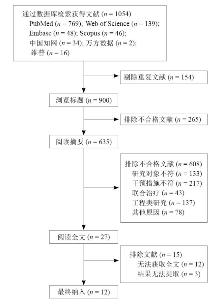
图1
文献筛选流程图"
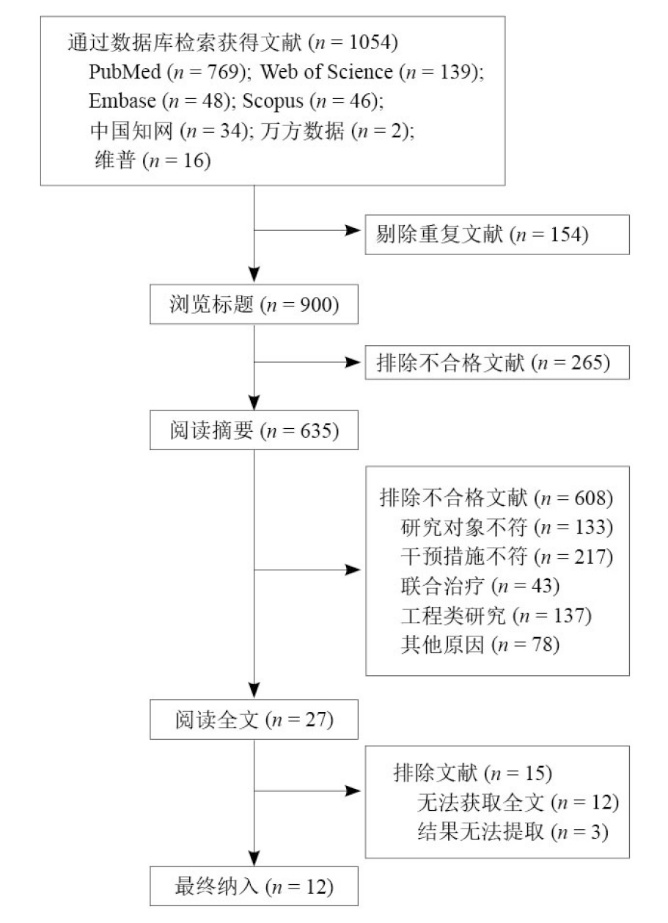
表2
RCT PEDro量表评分"
| 纳入文献 | 1 | 2 | 3 | 4 | 5 | 6 | 7 | 8 | 9 | 10 | 11 | 总分 |
|---|---|---|---|---|---|---|---|---|---|---|---|---|
| Yeung等[ | √ | √ | √ | √ | √ | √ | √ | √ | 7 | |||
| Xie等[ | √ | √ | √ | √ | √ | √ | √ | √ | √ | 8 | ||
| 吴文杰[ | √ | √ | √ | √ | √ | √ | √ | 6 |
表3
非RCT文献ROBINS-I评价"
| 纳入文献 | 混杂偏倚 | 选择受试者偏倚 | 干预分类偏倚 | 偏离干预偏倚 | 缺失数据偏倚 | 结局测量偏倚 | 选择性报告偏倚 | 总体偏倚风险等级 |
|---|---|---|---|---|---|---|---|---|
| Awad等[ | ± | + | + | + | + | + | + | ± |
| Awad等[ | - | - | + | + | + | + | + | - |
| Shin等[ | - | - | + | + | + | + | + | - |
| Nuckols等[ | - | ± | + | + | + | + | + | - |
| Porciuncula等[ | - | - | + | + | + | + | + | - |
| Sloot等[ | ± | + | + | + | + | + | + | ± |
| Swaminathan等[ | ± | + | + | + | + | + | + | ± |
| Cataldo等[ | ± | + | + | + | + | ± | + | ± |
| Lee等[ | ± | + | + | + | + | ± | + | ± |
表4
纳入文献基本特征"
| 纳入文献 | 实验设计 | 地区 | n | 年龄/岁 | 病程 | 设备/质量 | 比较 | 干预方案 | 评价指标 | 主要结果 |
|---|---|---|---|---|---|---|---|---|---|---|
| Awad等[ | 前后对照 | 美国 | 36 | 57 | 7.3年 | ReWalkReStoreTM/5 kg | 干预前后 | 每次40 min,共5次 | 最大步行速度、不良事件发生率、故障率 | 步行速度提高,不良事件发生率、故障率低 |
| Awad等[ | 前后对照 | 美国 | 6 | 52 | 4.2年 | ReWalkReStoreTM/5 kg | WE vs. UWE | 单次 | 10MWT、6MWT、能量消耗 | 步行速度、距离提高,能量消耗无变化 |
| Yeung等[ | RCT | 中国 | 47 | 66 | 27 d | 自研ASRE设备/0.5 kg | 组内、组间比较(UWE) | 每次30 min,共20次(10周) | 10MWT、BBS、FAC | 步行速度提高,BBS、FAC评分提高 |
| Shin等[ | 前后对照 | 美国 | 5 | 46 | 2.7年 | ReWalkReStoreTM/5 kg | 干预后vs.干预前(UWE) | 每次30 min,共18次(6~8周) | 10MWT、6MWT、FGA、TUGT、FMA-LE、2MWT、关节运动角度、时空对称性 | 步行速度、距离提高,关节运动角度增加,角度对称性增加,FGA、TUGT、FMA-LE评分改善 |
| Nuckols等[ | 前后对照 | 美国 | 4 | 49 | 12.3年 | 软体踝关节外骨骼/3.8 kg | 干预后vs.干预前(UWE) WE vs. UWE | 每次60 min,平均训练15.5次(4周) | 偏瘫侧推进力、每日步数 | 2例偏瘫侧推进力、每日步数增加,另外2例无变化 |
| Porciuncula等[ | 交叉对照 | 美国 | 4 | 49 | 3.8年 | ReWalkReStoreTM/5 kg | 干预后vs.干预前(UWE) | 每次30 min,共6次(2周,洗脱期6周) | 10MWT、6MWT、偏瘫侧推进力、踝关节扭矩、拖曳肢体角度、步长 | 步行速度、距离提高,3例偏瘫侧推进力提高,步幅提高 |
| Sloot等[ | 前后对照 | 美国 | 19 | 53 | 8年 | 软体踝关节外骨骼/2 kg | WE vs. UWE | 单次 | 步行速度、偏瘫侧推进力、摆动期离地间隙、足部着地角度、能量消耗、行走稳定性、小腿肌肉活动 | 步行速度提高,偏瘫侧推进力提高,踝背屈角度增加,足廓清能力提高 |
| Swaminathan等[ | 前后对照 | 美国 | 9 | 52 | 9.5年 | 软体踝关节外骨骼 | WE,不同阻力与无阻力比较 | 单次 | 峰值推进力、推进冲量、推进冲量对称性、踝关节峰值扭矩及功率、腓肠肌与胫前肌活动、患侧膝伸展角度、患侧肢体拖曳角度、非偏瘫侧GRFV | 峰值推进力提高,踝关节扭矩、功率增加 |
| Xie等[ | RCT | 中国 | 30 | 61 | 8.4周 | YrobotRelinkTM/3 kg | 组内、组间比较(UWE) | 每次30 min,共10次(2周) | 10MWT、6MWT、FAC、FMA-LE、BBS、时空参数和步态对称性 | 步行速度、距离提高,FMA-LE得分改善,步态对称性改善,步长增加(有组间差异) |
| Cataldo等[ | 交叉对照 | 美国 | 11 | 58 | 8年 | ReWalkReStoreTM/5 kg | WE vs. UWE | 单次 | 步行速度、持续时间、VO2peak、BDNF水平、步态对称性 | 步行速度、持续时间、VO2peak、BDNF水平提高 |
| 吴文杰[ | RCT | 中国 | 40 | 50 | 2个月 | YrobotRelinkTM/3 kg | 组内、组间比较(UWE) | 每次30 min,共20次(4周) | 6MWT、FAC、FMA-LE、步态周期、步频、步行速度、步幅、步态对称性 | 步行速度、距离提高(无组间差异),步态对称性改善、踝关节运动角度改善,步幅、步频改善,FMA-LE评分改善 |
| Lee等[ | 交叉对照 | 韩国 | 45 | 54 | 2.8年 | GEMS-A/2.1 kg | WE vs. UWE | 单次 | 步行速度、步频、步幅、步态对称性、髋膝踝运动角度、踝关节背屈/跖屈力矩、GRFV | 步行速度提高,步态对称性改善,步幅、步长改善,关节运动角度改善 |
表5
主要结局指标的GRADE证据分级"
| 结局指标 | 研究数 | 总样本量 | 研究设计类型 | 证据级别 |
|---|---|---|---|---|
| 步行速度 | 10 | 251 | 4项RCT,6项非RCT | 低 |
| 步行距离 | 5 | 105 | 2项RCT,3项非RCT | 极低 |
| 偏瘫侧推进力 | 4 | 36 | 4项非RCT | 极低 |
| 踝关节角度 | 4 | 109 | 1项RCT,3项非RCT | 极低 |
| 步态对称性 | 5 | 141 | 3项RCT,2项非RCT | 低 |
| 能量消耗 | 3 | 29 | 3项非RCT | 极低 |
| FMA-LE | 3 | 75 | 2项RCT,1项非RCT | 低 |
| BBS | 2 | 77 | 2项RCT | 中 |
| [1] |
FEIGIN V L, BRAININ M, NORRVING B, et al. World Stroke Organization: global stroke fact sheet 2025[J]. Int J Stroke, 2025, 20(2): 132-144.
doi: 10.1177/17474930241308142 pmid: 39635884 |
| [2] |
MOORE S A, BOYNE P, FULK G, et al. Walk the talk: current evidence for walking recovery after stroke, future pathways and a mission for research and clinical practice[J]. Stroke, 2022, 53(11): 3494-3505.
doi: 10.1161/STROKEAHA.122.038956 |
| [3] |
SOMERVILLE E, BLENDEN G, KRETZER D, et al. Differences in daily activity performance between inpatient rehabilitation facility and home among stroke survivors[J]. Neurorehabil Neural Repair, 2024, 38(6): 403-412.
doi: 10.1177/15459683241246266 pmid: 38602200 |
| [4] |
AWAD L N, KNARR B A, KUDZIA P, et al. The interplay between walking speed, economy, and stability after stroke[J]. J Neurol Phys Ther, 2023, 47(2): 75-83.
doi: 10.1097/NPT.0000000000000431 pmid: 36867550 |
| [5] |
BOYNE P, BILLINGER S A, REISMAN D S, et al. Optimal intensity and duration of walking rehabilitation in patients with chronic stroke: a randomized clinical trial[J]. JAMA Neurol, 2023, 80(4): 342.
doi: 10.1001/jamaneurol.2023.0033 pmid: 36822187 |
| [6] |
WANG T, ZHANG B, LIU C, et al. A review on the rehabilitation exoskeletons for the lower limbs of the elderly and the disabled[J]. Electronics, 2022, 11(3): 388.
doi: 10.3390/electronics11030388 |
| [7] |
PARK Y H, LEE D H, LEE J H. A comprehensive review: robot-assisted treatments for gait rehabilitation in stroke patients[J]. Medicina, 2024, 60(4): 620.
doi: 10.3390/medicina60040620 |
| [8] | CALABRÒ R S, SORRENTINO G, CASSIO A, et al. Robotic-assisted gait rehabilitation following stroke: a systematic review of current guidelines and practical clinical recommendations[J]. Eur J Phys Rehabil Med, 2021, 57(3): 460-471. |
| [9] |
KOCH M A, FONT-LLAGUNES J M. Lower-limb exosuits for rehabilitation or assistance of human movement: a systematic review[J]. Appl Sci, 2021, 11(18): 8743.
doi: 10.3390/app11188743 |
| [10] |
XIE R, ZHANG Y, JIN H, et al. Effects of soft robotic exoskeleton for gait training on clinical and biomechanical gait outcomes in patients with sub-acute stroke: a randomized controlled pilot study[J]. Front Neurol, 2023, 14: 1296102.
doi: 10.3389/fneur.2023.1296102 |
| [11] | 周政, 韩晓凤, 张辛, 等. 柔性外骨骼机器人在下肢康复训练中的应用研究进展[J]. 重庆医学, 2023, 52(15): 2368-2373. |
| ZHOU Z, HAN X F, ZHANG X, et al. Research progress on the application of flexible exoskeleton robots in lower limb rehabilitation training[J]. Chongqing Med, 2023, 52(15): 2368-2373. | |
| [12] |
ZHANG X, LIU Y X, WANG R, et al. Soft ankle exoskeleton to counteract dropfoot and excessive inversion[J]. Front Neurorobot, 2024, 18: 1372763.
doi: 10.3389/fnbot.2024.1372763 |
| [13] | THALMAN C, ARTEMIADIS P. A review of soft wearable robots that provide active assistance: trends, common actuation methods, fabrication, and applications[J]. Wear Technol, 2020, 1: e3. |
| [14] |
AWAD L N, ESQUENAZI A, FRANCISCO G E, et al. The ReWalk ReStoreTM soft robotic exosuit: a multi-site clinical trial of the safety, reliability, and feasibility of exosuit-augmented post-stroke gait rehabilitation[J]. J Neuroeng Rehabil, 2020, 17(1): 80.
doi: 10.1186/s12984-020-00702-5 |
| [15] |
NUCKOLS R W, CHANG C K, KIM D, et al. Design and evaluation of an independent 4-week, exosuit-assisted, post-stroke community walking program[J]. Ann N Y Acad Sci, 2023, 1525(1): 147-159.
doi: 10.1111/nyas.v1525.1 |
| [16] |
YEUNG L F, LAU C C Y, LAI C W K, et al. Effects of wearable ankle robotics for stair and over-ground training on sub-acute stroke: a randomized controlled trial[J]. J Neuroeng Rehabil, 2021, 18(1): 19.
doi: 10.1186/s12984-021-00814-6 |
| [17] |
TRICCO A C, LILLIE E, ZARIN W, et al. PRISMA extension for scoping reviews(PRISMA-ScR): checklist and explanation[J]. Ann Intern Med, 2018, 169(7): 467-473.
doi: 10.7326/M18-0850 |
| [18] |
CASHIN A G, MCAULEY J H. Clinimetrics: Physiotherapy Evidence Database(PEDro)scale[J]. J Physiother, 2020, 66(1): 59.
doi: 10.1016/j.jphys.2019.08.005 |
| [19] | STERNE J A, HERNÁN M A, REEVES B C, et al. ROBINS-I: a tool for assessing risk of bias in non-randomised studies of interventions[J]. BMJ, 2016: i4919. |
| [20] | 吴文杰. 单踝关节步行外骨骼机器人对脑卒中患者步行能力的影响[D]. 南京: 南京体育学院, 2024. |
| WU W J. Effects of a single ankle joint walking exoskeleton robot on the walking ability of stroke patients[D]. Nanjing: Nanjing Sport Institute, 2024. | |
| [21] |
CATALDO A V R, COLLIMORE A N, SPANGLER J, et al. Enhancing neuroplasticity in the chronic phase after stroke: effects of a soft robotic exosuit on training intensity and brain-derived neurotrophic factor[J]. IEEE Open J Eng Med Biol, 2023, 4: 284-291.
doi: 10.1109/OJEMB.2023.3313396 |
| [22] |
PORCIUNCULA F, ARUMUKHOM R D, BAKER T C, et al. Effects of high-intensity gait training with and without soft robotic exosuits in people post-stroke: a development-of-concept pilot crossover trial[J]. J Neuroeng Rehabil, 2023, 20(1): 148.
doi: 10.1186/s12984-023-01267-9 pmid: 37936135 |
| [23] |
LEE S H, KIM J, LEE H J, et al. A wearable ankle-assisted robot for improving gait function and pattern in stroke patients[J]. J Neuroeng Rehabil, 2025, 22(1): 89.
doi: 10.1186/s12984-025-01624-w |
| [24] |
AWAD L N, KUDZIA P, REVI D A, et al. Walking faster and farther with a soft robotic exosuit: implications for post-stroke gait assistance and rehabilitation[J]. IEEE Open J Eng Med Biol, 2020, 1: 108-115.
doi: 10.1109/OJEMB |
| [25] |
SHIN S Y, HOHL K, GIFFHORN M, et al. Soft robotic exosuit augmented high intensity gait training on stroke survivors: a pilot study[J]. J Neuroeng Rehabil, 2022, 19(1): 51.
doi: 10.1186/s12984-022-01034-2 pmid: 35655180 |
| [26] |
SWAMINATHAN K, PORCIUNCULA F, PARK S, et al. Ankle-targeted exosuit resistance increases paretic propulsion in people post-stroke[J]. J Neuroeng Rehabil, 2023, 20(1): 85.
doi: 10.1186/s12984-023-01204-w pmid: 37391851 |
| [27] |
SLOOT L H, BAKER L M, BAE J, et al. Effects of a soft robotic exosuit on the quality and speed of overground walking depends on walking ability after stroke[J]. J Neuroeng Rehabil, 2023, 20(1): 113.
doi: 10.1186/s12984-023-01231-7 pmid: 37658408 |
| [28] |
AWAD L N, BAE J, O'DONNELL K, et al. A soft robotic exosuit improves walking in patients after stroke[J]. Sci Transl Med, 2017, 9(400): eaai9084.
doi: 10.1126/scitranslmed.aai9084 |
| [29] |
AWAD L N, BAE J, KUDZIA P, et al. Reducing circumduction and hip hiking during hemiparetic walking through targeted assistance of the paretic limb using a soft robotic exosuit[J]. Am J Phys Med Rehabil, 2017, 96(10): S157-S164.
doi: 10.1097/PHM.0000000000000800 |
| [30] | BAE J, AWAD L N, LONG A, et al. Biomechanical mechanisms underlying exosuit-induced improvements in walking economy after stroke[J]. J Exp Biol, 2018: jeb.168815. |
| [31] |
CHUANG Y C, TSAI Y L, LIN T T L, et al. Effects of soft robotic exosuit on ambulation ability in stroke patients: a systematic review[J]. Biomed Eng Online, 2023, 22: 88.
doi: 10.1186/s12938-023-01150-7 |
| [32] |
MOLTENI F, FORMAGGIO E, BOSCO A, et al. Brain connectivity modulation after exoskeleton-assisted gait in chronic hemiplegic stroke survivors: a pilot study[J]. Am J Phys Med Rehabil, 2020, 99(8): 694-700.
doi: 10.1097/PHM.0000000000001395 |
| [33] |
TANG Z, ZHAO Y, SUN X, et al. Evidence that robot-assisted gait training modulates neuroplasticity after stroke: an fMRI pilot study based on graph theory analysis[J]. Brain Res, 2024, 1842: 149113.
doi: 10.1016/j.brainres.2024.149113 |
| [34] | CHEN S, ZHANG W, WANG D, et al. How robot-assisted gait training affects gait ability, balance and kinematic parameters after stroke: a systematic review and meta-analysis[J]. Eur J Phys Rehabil Med, 2024, 60(3): 400-411. |
| [35] |
NEVISIPOUR M, HONEYCUTT C F. The impact of ankle-foot-orthosis(AFO)use on the compensatory stepping response required to avoid a fall during trip-like perturbations in young adults: implications for AFO prescription and design[J]. J Biomech, 2020, 103: 109703.
doi: 10.1016/j.jbiomech.2020.109703 |
| [36] |
HE L, XU C, GUAN X. Design methodology and experimental study of a lower extremity soft exosuit[J]. Electronics, 2023, 12(11): 2502.
doi: 10.3390/electronics12112502 |
| [37] |
ALNAJJAR F, ZAIER R, KHALID S, et al. Trends and technologies in rehabilitation of foot drop: a systematic review[J]. Expert Rev Med Devices, 2021, 18(1): 31-46.
doi: 10.1080/17434440.2021.1857729 pmid: 33249938 |
| [38] |
LIU J, LIU K, GE X, et al. Flexible exoskeleton-assisted training enhances lower limb motor function after stroke: a systematic review and meta-analysis[J]. J Neurol, 2025, 272(4): 274.
doi: 10.1007/s00415-025-12998-1 pmid: 40106023 |
| [39] |
LINGAMPALLY P K, RAMANATHAN K C, SHANMUGAM R, et al. Wearable assistive rehabilitation robotic devices: a comprehensive review[J]. Machines, 2024, 12(6): 415.
doi: 10.3390/machines12060415 |
| [40] |
SHI B, CHEN X, YUE Z, et al. Wearable ankle robots in post-stroke rehabilitation of gait: a systematic review[J]. Front Neurorobot, 2019, 13: 63.
doi: 10.3389/fnbot.2019.00063 |
| [41] |
YANG J, GONG Y, YU L, et al. Effect of exoskeleton robot-assisted training on gait function in chronic stroke survivors: a systematic review of randomised controlled trials[J]. BMJ Open, 2023, 13(9): e074481.
doi: 10.1136/bmjopen-2023-074481 |
| [1] | 李欣源, 郑洁皎, 张廷宇, 吴雪娇, 梁晓笑. 间歇性θ脉冲刺激改善脑卒中患者下肢运动和平衡功能的Meta分析[J]. 《中国康复理论与实践》, 2026, 32(6): 631-644. |
| [2] | 刘睿, 高振梅, 周星宇, 张琦, 吴建林. 2015年至2025年数字健康技术在脑卒中上肢运动功能康复中应用的文献计量分析[J]. 《中国康复理论与实践》, 2026, 32(5): 534-549. |
| [3] | 倪天皓, 毕思雨, 戴媛, 钱红, 王勇丽, 万勤, 黄昭鸣. 汉语普通话言语失用症评估诊断工具的编制与验证[J]. 《中国康复理论与实践》, 2026, 32(5): 550-560. |
| [4] | 安咏怡, 李雪梅, 常学优, 赵雅宁, 黄海玲, 杨亚东. 不同强度血流限制训练联合低强度抗阻训练对老年脑卒中衰弱患者运动功能的影响[J]. 《中国康复理论与实践》, 2026, 32(5): 561-570. |
| [5] | 陈竹, 翟丽茹, 曹存霞, 彭晓华, 黄桃. 基于电阻抗断层成像技术评估膈神经-腹肌电刺激对脑卒中患者肺通气分布的效果[J]. 《中国康复理论与实践》, 2026, 32(5): 571-576. |
| [6] | 李欣源, 郑洁皎, 吴雪娇, 段林茹, 高羽飞. 小脑间歇性θ脉冲刺激对脑卒中患者姿势控制和跌倒风险的效果[J]. 《中国康复理论与实践》, 2026, 32(5): 577-587. |
| [7] | 谷玉红, 段锦绣, 薛明阳, 杨婕, 吴瑕, 刘华, 高宇芳, 张蒙惠, 叶财德. “医社协同”模式对社区脑卒中患者心理和运动功能的效果[J]. 《中国康复理论与实践》, 2026, 32(5): 597-603. |
| [8] | 黄成, 沈扬艺, 卢碧莹, 刘通, 刘悦. 2016年至2025年动作观察疗法在脑卒中康复领域应用的文献计量分析[J]. 《中国康复理论与实践》, 2026, 32(4): 399-410. |
| [9] | 刘日华, 张星悦, 亓丰学. 经颅直流电刺激在成人运动技能中应用的Scoping综述[J]. 《中国康复理论与实践》, 2026, 32(4): 411-425. |
| [10] | 桂舜, 张见飞, 黄慧芝. 可解释的机器学习模型对脑卒中患者神经功能康复结局的预测效能[J]. 《中国康复理论与实践》, 2026, 32(4): 463-472. |
| [11] | 朱丽丽, 赵嘉欣, 程雪, 王会娟, 陈小霞. 康复期脑卒中患者疾病体验及需求的Meta整合[J]. 《中国康复理论与实践》, 2026, 32(3): 286-293. |
| [12] | 刘平, 周楠, 薛晓杰, 邵伟波. 脑卒中后吞咽障碍康复治疗技术应用研究的文献计量分析[J]. 《中国康复理论与实践》, 2026, 32(3): 294-303. |
| [13] | 杨玲, 王庆雷, 王洁, 徐雯婕, 王彤, 郭川, 钱雪. 基于功能性近红外光谱成像的卒中后焦虑患者前额叶皮质激活特征及机制研究[J]. 《中国康复理论与实践》, 2026, 32(3): 329-336. |
| [14] | 岳圆, 张通, 刘元旻, 王亚囡. 下肢外骨骼机器人对卒中后小脑性共济失调患者平衡和步行功能的影响[J]. 《中国康复理论与实践》, 2026, 32(1): 23-29. |
| [15] | 吴澄, 章云枫, 王卫宁, 余克威, 张艳正, 沈嘉蓉, 吴毅. 肘腕功能支具对脑卒中偏瘫患者足底压力和平衡功能的效果[J]. 《中国康复理论与实践》, 2026, 32(1): 30-39. |
| 阅读次数 | ||||||
|
全文 |
|
|||||
|
摘要 |
|
|||||
|
||
