



《中国康复理论与实践》 ›› 2026, Vol. 32 ›› Issue (7): 817-828.doi: 10.3969/j.issn.1006-9771.2026.07.009
张仕坤1, 张菡奚2, 余一苇1, 杨翼1( )
收稿日期:2026-04-13
修回日期:2026-06-15
接受日期:2026-06-23
出版日期:2026-07-25
发布日期:2026-07-30
通讯作者:
杨翼,E-mail: yangyi999999@foxmail.com作者简介:张仕坤(2003-),男,汉族,四川绵阳市人,硕士研究生,主要研究方向:慢性疾病的临床与基础研究。基金资助:
Zhang Shikun1, Zhang Hanxi2, Yu Yiwei1, Yang Yi1()
Received:2026-04-13
Revised:2026-06-15
Accepted:2026-06-23
Published:2026-07-25
Online:2026-07-30
Supported by:摘要:
目的 系统梳理经颅电刺激(tES)干预阿尔茨海默病(AD)领域文献,明晰该领域研究现状、核心热点和演化趋势。
方法 检索Web of Science核心合集自建库至2026年3月收录的相关文献,采用VOSviewer、CiteSpace、Scimago Graphica和Bibliometrix R包开展文献计量与可视化分析。
结果 最终纳入225篇文献;领域年度发文整体呈上升趋势,2019年后发文量明显增加,2025年发文量达峰值;中国总发文量60篇居首位,美国总被引频次和国际合作广度领先;哈佛大学、Alvaro Pascual-Leone分别为核心机构和核心作者,Journal of Alzheimer's Disease为发文最多期刊;高频关键词为阿尔茨海默病、经颅直流电刺激(tDCS)、记忆;当前研究聚焦不同tES模式、个体化靶点和参数优化。
结论 tES治疗AD领域处于高速发展阶段;现有研究以经颅直流电刺激临床疗效评估为主。
中图分类号:
张仕坤, 张菡奚, 余一苇, 杨翼. 经颅电刺激在阿尔茨海默病中应用的文献计量分析[J]. 《中国康复理论与实践》, 2026, 32(7): 817-828.
Zhang Shikun, Zhang Hanxi, Yu Yiwei, Yang Yi. Application of transcranial electrical stimulation in Alzheimer's disease: a bibliometric analysis[J]. Chinese Journal of Rehabilitation Theory and Practice, 2026, 32(7): 817-828.
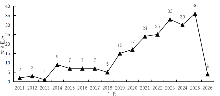
图1
年发文量"
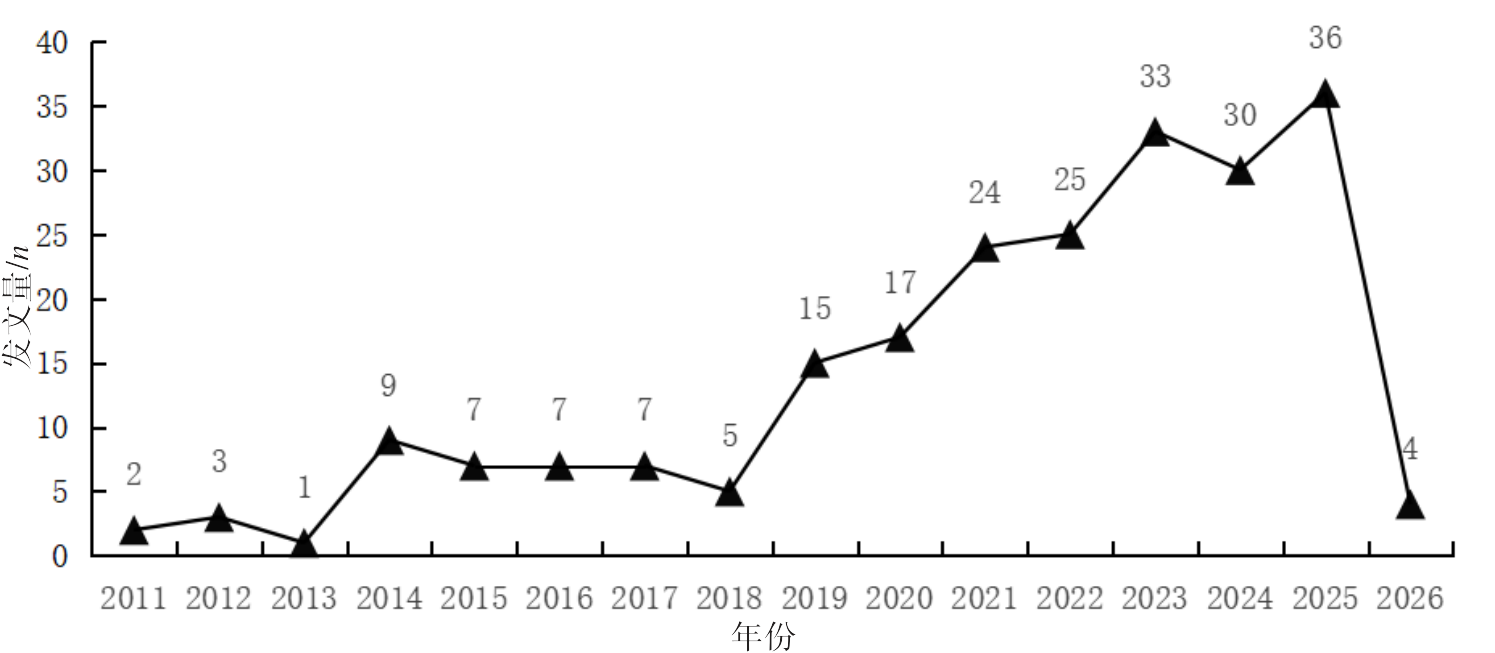

表1
发文量前5的国家"
| 排名 | 国家 | 发文量/n | 总被引次数 |
|---|---|---|---|
| 1 | 中国 | 60 | 1375 |
| 2 | 美国 | 55 | 2955 |
| 3 | 意大利 | 49 | 1884 |
| 4 | 西班牙 | 24 | 900 |
| 5 | 德国 | 20 | 1251 |
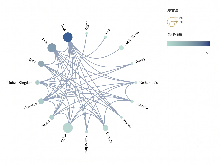
图2
国家共现图"

图3
机构共现图"

表2
发文量前5的机构"
| 排名 | 机构 | 发文量/n | 中心性 |
|---|---|---|---|
| 1 | Harvard University | 26 | 0.27 |
| 2 | University of Toronto | 15 | 0.11 |
| 3 | Centre for Addiction & Mental Health-Canada | 11 | 0.02 |
| 4 | Massachusetts General Hospital | 11 | 0.06 |
| 5 | Beth Israel Deaconess Medical Center | 10 | 0.22 |
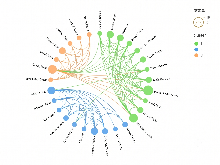
图4
作者共现图"

表3
发文量前5的作者"
| 排名 | 作者 | 发文量/n | 总被引次数 | H指数 |
|---|---|---|---|---|
| 1 | Alvaro Pascual-Leone | 13 | 1288 | 12 |
| 2 | Maria Sofia Cotelli | 10 | 649 | 9 |
| 3 | Emiliano Santarnecchi | 10 | 408 | 8 |
| 4 | Tarek K Rajji | 8 | 256 | 6 |
| 5 | Alberto Benussi | 7 | 292 | 5 |
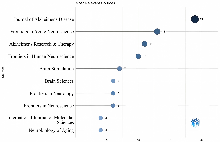
图5
发文量前10位的期刊"
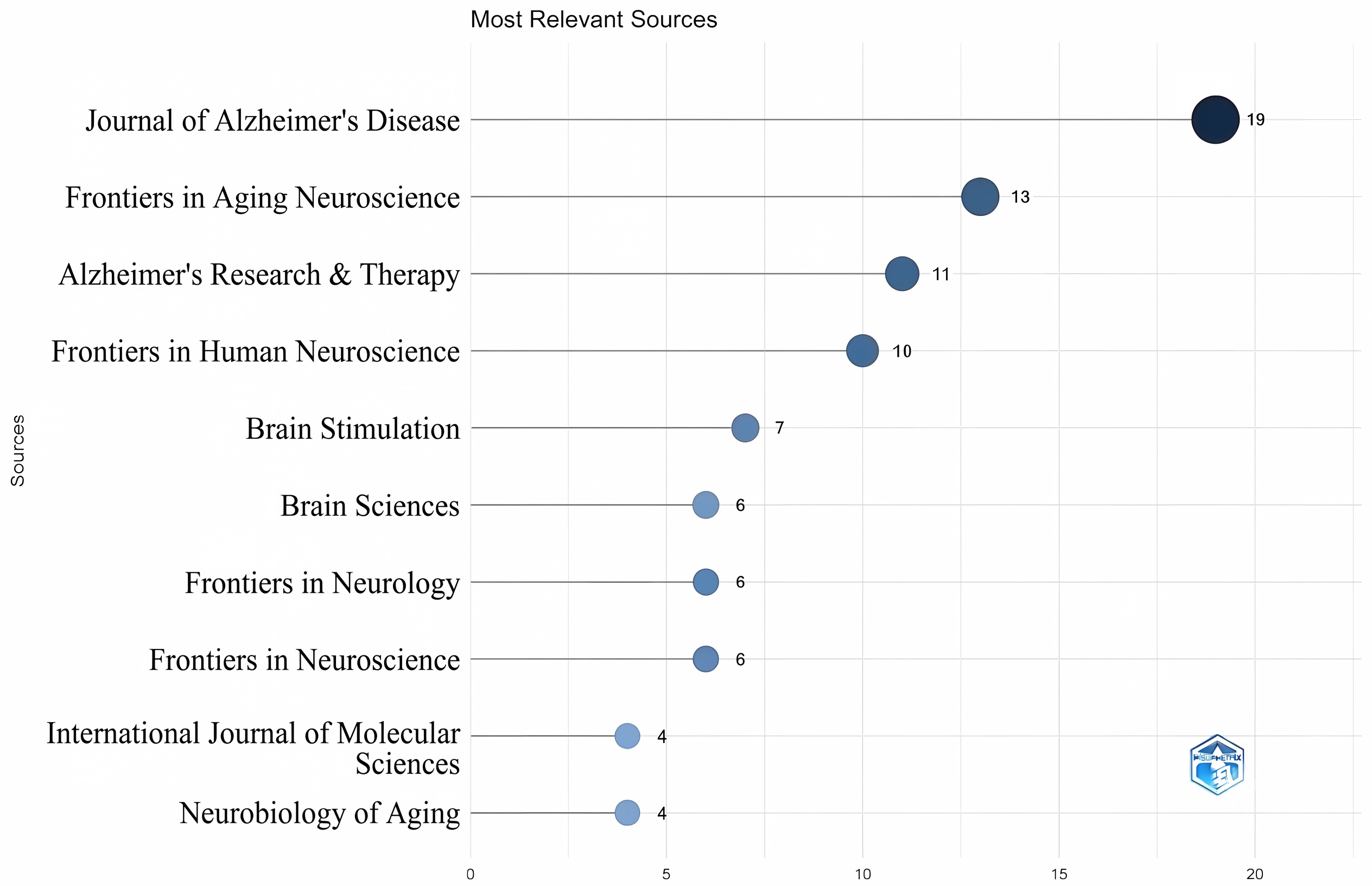
表4
被引次数前5的文献"
| 排名 | 文献 | 被引频次 |
|---|---|---|
| 1 | Fox等[ | 477 |
| 2 | Floeel等[ | 320 |
| 3 | Hsu等[ | 275 |
| 4 | Boggio等[ | 220 |
| 5 | Ladenbauer等[ | 173 |
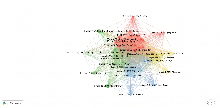
图6
共被引文献图"

表5
共被引频次前5的文献"
| 排名 | 文献 | 共被引频次 |
|---|---|---|
| 1 | Ferrucci等[ | 81 |
| 2 | Boggio等[ | 74 |
| 3 | Boggio等[ | 73 |
| 4 | Khedr等[ | 69 |
| 5 | Bystad等[ | 66 |
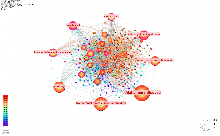
图7
关键词共现图"

表6
排名前10的高频关键词"
| 排名 | 关键词 | 频次 |
|---|---|---|
| 1 | Alzheimer's disease | 158 |
| 2 | transcranial direct current stimulation | 117 |
| 3 | memory | 94 |
| 4 | noninvasive brain stimulation | 71 |
| 5 | mild cognitive impairment | 68 |
| 6 | transcranial magnetic stimulation | 50 |
| 7 | motor cortex | 48 |
| 8 | prefrontal cortex | 39 |
| 9 | dementia | 33 |
| 10 | transcranial alternating current stimulation | 25 |
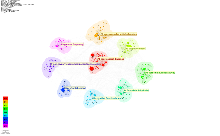
图8
关键词聚类图"
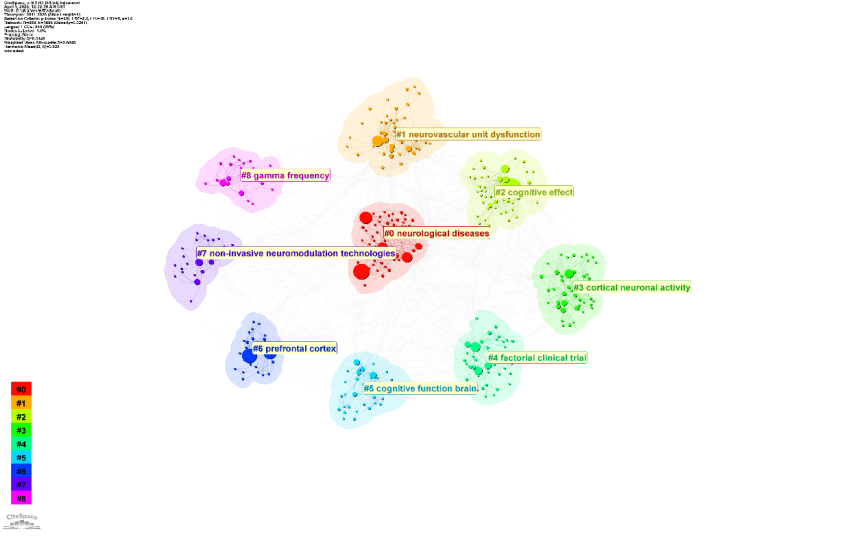
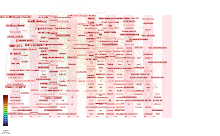
图9
关键词时区图"
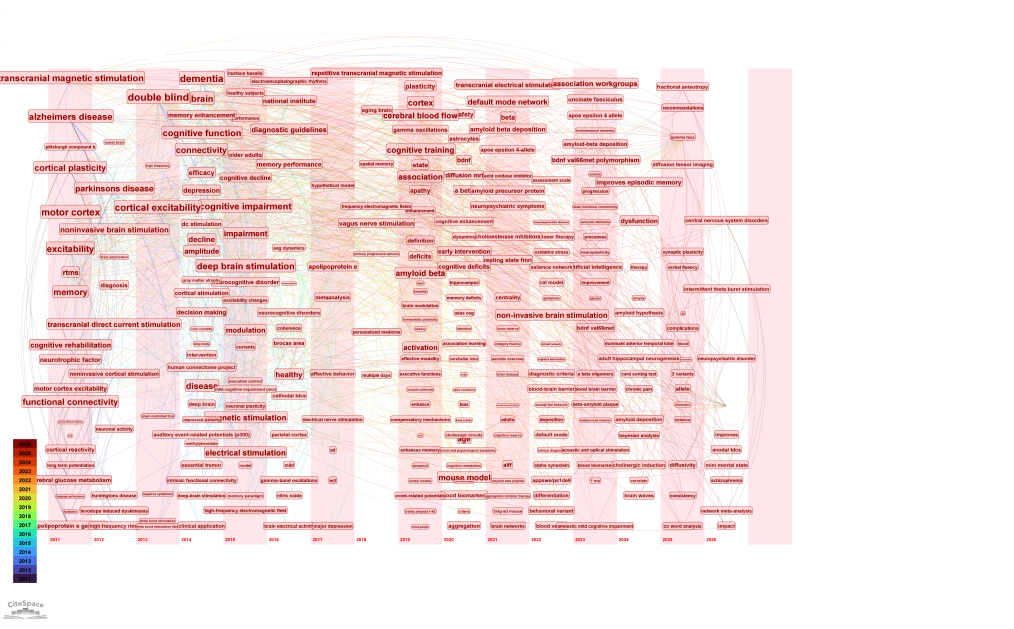
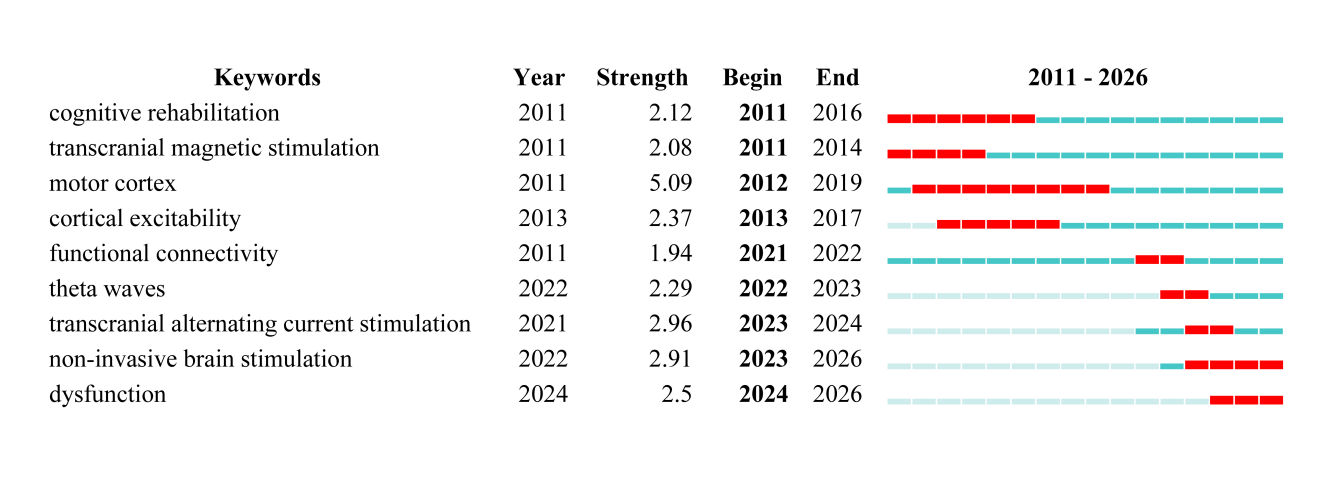
图10
关键词突现图"
| [1] | Safiri S, Ghaffari J A, Fazlollahi A, et al. Alzheimer's disease: a comprehensive review of epidemiology, risk factors, symptoms diagnosis, management, caregiving, advanced treatments and associated challenges[J]. Front Med (Lausanne), 2024, 11: 1474043. |
| [2] | Scheltens P, De Strooper B, Kivipelto M, et al. Alzheimer's disease[J]. Lancet, 2021, 397(10284): 1577-1590. |
| [3] | Zhang J F, Zhang Y L, Wang J X, et al. Recent advances in Alzheimer's disease: mechanisms, clinical trials and new drug development strategies[J]. Signal Transduct Target Ther, 2024, 9(1): 211. |
| [4] | De Paolis M L, Paoletti I, Zaccone C, et al. Transcranial alternating current stimulation (tACS) at gamma frequency: an up-and-coming tool to modify the progression of Alzheimer's disease[J]. Transl Neurodegener, 2024, 13: 33. |
| [5] | Fox M D, Buckner R L, Liu H S, et al. Resting-state networks link invasive and noninvasive brain stimulation across diverse psychiatric and neurological diseases[J]. Proc Natl Acad Sci U S A, 2014, 111(41): E4367-E4375. |
| [6] | Flöel A. tDCS-enhanced motor and cognitive function in neurological diseases[J]. Neuroimage, 2014, 85 Pt 3: 934-947. |
| [7] | Hsu W Y, Ku Y X, Zanto T P, et al. Effects of noninvasive brain stimulation on cognitive function in healthy aging and Alzheimer's disease: a systematic review and meta-analysis[J]. Neurobiol Aging, 2015, 36(8): 2348-2359. |
| [8] | Boggio P S, Ferrucci R, Mameli F, et al. Prolonged visual memory enhancement after direct current stimulation in Alzheimer's disease[J]. Brain Stimul, 2012, 5(3): 223-230. |
| [9] | Ladenbauer J, Ladenbauer J, Külzow N, et al. Promoting sleep oscillations and their functional coupling by transcranial stimulation enhances memory consolidation in mild cognitive impairment[J]. J Neurosci, 2017, 37(30): 7111-7124. |
| [10] | Ferrucci R, Mameli F, Guidi I, et al. Transcranial direct current stimulation improves recognition memory in Alzheimer disease[J]. Neurology, 2008, 71(7): 493-498. |
| [11] | Boggio P S, Khoury L P, Martins D C S, et al. Temporal cortex direct current stimulation enhances performance on a visual recognition memory task in Alzheimer disease[J]. J Neurol Neurosurg Psychiatry, 2009, 80(4): 444-447. |
| [12] | Khedr E M, Gamal N F E, El-Fetoh N A, et al. A double-blind randomized clinical trial on the efficacy of cortical direct current stimulation for the treatment of Alzheimer's disease[J]. Front Aging Neurosci, 2014, 6: 275. |
| [13] | Bystad M, Grønli O, Rasmussen I D, et al. Transcranial direct current stimulation as a memory enhancer in patients with Alzheimer's disease: a randomized, placebo-controlled trial[J]. Alzheimers Res Ther, 2016, 8(1): 13. |
| [14] | Kim C K, Lee Y R, Ong L, et al. Alzheimer's disease: key insights from two decades of clinical trial failures[J]. J Alzheimers Dis, 2022, 87(1): 83-100. |
| [15] | Yu T W, Lane H Y, Lin C H. Novel therapeutic approaches for Alzheimer's disease: an updated review[J]. Int J Mol Sci, 2021, 22(15): 8208. |
| [16] | Antal A, Bjekić J, Ganho-Ávila A, et al. Low intensity transcranial electric stimulation: safety, ethical, legal regulatory and application guidelines (2017-2025: an update): endorsed by the European Society for Brain Stimulation (ESBS) and by the International Federation for Clinical Neurophysiology (IFCN)[J]. Clin Neurophysiol, 2026, 184: 2111436. |
| [17] | Kar S K, Vidya K L. Transcranial direct current stimulation for psychiatric disorders: evidence and rationale[J]. Brain Netw Modul, 2025, 4(2): 23. |
| [18] | Kang D W, Wang S M, Um Y H, et al. Transcranial direct current stimulation and neuronal functional connectivity in MCI: role of individual factors associated to AD[J]. Front Psychiatry, 2024, 15: 1428535. |
| [19] | Luo Y P, Yang W J, Li N, et al. Anodal transcranial direct current stimulation can improve spatial learning and memory and attenuate Aβ42 burden at the early stage of Alzheimer's disease in APP/PS1 transgenic mice[J]. Front Aging Neurosci, 2020, 12: 134. |
| [20] | Elyamany O, Leicht G, Herrmann C S, et al. Transcranial alternating current stimulation (tACS): from basic mechanisms towards first applications in psychiatry[J]. Eur Arch Psychiatry Clin Neurosci, 2021, 271(1): 135-156. |
| [21] | Herrmann C S, Rach S, Neuling T, et al. Transcranial alternating current stimulation: a review of the underlying mechanisms and modulation of cognitive processes[J]. Front Hum Neurosci, 2013, 7: 279. |
| [22] | Antal A, Paulus W. Transcranial alternating current stimulation (tACS)[J]. Front Hum Neurosci, 2013, 7: 317. |
| [23] | Benussi A, Cantoni V, Grassi M, et al. Increasing brain gamma activity improves episodic memory and restores cholinergic dysfunction in Alzheimer's disease[J]. Ann Neurol, 2022, 92(2): 322-334. |
| [24] | Benussi A, Cantoni V, Cotelli M S, et al. Exposure to gamma tACS in Alzheimer's disease: a randomized, double-blind, sham-controlled, crossover, pilot study[J]. Brain Stimul, 2021, 14(3): 531-540. |
| [25] | Spencer R J, Wendell C R, Giggey P P, et al. Psychometric limitations of the mini-mental state examination among nondemented older adults: an evaluation of neurocognitive and magnetic resonance imaging correlates[J]. Exp Aging Res, 2013, 39(4): 382-397. |
| [26] | Meinzer M, Lindenberg R, Phan M T, et al. Transcranial direct current stimulation in mild cognitive impairment: behavioral effects and neural mechanisms[J]. Alzheimers Dement, 2015, 11(9): 1032-1040. |
| [27] | Dhaynaut M, Cappon D, Paciorek R, et al. Effects of modulating gamma oscillations via 40 Hz transcranial alternating current stimulation (tACS) on tau PET imaging in mild to moderate Alzheimer's disease[J]. J Nucl Med, 2020, 61(S1): 340. |
| [28] | Ornish D, Madison C, Kivipelto M, et al. Effects of intensive lifestyle changes on the progression of mild cognitive impairment or early dementia due to Alzheimer's disease: a randomized, controlled clinical trial[J]. Alzheimers Res Ther, 2024, 16(1): 122. |
| [29] | Ding X, Yin L, Zhang L, et al. Diabetes accelerates Alzheimer's disease progression in the first year post mild cognitive impairment diagnosis[J]. Alzheimers Dement, 2024, 20(7): 4583-4593. |
| [30] | Hou Y F, Liu F, Su G T, et al. Systematic review and meta-analysis of transcranial direct current stimulation (tDCS) for global cognition in mild cognitive impairment and Alzheimer's disease[J]. Geriatr Nurs, 2024, 59: 261-270. |
| [31] | Chen J J, Wang Z, Chen Q, et al. Transcranial direct current stimulation enhances cognitive function in patients with mild cognitive impairment and early/mid Alzheimer's disease: a systematic review and meta-analysis[J]. Brain Sci, 2022, 12(5): 562. |
| [32] | Hu M D, Nitsche M A, Lv Y, et al. The effects of repetitive transcranial magnetic and transcranial direct current stimulation on memory functions in older adults with mild cognitive impairment: a systematic review and meta-analysis[J]. Front Hum Neurosci, 2024, 18: 1436448. |
| [33] | Hathaway E, Morgan K, Carson M, et al. Transcranial electrical stimulation targeting limbic cortex increases the duration of human deep sleep[J]. Sleep Med, 2021, 81: 350-357. |
| [34] | Lawson R P, Zomorrodi R, Joseph M, et al. Assessing motor cortex excitability and its relationship with cortical atrophy in Alzheimer's dementia[J]. Can J Neurol Sci, 2025, 53(2): 1-8. |
| [35] | Orta-Salazar E, Feria-Velasco A I, Díaz-Cintra S. Primary motor cortex alterations in Alzheimer disease: a study in the 3xTg-AD model[J]. Neurologia (Engl Ed), 2019, 34(7): 429-436. |
| [36] | Yang W J, Wen H Z, Zhou L X, et al. After-effects of repetitive anodal transcranial direct current stimulation on learning and memory in a rat model of Alzheimer's disease[J]. Neurobiol Learn Mem, 2019, 161: 37-45. |
| [37] | Manenti R, Sandrini M, Gobbi E, et al. Effects of transcranial direct current stimulation on episodic memory in amnestic mild cognitive impairment: a pilot study[J]. J Gerontol B Psychol Sci Soc Sci, 2020, 75(7): 1403-1413. |
| [38] | Liu W, Zuo C, Chen L, et al. The whole-brain structural and functional connectome in Alzheimer's disease spectrum: a multimodal Bayesian meta-analysis of graph theoretical characteristics[J]. Neurosci Biobehav Rev, 2025, 174: 106174. |
| [39] | Li Y, Pereda Serras C, Blumenfeld J, et al. Cell-type-directed network-correcting combination therapy for Alzheimer's disease[J]. Cell, 2025, 188(20): 5516-5534.e18. |
| [40] | Brier M R, Thomas J B, Ances B M. Network dysfunction in Alzheimer's disease: refining the disconnection hypothesis[J]. Brain Connect, 2014, 4(5): 299-311. |
| [41] | Wang T, Yan S, Shan Y, et al. Modulation of cortical and hippocampal functional MRI connectivity following transcranial alternating current stimulation in mild Alzheimer disease[J]. Radiology, 2025, 315(3): e241463. |
| [42] | Zhang X, Lv R, Sun Y, et al. The safety and effectiveness of 40 Hz γ-tACS in Alzheimer's disease: a meta-analysis[J]. J Alzheimers Dis, 2024, 102(2): 295-307. |
| [43] | Iordan A D, Ryan S, Tyszkowski T, et al. High-definition transcranial direct current stimulation enhances network segregation during spatial navigation in mild cognitive impairment[J]. Cereb Cortex, 2022, 32(22): 5230-5241. |
| [44] | Cammisuli D M, Cignoni F, Ceravolo R, et al. Transcranial direct current stimulation (tDCS) as a useful rehabilitation strategy to improve cognition in patients with Alzheimer's disease and Parkinson's disease: an updated systematic review of randomized controlled trials[J]. Front Neurol, 2021, 12: 798191. |
| [45] | Prathum T, Chantanachai T, Vimolratana O, et al. A systematic review and meta-analysis of the impact of transcranial direct current stimulation on cognitive function in older adults with cognitive impairments: the influence of dosage parameters[J]. Alzheimers Res Ther, 2025, 17: 37. |
| [46] | Uehara M A, Kalia S, Campuzano M G, et al. Cognitive and neuropsychiatric effects of 40 Hz tACS simultaneously with cognitive exercises for dementia: a randomized, crossover, double-blind, sham-controlled study[J]. Medicina (Kaunas), 2025, 61(4): 757. |
| [47] | Hu Y Q, Jia Y, Sun Y, et al. Efficacy and safety of simultaneous rTMS-tDCS over bilateral angular gyrus on neuropsychiatric symptoms in patients with moderate Alzheimer's disease: a prospective, randomized, sham-controlled pilot study[J]. Brain Stimul, 2022, 15(6): 1530-1537. |
| [48] | Cappon D, Fox R, Den Boer T, et al. Tele-supervised home-based transcranial alternating current stimulation (tACS) for Alzheimer's disease: a pilot study[J]. Front Hum Neurosci, 2023, 17: 1168673. |
| [1] | 李锦萌, 柳君娜, 陈强, 毕鸿雁. 2011年至2025年远程医疗、可穿戴设备和人工智能在慢性阻塞性肺疾病肺康复中应用的文献计量分析[J]. 《中国康复理论与实践》, 2026, 32(7): 829-840. |
| [2] | 郭子扬, 曹明. 1987年至2025年残疾人社区康复研究的文献计量分析[J]. 《中国康复理论与实践》, 2026, 32(6): 665-676. |
| [3] | 韩天星, 刘昊天, 徐子淇, 彭晓涵, 王杨, 曹丹娜. 基于静息态磁共振功能成像对阿尔茨海默病轻度认知障碍期默认网络与内侧颞叶区脑功能连接研究的Meta分析[J]. 《中国康复理论与实践》, 2026, 32(5): 522-533. |
| [4] | 刘睿, 高振梅, 周星宇, 张琦, 吴建林. 2015年至2025年数字健康技术在脑卒中上肢运动功能康复中应用的文献计量分析[J]. 《中国康复理论与实践》, 2026, 32(5): 534-549. |
| [5] | 齐圆圆, 高海峰, 刘丽娜, 谢宇杰, 徐静, 高峰, 陈亮, 杨德刚, 李军. 1999年至2025年脊髓电刺激治疗脊髓损伤研究的文献计量分析[J]. 《中国康复理论与实践》, 2026, 32(4): 373-386. |
| [6] | 黄成, 沈扬艺, 卢碧莹, 刘通, 刘悦. 2016年至2025年动作观察疗法在脑卒中康复领域应用的文献计量分析[J]. 《中国康复理论与实践》, 2026, 32(4): 399-410. |
| [7] | 刘平, 周楠, 薛晓杰, 邵伟波. 脑卒中后吞咽障碍康复治疗技术应用研究的文献计量分析[J]. 《中国康复理论与实践》, 2026, 32(3): 294-303. |
| [8] | 蒲心语, 王靖萱, 王虎军, 修安达, 王颖鹏. 重复外周磁刺激在康复治疗中应用的文献计量分析[J]. 《中国康复理论与实践》, 2026, 32(3): 304-316. |
| [9] | 孙奎, 黄海伦, 刘永皑, 高恒. 脑机接口技术在脊髓损伤治疗领域的文献计量分析[J]. 《中国康复理论与实践》, 2026, 32(3): 317-328. |
| [10] | 何照楠, 张婷婷, 何照珂, 孟丽君. 基于BERTopic模型的我国康复伦理研究主题挖掘与内容分析[J]. 《中国康复理论与实践》, 2026, 32(2): 132-141. |
| [11] | 郭亚彬, 曾必云, 周阳. 2015年至2025年肌少症-疼痛共病研究的文献计量分析[J]. 《中国康复理论与实践》, 2026, 32(2): 151-161. |
| [12] | 李水艳, 李湘, 李彦慧, 陆翊濛, 李杜娟, 杨小良, 谢秋幼. 气道廓清技术在重症康复应用的文献计量分析[J]. 《中国康复理论与实践》, 2026, 32(2): 162-173. |
| [13] | 张军风, 陈昊, 杜宇征, 李琛, 于涛, 杨元庆. 2004年至2024年脑卒中后肢体痉挛非药物疗法的文献计量分析[J]. 《中国康复理论与实践》, 2026, 32(1): 45-58. |
| [14] | 高凯祥, 芦海涛. 2015年至2024年神经康复研究的文献计量分析[J]. 《中国康复理论与实践》, 2026, 32(1): 59-68. |
| [15] | 董丽军, 徐世豪, 陈秋华, 张璐, 尹小兵. 2015年至2025年虚拟现实技术在围术期患者负性情绪管理及术后康复中应用的文献计量分析[J]. 《中国康复理论与实践》, 2026, 32(1): 69-82. |
| 阅读次数 | ||||||
|
全文 |
|
|||||
|
摘要 |
|
|||||
|
||
