


《中国康复理论与实践》 ›› 2025, Vol. 31 ›› Issue (12): 1385-1397.doi: 10.3969/j.issn.1006-9771.2025.12.003
段富文1, 张倍齐2, 李丽2( )
)
收稿日期:2025-08-18
修回日期:2025-10-19
出版日期:2025-12-25
发布日期:2025-12-29
通讯作者:
李丽
E-mail:lili@hrbipe.edu.cn
作者简介:段富文(1999-),男,汉族,云南陇川县人,硕士研究生,主要研究方向:运动康复学(运动损伤康复与预防)。
基金资助:
DUAN Fuwen1, ZHANG Beiqi2, LI Li2()
Received:2025-08-18
Revised:2025-10-19
Published:2025-12-25
Online:2025-12-29
Contact:
LI Li
E-mail:lili@hrbipe.edu.cn
Supported by:摘要:
目的 系统综述运动干预对运动相关性脑震荡(SRC)的预防作用。
方法 系统检索中国知网、万方数据库、维普、Embase、PubMed、Web of Science、Cochrane Library、EBSBO等数据库关于运动干预对SRC预防作用的文献,检索时限为建库至2025年7月22日。采用PEDro量表对纳入文献进行方法学质量评估,遵循PRISMA指南提取相关数据进行系统综述。
结果 最终纳入29篇文献,其中以个体为分析单位的研究,共纳入3 892例受试者;以团队为分析单位的研究共涉及41个俱乐部;来自美国、英国、意大利、新西兰、澳大利亚、加拿大和德国等国家;发表时间跨度为2004年到2025年;PEDro量表评分4~8分。干预方法包括传统颈部抗阻训练、动态颈部抗阻训练和损伤预防计划。传统颈部抗阻训练(以徒手或弹力带为主,多为等长收缩),干预频率多为每次15~35 min、每周2~3 次、持续4~16周;动态颈部抗阻训练(涉及多平面等张或等速训练,使用特定设备进行),训练参数多为每次10~40 min、每周2~3次、持续6~14周;损伤预防计划(在常规训练前后加入颈部练习,整合神经肌肉控制、平衡训练、扰动训练与技术优化),多在赛季内以单次15~20 min、每周2~3次、持续3~9个月实施。三类干预对颈部肌力的提升效果最为稳健,而动态训练相较传统训练,可产生更大的多方向力量增益;部分研究还观察到运动干预对关键头部运动学参数的改善,这一效果在采用损伤预防计划以及基础颈部肌力较弱的个体中尤为突出。少数整群随机对照试验证实损伤预防计划可降低SRC发生率,并呈现依从性越高获益越大的剂量-效应关系。
结论 多数研究证实,运动干预对SRC的预防有积极影响,个别研究存在争议。规范、持续且依从性良好的运动干预能降低SRC风险,应作为团队层面的一级预防策略推广。
中图分类号:
段富文, 张倍齐, 李丽. 运动干预对运动相关性脑震荡预防作用的系统综述[J]. 《中国康复理论与实践》, 2025, 31(12): 1385-1397.
DUAN Fuwen, ZHANG Beiqi, LI Li. Preventive effect of exercise interventions on sport-related concussion: a systematic review[J]. Chinese Journal of Rehabilitation Theory and Practice, 2025, 31(12): 1385-1397.
表1
PICO框架"
| 人群(Population) | 干预(Intervention) | 比较(Comparison) | 结局(Outcome) |
|---|---|---|---|
| 高脑震荡风险的健康运动员 无颈部或脑震荡症状健康人 | 运动干预包括但不限于:传统颈部抗阻训练、动态颈部抗阻训练、多组分运动与损伤预防计划(包括平衡、核心、敏捷、抗干扰等) | 与对照组比较 | 运动相关脑震荡发病率 头部线性加速度和旋转加速度 等长颈部肌力 |
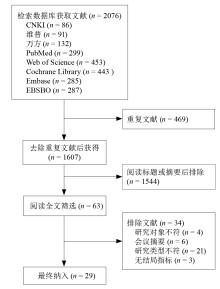
图1
文献筛选流程图"

表2
纳入文献质量评价"
| 纳入文献 | 资格标准 | 随机分配 | 分配隐藏 | 基线相似 | 受试施盲 | 治疗师施盲 | 评估者施盲 | 被试流失率≤ 15% | 意向性分析 | 组间统计比较 | 变异性测量 | 总分 |
|---|---|---|---|---|---|---|---|---|---|---|---|---|
| Burnett等[ | √ | √ | √ | √ | √ | √ | √ | √ | 7 | |||
| Mansell等[ | √ | √ | √ | √ | √ | √ | √ | 6 | ||||
| Kramer等[ | √ | √ | √ | √ | √ | √ | √ | √ | √ | 8 | ||
| Geary等[ | √ | √ | √ | √ | √ | √ | 5 | |||||
| Barrett 等[ | √ | √ | √ | √ | √ | √ | √ | √ | 7 | |||
| Hislop等[ | √ | √ | √ | √ | √ | √ | √ | √ | 7 | |||
| Attwood 等[ | √ | √ | √ | √ | √ | √ | √ | √ | √ | 8 | ||
| Eckner等[ | √ | √ | √ | √ | √ | √ | √ | √ | 7 | |||
| Becker 等[ | √ | √ | √ | √ | √ | √ | 5 | |||||
| Versteegh等[ | √ | √ | √ | √ | √ | √ | 5 | |||||
| Le Flao 等[ | √ | √ | √ | √ | √ | √ | 5 | |||||
| Müeller等[ | √ | √ | √ | √ | √ | √ | 5 | |||||
| Attwood等[ | √ | √ | √ | √ | √ | √ | √ | √ | 7 | |||
| Barden等[ | √ | √ | √ | √ | √ | 4 | ||||||
| Deng等[ | √ | √ | √ | √ | √ | √ | √ | √ | √ | 8 | ||
| Gillies等[ | √ | √ | √ | √ | √ | √ | 5 | |||||
| Peek 等[ | √ | √ | √ | √ | √ | √ | √ | √ | √ | 8 | ||
| Waring等[ | √ | √ | √ | √ | √ | √ | √ | √ | √ | 8 | ||
| Petrie等[ | √ | √ | √ | √ | √ | √ | 5 | |||||
| Schroeder等[ | √ | √ | √ | √ | √ | √ | √ | 6 | ||||
| Wahlquist等[ | √ | √ | √ | √ | √ | √ | 5 | |||||
| Schroeder等[ | √ | √ | √ | √ | √ | 4 | ||||||
| Thompson等[ | √ | √ | √ | √ | √ | √ | √ | 6 | ||||
| Wilson等[ | √ | √ | √ | √ | √ | √ | 5 | |||||
| Taylor等[ | √ | √ | √ | √ | √ | √ | 5 | |||||
| Hamlin等[ | √ | √ | √ | √ | √ | √ | √ | 6 | ||||
| Salmon等[ | √ | √ | √ | √ | √ | √ | 5 | |||||
| Maconi等[ | √ | √ | √ | √ | √ | √ | √ | 6 | ||||
| Fiebert等[ | √ | √ | √ | √ | √ | √ | 5 |
表3
纳入文献基本特征"
| 纳入文献 | 国家/地区 | 研究设计 | 人群 | n(C/T) | 干预措施 | 对照组 措施 | 干预时长/频率 | 测量方法/工具 | 主要结局指标 | 主要发现 |
|---|---|---|---|---|---|---|---|---|---|---|
| Burnett等[ | 澳大利亚 | RCT | 无颈部损伤的健康男性志愿者,年龄约(22.6±4.0)岁 | C:11 T1:12 T2: 9 | MCU 阻力训练、弹力带训练 | 不进行任何训练 | 每次约30 min,每周2 次,共10周 | MCU等长测力 | 等长颈部力量 | T1组等长颈部肌肉力量增幅显著优于对照;T2组亦显著优于对照但增幅低于T1组 |
| Mansell等[ | 美国 | RCT | 大学足球运动员,男性(19.2±0.9)岁,女性(19.2±0.9)岁 | 16/19 | 颈部等张训练仪阻力训练:3×10 次,55%~70% 10 RM | 常规训练,无颈部训练 | 每次3组,每周2次,共8周 | 运动捕捉、EMG、手持测力计 | 等长颈部力量、头颈段角加速度和位移、EMG、刚度 | 男性颈前屈力量和女性颈后屈力量显著提高,头加速度、EMG、刚度无显著训练效应 |
| Kramer等[ | 德国 | RCT | 健康女性18~27岁,平均(21±1.7)岁 | 13/13 | VR本体感觉阻力训练 | 弹力带抗阻训练 | 每次12 min,每周2 次,共10周 | VR系统、MRI、力传感器 | 等长颈部力量、颈肌肉横截面积、颈椎本体觉 | 肌群肥大显著优于对照组;对照组本体觉恶化,干预组保持稳定;两组的绝对肌力提升无显著性差异 |
| Geary 等[ | 英国 | QE | 男子橄榄球运动员:职业组(19.3±1.3)岁;半职业组(20.7±1.3)岁 | 10/15 | 等长颈部强化:仰卧位徒手抗阻 | 常规训练 | 每次12 min,每周2 次,共5周 | 手持测力计 | 最大等长颈部力量 | 各方向颈部等长力量显著提升;对照组无显著改变 |
| Barrett 等[ | 英国 | RCT | 男子U19橄榄球运动员,16~18岁 | 17/17 | 颈部弹力带阻力训练 | 常规训练 | 每次20 min,每周3 次,共6周 | 测力计 | 等长颈部力量 | 力量变化不显著 |
| Hislop 等[ | 英国 | cRCT | 中学男子橄榄球运动员(16.0±1.2)岁 | 1127/1325 | 每次训练或比赛前进行运动控制方案:平衡/扰动训练、包含颈肌等长抗阻的全身阻力训练、弹跳训练、落地与切入动作控制及技术反馈 | 常规热身 | 每周训练或比赛之前进行干预,每次20 min,持续整个赛季(8~12个月) | 教练与校医记录伤病,使用OSICS-10分类 | 伤病发生率、脑震荡发生率 | 每周完成3次或以上训练者比赛伤病发生率、接触性伤病和脑震荡发生率均显著下降 |
| Attwood等[ | 英国 | cRCT | 成年男子社区橄榄球运动员(25.5±5.6)岁 | 41个俱乐部(对照组19个/试验组22个) | 运动控制方案:平衡/本体感觉训练、阻力/扰动训练、着陆-变向-弹跳训练、颈肌等长训练 | 常规热身 | 训练日每周2次;比赛前每周1次,共42周 | 俱乐部协调员每周记录比赛时间、干预完成度、伤病OSICS-8分类,≥ 8 d缺赛记为时间损失伤病,负担定义为因伤病缺勤训练或比赛时间 | ≥ 8 d时间损失和 “总体”和“靶向”伤病发生率与负担;靶向部位:下肢、肩、头/颈 | 靶向伤病发生率和严重伤病均下降;下肢伤病发生率下降;脑震荡发生率和负担均下降;高依从组靶向伤病发生率与负担降低 |
| Eckner等[ | 美国 | QE | 青少年中学/高中运动员,年龄13~17 岁,平均(14.8±1.8)岁 | 4/13 | 8周徒手阻力+哑铃耸肩的颈部多平面强化(前后屈、侧屈、旋转) | 8周全身常规阻力训练(不含颈部专项) | 每周2次,共8周 | 运动捕捉、测力仪、EMG | 颈部峰值力矩、PLA和PAA,EMG | 颈峰值力矩和颈围显著提高;PLA和PAA在后屈、侧屈显著下降;肌肉激活提升 |
| Becker等[ | 德国 | QE | 男子足球运动员(20.3±3.6)岁 | 13/20 | 颈部前后屈肌力量训练:借助弹力带屈颈前前后屈、徒手等长头部训练 | 常规足球训练 | 每周2次,共6周 | 3D加速度计、力传感器 | PLA、 颈部等长力量 | 颈部肌力显著提高,未显著降低任意顶球条件下的PLA |
| Versteegh[ | 加拿大 | QE | 大学美式橄榄球男子运动员,年龄18~23 岁 | 10/8 | 新型动态颈部训练:利用多平面等张/等速旋转,联合传统徒手颈部抗阻 | 仅传统颈部徒手抗阻,每周2次 | 每周2次,共7周 | 手持测力仪 | 多平面等长颈部力量 | 综合颈肌力量和轴向旋转力量显著提高 |
| Le Flao等[ | 加拿大 | QE | 青少年足球运动员,年龄8~12 岁,平均(9.8±1.5)岁 | 25 | 颈部抗阻训练:弹力带、自重、徒手抗阻 | 无对照组 | 每周2次,共16周 | IMU | 头部运动学参数,颈部前后屈力量 | 颈部前后屈力量显著提高,头俯仰角显著下降,女性PLA显著下降 |
| Müeller等[ | 德国 | QE | 青少年U17/U19足球运动员,年龄15~18岁,平均16.7 岁 | 13/14 | 多组分训练:包括颈部阻力训练;躯干肌肉与神经肌肉稳定训练:弹力带、等长、徒手抗阻、扰动等 | 常规训练 | 每次15 min,每周2次,共14周 | 3-D加速度计,力传感器 | 头球时总、躯干、头部PLA,最大等长颈部力量 | 颈部前后屈、侧屈力量显著提高;低球速下总 PLA、躯干PLA、头部PLA均显著下降 |
| Attwood等[ | 英国 | RCT | U18男性区域青少年橄榄球运动员,年龄(16.9±0.6)岁 | 13/15 | 徒手抗阻等长颈部肌力训练 | 常规训练 | 每周3 次,共8周 | 手持测力计 | 最大等长颈部力量 | 总颈部力量显著增加,伸、左右侧屈均显著改善;颈前屈力量改善不显著 |
| Barden等[ | 英国 | QE | U12-U19男子学校橄榄球运动员,平均(15.6±1.8)岁 | 247/412 | Activate伤害预防锻炼计划(平衡、抗阻、弹跳练习,含4阶段递进) | 采用常规热身 | 每次15~20 min,每周3次,整个赛季(约4~6个月) | 学校教练自报训练和比赛、伤病与Activate 依从性 | 比赛/训练伤病发生率(/1000 h)及伤病负担(天/1000 h) | 比赛受伤率和训练受伤率分别下降23%和59 %,高依从组(≥ 3次/周):比赛受伤率下降32%,训练受伤率下降67% |
| Deng 等[ | 澳大利亚 | RCT | 精英女子足球/澳式足球运动员,年龄18~40 岁,平均(24.4±5.3)岁 | 20/20 | 徒手等长抗阻颈部强化 | 常规训练 | 12周,每周3次 | 手持测力计 | 峰值等长肌肉力量 | 除左侧屈力量外无显著组间差异;两组均随时间显著增强 |
| Gillies 等[ | 澳大利亚 | QE | 职业男子橄榄球运动员,年龄18~34 岁,其中前锋组(24.1±3.9)岁,后卫组 (22.5±3.0)岁 | 37 | 颈部等长力量强化计划(头套+弹力绳) | 无对照组 | 每周2~3次,2020赛季(≈ 29 周) | 手持测力计 | 最大等长颈部力量,颈部力量屈/伸比 | 两组的颈前屈力量均显著增加,屈/伸比提升 |
| Peek 等[ | 澳大利亚 | cRCT | 12~17 岁青少年足球运动员,年龄(14.6±0.8)岁 | 21/31 | FIFA 11+损伤预防计划联合3项颈部神经肌肉控制练习 | FIFA 11+伤害预防计划 | 每周3次,共5周 | 手持测力计、IMU | 等长颈部力量、PLA与PAV | 颈部力量显著上升,头球时PLA显著下降,女性PAV降幅更大 |
| Waring 等[ | 美国 | RCT | 大学足球运动员年龄18~22 岁,平均(20.15±1.35)岁 | 10/10 | 颈部等长力量强化,使用Shingo Imara™ 装置 | 仅参与常规足球体能训练 | 每周3次,共6周 | 手持测力计、IMU | 等长颈部力量、头球生物力学(PLA、PRA、) | 前/前外侧颈部力量显著提升;头球生物力学改善不显著 |
| Petrie等[ | 英国 | QE | 大学女子橄榄球队员,年龄18~22岁,平均(20.3±1.0)岁 | 14 | 渐进式颈部等长强化训练:从自重抗阻到弹力带 | 无对照组 | 每周2次,训练后实施共22周 | 固定架测力仪 | 等长颈部力量 | 颈部左右侧屈和前屈力量显著增加 |
| Schroeder 等[ | 美国 | RCT | 大学生/军校志愿者,年龄18~35 岁,平均(23.0±2.5)岁 | 13/13 | 使用TopSpin360动态训练器进行多平面动态训练 | 传统徒手到弹力带颈部训练 | 每周2~3次,共10周 | 固定测力仪 | 等长颈部力量 | 颈部前屈和后屈力量提升 |
| Wahlquist[ | 美国 | QE | U12女子足球运动员,年龄10~11岁,对照组(11.0±0.4)岁,试验组(10.6±0.5)岁 | 13/14 | “Get aHEAD Safely in Soccer™”项目干预:包括每周1次轻球头顶练习+每周2次颈/核心力量训练 | 常规训练 | 每周1次头球训练,每周2次颈部和核心力量训练,共3.5个月(1个赛季) | 冲击传感器,手持测力计 | 头冲击运动学(PLA、PRA、PRV)及颈/躯干前后屈肌力 | 颈前屈肌力和躯干屈肌力显著提升,而头冲击运动学两组无差异 |
| Schroeder等[ | 美国 | QE | 健康大学生18~29 岁(男性8例,女性8例),平均(23.2±2.8)岁 | 16 | TopSpin360动态训练器颈部训练 | 无对照组 | 每次10~15 min,平均每周2~3次,共14周 | 测力仪,TopSpin360 内置传感器 | 等长颈部肌肉力量、RFD | RFD显著上升,颈部后屈、颈部前屈、颈左侧屈等长颈部力量显著上升 |
| Thompson等[ | 加拿大 | RCT | 女大学生运动员,年龄(19.5 ±1.42)岁 | 9/8 | 多模式颈部训练:使用铁颈训练器和TopSpin360动态训练器进行动态训练 | 常规训练 | 每次约30 min,每周3次,共7周 | 软尺;手持测力计;TopSpin360, COBALT | 颈围、颈前前后屈肌力比、耐力、等长颈部肌肉力量与动态力量 | 颈围、颈部肌肉耐力、等长/动态力量、前后屈比显著提高 |
| Wilson等[ | 美国 | QE | 青少年足球运动员,平均(15.1±1.1)岁 | 33/50 | 6周基于网络的渐进式颈部训练 | 常规训练 | 每周3~7次,共6周 | 手持测力计 | 等长颈部力量 | 等长颈部前后屈、右侧屈力量显著提高 |
| Taylor 等[ | 美国 | QE | 军队男性,平均(38.6±6.7)岁 | 5/5 | MCU动态颈部阻力训练:前屈、后屈、左右侧屈 | 常规训练 | 每次40 min,每周3 次,共12周 | MCU等长测力 | 等长颈部力量 | 各方向颈部等长力量增加,4周开始出现效果12周内持续 |
| Hamlin等[ | 新西兰 | RCT | 业余男子橄榄球运动员,平均(20.1±2.0)岁 | 17/22 | 6周颈部专项阻力训练,含负重头具前后屈及左右侧屈等 | 常规训练 | 每次4项动作,每周3次,共6周 | 载荷传感器测峰值力 | 等长颈部力量 | 颈后屈、左右侧屈力量 显著提高,前屈无显著变化 |
| Salmon等[ | 加拿大 | RCT | 军用直升机空勤人员(37.2±4.5)岁 | C:8 T1:11 T2:10 | T1颈部耐力训练组弹力带动态抗阻训练 T2颈部协调训练组头部自重强化训练 | 常规训练 | 每次约30 min,每周3次,共12周 | 自定义固定测力架、头带传感器 | 颈最大等长力量,肌肉疲劳 | T1组在右侧前屈的最大力量显著提高,T2组颈部前屈、左右侧屈力量提高 |
| Maconi等[ (2016) | 意大利 | RCT | 业余男子橄榄球运动员,训练年限(9.4±4.5)年 | 11/12 | 颈部等长收缩、弹力带向心收缩及被动拉伸等训练 | 常规橄榄球训练 | 每次35 min,每周3次,共12周 | 定制等长测力台,载荷传感器 | 颈部最大等长力量,EMG RMS | 等长肌肉力量(除侧屈外)、RMS和活动范围(除旋转外)均有所增加,对照组无显著变化 |
| Fiebert等[ (2004) | 美国 | RCT | 无颈痛健康年轻成人,年龄20~30岁,平均(24.79±2.12)岁 | 27/21 | 6个抗重力颈部强化动作(前后屈、侧屈、旋转) | 无干预 | 每周3次,共4周 | 手持肌力计 | 等长颈部力量 | 各方向颈部等长力量显著增加,与对照组差异显著 |
| [1] |
PIERPOINT L A, COLLINS C. Epidemiology of sport-related concussion[J]. Clin Sports Med, 2021, 40(1): 1-18.
doi: 10.1016/j.csm.2020.08.013 |
| [2] |
PATRICIOS J S, SCHNEIDER K J, DVORAK J, et al. Consensus statement on concussion in sport: the 6th International Conference on Concussion in Sport-Amsterdam, October 2022[J]. Br J Sports Med, 2023, 57(11): 695-711.
doi: 10.1136/bjsports-2023-106898 |
| [3] |
LINCOLN A E, CASWELL S V, ALMQUIST J L, et al. Trends in concussion incidence in high school sports: a prospective 11-year study[J]. Am J Sports Med, 2011, 39(5): 958-963.
doi: 10.1177/0363546510392326 pmid: 21278427 |
| [4] |
ELLIOTT J, HERON N, VERSTEEGH T, et al. Injury reduction programs for reducing the incidence of sport-related head and neck injuries including concussion: a systematic review[J]. Sports Med, 2021, 51(11): 2373-2388.
doi: 10.1007/s40279-021-01501-1 pmid: 34143411 |
| [5] |
COVASSIN T, MORAN R, ELBIN R J. Sex differences in reported concussion injury rates and time loss from participation: an update of the National Collegiate Athletic Association Injury Surveillance Program from 2004-2005 through 2008-2009[J]. J Athl Train, 2016, 51(3): 189-194.
doi: 10.4085/1062-6050-51.3.05 |
| [6] |
BLENNOW K, BRODY D L, KOCHANEK P M, et al. Traumatic brain injuries[J]. Nat Rev Dis Primers, 2016, 2(1): 16084.
doi: 10.1038/nrdp.2016.84 |
| [7] |
ROWSON S, DUMA S M. Brain injury prediction: assessing the combined probability of concussion using linear and rotational head acceleration[J]. Ann Biomed Eng, 2013, 41(5): 873-882.
doi: 10.1007/s10439-012-0731-0 pmid: 23299827 |
| [8] |
CAMPOLETTANO E T, GELLNER R A, SMITH E P, et al. Development of a concussion risk function for a youth population using head linear and rotational acceleration[J]. Ann Biomed Eng, 2020, 48(1): 92-103.
doi: 10.1007/s10439-019-02382-2 pmid: 31659605 |
| [9] |
ROWSON S, BROLINSON G, GOFORTH M, et al. Linear and angular head acceleration measurements in collegiate football[J]. J Biomech Eng, 2009, 131(6): 061016.
doi: 10.1115/1.3130454 |
| [10] |
ROWSON S, BLAND M L, CAMPOLETTANO E T, et al. Biomechanical perspectives on concussion in sport[J]. Sports Med Arthrosc Rev, 2016, 24(3): 100-107.
doi: 10.1097/JSA.0000000000000121 pmid: 27482775 |
| [53] |
COONEY N J, SOWMAN P, SCHILATY N, et al. Head and neck characteristics as risk factors for and protective factors against mild traumatic brain injury in military and sporting populations: a systematic review[J]. Sports Med, 2022, 52(9): 2221-2245.
doi: 10.1007/s40279-022-01683-2 pmid: 35522377 |
| [54] |
WILLIAMS E M P, PETRIE F J, PENNINGTON T N, et al. Sex differences in neck strength and head impact kinematics in university rugby union players[J]. Eur J Sport Sci, 2022, 22(11): 1649-1658.
doi: 10.1080/17461391.2021.1973573 |
| [55] |
ECKNER J T, OH Y K, JOSHI M S, et al. Effect of neck muscle strength and anticipatory cervical muscle activation on the kinematic response of the head to impulsive loads[J]. Am J Sports Med, 2014, 42(3): 566-276.
doi: 10.1177/0363546513517869 pmid: 24488820 |
| [56] |
COURNOYER J, KONCAN D, GILCHRIST M D, et al. The influence of neck stiffness on head kinematics and maximum principal strain associated with youth american football collisions[J]. J Appl Biomech, 2021, 37(3): 288-295.
doi: 10.1123/jab.2020-0070 |
| [57] |
TIERNEY R T, SITLER M R, SWANIK C B, et al. Gender differences in head-neck segment dynamic stabilization during head acceleration[J]. Med Sci Sports Exerc, 2005, 37(2): 272-279.
doi: 10.1249/01.MSS.0000152734.47516.AA |
| [11] |
GARRETT J M, MASTROROCCO M, PEEK K, et al. The relationship between neck strength and sports-related concussion in team sports: a systematic review with meta-analysis[J]. J Orthop Sports Phys Ther, 2023, 53(10): 585-593.
doi: 10.2519/jospt.2023.11727 |
| [12] |
LE FLAO E, BRUGHELLI M, HUME P A, et al. Assessing head/neck dynamic response to head perturbation: a systematic review[J]. Sports Med, 2018, 48(11): 2641-2658.
doi: 10.1007/s40279-018-0984-3 pmid: 30242627 |
| [13] |
COLLINS C L, FLETCHER E N, FIELDS S K, et al. Neck strength: a protective factor reducing risk for concussion in high school sports[J]. J Prim Prev, 2014, 35(5): 309-319.
doi: 10.1007/s10935-014-0355-2 pmid: 24930131 |
| [14] |
HISLOP M D, STOKES K A, WILLIAMS S, et al. Reducing musculoskeletal injury and concussion risk in schoolboy rugby players with a pre-activity movement control exercise programme: a cluster randomised controlled trial[J]. Br J Sports Med, 2017, 51(15): 1140-1146.
doi: 10.1136/bjsports-2016-097434 |
| [15] |
ATTWOOD M J, ROBERTS S P, TREWARTHA G, et al. Efficacy of a movement control injury prevention programme in adult men's community rugby union: a cluster randomised controlled trial[J]. Br J Sports Med, 2018, 52(6): 368-474.
doi: 10.1136/bjsports-2017-098005 |
| [16] |
BARDEN C, HANCOCK M V, STOKES K A, et al. Effectiveness of the activate injury prevention exercise programme to prevent injury in schoolboy rugby union[J]. Br J Sports Med, 2022, 56(14): 812-817.
doi: 10.1136/bjsports-2021-105170 |
| [17] | 赵坤, 吕俊芳. 脑震荡患者不同阶段的抑郁症状表现[J]. 中国康复理论与实践, 2006, 12(5): 417-419. |
| ZHAO K, LÜ J F. Characteristics of HAMD at different stages after cerebral concussion[J]. Chin J Rehabil Theory Pract, 2006, 12(5): 417-419. | |
| [18] | 任喜平. 冰球运动相关性脑震荡研究进展[J]. 中国体育科技, 2023, 59(8): 3-13. |
| REN X P. Research progress on ice hockey related concussion[J]. Chin Sport Sci Technol, 2023, 59(8): 3-13. | |
| [19] | 刘哲, 丁杰, 李伟, 等. 脑震荡的运动康复方式[J]. 体育科技, 2024, 45(5): 3-5. |
| LIU Z, DING J, LI W, et al. Exercise rehabilitation methods for concussion[J]. Sport Sci Technol, 2024, 45(5): 3-5. | |
| [20] | 周子顺, 晋腾, 汤冠, 等. 足球运动中头部损伤特征以及防控措施的研究综述[J]. 安徽体育科技, 2025, 46(2): 55-64. |
| ZHOU Z S, JIN T, TANG G, et al. A review of the characteristics of head injury and prevention and control measures in football[J]. J Anhui Sports Sci, 2025, 46(2): 55-64. | |
| [21] |
MOHER D, LIBERATI A, TETZLAFF J, et al. Preferred reporting items for systematic reviews and meta-analyses: the PRISMA statement[J]. PLoS Med, 2009, 6(7): e1000097.
doi: 10.1371/journal.pmed.1000097 |
| [22] |
CASHIN A G, MCAULEY J H. Clinimetrics: Physiotherapy Evidence Database (PEDro) Scale[J]. J Physiother, 2020, 66(1): 59.
doi: S1836-9553(19)30092-X pmid: 31521549 |
| [23] |
BURNETT A F, NAUMANN F L, PRICE R S, et al. A comparison of training methods to increase neck muscle strength[J]. Work, 2005, 25(3): 205-210.
pmid: 16179769 |
| [24] | MANSELL J, TIERNEY R T, SITLER M R, et al. Resistance training and head-neck segment dynamic stabilization in male and female collegiate soccer players[J]. J Athl Train, 2005, 40(4): 310-319. |
| [25] |
KRAMER M, HOHL K, BOCKHOLT U, et al. Training effects of combined resistance and proprioceptive neck muscle exercising[J]. J Back Musculoskelet Rehabil, 2013, 26(2): 189-197.
doi: 10.3233/BMR-130368 pmid: 23640321 |
| [26] |
GEARY K, GREEN B S, DELAHUNT E. Effects of neck strength training on isometric neck strength in rugby union players[J]. Clin J Sport Med, 2014, 24(6): 502-508.
doi: 10.1097/JSM.0000000000000071 pmid: 24561636 |
| [27] | BARRETT M D, MCLOUGHLIN T F, GALLAGHER K R, et al. Effectiveness of a tailored neck training program on neck strength, movement, and fatigue in under-19 male rugby players: a randomized controlled pilot study[J]. Open Access J Sports Med, 2015, 6: 137-147. |
| [28] |
ECKNER J T, GOSHTASBI A, CURTIS K, et al. Feasibility and effect of cervical resistance training on head kinematics in youth athletes: a pilot study[J]. Am J Phys Med Rehabil, 2018, 97(4): 292-297.
doi: 10.1097/PHM.0000000000000843 |
| [29] | BECKER S, BERGER J, BACKFISCH M, et al. Effects of a 6-week strength training of the neck flexors and extensors on the head acceleration during headers in soccer[J]. J. Sports Sci Med, 2019, 18(4): 729-737. |
| [30] |
VERSTEEGH T H, DICKEY J P, EMERY C A, et al. Evaluating the effects of a novel neuromuscular neck training device on multiplanar static and dynamic neck strength: a pilot study[J]. J Strength Cond Res, 2020, 34(3): 708-716.
doi: 10.1519/JSC.0000000000003091 pmid: 30946260 |
| [31] |
LE FLAO E, PICHARDO A W, GANPATT S, et al. An accessible, 16-week neck strength training program improves head kinematics following chest perturbation in young soccer athletes[J]. J Sport Rehabil, 2021, 30(8): 1158-1165.
doi: 10.1123/jsr.2020-0537 |
| [32] | MÜELLER C, ZENTGRAF K. Neck and trunk strength training to mitigate head acceleration in youth soccer players[J]. J Strength Cond Res, 2021, 35: S81-S89. |
| [33] |
ATTWOOD M J, HUDD L J W, ROBERTS S P, et al. Eight weeks of self-resisted neck strength training improves neck strength in age-grade rugby union players: a pilot randomized controlled trial[J]. Sports Health, 2022, 14(4): 500-507.
doi: 10.1177/19417381211044736 |
| [34] |
DENG C L, PEARCE A J, MENTIPLAY B F, et al. An isometric neck strengthening program does not improve neck strength in elite women's football-code athletes: a randomised controlled trial[J]. J Sci Med Sport, 2022, 25(4): 327-333.
doi: 10.1016/j.jsams.2021.10.009 |
| [35] |
GILLIES L, MCKAY M, KERTANEGARA S, et al. The implementation of a neck strengthening exercise program in elite rugby union: a team case study over one season[J]. Phys Ther Sport, 2022, 55: 248-255.
doi: 10.1016/j.ptsp.2022.05.003 pmid: 35576885 |
| [36] |
PEEK K, ANDERSEN J, MCKAY M J, et al. The effect of the FIFA 11+with added neck exercises on maximal isometric neck strength and peak head impact magnitude during heading: a pilot study[J]. Sports Med, 2022, 52(3): 655-668.
doi: 10.1007/s40279-021-01564-0 |
| [37] |
WARING K M, SMITH E R, AUSTIN G P, et al. Exploring the effects of a neck strengthening program on purposeful soccer heading biomechanics and neurocognition[J]. Int J Sports Phys Ther, 2022, 17(6): 1043-1052.
doi: 10.26603/001c.38327 pmid: 36237655 |
| [38] |
PETRIE F J, WILLIAMS E M P, MACKINTOSH K A, et al. Assessing the feasibility of a neck-strength training intervention in university women's rugby[J]. Eur J Sport Sci, 2024, 24(4): 466-473.
doi: 10.1002/ejsc.v24.4 |
| [39] |
SCHROEDER L H, MCDANIEL A T, WANG Y, et al. Evaluating neck-strengthening protocols to reduce the incidence of traumatic brain injury: traditional vs. nontraditional neck-strengthening techniques[J]. J Strength Cond Res, 2024, 38(7): 1266-1274.
doi: 10.1519/JSC.0000000000004587 |
| [40] |
WAHLQUIST V E, GLUTTING J J, KAMINSKI T W. Examining the influence of the Get aHEAD Safely in Soccer™ program on head impact kinematics and neck strength in female youth soccer players[J]. Res Sports Med, 2024, 32(1): 17-27.
doi: 10.1080/15438627.2022.2079982 |
| [41] |
SCHROEDER L H, TYNDALL M C, MCDANIEL A T, et al. Evaluating a 14-week neck strengthening protocol for neuromuscular indicators associated with head and neck trauma[J]. Sports Med Health Sci, 2025, 7(1): 61-67.
doi: 10.1016/j.smhs.2024.04.002 pmid: 39649794 |
| [42] |
THOMPSON B J, LATTIMER L J. A pilot study on the effects of multimodal cervical exercise training on clinical concussion risk factors in female athletes[J]. Phys Ther Sport, 2025, 72: 39-45.
doi: 10.1016/j.ptsp.2025.01.003 pmid: 39919532 |
| [43] |
WILSON J C, LEVEK C, DAOUD A K, et al. Web-based exercise program increases cervical strength in adolescent athletes[J]. J Strength Cond Res, 2021, 35(4): 1149-1155.
doi: 10.1519/JSC.0000000000002907 |
| [44] | TAYLOR M, HODGDON J, GRISWOLD L, et al. Cervical resistance training: effects on isometric and dynamic strength[J]. Aviat Space Environ Med, 2006, 77: 1131-1135. |
| [45] | HAMLIN M, DEUCHRESS R, ELLIOT C, et al. Effect of a 6-week exercise intervention for improved neck muscle strength in amateur male rugby union players[J]. J Sport Exerc Sci, 2020, 4(1): 33-39. |
| [46] |
SALMON D M, HARRISON M F, SHARPE D, et al. Exercise therapy for improved neck muscle function in helicopter aircrew[J]. Aviat Space Environ Med, 2013, 84(10): 1046-1054.
doi: 10.3357/ASEM.3593.2013 |
| [47] |
MACONI F, VENTURELLI M, LIMONTA E, et al. Effects of a 12-week neck muscles training on muscle function and perceived level of muscle soreness in amateur rugby players[J]. Sport Sci Health, 2016, 12(3): 443-452.
doi: 10.1007/s11332-016-0314-9 |
| [48] |
FIEBERT I, ROACH K, CHO P, et al. The effects of antigravity unsupervised home cervical muscle strengthening protocol on cervical strength in healthy young adults[J]. J Back Musculoskelet Rehabil, 2004, 17: 41-49.
doi: 10.3233/BMR-2004-17202 |
| [49] |
THORSTENSSON A, HULTÉN B, VON DÖBELN W, et al. Effect of strength training on enzyme activities and fibre characteristics in human skeletal muscle[J]. Acta Physiol Scand, 1976, 96(3): 392-398.
pmid: 179278 |
| [50] |
HäKKINEN K, ALÉN M, KOMI P V. Changes in isometric force- and relaxation-time, electromyographic and muscle fibre characteristics of human skeletal muscle during strength training and detraining[J]. Acta Physiol Scand, 1985, 125(4): 573-585.
pmid: 4091001 |
| [51] |
BANDY W D, LOVELACE-CHANDLER V, MCKITRICK-BANDY B. Adaptation of skeletal muscle to resistance training[J]. J Orthop Sports Phys Ther, 1990, 12(6): 248-255.
doi: 10.2519/jospt.1990.12.6.248 |
| [52] |
SANTOS P D G, VAZ J R, CORREIA J, et al. Long-term neurophysiological adaptations to strength training: a systematic review with cross-sectional studies[J]. J Strength Cond Res, 2023, 37(10): 2091-2105.
doi: 10.1519/JSC.0000000000004543 pmid: 37369087 |
| [1] | 杨同念, 任杰, 肖辉. 儿童青少年身体活动对焦虑的效果:系统综述的系统综述[J]. 《中国康复理论与实践》, 2025, 31(8): 883-888. |
| [2] | 王晓锋, 胡梦巧, 汪嫣, 魏坤, 徐文竹, 任丹, 马晔. 外骨骼机器人辅助步态训练对脑卒中和脊髓损伤下肢功能康复效果的系统综述[J]. 《中国康复理论与实践》, 2025, 31(8): 914-921. |
| [3] | 顾逸青, 程舒芃, 李勇强, 毛二莉, 励建安. 成年气管切开患者拔管的直接策略与堵管策略对比的系统综述[J]. 《中国康复理论与实践》, 2025, 31(6): 666-673. |
| [4] | 王梅, 朱文平. 身体活动干预2型糖尿病患者的健康效益:系统综述的系统综述[J]. 《中国康复理论与实践》, 2025, 31(5): 553-560. |
| [5] | 叶绿, 常晶, 凌海润. 网络行为成瘾的运动干预效果:系统综述的系统综述[J]. 《中国康复理论与实践》, 2025, 31(4): 431-440. |
| [6] | 朱志强, 徐巧玲, 邵雪云. 肥胖和超重儿童参与身体活动的健康效益:系统综述的系统综述[J]. 《中国康复理论与实践》, 2025, 31(3): 296-305. |
| [7] | 蔡倩, 张溪, 苏海荣, 刘娜, 黄颖, 李际强, 夏金根, 郑德采. 吸气肌训练对脱机失败者脱机疗效的系统综述[J]. 《中国康复理论与实践》, 2025, 31(3): 306-313. |
| [8] | 徐晓红, 钟晓珂, 孙思怡, 张祁, 程怀春. 轻度认知障碍老年人参与艺术治疗心理健康效益的系统综述[J]. 《中国康复理论与实践》, 2025, 31(2): 165-171. |
| [9] | 杨益成, 王丹丹, 沈群策, 张磊, 吴雪萍. 癌症患者化疗期间运动干预焦虑和抑郁状态效果的Meta分析[J]. 《中国康复理论与实践》, 2025, 31(2): 184-193. |
| [10] | 杨文睿, 崔思栋, 曾莉. 虚拟与增强现实对孤独症谱系障碍儿童青少年认知、情绪和适应性行为干预效果的系统综述[J]. 《中国康复理论与实践》, 2024, 30(9): 1026-1033. |
| [11] | 周静, 张晓晓, 丁忠冰, 陈建超, 魏星星, 林姝琦. 智力与发展性残疾儿童言语与语言障碍康复的系统综述[J]. 《中国康复理论与实践》, 2024, 30(8): 894-902. |
| [12] | 杨家坤, 张晓侠. 适应性体育活动对智力与发展性残疾儿童功能、活动和参与效益的系统综述[J]. 《中国康复理论与实践》, 2024, 30(7): 768-777. |
| [13] | 唐乐天, 黄兆欣, 刘超, 肖晓飞. 前交叉韧带重建术后患者高血流限制训练康复效果的系统综述[J]. 《中国康复理论与实践》, 2024, 30(7): 789-796. |
| [14] | 魏晓微. 数字赋能技术促进智力与发展性残疾儿童身体活动和健康的系统综述[J]. 《中国康复理论与实践》, 2024, 30(5): 497-504. |
| [15] | 王红志, 杨剑. 虚拟现实技术在脑性瘫痪儿童青少年身体活动和健康中的应用:系统综述的系统综述[J]. 《中国康复理论与实践》, 2024, 30(5): 505-512. |
| 阅读次数 | ||||||
|
全文 |
|
|||||
|
摘要 |
|
|||||
|
||
