



《中国康复理论与实践》 ›› 2022, Vol. 28 ›› Issue (8): 889-896.doi: 10.3969/j.issn.1006-9771.2022.08.003
陈婷婷1a,钟晓珂2,温柔1b( )
收稿日期:2022-08-02
修回日期:2022-08-08
出版日期:2022-08-25
发布日期:2022-08-30
通讯作者:
温柔
E-mail:wenrou@bda.edu.cn
作者简介:陈婷婷(1986-),女,汉族,安徽芜湖市人,博士研究生,主要研究方向:舞蹈脑科学及舞蹈教育心理学。
基金资助:
CHEN Tingting1a,ZHONG Xiaoke2,WEN Rou1b()
Received:2022-08-02
Revised:2022-08-08
Published:2022-08-25
Online:2022-08-30
Contact:
WEN Rou
E-mail:wenrou@bda.edu.cn
Supported by:摘要:
目的 系统综述舞蹈对儿童认知功能的干预效果,梳理儿童舞蹈干预方案设计的影响因素。
方法 采用主题词检索方法,在PubMed、Web of Science、EBSCO、Cochrane图书馆、中国知网、维普和万方数据库,检索舞蹈影响儿童认知功能发展的相关文献,检索时间为建库至2022年6月1日。经筛选从文献中提取作者、国家、发表时间、研究对象、研究方法、干预过程、测量工具和结局指标,并采用物理治疗证据数据库(PEDro)量表进行方法学质量评价。
结果 最终纳入英文文献10篇,均为随机对照试验或准试验设计,研究对象包括正常发展儿童和发展障碍儿童,整体研究质量较高。舞蹈活动干预方案包括舞蹈训练课程、舞蹈康复训练、舞蹈课间操和有氧舞蹈,其中学校开展的舞蹈训练课程最多;舞蹈对儿童认知功能的促进效益主要表现为增强感觉运动同步,提高注意力和执行功能;舞蹈活动的剂量和认知负荷是影响干预效果的重要因素。
结论 短时和长期的舞蹈活动,可以有效提升儿童的感觉运动同步、注意力和执行功能,其中对感觉运动同步、注意力维持时间和工作记忆容量的改善效果最为明显。
中图分类号:
陈婷婷,钟晓珂,温柔. 舞蹈活动改善儿童认知功能的系统综述[J]. 《中国康复理论与实践》, 2022, 28(8): 889-896.
CHEN Tingting,ZHONG Xiaoke,WEN Rou. Effects of dance activity on cognitive function in children:a systematic review[J]. 《Chinese Journal of Rehabilitation Theory and Practice》, 2022, 28(8): 889-896.
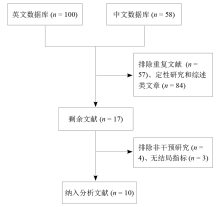
图1
文献筛选流程"

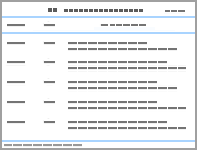
表1
纳入文献基本特征"
| 作者 | 国家 | 研究设计 | 研究对象 | 干预方式 | 干预地点 | 干预方案 | 测量工具 |
|---|---|---|---|---|---|---|---|
| Bégel等[ | 法国 | 准试验设计 | 正常发展儿童(对照组):n = 19,年龄7~10.6岁 小脑发育异常儿童(实验组):n = 7,年龄7.5~10.3岁 | 舞蹈康复训练vs.无干预 | 大学 | 每次90 min,每周2次,共7周 | BAASTA、TEA-ch |
| Chatzihidiroglou等[ | 希腊 | RCT | 正常发展儿童(对照组):n = 20,平均年龄5岁 正常发展儿童(实验组):n = 22,平均年龄5岁 | 舞蹈训练课程vs.自由游戏活动 | 学校 | 每次45 min,每周2次,共8周 | K节奏测试 |
| Cherriere等[ | 加拿大 | RCT | 腓骨肌萎缩症儿童(对照组):n = 4,平均年龄9岁 腓骨肌萎缩症儿童(实验组):n = 5,平均年龄10.2岁 | 舞蹈康复训练vs.无干预 | 医院 | 每次60 min,每周2次,共10周 | Mira-Stambak节奏试验、TEA-ch、DST |
| Cofini等[ | 意大利 | RCT | 学习障碍儿童(对照组):n = 15,年龄9~11岁 学习障碍儿童(实验组):n = 15,年龄9~11岁 | 舞蹈活动+认知训练vs.认知训练 | 医院 | 每次60 min,每周1次,共6个月 | CPT、DST、Stroop任务 |
| Kuilnna等[ | 美国 | 准试验设计 | 正常发展儿童(对照组):n = 104,年龄8~11岁 正常发展儿童(实验组):n = 88,年龄8~11岁 | 有氧舞蹈vs.无干预 | 学校 | 一次性45 min | d2注意力测验 |
| Oppici等[ | 澳大利亚 | RCT | 正常发展儿童(对照组):n = 20,年龄8~10岁 正常发展儿童(实验组1):n = 30,年龄8~10岁 正常发展儿童(实验组2):n = 30,年龄8~10岁 | 高认知舞蹈活动vs.低认知舞蹈活动vs.无干预 | 学校 | 每次60 min,每周2次,共7周 | LSWMT、DCCS、Flanker任务 |
| Rudd等[ | 澳大利亚 | RCT | 正常发展儿童(对照组):n = 31,年龄6~7岁 正常发展儿童(实验组):n = 31,年龄6~7岁 | 编舞课程vs.创意舞动 | 学校 | 每次50 min,每周2次,共8周 | LSWMT、DCCS、Flanker任务 |
| Shen等[ | 中国 | 准试验设计 | 正常发展儿童(对照组):n = 30,年龄5~6岁 正常发展儿童(实验组):n = 30,年龄5~6岁 | 街舞课程vs.无干预 | 学校 | 每次40~50 min,每周3次,共8周 | ANT、DST、DCCS、Go-nogo任务 |
| van den Berg等[ | 荷兰 | RCT | 正常发展儿童(对照组):n = 249,年龄9~12岁 正常发展儿童(实验组):n = 263,年龄9~12岁 | 舞蹈课间操vs.观看健康教育视频 | 学校 | 每次10 min,每周5次,共9周 | d2 Test,ANT,VFT,Flanker、Stroop任务 |
| Zinelabidine等[ | 突尼斯 | RCT | 正常发展儿童(对照组):n = 22,年龄9~11岁 正常发展儿童(实验组):n = 19,年龄9~11岁 | 有氧舞蹈vs.无干预 | 学校 | 每次45 min,每周2次,共8周 | DRT、TMT、Stroop任务 |
表2
纳入研究PICO分析"
| 人群 (people) | 干预方式 (intervention) | 比较 (comparison) | 结局 (outcome) | |
|---|---|---|---|---|
| 正常发展儿童 | 舞蹈训练课程 [ | 在学校已有课程体系基础上,增设舞蹈相关训练课程,学生跟随老师学习或编创不同的舞蹈动作 | 不干预或游戏活动 | 提升感觉运动同步,增强注意力,改善执行功能 |
| 舞蹈课间操[ | 将舞蹈元素融入课间操,以强身健体和愉悦身心为主要目的 | 健康教育 | 认知功能改善无统计学意义 | |
| 有氧舞蹈[ | 配合音乐有节奏舞动的有氧运动,是舞蹈与健美操的有机结合 | 不干预 | 增强注意力,改善执行功能 | |
| 发展异常儿童 | 舞蹈康复训练[ | 学习不同舞种的动作序列,提高身体各部分的灵活性和协调性,增强身体表达意识 | 不干预 | 提升感觉运动同步,增强注意力,改善工作记忆 |
表3
纳入研究的PEDro量表评分"
| 研究 | 资格标准 | 随机分配 | 分配隐藏 | 基线相似 | 被试施盲 | 治疗师施盲 | 评估者施盲 | 被试流失率≤ 15% | ITT意向治疗分析 | 组间统计比较 | 报告点测量和变异量值 | 总分 |
|---|---|---|---|---|---|---|---|---|---|---|---|---|
| Bégel等[ | √ | √ | √ | √ | √ | 4 | ||||||
| Chatzihidiroglou等[ | √ | √ | √ | √ | √ | √ | √ | √ | 7 | |||
| Cherriere等[ | √ | √ | √ | √ | √ | √ | √ | √ | √ | √ | 9 | |
| Cofini等[ | √ | √ | √ | √ | √ | √ | √ | 6 | ||||
| Kuilnna等[ | √ | √ | √ | √ | √ | √ | √ | 6 | ||||
| Oppici等[ | √ | √ | √ | √ | √ | √ | √ | √ | √ | 8 | ||
| Rudd等[ | √ | √ | √ | √ | √ | √ | √ | √ | √ | 8 | ||
| Shen等[ | √ | √ | √ | √ | √ | √ | √ | 6 | ||||
| van den Berg等[ | √ | √ | √ | √ | √ | √ | √ | √ | √ | √ | √ | 10 |
| Zinelabidine等[ | √ | √ | √ | √ | √ | √ | √ | √ | 7 |
| [1] |
LÖVDÉN M, FRATIGLIONI L, GLYMOUR M M, et al. Education and cognitive functioning across the life span[J]. Psychol Sci Public Interest, 2020, 21(1): 6-41.
doi: 10.1177/1529100620920576 |
| [2] | 李艳玮, 李燕芳. 儿童青少年认知能力发展与脑发育[J]. 心理科学进展, 2010, 18(11): 1700-1706. |
| LI Y W, LI Y F. The relationship between cognitive and brain development in children and adolescents[J]. Adv Psychol Sci, 2010, 18(11): 1700-1706. | |
| [3] | 周成林, 金鑫虹. 从脑科学诠释体育运动提升学习效益的理论与实践[J]. 上海体育学院学报, 2021, 45(1): 20-28. |
| ZHOU C L, JIN X H. Theory and practice of sports to promote learning efficiency from the perspective of brain science[J]. J Shanghai Univ Sport, 2021, 45(1): 20-28. | |
| [4] |
MALANCHINI M, RIMFELD K, ALLEGRINI A G, et al. Cognitive ability and education: How behavioural genetic research has advanced our knowledge and understanding of their association[J]. Neurosci Biobehav Rev, 2020, 111: 229-245.
doi: 10.1016/j.neubiorev.2020.01.016 |
| [5] |
TIKHOMIROVA T, MALYKH A, MALYKH S. Predicting academic achievement with cognitive abilities: cross-sectional study across school education[J]. Behav Sci, 2020, 10(10): 158.
doi: 10.3390/bs10100158 |
| [6] |
ESPOSITO A G, BAUER P J. Determinants of elementary-school academic achievement: component cognitive abilities and memory integration[J]. [ahead of print]. Child Dev, 2022. doi: 10.1111/cdev.13819.
doi: 10.1111/cdev.13819 |
| [7] | ERICKSON K I, HILLMAN C, STILLMAN C M, et al. Physical activity, cognition, and brain outcomes: a review of the 2018 Physical Activity Guidelines[J]. Med Sience Sports Exerc, 2019, 51(6): 1242-1251. |
| [8] |
PEDRO ÁNGEL L R, BEATRIZ B A, JERÖNIMO A V, et al. Effects of a 10-week active recess program in school setting on physical fitness, school aptitudes, creativity and cognitive flexibility in elementary school children. A randomised-controlled trial[J]. J Sports Sci, 2021, 39(11): 1277-1286.
doi: 10.1080/02640414.2020.1864985 |
| [9] |
BIDZAN-BLUMA I, LIPOWASK M. Physical activity and cognitive functioning of children: a systematic review[J]. Int J Environ Res Public Health, 2018, 15(4): 800.
doi: 10.3390/ijerph15040800 |
| [10] |
HERTING M M, CHU X. Exercise, cognition, and the adolescent brain[J]. Birth Defects Res, 2017, 109(20): 1672-1679.
doi: 10.1002/bdr2.1178 |
| [11] |
CHRISTENSEN J F, GOMILA A, GAIGG S B, et al. Dance expertise modulates behavioral and psychophysiological responses to affective body movement[J]. J Exp Psychol Hum Percept Perform, 2016, 42(8): 1139-1147.
doi: 10.1037/xhp0000176 |
| [12] | REHFELD K, LUDERS A, HÖKELMAN A, et al. Dance training is superior to repetitive physical exercise in inducing brain plasticity in the elderly[J]. PLoS One, 2018, 13(7): e0196636. |
| [13] |
SYARAHA E S, SUMANTRIB M S, RAHMAWATIC Y, et al. Dancing is thinking for children: working memory, inhibition, and mental flexibility[J]. IEJEE, 2021, 14(2): 135-146.
doi: 10.26822/iejee.2022.234 |
| [14] |
CASHIN A G, MCAULEY J H. Clinimetrics: Physiotherapy Evidence Database (PEDro) scale[J]. J Physiother, 2020, 66(1): 59.
doi: 10.1016/j.jphys.2019.08.005 |
| [15] |
BÉGEL V, BACHRACH A, BELLA S D, et al. Dance improves motor, cognitive, and social skills in children with developmental cerebellar anomalies[J]. Cerebellum, 2022, 21(2): 264-279.
doi: 10.1007/s12311-021-01291-2 |
| [16] | CHATZIHIDIROGLOU P, CHATZOPOUIOS D, LYKESAS G, et al. Dancing effects on preschoolers' sensorimotor synchronization, balance, and movement reaction time[J]. Percept Mot Skills, 2018, 125(3): 463-477. |
| [17] |
CHERRIERE C, MARTRL M, FORTIN S, et al. An adapted dance program for children with Charcot-Marie-Tooth disease: an exploratory study[J]. J Body Mov Ther, 2020, 24(2): 85-91.
doi: 10.1016/j.jbmt.2019.09.009 |
| [18] | COFINI V, CIANFARANI A, CECILIA M R, et al. Impact of dance therapy on children with specific learning disability: a two-arm cluster randomized control study on an Italian sample[J]. Minerva Pediatr (Torino), 2021, 73(3): 243‐250. |
| [19] | KUILNNA P H, STYLIANOU M, DYSON B, et al. The effect of an authentic acute physical education session of dance on elementary students' selective attention[J]. Biomed Res Int, 2018, 2018: 8790283. |
| [20] |
OPPICI L, RUDD J, BUSZARD T, et al. Efficacy of a 7-week dance (RCT) PE curriculum with different teaching pedagogies and levels of cognitive challenge to improve working memory capacity and motor competence in 8-10 years old children[J]. Psychol Sport Exerc, 2020, 50: 101675.
doi: 10.1016/j.psychsport.2020.101675 |
| [21] |
RUDD J, OPPICI L, BUSZARD T, et al. Comparing the efficacy (RCT) of learning a dance choreography and practicing creative dance on improving executive functions and motor competence in 6-7 years old children[J]. Psychol Sport Exerc, 2021, 53: 101846.
doi: 10.1016/j.psychsport.2020.101846 |
| [22] | SHEN Y, ZHAO Q, HUANG Y, et al. Promotion of street-dance training on the executive function in preschool children[J]. Front Psychol, 2020, 11: e585598. |
| [23] | VAN DEN BERG V, SALIASI E, DE GROOT R, et al. Improving cognitive performance of 9-12 years old children: just dance? A randomized controlled trial [J]. Front Psychol, 2019, 10: e174. |
| [24] |
ZINELABIDINE K, ELGHOUL K, ELGHOUL Y, et al. The effect of an 8-week aerobic dance program on executive function in children[J]. Percept Mot Skills, 2022, 129(1): 153-175.
doi: 10.1177/00315125211058001 |
| [25] |
MONIER F, DROIT-VOLET S. Development of sensorimotor synchronization abilities: motor and cognitive components[J]. Child Neuropsychol, 2019, 25(8): 1043-1062.
doi: 10.1080/09297049.2019.1569607 |
| [26] | BAR R J, DESOUZA J F. Tracking plasticity: effects of long-term rehearsal in expert dancers encoding music to movement[J]. PLoS One, 2016, 11(1): e0147731. |
| [27] |
CHRISTENSEN J F, GOMILA A, GAIGG S B, et al. Dance expertise modulates behavioral and psychophysiological responses to affective body movement[J]. J Exp Psychol Hum Percept Perform, 2016, 42(8): 1139-1147.
doi: 10.1037/xhp0000176 |
| [28] |
JIN X, WANG B, LÜ Y, et al. Does dance training influence beat sensorimotor synchronization? Differences in finger-tapping sensorimotor synchronization between competitive ballroom dancers and nondancers[J]. Exp Brain Res, 2019, 237(3): 743-753.
doi: 10.1007/s00221-018-5410-4 |
| [29] |
VAN MOORSELAAR D, SLAGTER H A. Inhibition in selective attention[J]. Ann N Y Acad Sci, 2020, 1464(1): 204-221.
doi: 10.1111/nyas.14304 |
| [30] | WARD K M, GRIECO-CALUB T M. Age and hearing ability influence selective attention during childhood[J]. Ear Hear, 2022, 43(4): 1125-1138. |
| [31] | COSTELLOE S, DAVIS S, CAVENAGH P, et al. Attention levels in young children who stutter[J]. Appl Neuropsychol Child, 2019, 8(4): 355-365. |
| [32] | SHAKED D, FAULKNER L, TOLLE K, et al. Reliability and validity of the Conners' Continuous Performance Test[J]. Appl Neuropsychol Adult, 2020, 27(5): 478-487. |
| [33] |
STEINBORN M B, LANGNER R, FLEHMIG H C, et al. Methodology of performance scoring in the d2 sustained-attention test: cumulative-reliability functions and practical guidelines[J]. Psychol Assess, 2018, 30(3): 339-357.
doi: 10.1037/pas0000482 |
| [34] |
JOHNSON K A, LEWIS F S, CORNISH K M. A child-focused version of the Attention Network Task designed to investigate interactions between the attention networks, including the endogenous orienting network[J]. Child Neuropsychol, 2020, 26(5): 666-690.
doi: 10.1080/09297049.2019.1702635 |
| [35] | PÁEZ-MALDONADO J A, REIGAL R E, MORILLO-BARO J P, et al. Physical fitness, selective attention and academic performance in a pre-adolescent sample[J]. Int J Environ Res Public Health, 2020, 17(17): e6216. |
| [36] |
蒋长好, 陈婷婷. 有氧锻炼对执行控制和脑功能的影响[J]. 心理科学进展, 2013, 21(10): 1844-1850.
doi: 10.3724/SP.J.1042.2013.01844 |
|
JIANG C H, CHEN T T. Effects of aerobic exercise on executive control and brain function[J]. Adv Psychol Sci, 2013, 21(10): 1844-1850.
doi: 10.3724/SP.J.1042.2013.01844 |
|
| [37] |
盖笑松, 许洁, 闫艳, 等. 体感游戏促进儿童的执行功能:运动强度和认知参与的作用[J]. 心理学报, 2021, 53(5): 505-514.
doi: 10.3724/SP.J.1041.2021.00505 |
|
GAI X S, XU J, YAN Y, et al. Exergame can improve children's executive function: the role of physical intensity and cognitive engagement[J]. Acta Psychol Sinica, 2021, 53(5): 505-514.
doi: 10.3724/SP.J.1041.2021.00505 |
|
| [38] | WIRZBERGER M, BORST M, BORST J P, et al. Memory-related cognitive load effects in an interrupted learning task: a model-based explanation[J]. Trends Neurosci Educ, 2020, 20: e100139. |
| [39] | 查先进, 黄程松, 严亚兰, 等. 国外认知负荷理论应用研究进展[J]. 情报学报, 2020, 39(5): 547-556. |
| ZHA X J, HUANG C S, YAN Y L, et al. Progress of foreign cognitive load theory application research[J]. J China Soc Sci Tech Inform, 2020, 39(5): 547-556. | |
| [40] |
COUVILLION K F, BASS A D, FAIRBROTHER J T. Increased cognitive load during acquisition of a continuous task eliminates the learning effects of self-controlled knowledge of results[J]. J Sports Sci, 2020, 38(1): 94-99.
doi: 10.1080/02640414.2019.1682901 |
| [1] | 梁冠军, 徐欢岚, 张何威, 张大力, 顾琴, 李明娣. 不同视觉输入及任务条件下痉挛型偏瘫儿童平衡与下肢生物力学变化[J]. 《中国康复理论与实践》, 2026, 32(3): 345-355. |
| [2] | 孟丽君. 残疾儿童康复研究伦理审查的挑战与思考[J]. 《中国康复理论与实践》, 2026, 32(2): 142-150. |
| [3] | 杨同念, 任杰, 肖辉. 儿童青少年身体活动对焦虑的效果:系统综述的系统综述[J]. 《中国康复理论与实践》, 2025, 31(8): 883-888. |
| [4] | 叶绿, 陈悦琳, 刘雨霏. 儿童身体活动与脑健康的认知神经科学研究技术范式与进展:Scoping综述[J]. 《中国康复理论与实践》, 2025, 31(8): 889-895. |
| [5] | 蔡勇刚, 张腾, 刘天钦, 王建芬, 高晓慧, 杜晓新. 听力障碍儿童认知抑制特征分析[J]. 《中国康复理论与实践》, 2025, 31(7): 853-861. |
| [6] | 邵雪云. 肥胖儿童身体活动与功能和心理-行为健康:政策架构与健康行为干预模式[J]. 《中国康复理论与实践》, 2025, 31(6): 642-649. |
| [7] | 武砀, 张青, 吴佳洺, 贾文蓉, 武爱红, 武剑. 融合教育背景下特殊需要儿童参与身体活动的支持保障系统研究[J]. 《中国康复理论与实践》, 2025, 31(6): 650-657. |
| [8] | 周天添, 张通, 张琦, 梁艳华, 张燕庆, 岳青, 李思佳. Lokomat机器人辅助步行训练对偏瘫儿童下肢运动功能的效果[J]. 《中国康复理论与实践》, 2025, 31(6): 711-720. |
| [9] | 冯海洋. 足功能指数在儿童和青少年扁平足中的信度和效度[J]. 《中国康复理论与实践》, 2025, 31(6): 729-735. |
| [10] | 潘义, 厚双龙, 温晓妮. 经皮迷走神经刺激在成年人执行功能中应用的Scoping综述[J]. 《中国康复理论与实践》, 2025, 31(5): 520-528. |
| [11] | 周波, 佘万斌, 向松柏. 人工智能在孤独症谱系障碍儿童诊断与干预中应用的文献计量分析[J]. 《中国康复理论与实践》, 2025, 31(5): 573-580. |
| [12] | 易玲, 周静, 陈雪芬, 陈川帆, 陈科伊, 董慧繁. 基于ICF的智力残疾儿童言语功能障碍和沟通活动受限特征与康复干预[J]. 《中国康复理论与实践》, 2025, 31(4): 398-405. |
| [13] | 张勇, 蔡增, 徐凤萍, 刘丹, 常红娟. 音乐治疗对孤独症谱系障碍儿童干预效果的Meta分析[J]. 《中国康复理论与实践》, 2025, 31(4): 423-430. |
| [14] | 段冠婷, 肖雪, 侯会生, 姜芸桥, 刘雨歌, 时文霞. 孤独症谱系障碍儿童体育锻炼与心理健康的关系:社交反应的中介作用[J]. 《中国康复理论与实践》, 2025, 31(2): 150-157. |
| [15] | 向松柏, 周雯慧, 王崇高. 2004年至2024年机器人在孤独症谱系障碍儿童康复中应用的文献计量分析[J]. 《中国康复理论与实践》, 2025, 31(2): 158-164. |
| 阅读次数 | ||||||
|
全文 |
|
|||||
|
摘要 |
|
|||||
|
||
