



《中国康复理论与实践》 ›› 2026, Vol. 32 ›› Issue (4): 399-410.doi: 10.3969/j.issn.1006-9771.2026.04.004
黄成1, 沈扬艺1, 卢碧莹2, 刘通1,3( ), 刘悦1,3()
收稿日期:2026-01-30
出版日期:2026-04-25
发布日期:2026-05-06
通讯作者:
刘通,E-mail: liutongmama@163.com;作者简介:黄成(1997-),男,汉族,湖南永州市人,博士研究生,主要研究方向:神经康复。基金资助:
HUANG Cheng1, SHEN Yangyi1, LU Biying2, LIU Tong1,3(), LIU Yue1,3()
Received:2026-01-30
Published:2026-04-25
Online:2026-05-06
Contact:
LIU Tong, E-mail: liutongmama@163.com;Supported by:摘要:
目的 分析近10年动作观察疗法(AOT)在脑卒中康复领域的应用趋势和研究热点。
方法 检索2016年1月至2025年12月在Web of Science核心合集数据库中AOT在脑卒中康复领域研究的相关文献,采用CiteSpace 6.4.R1软件进行可视化分析。
结果 共纳入463篇文献。年发文量呈波动上升趋势,发文量最多的国家是中国,发文量最多的机构是长庚大学和Consiglio Nazionale delle Ricerche,发文量最多的作者是Avanzini Pietro。mirror neuron system、motor imagery、upper limb和facilitation是高频关键词和突现词。
结论 近10年AOT在脑卒中康复领域研究发文量总体呈上升趋势,研究热点聚焦于感知-闭环多模态技术协同,以及上肢精细功能重建和神经促进机制的解析。
中图分类号:
黄成, 沈扬艺, 卢碧莹, 刘通, 刘悦. 2016年至2025年动作观察疗法在脑卒中康复领域应用的文献计量分析[J]. 《中国康复理论与实践》, 2026, 32(4): 399-410.
HUANG Cheng, SHEN Yangyi, LU Biying, LIU Tong, LIU Yue. Application of action observation therapy in stroke rehabilitation from 2016 to 2025: a bibliometric analysis[J]. Chinese Journal of Rehabilitation Theory and Practice, 2026, 32(4): 399-410.
图1
年发文量"
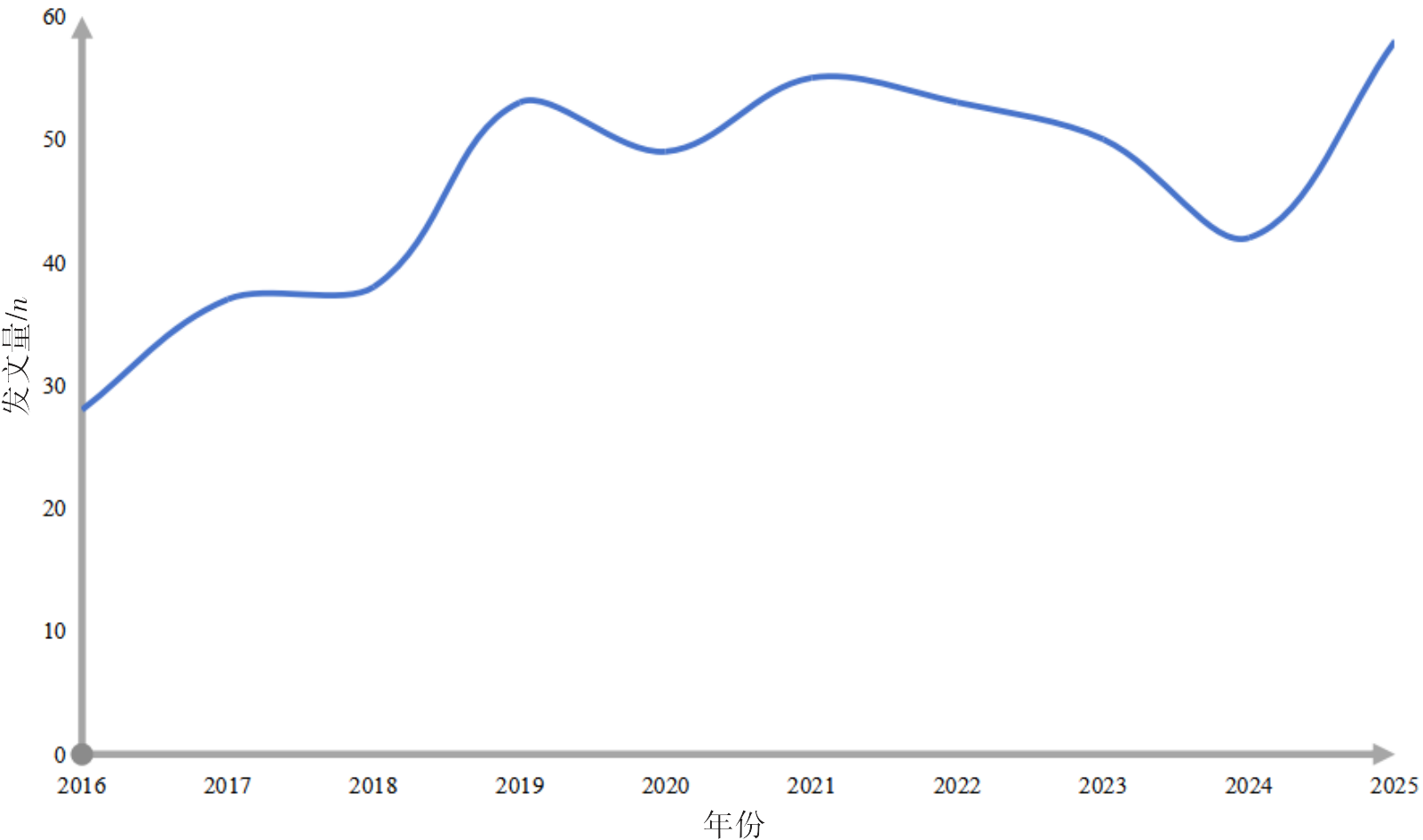
图2
国家共现图"
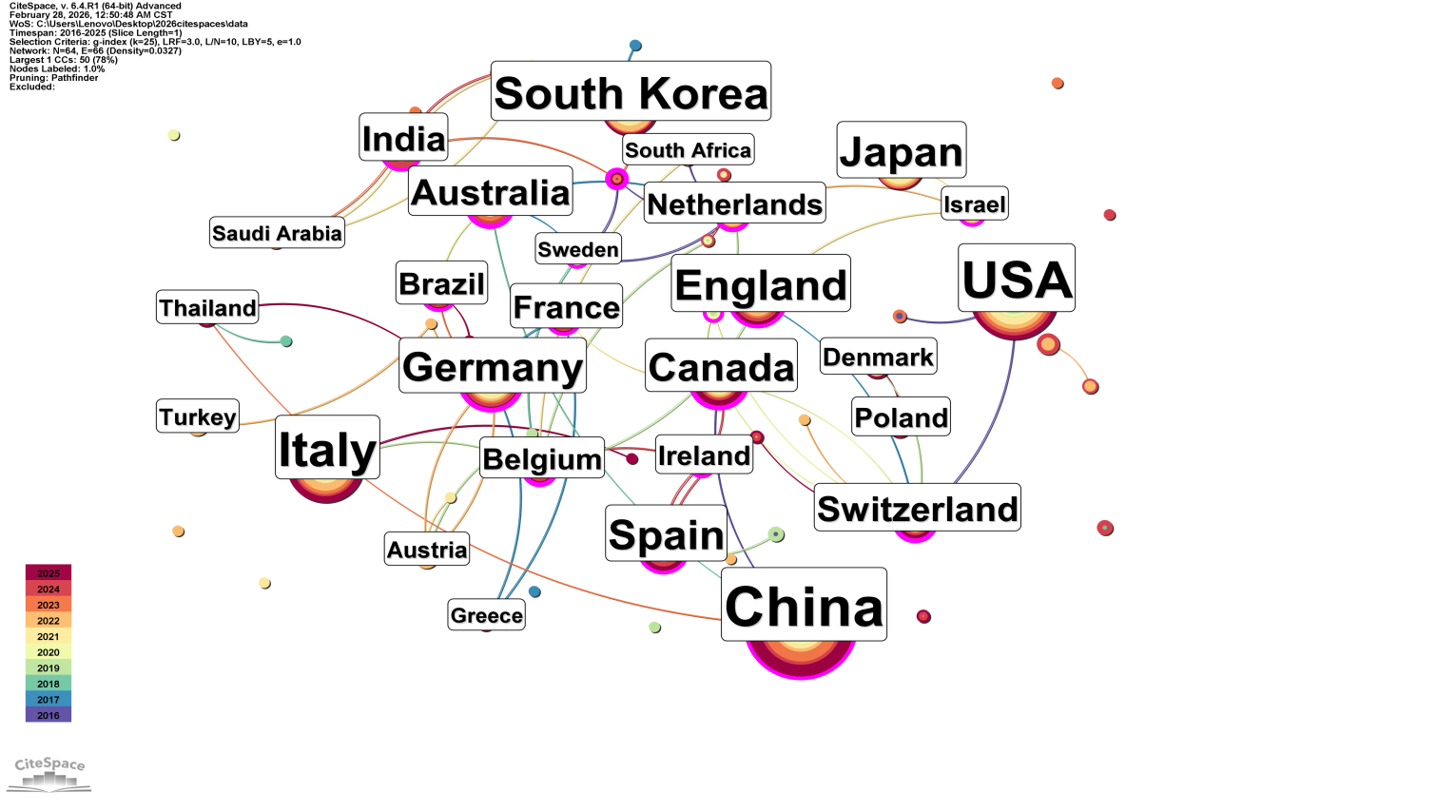

表1
发文量前10国家"
| 排名 | 国家 | 发文量/n | 中心性 |
|---|---|---|---|
| 1 | 中国 | 108 | 0.16 |
| 2 | 美国 | 73 | 0.05 |
| 3 | 意大利 | 54 | 0.05 |
| 4 | 韩国 | 37 | 0.05 |
| 5 | 英国 | 33 | 0.09 |
| 6 | 西班牙 | 29 | 0.15 |
| 7 | 日本 | 29 | 0.05 |
| 8 | 德国 | 25 | 0.25 |
| 9 | 加拿大 | 23 | 0.37 |
| 10 | 澳大利亚 | 18 | 0.22 |
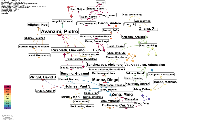
图3
作者共现图"
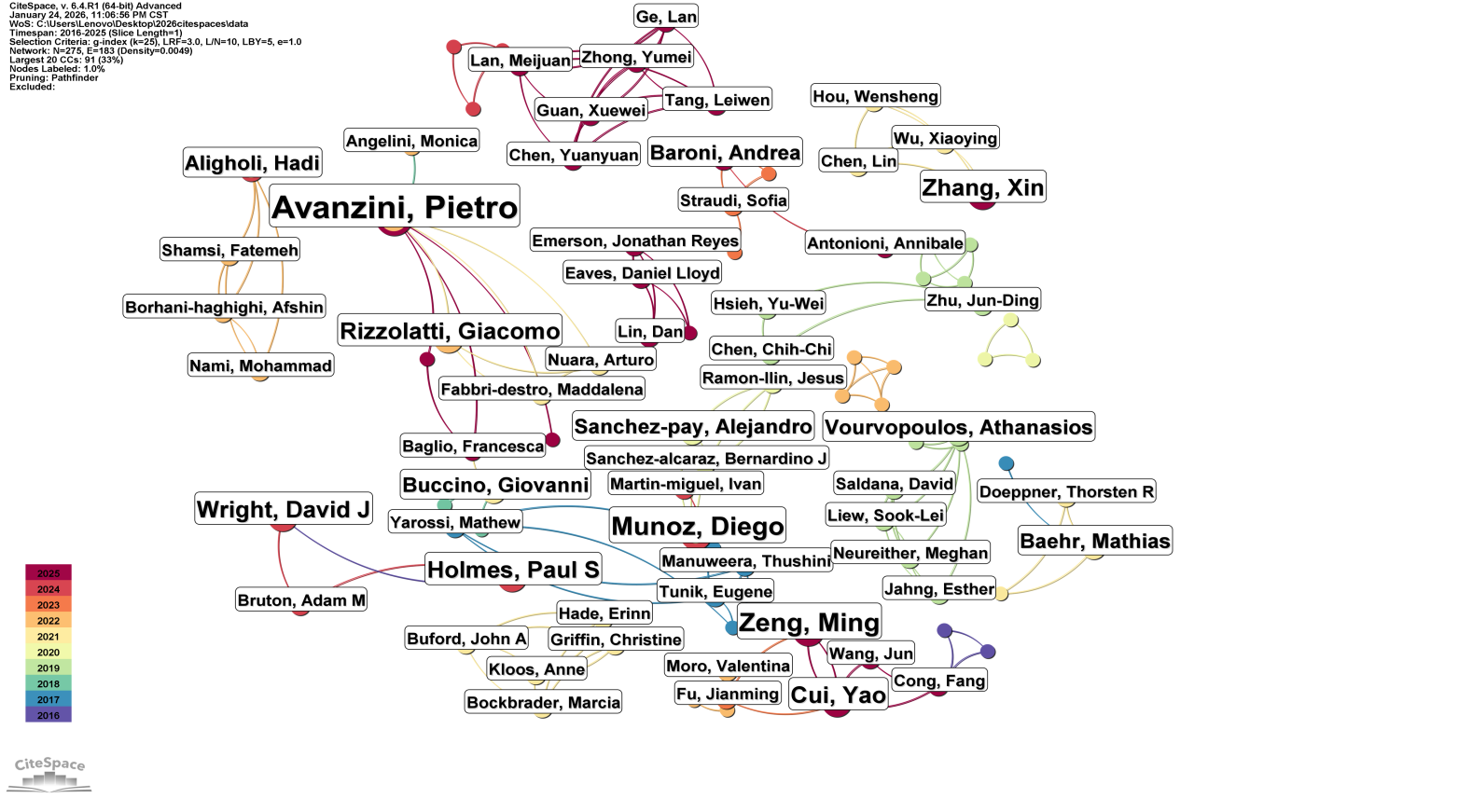
表2
发文量前10的作者"
| 排名 | 作者 | 发文量/n | 中心性 |
|---|---|---|---|
| 1 | Pietro Avanzini | 8 | 0 |
| 2 | Zeng Ming | 5 | 0 |
| 3 | Diego Munoz | 5 | 0 |
| 4 | Paul S Holmes | 4 | 0 |
| 5 | David J Wright | 4 | 0 |
| 6 | Giacomo Rizzolatti | 4 | 0 |
| 7 | Zhang Xin | 4 | 0 |
| 8 | Cui Yao | 4 | 0 |
| 9 | Alejandro Sanchez-pay | 3 | 0 |
| 10 | Ziemowit Bankosz | 3 | 0 |
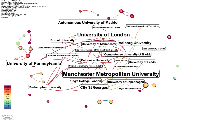
图4
机构共现图"
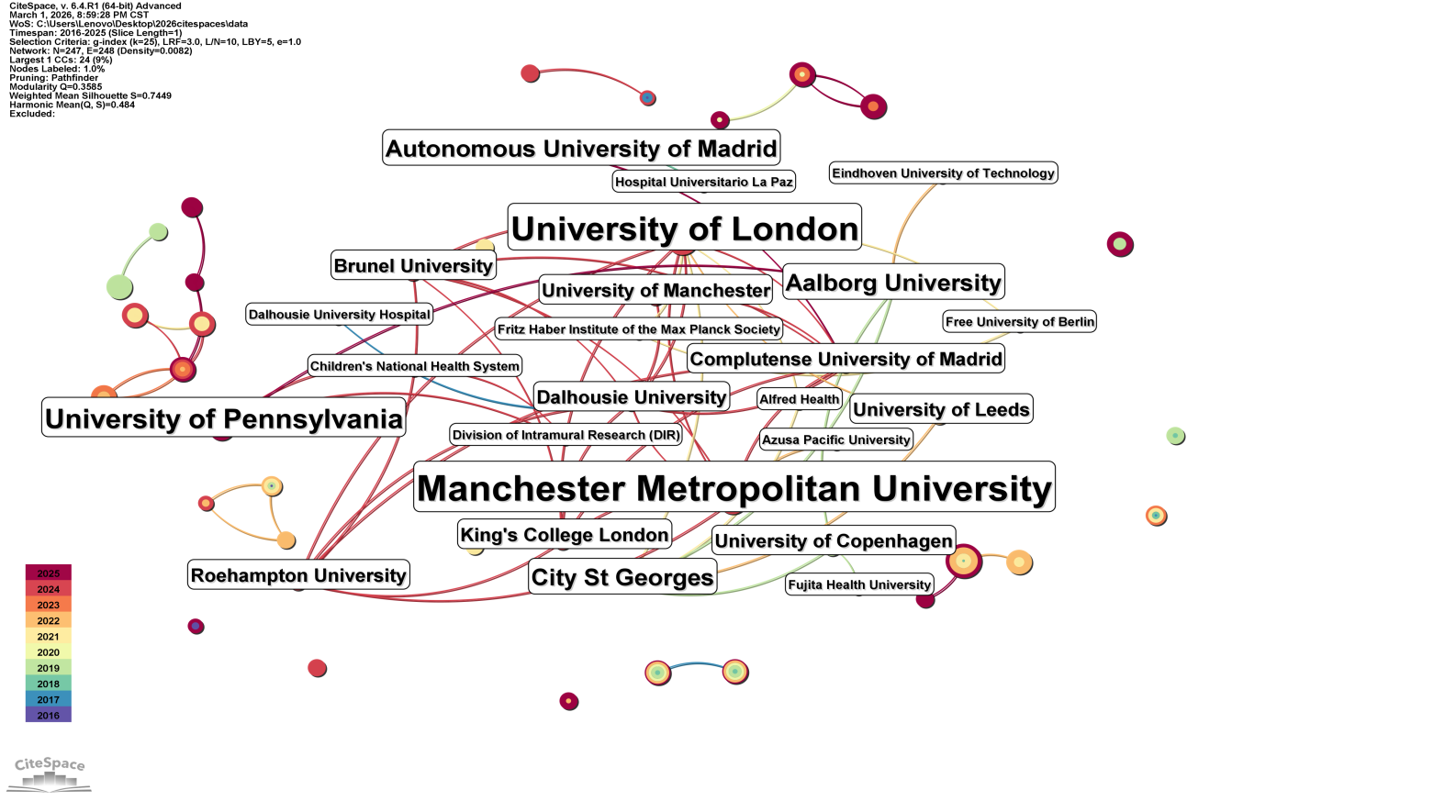
表3
发文量前10的机构"
| 排名 | 机构 | 发文量/n | 中心性 |
|---|---|---|---|
| 1 | Chang Gung University | 8 | 0 |
| 2 | Consiglio Nazionale delle Ricerche | 8 | 0 |
| 3 | Cheongju University | 7 | 0 |
| 4 | University of Murcia | 7 | 0 |
| 5 | Manchester Metropolitan University | 7 | 0 |
| 6 | Eulji University | 6 | 0 |
| 7 | University of London | 6 | 0 |
| 8 | Chongqing University | 5 | 0 |
| 9 | University of Parma | 5 | 0 |
| 10 | The Ohio State University | 5 | 0 |
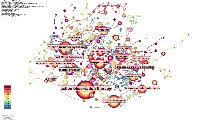
图5
关键词共现图"

表4
频次排名前10的关键词"
| 排名 | 关键词 | 频次/n | 中心性 |
|---|---|---|---|
| 1 | mirror neuron system | 82 | 0.03 |
| 2 | motor imagery | 63 | 0.03 |
| 3 | upper limb | 46 | 0.01 |
| 4 | brain-computer interfaces | 30 | 0.05 |
| 5 | stroke rehabilitation | 28 | 0.04 |
| 6 | imitation | 28 | 0.23 |
| 7 | mental practice | 28 | 0.06 |
| 8 | virtual reality | 25 | 0.02 |
| 9 | motor recovery | 23 | 0.14 |
| 10 | mirror therapy | 21 | 0.06 |
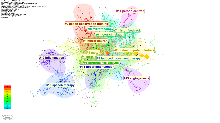
图6
关键词聚类图"

表5
关键词聚类标签及主要关键词"
| 编号 | 大小 | 轮廓值 | 标签 | 关键词 |
|---|---|---|---|---|
| #0 | 30 | 0.880 | action observation training | action observation training; focal vibration; manual dexterity; virtual reality; hand dexterity |
| #1 | 29 | 0.837 | mirror neuron | action observation; chronic stroke; brain-computer interface; motor rehabilitation; upper extremity function |
| #2 | 25 | 0.795 | brain-computer interface | action observation; brain-computer interface; motor rehabilitation; chronic stroke; motor intervention |
| #3 | 25 | 0.924 | motor | mirror neuron system; action observation; action verbs; dimensionality reduction; Riemannian geometry |
| #4 | 23 | 0.811 | apraxia | action observation; motor imagery; action execution; brain activity; multi-frequency magnetoencephalography |
| #5 | 22 | 0.926 | performance analysis | action observation; mental practice; stroke rehabilitation; occupational therapy; motor observation |
| #6 | 22 | 0.897 | motor simulation | motor imagery; action observation; motor simulation; action observation system; movement control |
| #7 | 22 | 0.895 | mirror feedback | virtual reality; motor learning; prosthetic control; motor imagery; strength |
| #8 | 21 | 0.858 | mirror therapy | action observation; beta rebound; mirror neurons; upper limb rehabilitation; primary motor |
| #9 | 19 | 0.862 | induced movement therapy | action observation; brain lesions; error monitoring; action monitoring; brain computer interfaces |
| #10 | 19 | 0.884 | speech therapy | cerebrovascular disease; Asian American; war refugees; racial disparity; immigrant health |
| #11 | 19 | 0.842 | upper limb function | action observation; video parameters; control videos; corticospinal excitability; electrical stimulation |
| #12 | 18 | 0.992 | inflammation | ischemic stroke; dipeptidyl peptidase; neutrophil rolling; multiple sclerosis; Alzheimers disease |
| #13 | 10 | 1.000 | angiogenesis | simulation; myocardial infarction; dysfunction; transmural heterogeneity; strain |
| #14 | 5 | 1.000 | person-centred | action observation; virtual reality; brain-computer interfaces; appreciative inquiry; brain-computer interface |
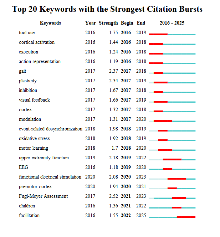
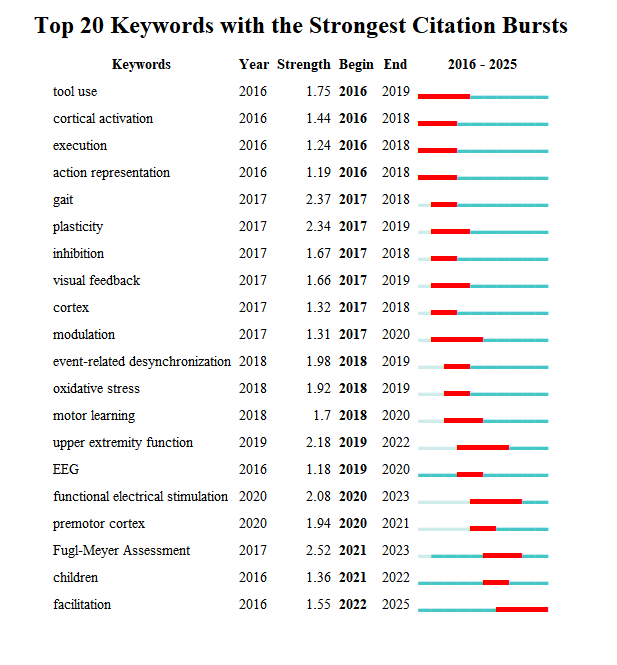
图7
突现关键词"
| [1] |
RIZZOLATTI G, CRAIGHERO L. The mirror-neuron system[J]. Annu Rev Neurosci, 2004, 27: 169-192.
pmid: 15217330 |
| [2] |
BUCCINO G. Action observation treatment: a novel tool in neurorehabilitation[J]. Philos Trans R Soc Lond B Biol Sci, 2014, 369(1644): 20130185.
doi: 10.1098/rstb.2013.0185 |
| [3] |
CIULLO G, BOZZETTI F, ZICCARELLI S, et al. Neurophysiological mechanisms underlying action observation treatment for upper limb stroke rehabilitation: a mini-review[J]. Neurosci Biobehav Rev, 2026, 180: 106484.
doi: 10.1016/j.neubiorev.2025.106484 |
| [4] | ZHANG J J Q, FONG K N K, WELAGE N, et al. The activation of the mirror neuron system during action observation and action execution with mirror visual feedback in stroke: a systematic review[J]. Neural Plast, 2018, 2018: 2321045. |
| [5] | ERTELT D, SMALL S, SOLODKIN A, et al. Action observation has a positive impact on rehabilitation of motor deficits after stroke[J]. Neuroimage, 2007, 36(Suppl 2): T164-T173. |
| [6] |
KEYSERS C, GAZZOLA V. Hebbian learning and predictive mirror neurons for actions, sensations and emotions[J]. Philos Trans R Soc Lond B Biol Sci, 2014, 369(1644): 20130175.
doi: 10.1098/rstb.2013.0175 |
| [7] |
BRUNNER I C, SKOUEN J S, ERSLANG L, et al. Plasticity and response to action observation: a longitudinal fMRI study of potential mirror neurons in patients with subacute stroke[J]. Neurorehabil Neural Repair, 2014, 28(9): 874-884.
doi: 10.1177/1545968314527350 pmid: 24642381 |
| [8] |
BIASIUCCI A, LEEB R, ITURRATE I, et al. Brain-actuated functional electrical stimulation elicits lasting arm motor recovery after stroke[J]. Nat Commun, 2018, 9(1): 2421.
doi: 10.1038/s41467-018-04673-z pmid: 29925890 |
| [9] |
MANSOUR S, ANG K K, NAIR K P S, et al. Efficacy of brain-computer interface and the impact of its design characteristics on poststroke upper-limb rehabilitation: a systematic review and meta-analysis of randomized controlled trials[J]. Clin EEG Neurosci, 2022, 53(1): 79-90.
doi: 10.1177/15500594211009065 |
| [10] |
VOURVOPOULOS A, PARDO O M, LEFEBVRE S, et al. Effects of a brain-computer interface with virtual reality (VR) neurofeedback: a pilot study in chronic stroke patients[J]. Front Hum Neurosci, 2019, 13: 210.
doi: 10.3389/fnhum.2019.00210 pmid: 31275126 |
| [11] |
ROSSI F, SAVI F, PRESTIA A, et al. Combining action observation treatment with a brain-computer interface system: perspectives on neurorehabilitation[J]. Sensors (Basel), 2021, 21(24): 8504.
doi: 10.3390/s21248504 |
| [12] |
RIZZOLATTI G, FABBRI-DESTRO M, NUARA A, et al. The role of mirror mechanism in the recovery, maintenance, and acquisition of motor abilities[J]. Neurosci Biobehav Rev, 2021, 127: 404-423.
doi: 10.1016/j.neubiorev.2021.04.024 pmid: 33910057 |
| [13] |
FU J, ZENG M, SHEN F, et al. Effects of action observation therapy on upper extremity function, daily activities and motion evoked potential in cerebral infarction patients[J]. Medicine (Baltimore), 2017, 96(42): e8080.
doi: 10.1097/MD.0000000000008080 |
| [14] | EAVES D L, RIACH M, HOLMES P S, et al. Motor imagery during action observation: a brief review of evidence, theory and future research opportunities[J]. Front Neurosci, 2016, 10: 514. |
| [15] |
WILSON P H, ADAMS I L, CAEYENBERGHS K, et al. Motor imagery training enhances motor skill in children with DCD: a replication study[J]. Res Dev Disabil, 2016, 57: 54-62.
doi: 10.1016/j.ridd.2016.06.014 pmid: 27388492 |
| [16] | BEK J, HOLMES P S, CRAIG C E, et al. Action imagery and observation in neurorehabilitation for Parkinson's disease (ACTION-PD): development of a user-informed home training intervention to improve functional hand movements[J]. Parkinsons Dis, 2021, 2021: 4559519. |
| [17] |
EMERSON J R, BINKS J A, SCOTT M W, et al. Combined action observation and motor imagery therapy: a novel method for post-stroke motor rehabilitation[J]. AIMS Neurosci, 2018, 5(4): 236-252.
doi: 10.3934/Neuroscience.2018.4.236 pmid: 32341964 |
| [18] |
VOURVOPOULOS A, JORGE C, ABREU R, et al. Efficacy and brain imaging correlates of an immersive motor imagery BCI-driven VR system for upper limb motor rehabilitation: a clinical case report[J]. Front Hum Neurosci, 2019, 13: 244.
doi: 10.3389/fnhum.2019.00244 pmid: 31354460 |
| [19] |
TANI M, OMO Y, MATSUBARA M, et al. Action observation facilitates motor cortical activity in patients with stroke and hemiplegia[J]. Neurosci Res, 2018, 133: 7-14.
doi: S0168-0102(17)30277-8 pmid: 29031830 |
| [20] |
SUN Y, WEI W, LUO Z, et al. Improving motor imagery practice with synchronous action observation in stroke patients[J]. Top Stroke Rehabil, 2016, 23(4): 245-253.
doi: 10.1080/10749357.2016.1141472 pmid: 27077982 |
| [21] |
MAIER M, BALLESTER B R, VERSCHURE P F M J. Principles of neurorehabilitation after stroke based on motor learning and brain plasticity mechanisms[J]. Front Syst Neurosci, 2019, 13: 74.
doi: 10.3389/fnsys.2019.00074 pmid: 31920570 |
| [22] |
SALEH S, YAROSSI M, MANUWEERA T, et al. Network interactions underlying mirror feedback in stroke: a dynamic causal modeling study[J]. Neuroimage Clin, 2016, 13: 46-54.
doi: 10.1016/j.nicl.2016.11.012 |
| [23] | BORGES L R, FERNANDES A B, MELO L P, et al. Action observation for upper limb rehabilitation after stroke[J]. Cochrane Database Syst Rev, 2018, 10(10): CD011887. |
| [24] |
MAO H, LI Y, TANG L, et al. Effects of mirror neuron system-based training on rehabilitation of stroke patients[J]. Brain Behav, 2020, 10(8): e01729.
doi: 10.1002/brb3.v10.8 |
| [25] |
PENG T H, ZHU J D, CHEN C C, et al. Action observation therapy for improving arm function, walking ability, and daily activity performance after stroke: a systematic review and meta-analysis[J]. Clin Rehabil, 2019, 33(8): 1277-1285.
doi: 10.1177/0269215519839108 |
| [26] |
MARTIN M, NITSCHKE K, BEUME L, et al. Brain activity underlying tool-related and imitative skills after major left hemisphere stroke[J]. Brain, 2016, 139(Pt 5): 1497-1516.
doi: 10.1093/brain/aww035 pmid: 26956421 |
| [27] |
PAZZAGLIA M, GALLI G. Action observation for neurorehabilitation in apraxia[J]. Front Neurol, 2019, 10: 309.
doi: 10.3389/fneur.2019.00309 pmid: 31001194 |
| [28] |
CHOI J W, KIM B H, HUH S, et al. Observing actions through immersive virtual reality enhances motor imagery training[J]. IEEE Trans Neural Syst Rehabil Eng, 2020, 28(7): 1614-1622.
doi: 10.1109/TNSRE.7333 |
| [29] | RYAN D, FULLEN B, RIO E, et al. Effect of action observation therapy in the rehabilitation of neurologic and musculoskeletal conditions: a systematic review[J]. Arch Rehabil Res Clin Transl, 2021, 3(1): 100106. |
| [30] |
LLORENS R, FUENTES M A, BORREGO A, et al. Effectiveness of a combined transcranial direct current stimulation and virtual reality-based intervention on upper limb function in chronic individuals post-stroke with persistent severe hemiparesis: a randomized controlled trial[J]. J Neuroeng Rehabil, 2021, 18(1): 108.
doi: 10.1186/s12984-021-00896-2 pmid: 34210347 |
| [31] |
LIM H, KU J. A brain-computer interface-based action observation game that enhances mu suppression[J]. IEEE Trans Neural Syst Rehabil Eng, 2018, 26(12): 2290-2296.
doi: 10.1109/TNSRE.7333 |
| [32] |
WRIGHT D J, MCCORMICK S A, WILLIAMS J, et al. Viewing instructions accompanying action observation modulate corticospinal excitability[J]. Front Hum Neurosci, 2016, 10: 17.
doi: 10.3389/fnhum.2016.00017 pmid: 26869901 |
| [33] |
MORENO-VERDU M, HAMOLINE G, VAN CAENEGEM E E, et al. Guidelines for reporting action simulation studies (GRASS): proposals to improve reporting of research in motor imagery and action observation[J]. Neuropsychologia, 2024, 192: 108733.
doi: 10.1016/j.neuropsychologia.2023.108733 |
| [34] | KIM M G, LIM H, LEE H S, et al. Brain-computer interface-based action observation combined with peripheral electrical stimulation enhances corticospinal excitability in healthy subjects and stroke patients[J]. J Neural Eng, 2022, 19(3). doi: 10.1088/1741-2552/ac76e0. |
| [35] |
CHA T H, HWANG H S. Rehabilitation interventions combined with noninvasive brain stimulation on upper limb motor function in stroke patients[J]. Brain Sci, 2022, 12(8): 994.
doi: 10.3390/brainsci12080994 |
| [36] | BURZI V, TEALDI G, BOYD R N, et al. Action observation in infancy: implications for neuro-rehabilitation[J]. Dev Med Child Neurol, 2016, 58(Suppl 4): 74-77. |
| [37] |
KIRKPATRICK E, PEARSE J, JAMES P, et al. Effect of parent-delivered action observation therapy on upper limb function in unilateral cerebral palsy: a randomized controlled trial[J]. Dev Med Child Neurol, 2016, 58(10): 1049-1056.
doi: 10.1111/dmcn.13109 pmid: 27038153 |
| [38] |
ERRANTE A, SAVIOLA D, CANTONI M, et al. Effectiveness of action observation therapy based on virtual reality technology in the motor rehabilitation of paretic stroke patients: a randomized clinical trial[J]. BMC Neurol, 2022, 22(1): 109.
doi: 10.1186/s12883-022-02640-2 pmid: 35317736 |
| [1] | 齐圆圆, 高海峰, 刘丽娜, 谢宇杰, 徐静, 高峰, 陈亮, 杨德刚, 李军. 1999年至2025年脊髓电刺激治疗脊髓损伤研究的文献计量分析[J]. 《中国康复理论与实践》, 2026, 32(4): 373-386. |
| [2] | 桂舜, 张见飞, 黄慧芝. 可解释的机器学习模型对脑卒中患者神经功能康复结局的预测效能[J]. 《中国康复理论与实践》, 2026, 32(4): 463-472. |
| [3] | 朱丽丽, 赵嘉欣, 程雪, 王会娟, 陈小霞. 康复期脑卒中患者疾病体验及需求的Meta整合[J]. 《中国康复理论与实践》, 2026, 32(3): 286-293. |
| [4] | 刘平, 周楠, 薛晓杰, 邵伟波. 脑卒中后吞咽障碍康复治疗技术应用研究的文献计量分析[J]. 《中国康复理论与实践》, 2026, 32(3): 294-303. |
| [5] | 蒲心语, 王靖萱, 王虎军, 修安达, 王颖鹏. 重复外周磁刺激在康复治疗中应用的文献计量分析[J]. 《中国康复理论与实践》, 2026, 32(3): 304-316. |
| [6] | 孙奎, 黄海伦, 刘永皑, 高恒. 脑机接口技术在脊髓损伤治疗领域的文献计量分析[J]. 《中国康复理论与实践》, 2026, 32(3): 317-328. |
| [7] | 杨玲, 王庆雷, 王洁, 徐雯婕, 王彤, 郭川, 钱雪. 基于功能性近红外光谱成像的卒中后焦虑患者前额叶皮质激活特征及机制研究[J]. 《中国康复理论与实践》, 2026, 32(3): 329-336. |
| [8] | 何照楠, 张婷婷, 何照珂, 孟丽君. 基于BERTopic模型的我国康复伦理研究主题挖掘与内容分析[J]. 《中国康复理论与实践》, 2026, 32(2): 132-141. |
| [9] | 郭亚彬, 曾必云, 周阳. 2015年至2025年肌少症-疼痛共病研究的文献计量分析[J]. 《中国康复理论与实践》, 2026, 32(2): 151-161. |
| [10] | 李水艳, 李湘, 李彦慧, 陆翊濛, 李杜娟, 杨小良, 谢秋幼. 气道廓清技术在重症康复应用的文献计量分析[J]. 《中国康复理论与实践》, 2026, 32(2): 162-173. |
| [11] | 岳圆, 张通, 刘元旻, 王亚囡. 下肢外骨骼机器人对卒中后小脑性共济失调患者平衡和步行功能的影响[J]. 《中国康复理论与实践》, 2026, 32(1): 23-29. |
| [12] | 吴澄, 章云枫, 王卫宁, 余克威, 张艳正, 沈嘉蓉, 吴毅. 肘腕功能支具对脑卒中偏瘫患者足底压力和平衡功能的效果[J]. 《中国康复理论与实践》, 2026, 32(1): 30-39. |
| [13] | 张军风, 陈昊, 杜宇征, 李琛, 于涛, 杨元庆. 2004年至2024年脑卒中后肢体痉挛非药物疗法的文献计量分析[J]. 《中国康复理论与实践》, 2026, 32(1): 45-58. |
| [14] | 高凯祥, 芦海涛. 2015年至2024年神经康复研究的文献计量分析[J]. 《中国康复理论与实践》, 2026, 32(1): 59-68. |
| [15] | 董丽军, 徐世豪, 陈秋华, 张璐, 尹小兵. 2015年至2025年虚拟现实技术在围术期患者负性情绪管理及术后康复中应用的文献计量分析[J]. 《中国康复理论与实践》, 2026, 32(1): 69-82. |
| 阅读次数 | ||||||
|
全文 |
|
|||||
|
摘要 |
|
|||||
|
||
