



Chinese Journal of Rehabilitation Theory and Practice ›› 2025, Vol. 31 ›› Issue (11): 1333-1341.doi: 10.3969/j.issn.1006-9771.2025.11.010
Previous Articles Next Articles
XIE Haixia1, HU Xinxing2, ZHAI Hua1, LIN Peipei1, HE Jianhui2, ZHANG Jia1, DONG Xiaowan2, CHANG Fengshui2( )
)
Received:2025-07-03
Revised:2025-08-31
Published:2025-11-25
Online:2025-11-26
Contact:
CHANG Fengshui
E-mail:changfsh@fudan.edu.cn
Supported by:CLC Number:
XIE Haixia, HU Xinxing, ZHAI Hua, LIN Peipei, HE Jianhui, ZHANG Jia, DONG Xiaowan, CHANG Fengshui. Effect of life reconstruction training on anxiety and depression among individuals with chronic spinal cord injury and their caregivers[J]. Chinese Journal of Rehabilitation Theory and Practice, 2025, 31(11): 1333-1341.
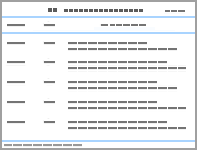
Table 1
Personal and family characteristics of individuals with spinal cord injury (n = 216)"
| 变量 | n | |
|---|---|---|
| 户籍地 | 上海 | 175 |
| 外省市 | 41 | |
| 性别 | 男 | 149 |
| 女 | 67 | |
| 户口 | 非农业 | 134 |
| 农业 | 82 | |
| 教育背景 | 初中及以下 | 109 |
| 高中/中专/技校 | 63 | |
| 大专及以上 | 44 | |
| 工作情况 | 有工作/学生 | 25 |
| 无业 | 111 | |
| 退休 | 80 | |
| 家庭年收入 | < 5万元 | 108 |
| 5万~10万元 | 75 | |
| ≥ 10万元 | 33 | |
| 婚姻状况 | 未婚 | 51 |
| 已婚 | 151 | |
| 离异/丧偶 | 14 | |
| 受伤水平 | 颈段 | 77 |
| 胸段 | 98 | |
| 腰骶段 | 41 | |
| 损伤原因 | 外伤 | 173 |
| 疾病 | 43 | |
| 严重程度 | 完全 | 125 |
| 不完全 | 91 | |
| 照顾者 | 无 | 135 |
| 有 | 81 | |
| 受伤年限 | 0.5~< 2年 | 69 |
| 2~< 6年 | 47 | |
| 6~< 21年 | 53 | |
| ≥ 21年 | 47 | |
Table 2
Descriptive analysis of anxiety and depression of individuals with spinal cord injury and their caregivers before and after life reconstruction training"
| 类别 | 严重程度 | 脊髓损伤患者 | 照顾者 | 脊髓损伤患者 | 照顾者 | ||||
|---|---|---|---|---|---|---|---|---|---|
| 入院 | 出院 | 入院 | 出院 | χ2/t值 | P值 | χ2/t值 | P值 | ||
| 焦虑 | 正常/n | 114 | 124 | 40 | 45 | 1.400a | 0.705 | 4.464a | 0.216 |
| 轻度/n | 59 | 50 | 19 | 24 | |||||
| 中度/n | 33 | 34 | 12 | 7 | |||||
| 重度/n | 10 | 8 | 8 | 3 | |||||
| SAS | 39.31±0.63 | 38.12±0.68 | 40.44±1.19 | 37.48±1.06 | 2.347b | 0.020 | 2.641b | < 0.010 | |
| 抑郁 | 正常/n | 95 | 99 | 27 | 32 | 2.623a | 0.453 | 1.837a | 0.607 |
| 轻度/n | 66 | 69 | 28 | 24 | |||||
| 中度/n | 38 | 39 | 18 | 20 | |||||
| 重度/n | 17 | 9 | 6 | 3 | |||||
| SDS | 43.83±0.69 | 42.67±0.70 | 45.42±1.18 | 42.57±1.21 | 1.977b | 0.049 | 2.700b | 0.008 | |
Table 3
Univariate analysis of significant decrease of anxiety and depression scores among individuals with spinal cord injury after life reconstruction training 单位:n"
| 变量 | 焦虑显著降分 | 抑郁显著降分 | 焦虑显著降分 | 抑郁显著降分 | |||||
|---|---|---|---|---|---|---|---|---|---|
| 无 | 有 | 无 | 有 | χ2值 | P值 | χ2值 | P值 | ||
| 户籍地 | 上海 | 86 | 89 | 94 | 81 | 3.718 | 0.054 | 0.083 | 0.773 |
| 外省市 | 27 | 14 | 21 | 20 | |||||
| 性别 | 男 | 81 | 68 | 81 | 68 | 0.807 | 0.369 | 0.243 | 0.622 |
| 女 | 32 | 35 | 34 | 33 | |||||
| 年龄 | 18~52岁 | 65 | 46 | 53 | 58 | 3.568 | 0.059 | 2.768 | 0.096 |
| 53~70岁 | 48 | 57 | 62 | 43 | |||||
| 户口 | 非农业 | 63 | 71 | 65 | 69 | 3.974 | 0.046 | 3.177 | 0.075 |
| 农业 | 50 | 32 | 50 | 32 | |||||
| 教育背景 | 初中及以下 | 56 | 53 | 57 | 52 | 0.455 | 0.797 | 0.610 | 0.737 |
| 高中/中专/技校 | 32 | 31 | 36 | 27 | |||||
| 大专及以上 | 25 | 19 | 22 | 22 | |||||
| 婚姻状况 | 未婚 | 26 | 25 | 18 | 33 | 0.167 | 0.920 | 8.654 | 0.013 |
| 已婚 | 79 | 72 | 89 | 62 | |||||
| 离异/丧偶 | 8 | 6 | 8 | 6 | |||||
| 工作情况 | 有工作/学生 | 13 | 12 | 10 | 15 | 5.362 | 0.069 | 2.779 | 0.249 |
| 无业 | 66 | 45 | 58 | 53 | |||||
| 退休 | 34 | 46 | 47 | 33 | |||||
| 家庭年收入 | < 5万元 | 55 | 53 | 58 | 50 | 0.453 | 0.797 | 0.078 | 0.962 |
| 5~< 10万元 | 39 | 36 | 39 | 36 | |||||
| ≥ 10万元 | 19 | 14 | 18 | 15 | |||||
| 受伤年限 | 0.5~< 2年 | 38 | 31 | 40 | 29 | 0.802 | 0.849 | 7.855 | 0.049 |
| 2~< 6年 | 25 | 22 | 25 | 22 | |||||
| 6~< 21年 | 28 | 25 | 33 | 20 | |||||
| ≥ 21年 | 22 | 25 | 17 | 30 | |||||
| 受伤水平 | 颈段 | 41 | 36 | 50 | 27 | 1.495 | 0.474 | 7.037 | 0.030 |
| 胸段 | 54 | 44 | 44 | 54 | |||||
| 腰骶段 | 18 | 23 | 21 | 20 | |||||
| 损伤原因 | 外伤 | 94 | 79 | 99 | 74 | 1.422 | 0.233 | 5.543 | 0.019 |
| 疾病 | 19 | 24 | 16 | 27 | |||||
| 严重程度 | 完全 | 70 | 55 | 68 | 57 | 1.615 | 0.204 | 0.160 | 0.689 |
| 不完全 | 43 | 48 | 47 | 44 | |||||
| 是否有照顾者 | 无 | 70 | 63 | 67 | 66 | 0.014 | 0.906 | 1.141 | 0.285 |
| 有 | 43 | 40 | 48 | 35 | |||||
| 入院时焦虑/抑郁情况 | 无 | 70 | 44 | 59 | 36 | 7.994 | 0.005 | 5.353 | 0.021 |
| 有 | 43 | 59 | 56 | 65 | |||||
Table 4
Univariate analysis of significant decrease of anxiety and depression scores among caregivers of individuals with spinal cord injury after life reconstruction training 单位:n"
| 变量 | n | 焦虑显著降分 | 抑郁显著降分 | 焦虑显著降分 | 抑郁显著降分 | |||||
|---|---|---|---|---|---|---|---|---|---|---|
| 无 | 有 | 无 | 有 | χ2值 | P值 | χ2值 | P值 | |||
| 性别 | 男性 | 15 | 8 | 7 | 9 | 6 | 0.015 | 0.902 | 0.347 | 0.556 |
| 女性 | 64 | 33 | 31 | 33 | 31 | |||||
| 年龄 | 27~58岁 | 43 | 23 | 20 | 20 | 23 | 0.096 | 0.757 | 1.677 | 0.195 |
| 59~76岁 | 36 | 18 | 18 | 22 | 14 | |||||
| 与脊髓损伤患者关系 | 配偶 | 50 | 25 | 25 | 30 | 20 | 0.197 | 0.657 | 2.556 | 0.110 |
| 其他 | 29 | 16 | 13 | 12 | 17 | |||||
| 教育背景 | 初中及以下 | 19 | 5 | 14 | 6 | 13 | 6.559 | 0.038 | 4.681 | 0.096 |
| 高中/中专/技校 | 40 | 24 | 16 | 24 | 16 | |||||
| 大专及以上 | 20 | 12 | 8 | 12 | 8 | |||||
| 工作情况 | 有工作 | 11 | 6 | 5 | 6 | 5 | 0.068 | 0.967 | 1.093 | 0.386 |
| 无业 | 24 | 12 | 12 | 10 | 14 | |||||
| 退休 | 44 | 23 | 21 | 26 | 18 | |||||
| 每天照顾时间 | < 12 h | 13 | 6 | 7 | 6 | 7 | 0.021 | 0.650 | 0.307 | 0.579 |
| ≥ 12 h | 66 | 35 | 31 | 36 | 30 | |||||
| 累计照顾时间 | 0~< 2年 | 32 | 19 | 13 | 17 | 15 | 6.222 | 0.101 | 1.014 | 0.798 |
| 2~< 5年 | 14 | 9 | 5 | 9 | 5 | |||||
| 5~< 15年 | 16 | 4 | 12 | 8 | 8 | |||||
| ≥ 15年 | 17 | 9 | 8 | 8 | 9 | |||||
| 自身健康状况 | 比5年前好/和5年前一样 | 15 | 7 | 8 | 7 | 8 | 6.645 | 0.036 | 2.009 | 0.366 |
| 比5年前略差 | 30 | 21 | 9 | 19 | 11 | |||||
| 明显比5年前要差 | 34 | 13 | 21 | 16 | 18 | |||||
| 入院时焦虑/抑郁情况 | 无 | 40 | 26 | 14 | 14 | 13 | 5.571 | 0.018 | 0.028 | 0.866 |
| 有 | 39 | 15 | 24 | 28 | 24 | |||||
Table 5
Logistic regression analysis of factors associated with significant decrease of SAS scores among individuals with spinal cord injury and their caregivers"
| 类别 | 自变量 | 偏回归系数 | SE | Wald值 | OR值 | 95%CI | P值 | ||
|---|---|---|---|---|---|---|---|---|---|
| 下限 | 上限 | ||||||||
| 脊髓损伤患者 | 户口 | 农业 | 0.000 | ||||||
| 非农业 | 0.646 | 0.293 | 4.855 | 1.908 | 1.074 | 3.391 | 0.028 | ||
| 入院时焦虑 | 无 | 0.000 | |||||||
| 有 | 0.839 | 0.283 | 8.772 | 2.315 | 1.328 | 4.033 | 0.003 | ||
| 照顾者 | 教育背景 | 高中及以上 | 0.000 | ||||||
| 初中及以下 | 1.512 | 0.630 | 5.768 | 4.537 | 1.321 | 15.589 | 0.016 | ||
| 累计照顾时间 | < 5年或≥ 15年 | 0.000 | |||||||
| 5~< 15年 | 1.968 | 0.702 | 7.851 | 7.155 | 1.806 | 28.342 | 0.005 | ||
| 入院时焦虑 | 无 | 0.000 | |||||||
| 有 | 1.290 | 0.536 | 5.784 | 3.632 | 1.270 | 10.390 | 0.016 | ||
Table 6
Logistic regression analysis of factors associated with significant decrease of SDS scores among individuals with spinal cord injury and their caregivers"
| 类别 | 自变量 | 偏回归系数 | SE | Wald值 | OR值 | 95%CI | P值 | ||
|---|---|---|---|---|---|---|---|---|---|
| 下限 | 上限 | ||||||||
| 脊髓损伤患者 | 婚姻状态 | 已婚/离异/丧偶 | 0.000 | ||||||
| 未婚 | 0.778 | 0.367 | 4.490 | 2.178 | 1.060 | 4.473 | 0.034 | ||
| 受伤年限 | < 21年 | 0.000 | |||||||
| ≥ 21年 | 0.774 | 0.381 | 4.126 | 2.168 | 1.028 | 4.573 | 0.042 | ||
| 损伤原因 | 外伤 | 0.000 | |||||||
| 疾病 | 0.803 | 0.365 | 4.833 | 2.231 | 1.091 | 4.563 | 0.028 | ||
| 入院时抑郁 | 无 | 0.000 | |||||||
| 有 | 0.811 | 0.299 | 7.349 | 2.251 | 1.252 | 4.047 | 0.007 | ||
| 照顾者 | 教育背景 | 高中及以上 | 0.000 | ||||||
| 初中及以下 | 1.179 | 0.559 | 4.438 | 3.250 | 1.086 | 9.730 | 0.035 | ||
| [1] | 刘小舟, 赖逸菲, 金子焯, 等. 脊髓损伤研究及治疗进展[J]. 江西中医药, 2022, 53(11): 65-71. |
| [2] | 姜楠, 郭爱松. 脊髓损伤康复治疗的研究进展[J]. 交通医学, 2021, 35(2): 135-138, 141. |
| [3] | 吴爱荣, 吕军, 解海霞, 等. 上海市社区脊髓损伤患者照顾者焦虑抑郁现状及影响因素[J]. 上海护理, 2021, 21(9): 27-32. |
| WU A R, LÜ J, XIE H X, et al. Status quo of anxiety and depression of caregivers of patients with spinal cord injury in Shanghai communities and influencing factors[J]. Shanghai Nurs, 2021, 21(9): 27-32. | |
| [4] | 程园园, 方爱贞, 吴园. 脊髓损伤患者术后焦虑情绪现状及影响因素调查[J]. 颈腰痛杂志, 2024, 45(3): 588-590. |
| [5] | 张晓静, 刘嘉欣, 陈岩燕, 等. 脊髓损伤带来的心理社会影响及有效干预研究进展[J]. 中国康复医学杂志, 2024, 39(12): 1901-1906. |
| [6] | CHANG F S, XIE H X, ZHANG Q, et al. Quality of life of adults with chronic spinal cord injury in mainland China: a cross-sectional study[J]. J Rehabil Med, 2020, 52(5): jrm58. |
| [7] | 解海霞, 魏燕, 高莹, 等. 社区脊髓损伤患者焦虑抑郁情况及其影响因素分析[J]. 中国康复医学杂志, 2022, 37(8): 1093-1097. |
| [8] |
TANG Z J, YU X. Analysis of influencing factors of major depression after spinal cord injury[J]. Alpha Psychiatry, 2024, 25(3): 395-400.
doi: 10.5152/alphapsychiatry.2024.241526 pmid: 39148589 |
| [9] | 宓忠祥, 刘松怀, 祁长凤. 脊髓损伤患者的心理问题及康复策略[J]. 中国康复理论与实践, 2003, 9(2): 97-99. |
| MI Z C, LIU S H, QI C F. Psychoanalysis and rehabilitation treatment for spinal cord injured patients[J]. Chin J Rehabil Theory Pract, 2003, 9(2): 97-99. | |
| [10] |
戴晴, 李伦兰, 廖晨霞, 等. 脊髓损伤患者及其配偶二元应对体验的质性研究[J]. 中华护理杂志, 2021, 56(8): 1180-1186.
doi: 10.3761/j.issn.0254-1769.2021.08.010 |
|
DAI Q, LI L L, LIAO C X, et al. A qualitative research on the dual coping experience of patients with spinal cord injury and their spouses[J]. Chin J Nurs, 2021, 56(8): 1180-1186.
doi: 10.3761/j.issn.0254-1769.2021.08.010 |
|
| [11] |
解海霞, 杨玉慧, 吴爱荣, 等. 上海脊髓损伤者"希望之家"的现状与发展研究:基于管理者和组织者视角[J]. 中国康复理论与实践, 2019, 25(10): 1221-1227.
doi: 10.3969/j.issn.1006-9771.2019.00.011 |
| XIE H X, YANG Y H, WU A R, et al. Status quo and development of hope houses for individuals with spinal cord injury in Shanghai: from perspective of managers and organizers[J]. Chin J Rehabil Theory Pract, 2019, 25(10): 1221-1227. | |
| [12] | 翟华, 刘骏. 脊髓损伤者能力重建指南[M]. 上海: 上海科学技术出版社, 2017. |
| ZHAI H, LIU J. Guide to life reconstruction of persons with spinal cord injury[M]. Shanghai: Shanghai Science and Technology Press, 2017. | |
| [13] |
CHANG F S, ZHANG Q, XIE H X, et al. Effects of a rehabilitation program for individuals with chronic spinal cord injury in Shanghai, China[J]. BMC Health Serv Res, 2020, 20(1): 298-307.
doi: 10.1186/s12913-020-05181-x pmid: 32293434 |
| [14] | 缪洁, 李晓玲, 阳庆军, 等. 同侪互助对脊髓损伤患者情绪状态及日常生活能力的影响[J]. 中国康复, 2018, 33(4): 319-321. |
| [15] |
LI Y, CHIEN W T, BRESSINGTON D. Effects of a coping-oriented supportive programme for people with spinal cord injury during inpatient rehabilitation: a quasi-experimental study[J]. Spinal Cord, 2020, 58(1): 58-69.
doi: 10.1038/s41393-019-0320-2 pmid: 31253849 |
| [16] | 顾海燕, 成卫平, 朱砾. 家属干预对脊髓损伤患者心理健康状况的影响[J]. 交通医学, 2011, 25(6): 662-663. |
| [17] | 刘华, 康金琴. 康复护理干预对脊髓损伤患者生活质量与抑郁焦虑情绪的影响[J]. 中国社区医师, 2020, 36(11): 143-144. |
| LIU H, KANG J Q. Effect of rehabilitation nursing intervention on quality of life and depression and anxiety of patients with spinal cord injury[J]. Chin Comm Doc, 2020, 36(11): 143-144. | |
| [18] | 孙琳. 基于罗森塔尔效应的护理干预对脊柱骨折伴脊髓损伤术后患者功能康复及心理状况的影响[J]. 反射疗法与康复医学, 2022, 3(10): 111-114. |
| SUN L. Influence of nursing intervention based on Rosenthal effect on functional rehabilitation and psychological status of patients with spinal fracture and spinal cord injury after operation[J]. Reflexol Rehabil Med, 2022, 3(10): 111-114. | |
| [19] | 兰代宽. 康复训练和心理疏导在脊髓损伤患者中的应用价值[J]. 现代诊断与治疗, 2015, 26(20): 4676-4677. |
| [20] | 张秀华. 聚焦解决视角下心理干预在脊髓损伤截瘫患者中的应用[J]. 国际护理学杂志, 2024, 43(3): 499-502. |
| [21] | 吴华, 吴彩虹, 顾旭东, 等. 心理干预结合指导性家庭康复对脊髓损伤患者的影响[J]. 中国康复理论与实践, 2009, 15(10): 967-969. |
| WU H, WU C H, GU X D, et al. Effect of psychology intervention and family rehabilitation guides on patients with spinal cord injury[J]. Chin J Rehabil Theory Pract, 2009, 15(10): 967-969. | |
| [22] |
ZUNG W W K. A rating instrument for anxiety disorders[J]. Psychosomatics, 1971, 12(6): 371-379.
doi: 10.1016/S0033-3182(71)71479-0 pmid: 5172928 |
| [23] |
ZUNG W W K. A self-rating depression scale[J]. Arch Gen Psychiatry, 1965, 12(1): 63-70.
doi: 10.1001/archpsyc.1965.01720310065008 |
| [24] | 段泉泉, 胜利. 焦虑及抑郁自评量表的临床效度[J]. 中国心理卫生杂志, 2012, 26(9): 676-679. |
| DUAN Q Q, SHENG L. Differential validity of SAS and SDS among psychiatric non-psychotic outpatients and their partners[J]. Chin Mental Health J, 2012, 26(9): 676-679. | |
| [25] | 阮海燕. 康复护理对脊髓损伤伴不全瘫术后患者的脊髓功能及对其心理状态的影响[J]. 中国医药指南, 2024, 22(33): 170-172. |
| RUAN H Y. Effect of rehabilitation nursing on spinal cord function and mental state of patients with spinal cord injury and incomplete paralysis after operation[J]. Guide Chin Med, 2024, 22(33): 170-172. | |
| [26] | 杨杰, 马睿, 张建梅, 等. 同伴教育联合团体心理干预在脊髓损伤患者中的应用研究[J]. 华西医学, 2020, 35(5): 589-593. |
| YANG J, MA R, ZHANG J M, et al. Application of peer education and group psychological intervention in patients withspinal cord injury[J]. West Chin Med J, 2020, 35(5): 589-593. | |
| [27] |
CHAVASIRI C, SUKPRASERT N, CHAVASIRI S. Depression and quality of life in spinal cord injury patients living in the community after hospital discharge[J]. Siriraj Med J, 2020, 72(1): 59-66.
doi: 10.33192/Smj |
| [28] | 李建荣. 早期康复介入对脊髓损伤患者功能恢复和日常独立生活能力的影响分析[J]. 基层医学论坛, 2023, 27(13):32-34. |
| LI J R. Study of early rehabilitation intervention on functional recovery and improvement of daily independent living ability after spinal cord injury[J]. Med Forum, 2023, 27(13): 32-34. | |
| [29] |
王鲁繁, 张文辉, 张翠翠. 神经外科重症脊髓损伤患者心理创伤应激的调查分析[J]. 心理月刊, 2023, 18(18): 185-187.
doi: 10.19738/j.cnki.psy.2023.18.055 |
| WANG L F, ZHANG W H, ZHANG C C. Investigation and analysis of psychological trauma stress in patients investigation and analysis of psychological trauma stress in patients[J]. Psychol Monthly, 2023, 18(18): 185-187. | |
| [30] |
李佳岭, 冯先琼. 脊髓损伤患者创伤后应激障碍、社会支持与生存质量的现状调查及相关性分析[J]. 中国医学科学院学报, 2020, 42(6): 723-731.
doi: 10.3881/j.issn.1000-503X.12630 |
| LI J L, FENG X Q. Post-traumatic stress disorder, social support, and quality of life in patients with spinal cord injury[J]. Acta Academ Med Sinicae, 2020, 42(6): 723-731. | |
| [31] | 黄慧, 李伦兰, 王宗桂, 等. 脊髓损伤患者希望和抑郁在创伤后应激障碍与失能中的中介效应[J]. 护士进修杂志, 2023, 38(14): 1261-1266. |
| HUANG H, LI L L, WANG Z G, et al. Mediating effects of hope and depression on post-traumatic stress disorder and disability in patients with spinal cord injury[J]. J Nurse Train, 2023, 38(14): 1261-1266. | |
| [32] | 孟玮玮, 刘佳佳, 吴昕峰. 脊髓损伤患者急性应激障碍及其影响因素研究[J]. 中国病案, 2022, 23(3): 90-93. |
| MENG W W, LIU J J, WU X F. Acute stress disorder and its influencing factors in patients with spinal cord injury[J]. Chin Med Record, 2022, 23(3): 90-93. | |
| [33] | 苌凤水, 解海霞, 杨玉慧, 等. 社区脊髓损伤患者照顾者的照顾负担及影响因素分析[J]. 上海护理, 2019, 19(12): 20-24. |
| CHANG F S, XIE H X, YANG Y H, et al. Analysis on burden of care and influencing factors of caregivers for patients with spinal cord injury in community[J]. Shanghai Nurs, 2019, 19(12): 20-24. | |
| [34] | 李貌, 秦月兰, 苏晚英. 脊髓损伤病人家庭照顾者负担研究进展[J]. 护理研究, 2024, 38(4): 683-686. |
| LI M, QIN Y L, SU W Y. Research progress of family caregivers burden for patients with spinal cord injury[J]. Chin Nurs Res, 2024, 38(4): 683-686. | |
| [35] |
LIU Y, HASIMU M, JIA M, et al. The effects of APP-based intervention for depression among community-dwelling individuals with spinal cord injury: a randomized controlled trial[J]. Arch Phys Med Rehabil, 2023, 104(2): 195-202.
doi: 10.1016/j.apmr.2022.10.005 |
| [36] |
BOMBARDIER C H, FANN J R, EHDE D M, et al. Collaborative care versus usual care to improve quality of life, pain, depression, and physical activity in outpatients with spinal cord injury: the SCI-CARE randomized controlled clinical trial[J]. J Neurotrauma, 2023, 40(23-24): 2667-2679.
doi: 10.1089/neu.2023.0200 |
| [1] | YANG Tongnian, REN Jie, XIAO Hui. Effect of physical activity on anxiety for children and adolescents: a systematic review of systematic reviews [J]. Chinese Journal of Rehabilitation Theory and Practice, 2025, 31(8): 883-888. |
| [2] | WANG Xiaofeng, HU Mengqiao, WANG Yan, WEI Kun, XU Wenzhu, REN Dan, MA Ye. Effect of exoskeleton robot-assisted gait training on lower limb function after stroke and spinal cord injury: a systematic review [J]. Chinese Journal of Rehabilitation Theory and Practice, 2025, 31(8): 914-921. |
| [3] | REN Liangxiang, MEI Peipei, MAO Erli, TANG Yifan, WANG Xue, YE Yiqing. Needs of full participation in intestinal management for primary caregivers of patients with neurogenic bowel dysfunction after spinal cord injury: a qualitative study [J]. Chinese Journal of Rehabilitation Theory and Practice, 2025, 31(8): 965-971. |
| [4] | DU Lilu, YAO Renkui, ZHAO Yanyu, LI Mengxuan, ZOU Min, ZHANG Gongfa. Impact of meaning in life and living arrangements on association between activities of daily living and depression in older adults [J]. Chinese Journal of Rehabilitation Theory and Practice, 2025, 31(8): 987-992. |
| [5] | SHAN Lei, LIU Ying, ZHANG Xin, CHI Qianqian, ZHU Xiaomin. Effect of accelerated intermittent theta burst stimulation on post-stroke depression [J]. Chinese Journal of Rehabilitation Theory and Practice, 2025, 31(7): 822-829. |
| [6] | LI Qiaozhen, FENG Feng, DU Xia, SHAO Wen, GAO Mi, HUI Linna, YUAN Hua, SUN Xiaolong. Characteristics of electroencephalography in neuropathic pain after spinal cord injury [J]. Chinese Journal of Rehabilitation Theory and Practice, 2025, 31(7): 830-837. |
| [7] | YANG Yicheng, WANG Dandan, SHEN Qunce, ZHANG Lei, WU Xueping. Effect of exercise on cancer patients with anxiety and depression during chemotherapy: a meta-analysis [J]. Chinese Journal of Rehabilitation Theory and Practice, 2025, 31(2): 184-193. |
| [8] | LIU Chen, DONG Liquan, YAN Mei, JIANG Hua. Evaluation of assistive device adaptation and analysis of influencing factors among people with dysfunction [J]. Chinese Journal of Rehabilitation Theory and Practice, 2025, 31(11): 1354-1364. |
| [9] | CHEN Yuhang, YANG Yu'ai, LU Xuanyu, WANG Yuhang, ZHANG Mengyuan, ZHANG Zihan, WANG Huiying, CHANG Jingling. Spontaneous brain activity changes in post-stroke aphasia and post-stroke depression: a meta-analysis of resting state functional magnetic resonance imaging [J]. Chinese Journal of Rehabilitation Theory and Practice, 2025, 31(10): 1143-1155. |
| [10] | SU Rufeng, ZHONG Xiaoke, GAO Xiaoyan, JIANG Changhao. Application of artificial intelligence in anxiety and depression among children and adolescents: a scoping review [J]. Chinese Journal of Rehabilitation Theory and Practice, 2024, 30(5): 513-519. |
| [11] | JIANG Na, WEI Ning, ZENG Yanling, ZHANG Qian, YI Xiaozhe, CHEN Wanqiang, JING Yuzhen, JI Jing, GUO Xusheng, PEI Hongbo, WANG Jianyun. Influencial factors of average hospitalization costs of rehabilitation inpatients based on quantile regression model [J]. Chinese Journal of Rehabilitation Theory and Practice, 2024, 30(4): 397-403. |
| [12] | YUAN Yuan, ZHOU Hongjun, WEI Bo, CONG Xinying, LIU Genlin, ZHENG Ying, HAO Chunxia, ZHANG Ying, WANG Yiji, KANG Haiqiong, LU Xiaolei, MENG Qianru. Wallerian degeneration in patients with traumatic cervical spinal cord injury: a magnetic resonance imaging study [J]. Chinese Journal of Rehabilitation Theory and Practice, 2024, 30(4): 487-492. |
| [13] | LI Fang, LIU Huizhen, MEI Liping, ZHANG Tong, ZHANG Haojie, LI Bingjie, ZHAO Jun. Related factors of post-stroke depression in patients with cerebral infarction during hospitalization in rehabilitation department [J]. Chinese Journal of Rehabilitation Theory and Practice, 2024, 30(2): 217-222. |
| [14] | ZHANG Minglan, ZHANG Lingling, WANG Lisha, LIU Li, GAO Run, RAO Jiang, LIU Wan, XIA Zi'an, ZHANG Chuanwen, CHENG Xinxin. Impact of autonomic nerve function on motor function in patients with post-stroke depression [J]. Chinese Journal of Rehabilitation Theory and Practice, 2024, 30(2): 223-231. |
| [15] | DU Huayong, LI Zehui, WANG Xiaoxin, JING Yingli, GAO Feng, YANG Degang, LI Jianjun. Immune responses in the microenvironment after spinal cord injury: a bibliometric analysis [J]. Chinese Journal of Rehabilitation Theory and Practice, 2024, 30(11): 1322-1333. |
| Viewed | ||||||
|
Full text |
|
|||||
|
Abstract |
|
|||||
|
||
