



《Chinese Journal of Rehabilitation Theory and Practice》 ›› 2020, Vol. 26 ›› Issue (1): 70-76.doi: 10.3969/j.issn.1006-9771.2020.01.013
Previous Articles Next Articles
LEI Xing-xing1,SONG Lu-ping1,2,3( )
Received:2019-07-24
Revised:2019-10-12
Published:2020-01-25
Online:2020-02-07
Contact:
SONG Lu-ping
E-mail:songluping882002@aliyun.com
Supported by:CLC Number:
LEI Xing-xing,SONG Lu-ping. Effect of Cognitive Training Based on PASS Theory on Post-stroke Cognitive Impairment[J]. 《Chinese Journal of Rehabilitation Theory and Practice》, 2020, 26(1): 70-76.
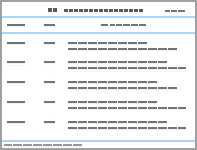
"
| 项目 | 对照组(n = 18) | 干预组(n = 18) | χ2/t值 | P值 |
|---|---|---|---|---|
| 性别(男/女, n) | 16/2 | 15/3 | 1.000 | |
| 年龄(岁) | 48.33±9.38 | 48.11±12. 93 | -0.059 | 0.953 |
| 受教育程度(年) | 14.72±2.45 | 14.39±3.52 | -0.330 | 0.743 |
| 病程(月) | 2.54±1.25 | 2.82±1.30 | 0.641 | 0.526 |
| 卒中类型(出血/梗死, n) | 9/9 | 10/8 | 0.111 | 0.738 |
| 病灶侧别(左/右, n) | 13/5 | 13/5 | - | 1.000 |
| MMSE | 16.61±5.33 | 18.61±3.99 | 1.275 | 0.211 |
| LOTCA | 76.89±18.30 | 83.72±15.48 | 1.210 | 0.235 |
| 简式Fugl-Meyer评定量表 | 31.61±31.81 | 43.50±30.00 | 1.154 | 0.257 |
| Fugl-Meyer评定量表平衡部分 | 7.17±3.78 | 8.94±3.21 | 1.522 | 0.137 |
| NIHSS | 8.83±3.99 | 6.94±3.54 | -1.503 | 0.142 |
| 改良Barthel指数 | 48.06±24.92 | 55.56±24.25 | 0.915 | 0.367 |
"
| 项目 | 对照组(n = 18) | 干预组(n = 18) | χ2/Z值 | P值 |
|---|---|---|---|---|
| 病灶部位(n) | 5.800 | 0.326 | ||
| 额叶 | 1 | 1 | ||
| 颞叶 | 0 | 1 | ||
| 额颞叶 | 0 | 2 | ||
| 额顶叶 | 2 | 2 | ||
| 额颞顶叶 | 3 | 3 | ||
| 颞顶叶 | 3 | 2 | ||
| 基底节区 | 8 | 5 | ||
| 放射冠区 | 0 | 1 | ||
| 丘脑 | 0 | 1 | ||
| 侧脑室旁 | 1 | 0 | ||
| 基础慢性病史(n) | 2.533 | 0.639 | ||
| 无 | 2 | 6 | ||
| 高血压 | 7 | 2 | ||
| 心脏病 | 3 | 2 | ||
| 2型糖尿病 | 1 | 1 | ||
| 高血压、高血脂 | 1 | 1 | ||
| 高血压、2型糖尿病 | 3 | 3 | ||
| 其他 | 1 | 3 | ||
| 病因(n) | 4.667 | 0.587 | ||
| 高血压性 | 8 | 4 | ||
| 动脉粥样硬化性 | 7 | 7 | ||
| 脑血管畸形 | 0 | 5 | ||
| 动脉瘤破裂 | 1 | 1 | ||
| 心源性 | 2 | 0 | ||
| 其他 | 0 | 1 | ||
| 手功能分级(n) | -0.652 | 0.589 | ||
| 废用手 | 13 | 10 | ||
| 辅助手C | 2 | 1 | ||
| 辅助手B | 0 | 1 | ||
| 辅助手A | 0 | 3 | ||
| 实用手B | 0 | 2 | ||
| 实用手A | 3 | 1 | ||
| 功能步行分级(n) | -0.417 | 0.677 | ||
| 0级 | 8 | 4 | ||
| Ⅰ级 | 3 | 4 | ||
| Ⅱ级 | 1 | 2 | ||
| Ⅲ级 | 2 | 2 | ||
| Ⅳ级 | 2 | 5 | ||
| Ⅴ级 | 2 | 1 |
"
| 组别 | n | 训练前 | 训练后 | 差值 | t值a | P值a |
|---|---|---|---|---|---|---|
| 对照组 | 18 | 16.61±5.33 | 21.50±5.80 | 4.89±2.35 | 23.61 | < 0.001 |
| 干预组 | 18 | 18.61±3.99 | 25.22±4.24 | 6.61±2.33 | 12.039 | < 0.001 |
| t值 | 1.275 | 2.198 | 2.209 | |||
| P值 | 0.211 | 0.035 | 0.034 |
"
| 组别 | n | 训练前 | 训练后 | 差值 | t值a | P值a |
|---|---|---|---|---|---|---|
| 对照组 | 18 | 76.89±18.30 | 86.89±18.61 | 10.00±4.37 | 9.718 | < 0.001 |
| 干预组 | 18 | 83.72±15.48 | 100.17±13.48 | 16.44±2.96 | 8.831 | < 0.001 |
| t值 | 1.210 | 2.451 | 5.186 | |||
| P值 | 0.235 | 0.02 | < 0.001 |
"
| 组别 | n | 训练前 | 训练后 | 差值 | t值a | P值a |
|---|---|---|---|---|---|---|
| 对照组 | 18 | 10.78±3.62 | 12.83±2.40 | 2.06±1.98 | 4.395 | < 0.001 |
| 干预组 | 18 | 11.44±3.00 | 14.28±2.45 | 2.83±1.89 | 6.372 | < 0.001 |
| t值 | 0.602 | 1.521 | 0.296 | |||
| P值 | 0.551 | 0.138 | 0.77 |
"
| 组别 | n | 训练前 | 训练后 | 差值 | t值a | P值a |
|---|---|---|---|---|---|---|
| 对照组 | 18 | 12.00±2.79 | 13.50±2.41 | 1.50±1.20 | 5.301 | < 0.001 |
| 干预组 | 18 | 13.17±2.36 | 15.11±1.18 | 1.94±1.70 | 4.862 | < 0.001 |
| t值 | 1.356 | 2.549 | 0.497 | |||
| P值 | 0.184 | 0.015 | 0.619 |
"
| 组别 | n | 训练前 | 训练后 | 差值 | t'值a | P值a |
|---|---|---|---|---|---|---|
| 对照组 | 18 | 8.94±2.24 | 10.33±2.20 | 1.39±1.34 | 4.415 | < 0.001 |
| 干预组 | 18 | 10.33±2.45 | 11.67±0.97 | 1.33±1.97 | 2.871 | 0.011 |
| t'值 | 1.777 | 2.356 | 1.497 | |||
| P值 | 0.085 | 0.027 | 0.150 |
"
| 组别 | n | 训练前 | 训练后 | 差值 | t'值a | P值a |
|---|---|---|---|---|---|---|
| 对照组 | 18 | 10.50±2.62 | 10.89±2.48 | 0.39±0.78 | 2.122 | 0.049 |
| 干预组 | 18 | 11.39±1.65 | 11.78±0.94 | 0.39±2.17 | 2.122 | 0.049 |
| t'值 | 1.219 | 1.426 | 1.427 | |||
| P值 | 0.233 | 0.168 | 0.169 |
"
| 组别 | n | 训练前 | 训练后 | 差值 | t值a | P值a |
|---|---|---|---|---|---|---|
| 对照组 | 18 | 19.28±6.05 | 21.78±6.16 | 2.50±2.20 | 4.815 | < 0.001 |
| 干预组 | 18 | 21.06±6.11 | 24.72±4.61 | 3.67±2.17 | 7.171 | < 0.001 |
| t值 | 0.877 | 1.623 | 2.354 | |||
| P值 | 0.386 | 0.114 | 0.029 |
"
| 组别 | n | 训练前 | 训练后 | 差值 | t值a | P值a |
|---|---|---|---|---|---|---|
| 对照组 | 18 | 15.39±5.14 | 17.67±6.11 | 2.28±2.27 | 4.257 | 0.001 |
| 干预组 | 18 | 16.33±5.63 | 22.67±6.04 | 6.33±2.93 | 9.169 | < 0.001 |
| t值 | 0.526 | 2.470 | 0.451 | |||
| P值 | 0.602 | 0.019 | 0.359 |
| [1] | 中国卒中学会, 卒中后认知障碍管理专家委员会. 卒中后认知障碍管理专家共识[J]. 中国卒中杂志, 2017, 12(6):519-531. |
| [2] | Benjamin E J, Virani S S, Callaway C W, et al. Heart Disease and Stroke Statistics-2018 Update: a report from the American Heart Association[J]. Circulation, 2018, 137(12):467-492. |
| [3] |
Gillespie D C, Bowen A, Chung C S, et al. Rehabilitation for post-stroke cognitive impairment: an overview of recommendations arising from systematic reviews of current evidence[J]. Clin Rehabil, 2015, 29(2):120-128.
doi: 10.1177/0269215514538982 pmid: 24942480 |
| [4] | 认知训练中国专家共识写作组, 中国医师协会神经内科医师分会认知障碍疾病专业委员会. 认知训练中国专家共识[J]. 中华医学杂志, 2019, 99(1):4-8. |
| [5] |
Tang Y, Xing Y, Zhu Z, et al. The effects of 7-week cognitive training in patients with vascular cognitive impairment, no dementia (the Cog-VACCINE study): a randomized controlled trial[J]. Alzheimers Dement, 2019, 15(5):605-614.
doi: S1552-5260(19)30030-5 pmid: 30894299 |
| [6] | Das J P, Naglieri J A, Kirby J R. Assessment of Cognitive Processes: The PASS Theory of Intelligence[M]. New York: Allyn and Bacon, 1994. |
| [7] | 燕铁斌, 马超, 郭友华, 等. Loewenstein认知评定量表(简体中文版)的效度及信度研究[J]. 中华物理医学与康复杂志, 2004, 26(2):81-84. |
| [8] |
Ankolekar S, Geeganage C, Anderton P, et al. Clinical trials for preventing post stroke cognitive impairment[J]. J Neurol Sci, 2010, 299(1-2):168-174.
doi: 10.1016/j.jns.2010.08.052 pmid: 20855090 |
| [9] | 中华医学会神经病学分会神经康复学组, 中华医学会神经病学分会脑血管病学组, 卫生部脑卒中筛查与防治工程委员会办公室. 中国脑卒中康复治疗指南(2011完全版)[J]. 中国康复理论与实践, 2012, 18(4):301-318. |
| [10] |
Pendlebury S T, Rothwell P M. Prevalence, incidence, and factors associated with pre-stroke and post-stroke dementia: a systematic review and meta-analysis[J]. Lancet Neurol, 2009, 8(11):1006-1018.
doi: 10.1016/S1474-4422(09)70236-4 pmid: 19782001 |
| [11] | Al-Qazzaz N K, Ali S H, Ahmad S A, et al. Cognitive impairment and memory dysfunction after a stroke diagnosis: a post-stroke memory assessment[J]. Neuropsychiatr Dis Treat, 2014, 10:1677-1691. |
| [12] | Sun J H, Tan L, Yu J T. Post-stroke cognitive impairment: epidemiology, mechanisms and management[J]. Ann Transl Med, 2014, 2(8):80. |
| [13] |
Pendlebury S T, Chen P J, Welch S J, et al. Methodological factors in determining risk of dementia after transient ischemic attack and stroke: (II) effect of attrition on follow-up[J]. Stroke, 2015, 46(6):1494-1500.
doi: 10.1161/STROKEAHA.115.009065 pmid: 25953366 |
| [14] | 曲艳吉, 卓琳, 詹思延. 中国脑卒中后认知障碍流行病学特征的系统评价[J]. 中华老年心脑血管病杂志, 2013, 15(12):1294-1301. |
| [15] |
Lanctot K L, Lindsay M P, Smith E E, et al. Canadian Stroke Best Practice Recommendations: Mood, Cognition and Fatigue following Stroke, 6th edition update 2019[J]. Int J Stroke, 2019, 10(7):1130-1140.
doi: 10.1111/ijs.12557 |
| [16] |
Peters R, Beckett N, Forette F, et al. Incident dementia and blood pressure lowering in the Hypertension in the Very Elderly Trial cognitive function assessment (HYVET-COG): a double-blind, placebo controlled trial[J]. Lancet Neurol, 2008, 7(8):683-689.
doi: 10.1016/S1474-4422(08)70143-1 pmid: 18614402 |
| [17] | Vliet P, Water W, Craen A J, et al. The influence of age on the association between cholesterol and cognitive function[J]. Exp Gerontol, 2009, 44(1-2):112-122. |
| [18] |
Galan B E, Zoungas S, Chalmers J, et al. Cognitive function and risks of cardiovascular disease and hypoglycaemia in patients with type 2 diabetes: the Action in Diabetes and Vascular Disease: Preterax and Diamicron Modified Release Controlled Evaluation (ADVANCE) trial[J]. Diabetologia, 2009, 52(11):2328-2336.
doi: 10.1007/s00125-009-1484-7 pmid: 19688336 |
| [19] |
Bath P M, Scutt P, Blackburn D J, et al. Intensive versus guideline blood pressure and lipid lowering in patients with previous stroke: main results from the pilot 'Prevention of Decline in Cognition after Stroke Trial' (PODCAST) randomised controlled trial[J]. PLoS One, 2017, 12(1):e0164608.
doi: 10.1371/journal.pone.0164608 |
| [20] |
Shepherd J, Blauw G J, Murphy M B, et al. Pravastatin in elderly individuals at risk of vascular disease (PROSPER): a randomised controlled trial[J]. Lancet, 2002, 360(9346):1623-1630.
pmid: 12457784 |
| [21] |
Matz K, Teuschl Y, Firlinger B, et al. Multidomain lifestyle interventions for the prevention of cognitive decline after ischemic stroke: randomized trial[J]. Stroke, 2015, 46(10):2874-2880.
doi: 10.1161/STROKEAHA.115.009992 |
| [22] |
Cicerone K D, Langenbahn D M, Braden C, et al. Evidence-based cognitive rehabilitation: updated review of the literature from 2003 through 2008[J]. Arch Phys Med Rehabil, 2011, 92(4):519-530.
doi: 10.1016/j.apmr.2010.11.015 |
| [23] |
Scholz J, Klein M C, Behrens T E, et al. Training induces changes in white-matter architecture[J]. Nat Neurosci, 2009, 12(11):1370-1371.
doi: 10.1038/nn.2412 pmid: 19820707 |
| [24] |
McNab F, Varrone A, Farde L, et al. Changes in cortical dopamine D1 receptor binding associated with cognitive training[J]. Science, 2009, 323(5915):800-802.
doi: 10.1126/science.1166102 |
| [25] | Zelinski E M. Far transfer in cognitive training of older adults[J]. Restor Neurol Neurosci, 2009, 27(5):455-471. |
| [26] |
Barnett S M, Ceci S J. When and where do we apply what we learn? A taxonomy for far transfer[J]. Psychol Bull, 2002, 128(4):612-637.
pmid: 12081085 |
| [27] |
Au J, Sheehan E, Tsai N, et al. Improving fluid intelligence with training on working memory: a meta-analysis[J]. Psychon Bull Rev, 2015, 22(2):366-377.
doi: 10.3758/s13423-014-0699-x |
| [28] |
Westerberg H, Jacobaeus H, Hirvikoski T, et al. Computerized working memory training after stroke: a pilot study[J]. Brain Inj, 2007, 21(1):21-29.
doi: 10.1080/02699050601148726 |
| [29] |
Prokopenko S V, Mozheyko E Y, Petrova M M, et al. Correction of post-stroke cognitive impairments using computer programs[J]. J Neurol Sci, 2013, 325(1-2):148-153.
doi: 10.1016/j.jns.2012.12.024 pmid: 23312291 |
| [30] | 蔡天燕, 冉春风, 钞强, 等. 计算机辅助工作记忆训练对脑卒中后认知障碍的影响[J]. 中国康复, 2016, 31(5):377-379. |
| [31] | 姜财, 杨珊莉, 黄佳, 等. 计算机辅助认知训练对脑卒中患者认知功能恢复的影响及其机制的fMRI研究[J]. 中国康复医学杂志, 2015, 30(9):911-914. |
| [32] | 王晓娜, 顾莹, 刘敏. 电脑辅助认知康复系统治疗脑卒中后认知障碍的疗效观察[J]. 中国康复, 2013, 28(5):330-332. |
| [33] | 叶海程, 杨珊莉, 陈立典, 等. 计算机辅助认知训练对脑卒中患者认知功能及功能独立性的影响[J]. 实用医学杂志, 2014, 30(17):2742-2744. |
| [34] | 朱静, 范建中, 张善纲, 等. 计算机训练与人工训练对脑损伤患者认知障碍康复的比较[J]. 中国康复医学杂志, 2007, 22(1):34-36. |
| [35] | 王健. 背景音乐下头皮针结合计算机辅助认知训练对脑卒中认知障碍的影响[J]. 中国康复, 2016, 31(2):128-130. |
| [1] | ZHU Lili, ZHAO Jiaxin, CHENG Xue, WANG Huijuan, CHEN Xiaoxia. Experiences and needs of stroke patients during rehabilitation: a qualitative meta-synthesis [J]. Chinese Journal of Rehabilitation Theory and Practice, 2026, 32(3): 286-293. |
| [2] | LIU Ping, ZHOU Nan, XUE Xiaojie, SHAO Weibo. Application of rehabilitation therapy techniques for post-stroke dysphagia: a bibliometric analysis [J]. Chinese Journal of Rehabilitation Theory and Practice, 2026, 32(3): 294-303. |
| [3] | YANG Ling, WANG Qinglei, WANG Jie, XU Wenjie, WANG Tong, GUO Chuan, QIAN Xue. Activation patterns and mechanism in the prefrontal cortex of post-stroke anxiety patients: a study using functional near-infrared spectroscopy [J]. Chinese Journal of Rehabilitation Theory and Practice, 2026, 32(3): 329-336. |
| [4] | YUE Yuan, ZHANG Tong, LIU Yuanmin, WANG Ya'nan. Effect of lower extremity exoskeleton robots on balance and walking function of patients with post-stroke cerebellar ataxia [J]. Chinese Journal of Rehabilitation Theory and Practice, 2026, 32(1): 23-29. |
| [5] | WU Cheng, ZHANG Yunfeng, WANG Weining, YU Kewei, ZHANG Yanzheng, SHEN Jiarong, WU Yi. Effect of elbow-wrist functional orthosis on plantar pressure and balance function in stroke patients with hemiplegia [J]. Chinese Journal of Rehabilitation Theory and Practice, 2026, 32(1): 30-39. |
| [6] | ZHANG Junfeng, CHEN Hao, DU Yuzheng, LI Chen, YU Tao, YANG Yuanqing. Non-pharmacological management for post-stroke spasticity from 2004 to 2024: a bibliometric analysis [J]. Chinese Journal of Rehabilitation Theory and Practice, 2026, 32(1): 45-58. |
| [7] | GAO Kaixiang, LU Haitao. Research in neurorehabilitation from 2015 to 2024: a bibliometric analysis [J]. Chinese Journal of Rehabilitation Theory and Practice, 2026, 32(1): 59-68. |
| [8] | WEI Jingyi, WANG Xiaojing, WANG Ran, WEI Chen, MA Sai, LIU Xihua. Effect of acupuncture synchronized speech training on post-stroke motor aphasia [J]. Chinese Journal of Rehabilitation Theory and Practice, 2025, 31(9): 1000-1008. |
| [9] | WANG Xiaojing, WEI Jingyi, WEI Chen, WANG Ran, MA Sai, LIU Xihua. Effect of synchronous acupuncture and articulation training on spastic dysarthria after stroke [J]. Chinese Journal of Rehabilitation Theory and Practice, 2025, 31(9): 1009-1016. |
| [10] | ZHOU Xinyue, YE Ruixue, MA Yaqi, XU Ying, CAO Longyao, WANG Yulong. Researches on central post-stroke pain: a bibliometric analysis [J]. Chinese Journal of Rehabilitation Theory and Practice, 2025, 31(9): 1038-1049. |
| [11] | GAO Yunhan, HOU Shanshan, WANG Xinyu, ZHU Chongtian. Effect of brain-computer interface on upper limb motor dysfunction in stroke patients based on functional near-infrared spectroscopy [J]. Chinese Journal of Rehabilitation Theory and Practice, 2025, 31(9): 1066-1073. |
| [12] | GAO Fei, LIU Lixu, HU Xueyan, WU Xiaoli, YANG Lingyu, YANG Yuqi, YE Changqing, DU Xiaoxia. Effect of unilateral or bilateral transcranial direct current stimulation on post-stroke dysphagia [J]. Chinese Journal of Rehabilitation Theory and Practice, 2025, 31(9): 993-999. |
| [13] | ZHANG Ziang, CHEN Jing, SHEN Mengru, GENG Zongxiao, HAN Xue, ZHAO Xu, XU Lei. Comparison of effect of different types of exercise on gait and balance for stroke patients [J]. Chinese Journal of Rehabilitation Theory and Practice, 2025, 31(8): 896-905. |
| [14] | WANG Xiaofeng, HU Mengqiao, WANG Yan, WEI Kun, XU Wenzhu, REN Dan, MA Ye. Effect of exoskeleton robot-assisted gait training on lower limb function after stroke and spinal cord injury: a systematic review [J]. Chinese Journal of Rehabilitation Theory and Practice, 2025, 31(8): 914-921. |
| [15] | ZHANG Zihan, GUAN Jinzhi, HUANG Xing, ZHOU Li, ZHANG Yaxuan, ZHANG Mengyuan, CHANG Jingling. Characteristics of time-domain and time-frequency of Chinese word-picture matching task-related electroencephalogram in patients with post-stroke aphasia [J]. Chinese Journal of Rehabilitation Theory and Practice, 2025, 31(8): 947-957. |
| Viewed | ||||||
|
Full text |
|
|||||
|
Abstract |
|
|||||
|
||
