



《Chinese Journal of Rehabilitation Theory and Practice》 ›› 2020, Vol. 26 ›› Issue (6): 738-744.doi: 10.3969/j.issn.1006-9771.2020.00.001
ZHANG Hui1,XUE Qiang1( ),WANG Xing-tao2
Received:2019-07-26
Revised:2019-08-27
Published:2020-06-25
Online:2020-06-29
Contact:
XUE Qiang
E-mail:qxue@tust.edu.cn
Supported by:CLC Number:
ZHANG Hui,XUE Qiang,WANG Xing-tao. Knee Support-based Study on Sit to Stand Transfer Trajectory of Human Body[J]. 《Chinese Journal of Rehabilitation Theory and Practice》, 2020, 26(6): 738-744.
"
"

"

"
"
"
"
"
"
"
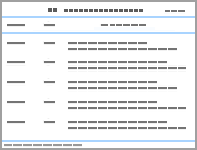
| 足间距离 | 阶段 | 第一组 | 第二组 | 第三组 |
|---|---|---|---|---|
| 20 cm | 阶段Ⅰ的Xt差值 | 115.13 | 134.52 | 126.99 |
| 阶段Ⅱ的Xt差值 | 163.79 | 195.50 | 158.93 | |
| 阶段Ⅲ的Xt差值 | 19.54 | 32.63 | 19.76 | |
| 30 cm | 阶段Ⅰ的Xt差值 | 122.55 | 123.95 | 137.42 |
| 阶段Ⅱ的Xt差值 | 172.47 | 187.38 | 168.41?? | |
| 阶段Ⅲ的Xt差值 | 24.85 | 17.93 | 26.18? |
"
| 参数 | 时间 |
|---|---|
| 第一组足间距离20 cm | 1.6±0.04 |
| 第一组足间距离30 cm | 1.7±0.06 |
| 第二组足间距离20 cm | 1.6±0.05 |
| 第二组足间距离30 cm | 1.6±0.03 |
| 第三组足间距离20 cm | 1.7±0.02 |
| 第三组足间距离30 cm | 1.8±0.02 |
| 肥胖者 | 1.9±0.03 |
| [1] |
Bobbert M F, Kistemaker D A, Vaz M A, et al. Searching for strategies to reduce the mechanical demands of the sit-to-stand task with a muscle-actuated optimal control model[J]. Clin Biomech (Bristol, Avon), 2016, 37:83-90.
doi: 10.1016/j.clinbiomech.2016.06.008 |
| [2] |
Dall P M, Kerr A. Frequency of the sit to stand task: an observational study of free-living adults[J]. Appl Ergon, 2010, 41(1):58-61.
doi: 10.1016/j.apergo.2009.04.005 |
| [3] |
Wang T, Jeong H, Watanabe M, et al. Fault classification with discriminant analysis during sit-to-stand movement assisted by a nursing care robot[J]. Mech Syst Signal Pr, 2018, 113:90-101.
doi: 10.1016/j.ymssp.2017.01.051 |
| [4] | Ottaviano E, Castelli G. A procedure for experimental evaluation of the sit-to-stand for the design of assisting devices[M]// Viadero F, Ceccarelli M. New Trends in Mechanism and Machine Science. Dordrecht: Springer, 2013: 487-495. |
| [5] |
Rea P, Ottaviano E. Functional design for customizing sit-to-stand assisting devices[J]. J Bionic Eng, 2018, 15(1):83-93.
doi: 10.1007/s42235-017-0006-4 |
| [6] | 张勤良, 周旭, 倪朝民, 等. 性别对正常人坐站转移过程髋关节运动学参数及足底压力的影响[J]. 中国康复医学杂志, 2012, 27(4):320-323. |
| [7] |
Zech A, Steib S, Freiberger E, et al. Functional muscle power testing in young, middle-aged, and community-dwelling nonfrail and prefrail older adults[J]. Arch Phys Med Rehabil, 2011, 92(6):967-971.
doi: 10.1016/j.apmr.2010.12.031 |
| [8] | 杨慧馨, 刘晓蕾. 太极拳和八段锦对脑卒中患者偏瘫下肢运动功能和表面肌电的效果[J]. 中国康复理论与实践, 2019, 25(1):101-106. |
| [9] | 梁康贵. 脑卒中偏瘫上肢康复外骨骼机器人的基础理论研究[D]. 哈尔滨:哈尔滨工业大学, 2016. |
| [10] | 高天昊, 吴毅, 陆蓉蓉, 等. 健康人坐-站-坐运动中姿势图参数的重测信度研究[J]. 中国运动医学杂志, 2017, 36(7):605-609. |
| [11] | 穆景颂, 倪朝民, 陈进, 等. 偏瘫患者上肢位置对坐站转移姿势稳定性的影响[J]. 中国康复, 2017, 32(1):37-38. |
| [12] |
Kawagoe S, Tajima N, Chosa E. Biomechanical analysis of effects of foot placement with varying chair height on the motion of standing up[J]. J Orthop Sci, 2000, 5(2):124-133.
pmid: 10982646 |
| [13] | Kwong P W, Ng S S, Chung R C, et al. Foot placement and arm position affect the five times sit-to-stand test time of individuals with chronic stroke[J]. Biomed Res Int, 2014, 2014:636530. |
| [14] |
Kinoshita S, Kiyama R, Yoshimoto Y. Effect of handrail height on sit-to-stand movement[J]. PLoS One, 2015, 10(7):e0133747.
doi: 10.1371/journal.pone.0133747 |
| [15] |
Gilleard W, Smith T. Effect of obesity on posture and hip joint moments during a standing task, and trunk forward flexion motion[J]. Int J Obes, 2007, 31(2):267-271.
doi: 10.1038/sj.ijo.0803430 |
| [16] |
Gilleard W, Crosbie J, Smith R. Effect of pregnancy on trunk range of motion when sitting and standing[J]. Acta Obstet Gynecol Scand, 2002, 81(11):1011-1020.
doi: 10.1034/j.1600-0412.2002.811104.x |
| [17] |
Jeon W, Jensen J L, Griffin L. Muscle activity and balance control during sit-to-stand across symmetric and asymmetric initial foot positions in healthy adults[J]. Gait Posture, 2019, 71:138-144.
doi: 10.1016/j.gaitpost.2019.04.030 |
| [18] |
Turcot K, Lachance B. How toe-out foot positioning influences body-dynamics during a sit-to-stand task[J]. Gait Posture, 2019, 70:185-189.
doi: S0966-6362(18)31684-9 pmid: 30878730 |
| [19] |
Macaluso A, De Vito G. Muscle strength, power and adaptations to resistance training in older people[J]. Eur J Appl Physiol, 2004, 91(4):450-472.
pmid: 14639481 |
| [20] |
Mathiyakom W, McNitt-Gray J L, Requejo P, et al. Modifying center of mass trajectory during sit-to-stand tasks redistributes the mechanical demand across the lower extremity joints[J]. Clin Biomech, 2005, 20(1):105-111.
pmid: 15567544 |
| [21] |
Escalante A, Lichtenstein M J, Hazuda H P. Determinants of shoulder and elbow flexion range: results from the San Antonio Longitudinal Study of Aging[J]. Arthritis Care Res, 1999, 12(4):277-286.
pmid: 10689992 |
| [22] |
Galli M, Crivellini M, Sibella F, et al. Sit-to-stand movement analysis in obese subjects[J]. Int J Obes Relat Metab Disord, 2000, 24(11):1488-1492.
doi: 10.1038/sj.ijo.0801409 |
| [23] |
Pataky Z, Armand S, Müller-Pinget S, et al. Effects of obesity on functional capacity[J]. Obesity, 2014, 22(1):56-62.
doi: 10.1002/oby.20514 |
| [1] | LIU Chen, DONG Liquan, YAN Mei, JIANG Hua. Evaluation of assistive device adaptation and analysis of influencing factors among people with dysfunction [J]. Chinese Journal of Rehabilitation Theory and Practice, 2025, 31(11): 1354-1364. |
| [2] | WEI Chenjing, DUAN Jinjuan, CONG Yan, SUN Fengjiao, CAI Hongbo. Development of an assessment-adaptation-evaluation framework for wheelchair cushions [J]. Chinese Journal of Rehabilitation Theory and Practice, 2025, 31(9): 1092-1100. |
| [3] | SU Benyue, LIU Wenyao, ZONG Wenjie, WANG Baoqian, SHENG Min. Adaptive temporal alignment-based motion intention recognition for intelligent lower-limb prostheses [J]. Chinese Journal of Rehabilitation Theory and Practice, 2025, 31(9): 1101-1115. |
| [4] | ZHANG Wei, QIAN Shanhua, LIU Li, JIANG Yujing, YU Jinghu, FAN Yuchao, WEI Xiaomei. Construction and simulation of swallowing dynamic model: taking tongue movement descent as an example [J]. Chinese Journal of Rehabilitation Theory and Practice, 2025, 31(6): 736-744. |
| [5] | LIU Fangchao, ZHANG Yuanmingfei, WU Meiqi, ZHOU Mouwang, LI Tao. Validity of key points detection technology of artificial intelligence in gait kinematics analysis [J]. Chinese Journal of Rehabilitation Theory and Practice, 2025, 31(3): 249-253. |
| [6] | WANG Hujun, WANG Jingxuan, WANG Binglong, HU Zhimin. Intelligent rehabilitation in China: a bibliometric analysis [J]. Chinese Journal of Rehabilitation Theory and Practice, 2024, 30(12): 1428-1435. |
| [7] | AI Wangxian, LIU Siwen, LIU Deming, HAN Junqi, DENG Xiaoqian. Factors of abandonment of upper limb prosthesis [J]. Chinese Journal of Rehabilitation Theory and Practice, 2024, 30(12): 1479-1488. |
| [8] | YANG Jian, YANG Yaru. Assistive technology in education: policy framework and development [J]. Chinese Journal of Rehabilitation Theory and Practice, 2024, 30(11): 1254-1261. |
| [9] | TIAN Yifan, YE Haiyan, LIU Ye, CHENG Yaning, YIN Ruixue, LÜ Xueli, CHEN Di. Rehabilitation big data standards under ICF framework [J]. Chinese Journal of Rehabilitation Theory and Practice, 2024, 30(11): 1262-1271. |
| [10] | YANG Ping, CHEN Haoyuan, GAO Ruixin, WANG Xinping, Philip ROWE. Three-dimensional modeling of foot motion based on low-cost inertial measurement unit and force sensing resistor [J]. Chinese Journal of Rehabilitation Theory and Practice, 2024, 30(10): 1224-1231. |
| [11] | ZHANG Yichen, FEI Sixian, SUN Qing, LI Xuanxuan, GUO Shuai. A motion performance-based assistance strategy for dual-person upper limb interaction [J]. Chinese Journal of Rehabilitation Theory and Practice, 2024, 30(10): 1232-1240. |
| [12] | CHEN Panpan, WANG Binglong, DONG Liquan, LIU Xidong, YANG Youping, LI Jiayue. Unmet needs for assistive technology and its related factors for persons with physical disabilities in Chengdu, China [J]. Chinese Journal of Rehabilitation Theory and Practice, 2024, 30(5): 598-605. |
| [13] | QIU Fubing, YANG Yaru. Accessible facilities construction and assistive technology application of public sports venues in Shenzhen, Guangdong, China [J]. 《Chinese Journal of Rehabilitation Theory and Practice》, 2023, 29(12): 1465-1472. |
| [14] | ZHANG Hengrui, MENG Zhaoli, CUI Pei, WANG Ruiyi. Impact of different kinds of helmet-mounted display on human balance and posture control [J]. 《Chinese Journal of Rehabilitation Theory and Practice》, 2023, 29(11): 1359-1364. |
| [15] | CAI Huanian, FEI Sixian, ZHANG Yichen, SUN Qing, GUO Shuai, SONG Tao. Motion assistance analysis for robot-assisted tele-rehabilitation based on bilateral admittance control [J]. 《Chinese Journal of Rehabilitation Theory and Practice》, 2023, 29(9): 1104-1109. |
| Viewed | ||||||
|
Full text |
|
|||||
|
Abstract |
|
|||||
|
||
