



《Chinese Journal of Rehabilitation Theory and Practice》 ›› 2020, Vol. 26 ›› Issue (7): 851-855.doi: 10.3969/j.issn.1006-9771.2020.07.022
Previous Articles Next Articles
LIU Ping,HU Xue-yan,HE Jing-jie( )
Received:2019-09-19
Revised:2019-10-17
Published:2020-07-25
Online:2020-07-24
Contact:
HE Jing-jie
E-mail:hejingjie@126.com
CLC Number:
LIU Ping,HU Xue-yan,HE Jing-jie. Rehabilitation for Stroke with Auditory Agnosia as the First Symptom: Four Cases Report[J]. 《Chinese Journal of Rehabilitation Theory and Practice》, 2020, 26(7): 851-855.
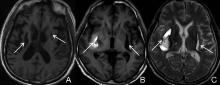
"
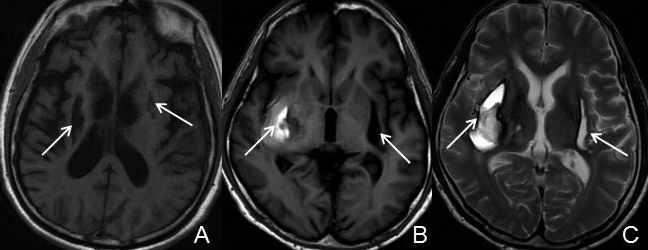
"
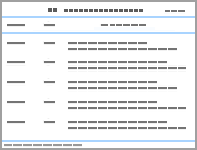
| 时间 | Fugl-Meyer评定量表 | Holden步行分级 | 改良Barthel指数 |
|---|---|---|---|
| 治疗前 | 24(20~35) | 0~1级 | 25(20~35) |
| 治疗后 | 87(84~92) | 3~4级 | 80(75~85) |
"
| 时间 | 听理解、复述、听写 | 表达、阅读、书写 |
|---|---|---|
| 治疗前 | 0 | 90 |
| 治疗后 | 0 | 100 |
| [1] |
Wang W, Jiang B, Sun H, et al. Prevalence, incidence and mortality of stroke in China: results from a nationwide population-based survey of 480687 adults[J]. Circulation, 2017, 135(8): 759-771.
doi: 10.1161/CIRCULATIONAHA.116.025250 |
| [2] |
Goll J C, Crutch S J, Warren J D. Central auditory disorders: toward a neuropsychology of auditory objects[J]. Curr Opin Neurol, 2010, 23(6): 617-627.
doi: 10.1097/WCO.0b013e32834027f6 |
| [3] |
Musiek F E, Chermak G D, Cone B. Central deafness: a review of past and current perspectives[J]. Int J Audiol, 2019, 58(10): 605-617.
doi: 10.1080/14992027.2019.1606458 pmid: 31066317 |
| [4] |
Pickles J O. Auditory pathways: anatomy and physiology[J]. Handb Clin Neurol, 2015, 129:3-25.
doi: 10.1016/B978-0-444-62630-1.00001-9 pmid: 25726260 |
| [5] |
Häusler R, Levine R A. Auditory dysfunction in stroke[J]. Acta Otolaryngol, 2000, 120(6): 689-703.
doi: 10.1080/000164800750000207 |
| [6] | 许莉, 李慧英, 张嵘, 等. 以突发性耳聋为首发症状的后循环卒中1例报告[J]. 北京医学, 2018, 40(5): 485-486. |
| Xu L, Li H Y, Zhang R, et al. Posterior circulation stroke with sudden deafness as the first symptom: a case report[J]. Beijing Med J, 2018, 40(5): 485-486. | |
| [7] |
Hoshino M, Akiyama H, Kashima S, et al. Acute onset bilateral hearing loss in dorsomedial pontine hemorrhage: a case report[J]. Medicine (Baltimore), 2019, 98(34): e16902.
doi: 10.1097/MD.0000000000016902 |
| [8] | Slevc L R, Shell A R. Auditory agnosia[J]. Handb Clin Neurol, 2015, 129:573-587. |
| [9] | Kumar A, Wroten M. Agnosia [M]. Treasure Island (FL): StatPearls Publishing, 2020. |
| [10] |
Buchman A S, Garron D C, Trost-Cardamone J E, et al. Word deafness: one hundred years later[J]. J Neurol Neurosurg Psychiatry, 1986, 49(5): 489-499.
doi: 10.1136/jnnp.49.5.489 |
| [11] |
Stewart L, von Kriegstein K, Warren J D. Music and the brain: disorders of musical listening[J]. Brain, 2006, 129:2533-2553.
pmid: 16845129 |
| [12] | Satoh M. Music processing in the brain: neuropsychological approach through findings of patients with amusia[J]. Brain Nerve, 2017, 69(6): 615-627. |
| [13] |
Shankweiler D. Effects of temporal lobe damage on the perception of dichotically presented melodies[J]. J Comp Physiol Psychol, 1966, 62(1): 115-119.
pmid: 5968258 |
| [14] |
Kaga K, Kaga M, Tamai F, et al. Auditory agnosia in children after herpes encephalitis[J]. Acta Otolaryngol, 2003, 123(2): 232-235.
doi: 10.1080/00016480310000958 |
| [15] |
Korkman M, Granstrom M L, Appelqvist K, et al. Neuropsychological characteristics of five children with the Landau-Kleffner syndrome: dissociation of auditory and phonological discrimination[J]. J Int Neuropsychol Soc, 1998, 4(6): 566-575.
doi: 10.1017/S1355617798466050 |
| [16] |
Metz-Lutz M N. The assessment of auditory function in CSWS: lessons from long-term outcome[J]. Epilepsia, 2009, 7:73-76.
doi: 10.1111/epi.1966.7.issue-1 |
| [17] |
Goll J C, Kim L G, Hailstone J C, et al. Auditory object cognition in dementia[J]. Neuropsychologia, 2011, 49(9): 2755-2765.
doi: 10.1016/j.neuropsychologia.2011.06.004 |
| [18] |
Simon E N. Auditory agnosia caused by a tectal germinoma[J]. Neurology, 2005, 65(2): 339.
doi: 10.1212/WNL.65.2.339 |
| [19] | 张志坚, 朱明万, 谢宝君, 等. 急性听觉失认症与线粒体脑肌病[J]. 听力学及言语疾病杂志, 2017, 25(6): 571-574. |
| Zhang Z J, Zhu M W, Xie B J, et al. Acute auditory agnosia resulted from MELAS syndrome[J]. J Audiol Speech Pathol, 2017, 25(6): 571-574. | |
| [20] |
Smith K, Chiu S, Hunt C, et al. Late-onset mitochondrial encephalopathy, lactic acidosis, and stroke-like episodes presenting with auditory agnosia[J]. Neurologist, 2019, 24(3): 90-92.
doi: 10.1097/NRL.0000000000000229 |
| [21] |
Kim J M, Woo S B, Lee Z, et al. Verbal auditory agnosia in a patient with traumatic brain injury: a case report[J]. Medicine (Baltimore), 2018, 97(11): e0136.
doi: 10.1097/MD.0000000000010136 |
| [22] | Hickok G. The cortical organization of speech processing: feedback control and predictive coding the context of a dual-stream model[J]. J Commun Disord, 2012, 45(6): 393-402. |
| [23] |
Bauer A R, Bleichner M G, Jaeger M, et al. Dynamic phase alignment of ongoing auditory cortex oscillations[J]. Neuroimage, 2018, 167:396-407.
doi: 10.1016/j.neuroimage.2017.11.037 |
| [24] | 谢江波, 邵国富. 以双侧耳聋为首发症状的基底核区出血一例[J]. 中国脑血管病杂志, 2013, 10(4): 208-209. |
| Xie J B, Shao G F. Basal ganglia hemorrhage with bilateral deafness as the first symptom: a case report[J]. Chin J Cerebrovasc Dis, 2013, 10(4): 208-209. | |
| [25] |
Pavani F, Meneghello F, Làdavas E. Deficit of auditory space perception in patients with visuospatial neglect[J]. Neuropsychologia, 2001, 39(13): 1401-1409.
pmid: 11585608 |
| [26] |
Pavani F, Ládavas E, Driver J. Auditory and multisensory aspects of visuospatial neglect[J]. Trend Cogn Sci, 2003, 7(9): 407-414.
doi: 10.1016/S1364-6613(03)00189-X |
| [27] |
Bestelmeyer P E G, Davis N J, Poliva O, et al. Neuromodulation of right auditory cortex selectively increases activation in speech-related brain areas in brainstem auditory agnosia[J]. Cogn Behav Neurol, 2018, 31(3): 151-155.
doi: 10.1097/WNN.0000000000000162 pmid: 30239465 |
| [1] | ZHU Lili, ZHAO Jiaxin, CHENG Xue, WANG Huijuan, CHEN Xiaoxia. Experiences and needs of stroke patients during rehabilitation: a qualitative meta-synthesis [J]. Chinese Journal of Rehabilitation Theory and Practice, 2026, 32(3): 286-293. |
| [2] | LIU Ping, ZHOU Nan, XUE Xiaojie, SHAO Weibo. Application of rehabilitation therapy techniques for post-stroke dysphagia: a bibliometric analysis [J]. Chinese Journal of Rehabilitation Theory and Practice, 2026, 32(3): 294-303. |
| [3] | YANG Ling, WANG Qinglei, WANG Jie, XU Wenjie, WANG Tong, GUO Chuan, QIAN Xue. Activation patterns and mechanism in the prefrontal cortex of post-stroke anxiety patients: a study using functional near-infrared spectroscopy [J]. Chinese Journal of Rehabilitation Theory and Practice, 2026, 32(3): 329-336. |
| [4] | YUE Yuan, ZHANG Tong, LIU Yuanmin, WANG Ya'nan. Effect of lower extremity exoskeleton robots on balance and walking function of patients with post-stroke cerebellar ataxia [J]. Chinese Journal of Rehabilitation Theory and Practice, 2026, 32(1): 23-29. |
| [5] | WU Cheng, ZHANG Yunfeng, WANG Weining, YU Kewei, ZHANG Yanzheng, SHEN Jiarong, WU Yi. Effect of elbow-wrist functional orthosis on plantar pressure and balance function in stroke patients with hemiplegia [J]. Chinese Journal of Rehabilitation Theory and Practice, 2026, 32(1): 30-39. |
| [6] | ZHANG Junfeng, CHEN Hao, DU Yuzheng, LI Chen, YU Tao, YANG Yuanqing. Non-pharmacological management for post-stroke spasticity from 2004 to 2024: a bibliometric analysis [J]. Chinese Journal of Rehabilitation Theory and Practice, 2026, 32(1): 45-58. |
| [7] | GAO Kaixiang, LU Haitao. Research in neurorehabilitation from 2015 to 2024: a bibliometric analysis [J]. Chinese Journal of Rehabilitation Theory and Practice, 2026, 32(1): 59-68. |
| [8] | WEI Jingyi, WANG Xiaojing, WANG Ran, WEI Chen, MA Sai, LIU Xihua. Effect of acupuncture synchronized speech training on post-stroke motor aphasia [J]. Chinese Journal of Rehabilitation Theory and Practice, 2025, 31(9): 1000-1008. |
| [9] | WANG Xiaojing, WEI Jingyi, WEI Chen, WANG Ran, MA Sai, LIU Xihua. Effect of synchronous acupuncture and articulation training on spastic dysarthria after stroke [J]. Chinese Journal of Rehabilitation Theory and Practice, 2025, 31(9): 1009-1016. |
| [10] | ZHOU Xinyue, YE Ruixue, MA Yaqi, XU Ying, CAO Longyao, WANG Yulong. Researches on central post-stroke pain: a bibliometric analysis [J]. Chinese Journal of Rehabilitation Theory and Practice, 2025, 31(9): 1038-1049. |
| [11] | GAO Yunhan, HOU Shanshan, WANG Xinyu, ZHU Chongtian. Effect of brain-computer interface on upper limb motor dysfunction in stroke patients based on functional near-infrared spectroscopy [J]. Chinese Journal of Rehabilitation Theory and Practice, 2025, 31(9): 1066-1073. |
| [12] | GAO Fei, LIU Lixu, HU Xueyan, WU Xiaoli, YANG Lingyu, YANG Yuqi, YE Changqing, DU Xiaoxia. Effect of unilateral or bilateral transcranial direct current stimulation on post-stroke dysphagia [J]. Chinese Journal of Rehabilitation Theory and Practice, 2025, 31(9): 993-999. |
| [13] | ZHANG Ziang, CHEN Jing, SHEN Mengru, GENG Zongxiao, HAN Xue, ZHAO Xu, XU Lei. Comparison of effect of different types of exercise on gait and balance for stroke patients [J]. Chinese Journal of Rehabilitation Theory and Practice, 2025, 31(8): 896-905. |
| [14] | WANG Xiaofeng, HU Mengqiao, WANG Yan, WEI Kun, XU Wenzhu, REN Dan, MA Ye. Effect of exoskeleton robot-assisted gait training on lower limb function after stroke and spinal cord injury: a systematic review [J]. Chinese Journal of Rehabilitation Theory and Practice, 2025, 31(8): 914-921. |
| [15] | ZHANG Zihan, GUAN Jinzhi, HUANG Xing, ZHOU Li, ZHANG Yaxuan, ZHANG Mengyuan, CHANG Jingling. Characteristics of time-domain and time-frequency of Chinese word-picture matching task-related electroencephalogram in patients with post-stroke aphasia [J]. Chinese Journal of Rehabilitation Theory and Practice, 2025, 31(8): 947-957. |
| Viewed | ||||||
|
Full text |
|
|||||
|
Abstract |
|
|||||
|
||
