



Chinese Journal of Rehabilitation Theory and Practice ›› 2026, Vol. 32 ›› Issue (9): 1041-1051.doi: 10.3969/j.issn.1006-9771.2026.09.006
Previous Articles Next Articles
Huang Xuli1,2,3, Wang Pingzhi3, Luo Tian'e1,2( )
)
Received:2026-01-07
Revised:2026-04-13
Accepted:2026-04-15
Published:2026-09-25
Online:2026-09-20
Contact:
Luo Tian'e
E-mail:luotiane1977@163.com
Supported by:CLC Number:
Huang Xuli, Wang Pingzhi, Luo Tian'e. Comparison of cortical hemodynamic responses between real-time and video-based action observation therapy in patients with stroke: a functional near-infrared spectroscopy study[J]. Chinese Journal of Rehabilitation Theory and Practice, 2026, 32(9): 1041-1051.
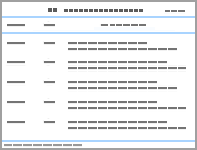
Table 1
Baseline data of patients"
| 指标 | 统计量 |
|---|---|
| 性别(男/女)/n | 25/4 |
| 年龄/岁 | 52.86±16.38 |
| 身高/cm | 169.86±6.16 |
| 体质量/kg | 72.52±13.77 |
| 病程/d | 36.62±37.54 |
| 利手(右/左)/n | 24/5 |
| FMA上肢部分 | 22.10±15.41 |
| FMA手功能 | 5.31±5.35 |
| MMSE | 28.41±1.12 |
| 上肢感觉障碍(有/无)/n | 2/27 |
| 病灶部位(皮质/皮质下/混合)/n | 2/11/16 |
| 优势半球受累(是/否)/n | 12/17 |
| 病灶侧别(左/右)/n | 15/14 |
| 失语(有/无)/n | 2/27 |
| 偏侧忽略(有/无)/n | 0/29 |
| Brunnstrom上肢分期(Ⅱ/Ⅲ/Ⅳ期及以上)/n | 9/11/9 |
| Brunnstrom手分期(Ⅰ/Ⅱ/Ⅲ/Ⅳ/Ⅴ)/n | 8/8/2/4/7 |
| 脑卒中类型(梗死/出血)/n | 23/6 |
| 高血压(是/否)/n | 18/11 |
| 糖尿病(是/否)/n | 8/21 |
| 高血脂(是/否)/n | 5/24 |
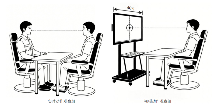
Figure 1
Scene layout"

Figure 2
Task flow"
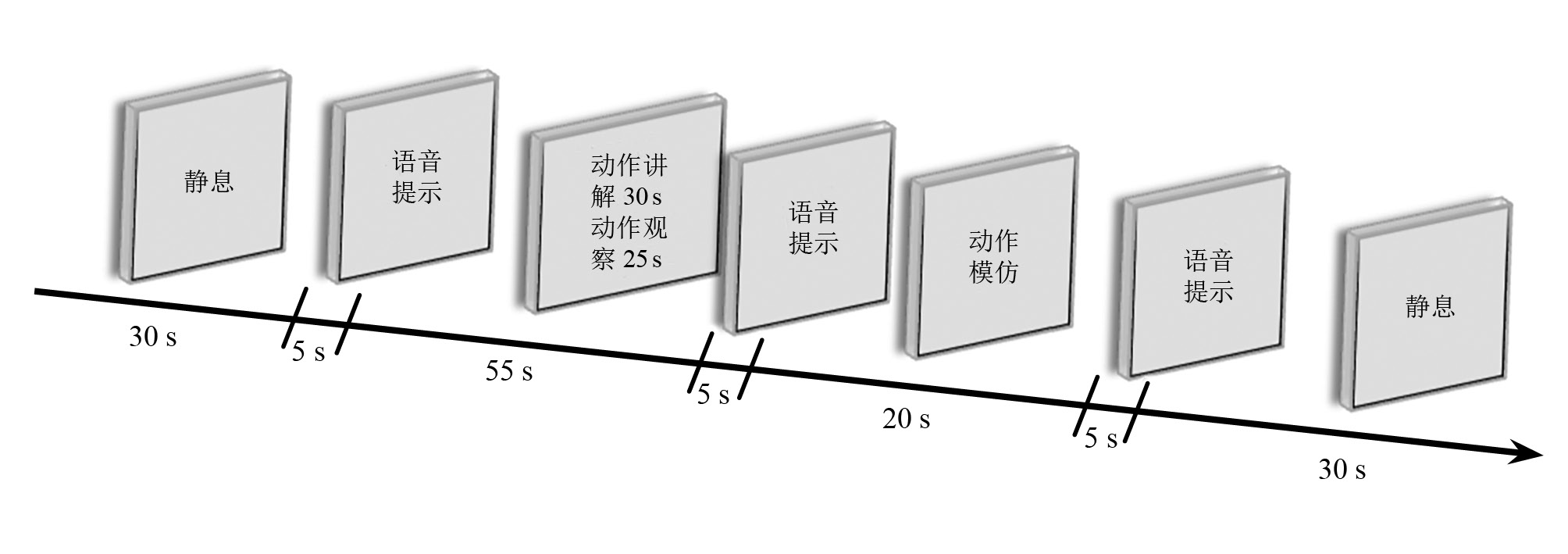
Figure 3
Schematic diagram of optode layout"
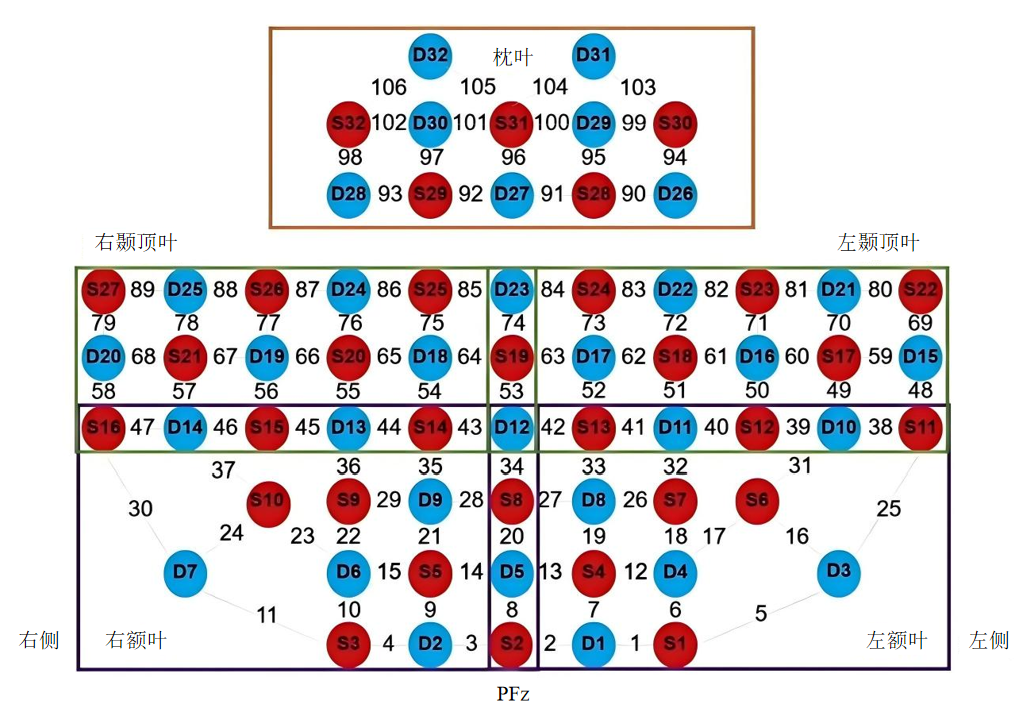
Table 2
Statistical results of 18 brain regions and lateralities in the observation period"
| 脑区 | V-AOT | R-AOT | 原始P值 | PFDR(k = 18) | PFDR(k = 3) | Z值 | r值 |
|---|---|---|---|---|---|---|---|
| Broca(非病灶侧脑区) | -0.002(-0.024, 0.018) | 0.006(-0.015, 0.041) | 0.126 | 0.454 | — | 1.530 | 0.284 |
| Broca(病灶侧脑区) | 0.006(-0.017, 0.033) | 0.011(-0.009, 0.033) | 0.550 | 0.901 | — | 0.597 | 0.111 |
| DLPFC(非病灶侧脑区) | 0.004(-0.009, 0.016) | 0.008(-0.007, 0.028) | 0.550 | 0.826 | — | 0.597 | 0.111 |
| DLPFC(病灶侧脑区) | 0.000(-0.006, 0.010) | 0.010(-0.005, 0.020) | 0.029 | 0.262 | 0.045 | 2.183 | 0.405 |
| FEF(非病灶侧脑区) | 0.004(-0.011, 0.018) | 0.000(-0.009, 0.018) | 0.949 | 0.949 | — | 0.064 | 0.012 |
| FEF(病灶侧脑区) | 0.012(-0.007, 0.023) | 0.002(-0.016, 0.017) | 0.247 | 0.635 | — | 1.158 | 0.215 |
| FPA(非病灶侧脑区) | -0.003(-0.013, 0.013) | 0.007(-0.002, 0.028) | 0.162 | 0.487 | — | 1.398 | 0.260 |
| FPA(病灶侧脑区) | -0.001(-0.007, 0.010) | 0.009(-0.008, 0.027) | 0.092 | 0.414 | — | 1.685 | 0.313 |
| OC(非病灶侧脑区) | 0.027(-0.031, 0.066) | 0.022(-0.067, 0.123) | 0.898 | 0.951 | — | 0.128 | 0.024 |
| OC(病灶侧脑区) | 0.046(-0.054, 0.149) | -0.027(-0.044, 0.078) | 0.020 | 0.365 | 0.060 | 2.321 | 0.431 |
| M1 (非病灶侧脑区) | 0.011(-0.017, 0.028) | 0.011(-0.002, 0.028) | 0.594 | 0.823 | — | 0.533 | 0.099 |
| M1 (病灶侧脑区) | 0.007(-0.009, 0.019) | 0.008(-0.002, 0.024) | 0.429 | 0.966 | — | 0.790 | 0.147 |
| PMC&SMC(非病灶侧脑区) | 0.010(-0.006, 0.022) | 0.012(-0.004, 0.016) | 0.701 | 0.842 | — | 0.384 | 0.071 |
| PMC&SMC(病灶侧脑区) | 0.000(-0.006, 0.015) | 0.004(-0.014, 0.014) | 0.522 | 0.940 | — | 0.640 | 0.119 |
| SSC(非病灶侧脑区) | 0.004(-0.006, 0.023) | 0.014(0.000, 0.027) | 0.670 | 0.861 | — | 0.426 | 0.079 |
| SSC(病灶侧脑区) | 0.011(-0.011, 0.029) | 0.007(-0.005, 0.026) | 0.749 | 0.843 | — | 0.320 | 0.059 |
| TC(非病灶侧脑区) | -0.008(-0.024, 0.024) | 0.013(-0.003, 0.031) | 0.080 | 0.479 | — | 1.752 | 0.325 |
| TC(病灶侧脑区) | 0.000(-0.032, 0.037) | 0.010(-0.003, 0.029) | 0.481 | 0.962 | 0.481 | 0.704 | 0.131 |
Table 3
Statistical results of 18 brain regions and lateralities during the imitation period"
| 脑区 | V-AOT | R-AOT | 原始P值 | PFDR (k = 18) | PFDR (k = 3) | Z值 | r值 |
|---|---|---|---|---|---|---|---|
| Broca(非病灶侧脑区) | -0.011(-0.039, 0.008) | -0.003(-0.036, 0.018) | 0.325 | 0.731 | — | 0.984 | 0.183 |
| Broca(病灶侧脑区) | 0.000(-0.024, 0.037) | 0.001(-0.044, 0.031) | 0.156 | 0.702 | — | 1.420 | 0.264 |
| DLPFC(非病灶侧脑区) | -0.004(-0.018, 0.009) | 0.008(-0.004, 0.038) | 0.053 | 0.477 | — | 1.932 | 0.359 |
| DLPFC(病灶侧脑区) | 0.003(-0.010, 0.026) | 0.014(-0.008, 0.033) | 0.247 | 0.741 | 0.375 | 1.158 | 0.215 |
| FEF(非病灶侧脑区) | 0.007(-0.002, 0.025) | 0.007(-0.004, 0.060) | 0.284 | 0.730 | — | 1.071 | 0.199 |
| FEF(病灶侧脑区) | 0.004(-0.014, 0.025) | -0.001(-0.021, 0.011) | 0.686 | 0.882 | — | 0.405 | 0.075 |
| FPA(非病灶侧脑区) | -0.010(-0.031, 0.011) | -0.001(-0.017, 0.029) | 0.053 | 0.318 | — | 1.932 | 0.359 |
| FPA(病灶侧脑区) | 0.001(-0.013, 0.018) | 0.006(-0.007, 0.025) | 0.405 | 0.729 | — | 0.833 | 0.155 |
| OC(非病灶侧脑区) | -0.018(-0.199, 0.020) | 0.002(-0.109, 0.086) | 0.405 | 0.663 | — | 0.833 | 0.155 |
| OC(病灶侧脑区) | 0.018(-0.070, 0.082) | 0.020(-0.030, 0.084) | 0.639 | 0.959 | 0.639 | 0.469 | 0.087 |
| M1 (非病灶侧脑区) | -0.001(-0.022, 0.025) | 0.008(-0.012, 0.034) | 0.654 | 0.906 | — | 0.448 | 0.083 |
| M1 (病灶侧脑区) | 0.005(-0.012, 0.016) | 0.013(-0.016, 0.040) | 0.198 | 0.713 | — | 1.288 | 0.239 |
| PMC&SMC(非病灶侧脑区) | 0.006(-0.013, 0.027) | 0.015(-0.001, 0.027) | 0.798 | 0.898 | — | 0.256 | 0.047 |
| PMC&SMC(病灶侧脑区) | -0.001(-0.016, 0.017) | 0.002(-0.010, 0.021) | 0.325 | 0.650 | — | 0.984 | 0.183 |
| SSC(非病灶侧脑区) | 0.006(-0.013, 0.028) | 0.005(-0.006, 0.020) | 0.882 | 0.882 | — | 0.149 | 0.028 |
| SSC(病灶侧脑区) | 0.005(-0.012, 0.025) | 0.002(-0.024, 0.045) | 0.733 | 0.880 | — | 0.341 | 0.063 |
| TC(非病灶侧脑区) | -0.005(-0.020, 0.028) | 0.006(-0.022, 0.042) | 0.848 | 0.897 | — | 0.192 | 0.036 |
| TC(病灶侧脑区) | -0.025(-0.040, 0.016) | 0.030(-0.012, 0.056) | 0.006 | 0.108 | 0.018 | 2.724 | 0.506 |
Figure 4
Surface mapping of hemodynamic changes in monitored cortical regions during the observation phase"
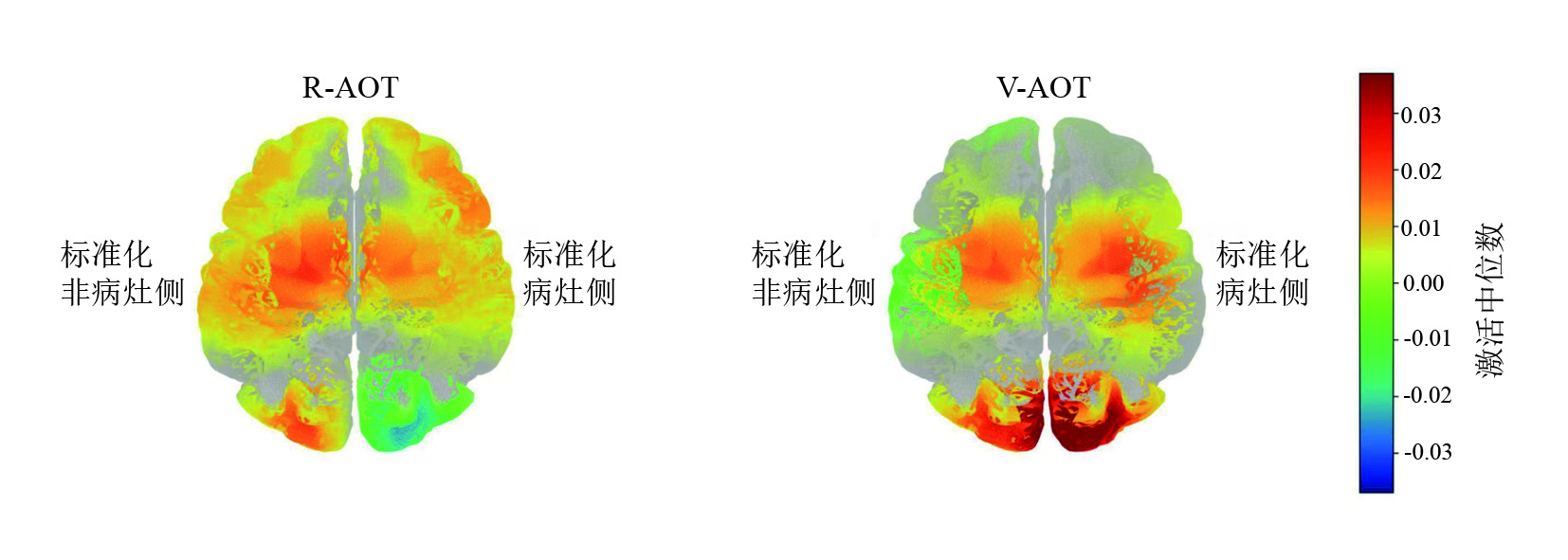
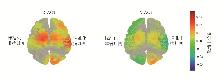
Figure 5
Surface mapping of cortical hemodynamic changes during the imitation phase"
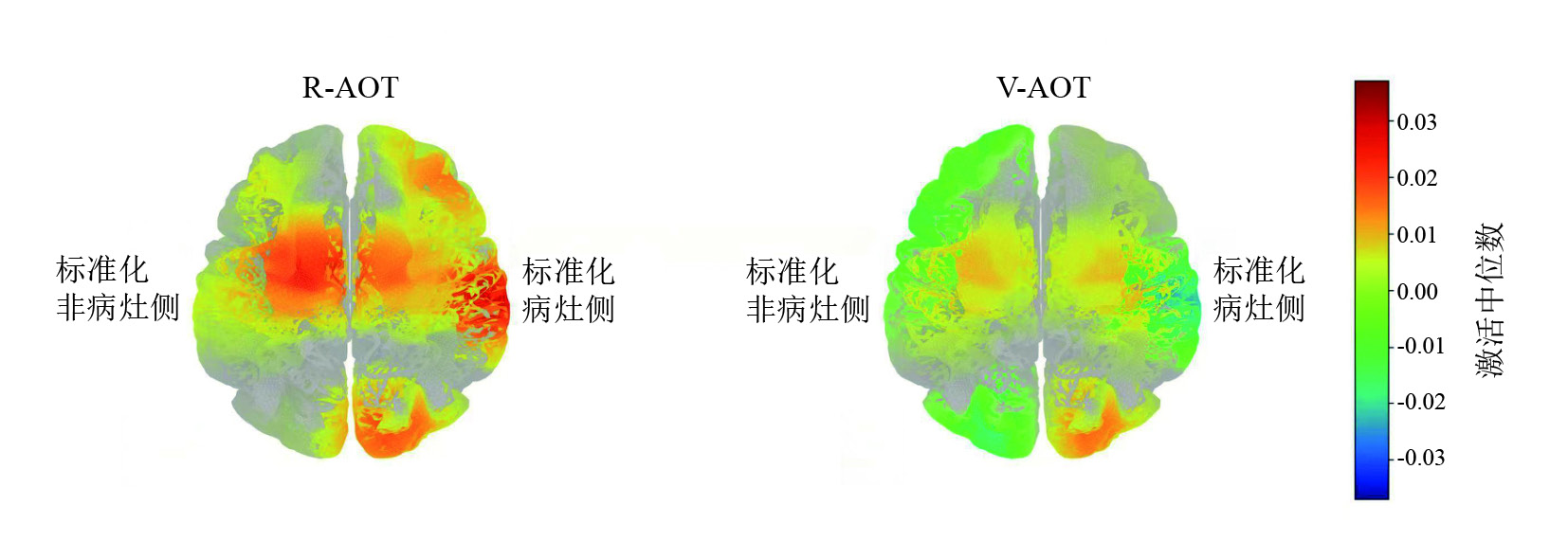
Table 4
Between-condition differences in activation of ipsilesional core brain regions during the observation and imitation phases"
| 脑区 | 阶段 | Z值 | 原始P值 | PFDR值 | r值 | 激活特征(R-AOT vs. V-AOT) |
|---|---|---|---|---|---|---|
| DLPFC | 观察期 | 2.183 | 0.029 | 0.045 | 0.405 | 显著激活(R-AOT更高) |
| OC | 观察期 | 2.321 | 0.020 | 0.060 | 0.431 | 未达统计学显著性但呈趋势(R-AOT反向激活) |
| TC | 观察期 | 0.704 | 0.480 | 0.480 | 0.131 | 无显著性差异 |
| DLPFC | 模仿期 | 1.158 | 0.247 | 0.375 | 0.215 | 无显著性差异 |
| OC | 模仿期 | 0.469 | 0.639 | 0.640 | 0.087 | 无显著性差异 |
| TC | 模仿期 | 2.724 | 0.006 | 0.018 | 0.506 | 显著激活(R-AOT更高) |
| [1] | 中华医学会神经病学分会, 中华医学会神经病学分会脑血管病学组. 中国急性缺血性卒中诊治指南2023[J]. 中华神经科杂志, 2024, 57(6): 523-559. |
| Chinese Society of Neurology, Chinese Stroke Society. Chinese guidelines for diagnosis and treatment of acute ischemic stroke 2023[J]. Chin J Neurol, 2024, 57(6): 523-559. | |
| [2] |
Zhang C P, Li X W, Wang H B. Application of action observation therapy in stroke rehabilitation: a systematic review[J]. Brain Behav, 2023, 13(8): e3157.
doi: 10.1002/brb3.3157 pmid: 37480161 |
| [3] |
Biswas A, Rao P D, Madhavan S, et al. Video parameters for action observation training in stroke rehabilitation: a scoping review[J]. Disabil Rehabil, 2024, 46(7): 1256-1265.
doi: 10.1080/09638288.2023.2191016 |
| [4] |
Chu M, Ma Y, Tian R, et al. Advances in functional near-infrared spectroscopy: physical principles and expanding applications in neuroscience[J]. J Biophotonics, 2025, 18(11): e202500147.
doi: 10.1002/jbio.v18.11 |
| [5] |
Bǎcilǎ C I, Marcu G M, Vintilă B I, et al. Applications of functional near-infrared spectroscopy (fNIRS) in monitoring treatment response in psychiatry: a scoping review[J]. J Clin Med, 2025, 14(15): 5197.
doi: 10.3390/jcm14155197 |
| [6] |
Su W C, Dashtestani H, Miguel H O, et al. Simultaneous multimodal fNIRS-EEG recordings reveal new insights in neural activity during motor execution, observation, and imagery[J]. Sci Rep, 2023, 13(1): 5151.
doi: 10.1038/s41598-023-31609-5 |
| [7] | Ertelt D, Small S, Solodkin A, et al. Action observation has a positive impact on rehabilitation of motor deficits after stroke[J]. Neuroimage, 2007, 36: T164-T173. |
| [8] |
Zhang B, Kan L, Dong A, et al. The effects of action observation training on improving upper limb motor functions in people with stroke: a systematic review and meta-analysis[J]. PLoS One, 2019, 14(8): e0221166.
doi: 10.1371/journal.pone.0221166 |
| [9] |
Roberts M, Lietz N H, Portelli N A, et al. Implementing technology enhanced real-time action observation therapy in persons with chronic stroke: a pilot study[J]. Physiother Theory Pract, 2022, 38(13): 2665-2676.
doi: 10.1080/09593985.2021.1978120 |
| [10] |
王建平, 桂沛君, 谢瑛. 动作观察疗法对重度偏瘫患者上肢运动功能的效果[J]. 中国康复理论与实践, 2020, 26(1): 85-88.
doi: 10.3969/j.issn.1006-9771.2020.01.015 |
| Wang J P, Gui P J, Xie Y. Effect of action observation therapy on upper limb motor function for severe hemiplegics[J]. Chin J Rehabil Theory Pract, 2020, 26(1): 85-88. | |
| [11] |
Tropea P, Infarinato F, Sterpi I, et al. Action observation treatment for upper limb rehabilitation in patients with stroke: protocol for a multicenter randomized controlled trial[J]. JMIR Res Protoc, 2023, 12(4): e42094.
doi: 10.2196/42094 |
| [12] |
Xie Y J, Chen K X, Ma X D, et al. Cortical activity during balance and walking tasks in stroke patients: functional near-infrared spectroscopy neuroimaging research[J]. Brain Res, 2025, 1864: 149808.
doi: 10.1016/j.brainres.2025.149808 |
| [13] |
Klein F. Optimizing spatial specificity and signal quality in fNIRS: an overview of potential challenges and possible options for improving the reliability of real-time applications[J]. Front Neuroergon, 2024, 5: 1286586.
doi: 10.3389/fnrgo.2024.1286586 |
| [14] |
Cote M P, Lubowitz J H, Brand J C, et al. Misinterpretation of P values and statistical power creates a false sense of certainty: statistical significance, lack of significance, and the uncertainty challenge[J]. Arthroscopy, 2021, 37(4): 1057-1063.
doi: 10.1016/j.arthro.2021.02.010 pmid: 33812509 |
| [15] |
Zhao W, Liu Q, Zhang X, et al. Differential responses in the mirror neuron system during imitation of individual emotional facial expressions and association with autistic traits[J]. Neuroimage, 2023, 277: 120263.
doi: 10.1016/j.neuroimage.2023.120263 |
| [16] |
Sato W, Kochiyama T, Yoshikawa S. The widespread action observation/execution matching system for facial expression processing[J]. Hum Brain Mapp, 2023, 44(8): 3057-3071.
doi: 10.1002/hbm.26262 pmid: 36895114 |
| [17] |
Thura D, Cabana J F, Feghaly A, et al. Integrated neural dynamics of sensorimotor decisions and actions[J]. PLoS Biol, 2022, 20(12): e3001861.
doi: 10.1371/journal.pbio.3001861 |
| [18] |
Hsieh Y W, Lee M T, Chen C C, et al. Development and user experience of an innovative multi-mode stroke rehabilitation system for the arm and hand for patients with stroke[J]. Sci Rep, 2022, 12(1): 1868.
doi: 10.1038/s41598-022-05314-8 |
| [19] | Sulfikar Ali A, Bhat M, Palaniswamy H P, et al. Does action observation of the whole task influence mirror neuron system and upper limb muscle activity better than part task in people with stroke?[J]. Stroke Res Treat, 2024, 2024(1): 9967369. |
| [20] |
He X, Bai J, Jiang Y, et al. Beyond motion extrapolation: vestibular contribution to head-rotation-induced flash-lag effects[J]. Psychol Res, 2022, 86(7): 2083-2098.
doi: 10.1007/s00426-021-01638-8 |
| [21] | He X, Bao M. Neuroimaging evidence of visual-vestibular interaction accounting for perceptual mislocalization induced by head rotation[J]. Neurophotonics, 2024, 11(1): 015005. |
| [22] |
Prinsen J, Alaerts K. Eye contact enhances interpersonal motor resonance: comparing video stimuli to a live two-person action context[J]. Soc Cogn Affect Neurosci, 2019, 14(9): 967-976.
doi: 10.1093/scan/nsz064 pmid: 31506688 |
| [23] |
Prinsen J, Bernaerts S, Wang Y, et al. Direct eye contact enhances mirroring of others' movements: a transcranial magnetic stimulation study[J]. Neuropsychologia, 2017, 95: 111-118.
doi: S0028-3932(16)30449-3 pmid: 27939365 |
| [24] |
Garrison K A, Winstein C J, Aziz-Zadeh L. The mirror neuron system: a neural substrate for methods in stroke rehabilitation[J]. Neurorehabil Neural Repair, 2010, 24(5): 404-412.
doi: 10.1177/1545968309354536 pmid: 20207851 |
| [25] |
Prinsen J, Alaerts K. Enhanced mirroring upon mutual gaze: multimodal evidence from TMS-assessed corticospinal excitability and the EEG mu rhythm[J]. Sci Rep, 2020, 10(1): 20449.
doi: 10.1038/s41598-020-77508-x pmid: 33235329 |
| [26] |
Franceschini M, Ceravolo M G, Agosti M, et al. Clinical relevance of action observation in upper-limb stroke rehabilitation: a possible role in recovery of functional dexterity. A randomized clinical trial [J]. Neurorehabil Neural Repair, 2012, 26(5): 456-462.
doi: 10.1177/1545968311427406 pmid: 22235059 |
| [27] |
Pizzamiglio G, Zhang Z, Kolasinski J, et al. A role for the action observation network in apraxia after stroke[J]. Front Hum Neurosci, 2019, 13: 422.
doi: 10.3389/fnhum.2019.00422 pmid: 31920586 |
| [28] | 杨浩, 余秋蓉, 魏彧, 等. 脑卒中运动功能障碍的局部一致性fMRI研究[J]. 中国康复医学杂志, 2020, 35(1): 10-16. |
| Yang H, Yu Q R, Wei Y, et al. Brain regional homogeneity alterations at resting state in the patients with motor deficits after stroke[J]. Chin J Rehabil Med, 2020, 35(1): 10-16. | |
| [29] |
Yang Y M, Park J H. Effects of upper limb robot therapy with action observation training on subacute stroke patients: a randomised controlled trial[J]. J Mot Behav, 2025, 57(4): 358-376.
doi: 10.1080/00222895.2025.2497376 |
| [30] |
Kim J, Kim E, Lee S H, et al. Use of cortical hemodynamic responses in digital therapeutics for upper limb rehabilitation in patients with stroke[J]. J Neuroeng Rehabil, 2024, 21(1): 115.
doi: 10.1186/s12984-024-01404-y pmid: 38987817 |
| [31] |
Molenberghs P, Hayward L, Mattingley J B, et al. Activation patterns during action observation are modulated by context in mirror system areas[J]. Neuroimage, 2012, 59(1): 608-615.
doi: 10.1016/j.neuroimage.2011.07.080 pmid: 21840404 |
| [32] |
Patel M. Action observation in the modification of postural sway and gait: theory and use in rehabilitation[J]. Gait Posture, 2017, 58: 115-120.
doi: S0966-6362(17)30824-X pmid: 28772130 |
| [33] | Adhikari S P, Tretriluxana J, Chaiyawat P, et al. Enhanced upper extremity functions with a single session of action-observation-execution and accelerated skill acquisition program in subacute stroke[J]. Stroke Res Treat, 2018, 2018(1): 1490692. |
| [34] |
Emerson J R, Scott M W, Van Schaik P, et al. A neural signature for combined action observation and motor imagery? An fNIRS study into prefrontal activation, automatic imitation, and self-other perceptions[J]. Brain Behav, 2022, 12(2): e2407.
doi: 10.1002/brb3.2407 pmid: 34994997 |
| [35] |
Fuchshofer K, Merz C, Denecke K, et al. Intervention platform for action observation and motor imagery training after stroke: usability test[J]. Stud Health Technol Inform, 2022, 292: 71-74.
doi: 10.3233/SHTI220324 pmid: 35575851 |
| [1] | Su Panpan, He Chuan, Qiongji , Meng Dianhuai. Comparison of static balance characteristics under different standing postures in older patients with post-stroke hemiplegia [J]. Chinese Journal of Rehabilitation Theory and Practice, 2026, 32(9): 1052-1060. |
| [2] | Shen Xiaohua, Chen Fangyuan, Rong Jifeng, Rao Biaoqin, Kong Lingxuan, Tian Wei, Chen Zhiqun, Li Li. Effect of anterior seat inclination on sit-to-stand ability in patients with stroke and related brain network [J]. Chinese Journal of Rehabilitation Theory and Practice, 2026, 32(9): 1061-1067. |
| [3] | Feng Xiaojuan, Huang Fubiao, Li Dongyue, Zhou Mingyi, Niu Yuxuan, Ismaili McGee Pireti, Wang Xixian, Wang Zile. Development and feasibility study of a self-stabilizing home-based functional interactive training device [J]. Chinese Journal of Rehabilitation Theory and Practice, 2026, 32(9): 1068-1077. |
| [4] | Yan Jiazheng, Luo Xiaoqin, Liu Rihua, Yu Ying, Qi Fengxue. Non-invasive brain stimulation techniques for balance function after stroke: a network meta-analysis [J]. Chinese Journal of Rehabilitation Theory and Practice, 2026, 32(8): 903-915. |
| [5] | Liu Shan, Xu Kunyao, Zhou Zhimeng, Zhou Lingyun, Zeng Mao, He Sha, Dai Luoyang, Qin Ting, Hu Qinglin, Yang Jiahai, Li Rui. Effects of different electromagnetic stimulation protocols on hand function and activities of daily living for stroke patients: a network meta-analysis [J]. Chinese Journal of Rehabilitation Theory and Practice, 2026, 32(8): 916-926. |
| [6] | Zhou Jie, He Zhicheng, Zhang Xiaoyu, Wang Xue, Liu Damei, Song Ning, Wu Jun. Effect of visuomotor integration training on unilateral spatial neglect after stroke [J]. Chinese Journal of Rehabilitation Theory and Practice, 2026, 32(7): 745-751. |
| [7] | Huang Yaohui, Ye Xiangming, Liu Yong, Tang Pei, Lu Yishu. Effect of repetitive transcranial magnetic stimulation on prolonged disorders of consciousness after stroke [J]. Chinese Journal of Rehabilitation Theory and Practice, 2026, 32(7): 752-759. |
| [8] | Shan Guixiang, Du Jubao, Cao Lei, Ye Linlin, Jiang Chunjing, Zhang Ye, Ma Huijuan, Song Weiqun. Characteristics of diaphragmatic function in stroke patients based on ultrasound [J]. Chinese Journal of Rehabilitation Theory and Practice, 2026, 32(7): 760-767. |
| [9] | Zhang Fei, Fu Boxun, Shen Hui, Chen Jin. Effect of action observation therapy based on mirror neuron system combined with low-frequency repetitive transcranial magnetic stimulation on post-stroke unilateral spatial neglect [J]. Chinese Journal of Rehabilitation Theory and Practice, 2026, 32(7): 768-775. |
| [10] | Fan Liubo, Shan Tingting, Liu Baohua, Luo Mimi, Zhang Luding, Wang Minghui. Effect of different doses of Botulinum toxin type A injected under ultrasound guidance combined with modified catheter-balloon localization for post-stroke cricopharyngeal dysfunction: a randomized controlled trial [J]. Chinese Journal of Rehabilitation Theory and Practice, 2026, 32(7): 776-787. |
| [11] | Zhou Guangxue, Xu Ning, Shi Bin. Effect of virtual reality combined with occupational therapy on upper limb motor function in patients with stroke: a meta-analysis [J]. Chinese Journal of Rehabilitation Theory and Practice, 2026, 32(7): 788-796. |
| [12] | Dun Shibo, Li Yuzhou. Effect of blood flow restriction training on lower-limb motor function after stroke: a meta-analysis [J]. Chinese Journal of Rehabilitation Theory and Practice, 2026, 32(7): 797-806. |
| [13] | Yuan Yiyi, Tian Wuchao, Zhang Xianbin, Chao Qiang, Li Yongsheng, Liu Guixin, Wu Wanqing, Wang Pu. Effect of dual task training on mobility and balance in stroke patients: a meta-analysis [J]. Chinese Journal of Rehabilitation Theory and Practice, 2026, 32(7): 807-816. |
| [14] | GUAN Yujie, LIU Keyan, YANG Keqin, LIANG Yulin, ZHANG Jinpeng, ZHAO Bin. Effect of cluster scalp acupuncture combined with Taijiquan on brain functional connectivity and network topology for patients with post-stroke depression [J]. Chinese Journal of Rehabilitation Theory and Practice, 2026, 32(6): 621-630. |
| [15] | LI Xinyuan, ZHENG Jiejiao, ZHANG Tingyu, WU Xuejiao, LIANG Xiaoxiao. Effect of intermittent theta burst stimulation on lower extremity motor function and balance function in stroke patients: a meta-analysis [J]. Chinese Journal of Rehabilitation Theory and Practice, 2026, 32(6): 631-644. |
| Viewed | ||||||
|
Full text |
|
|||||
|
Abstract |
|
|||||
|
||
