



Chinese Journal of Rehabilitation Theory and Practice ›› 2026, Vol. 32 ›› Issue (9): 993-1002.doi: 10.3969/j.issn.1006-9771.2026.09.001
Previous Articles Next Articles
Wang Xiaolei1, Zhao Xiaoqing2, Chen Shuying2, Zhang Minghao1, Zhou Xiaoyu2, Li Haiyan1, Zhang Jianhua2, Jing Qi1( ), Dong Zhiwei1()
Received:2025-02-18
Revised:2025-10-13
Accepted:2025-10-21
Published:2026-09-25
Online:2026-09-20
Contact:
Jing Qi, Dong Zhiwei
E-mail:jingq@sdsmu.edu.cn;dongzhiwei1989@outlook.com
Supported by:CLC Number:
Wang Xiaolei, Zhao Xiaoqing, Chen Shuying, Zhang Minghao, Zhou Xiaoyu, Li Haiyan, Zhang Jianhua, Jing Qi, Dong Zhiwei. Development of a nomogram for predicting cognitive impairment risk among older adults with heart disease[J]. Chinese Journal of Rehabilitation Theory and Practice, 2026, 32(9): 993-1002.
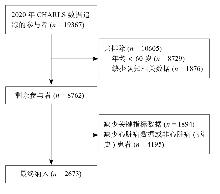
Figure 1
Flowchart of participant selection"
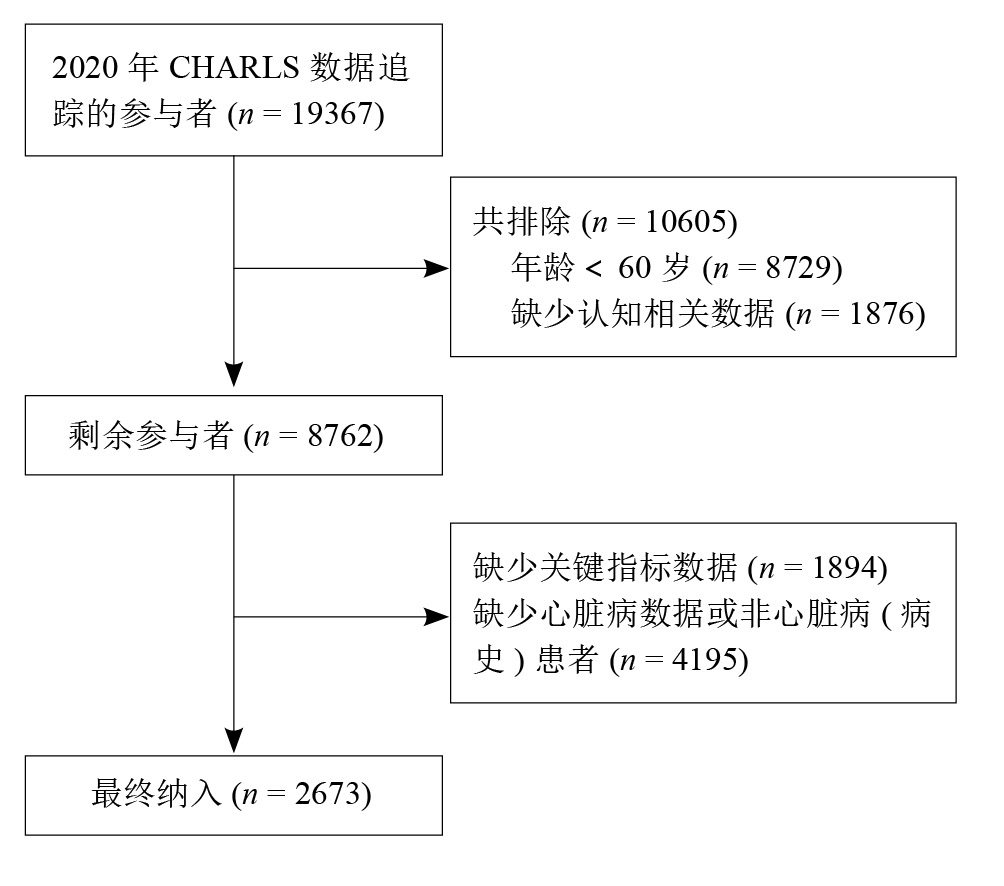
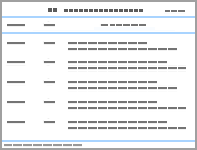
Table 1
Comparison of the relevant characteristics of the training and validation sets"
| 变量 | 总样本(n = 2673) | 训练集(n = 1871) | 验证集(n = 802) | χ2值 | P值 |
|---|---|---|---|---|---|
| 性别 | 0.107 | 0.744 | |||
| 女 | 1456 | 1023 | 433 | ||
| 男 | 1217 | 848 | 369 | ||
| 年龄 | 3.937 | 0.140 | |||
| 60~< 70岁 | 1747 | 1223 | 524 | ||
| 70~< 80岁 | 805 | 554 | 251 | ||
| ≥ 80岁 | 121 | 94 | 27 | ||
| 受教育程度 | 6.005 | 0.199 | |||
| 文盲 | 674 | 479 | 195 | ||
| 小学及以下 | 614 | 438 | 176 | ||
| 初中 | 35 | 26 | 9 | ||
| 高中或职高 | 841 | 594 | 247 | ||
| 大专及以上 | 509 | 334 | 175 | ||
| 婚姻状况 | 0.114 | 0.736 | |||
| 无配偶 | 544 | 384 | 160 | ||
| 有配偶 | 2129 | 1487 | 642 | ||
| 居住地 | 0.985 | 0.321 | |||
| 农村 | 1857 | 1289 | 568 | ||
| 城市 | 816 | 582 | 234 | ||
| 吸烟 | 0.324 | 0.569 | |||
| 否 | 2044 | 1425 | 619 | ||
| 是 | 629 | 446 | 183 | ||
| 饮酒 | 0.004 | 0.947 | |||
| 否 | 1844 | 1290 | 554 | ||
| 是 | 829 | 581 | 248 | ||
| 夜间睡眠 | 0.250 | 0.617 | |||
| 异常 | 751 | 531 | 220 | ||
| 正常 | 1922 | 1340 | 582 | ||
| 参与社交活动 | 1.701 | 0.192 | |||
| 否 | 1358 | 966 | 392 | ||
| 是 | 1315 | 905 | 410 | ||
| 进行日常活动 | 0.065 | 0.799 | |||
| 否 | 303 | 214 | 89 | ||
| 是 | 2370 | 1657 | 713 | ||
| ADL | 2.447 | 0.118 | |||
| 正常 | 1846 | 1275 | 571 | ||
| 受损 | 827 | 596 | 231 | ||
| IADL | 1.895 | 0.169 | |||
| 正常 | 1792 | 1239 | 553 | ||
| 受损 | 881 | 632 | 249 | ||
| 抑郁 | 0.247 | 0.620 | |||
| 否 | 1466 | 1032 | 434 | ||
| 是 | 1207 | 839 | 368 | ||
| 自评健康 | 4.743 | 0.315 | |||
| 很好 | 176 | 129 | 47 | ||
| 好 | 232 | 153 | 79 | ||
| 一般 | 1301 | 911 | 390 | ||
| 差 | 691 | 477 | 214 | ||
| 很差 | 273 | 201 | 72 | ||
| 并发症 | |||||
| 心血管及代谢性疾病 | 0.928 | 0.335 | |||
| 无 | 2276 | 1585 | 691 | ||
| 有 | 397 | 286 | 111 | ||
| 呼吸系统疾病 | 0.026 | 0.873 | |||
| 无 | 2510 | 1756 | 754 | ||
| 有 | 163 | 115 | 48 | ||
| 消化系统疾病 | 0.360 | 0.548 | |||
| 无 | 2385 | 1665 | 720 | ||
| 有 | 288 | 206 | 82 | ||
| 神经系统疾病 | 1.021 | 0.312 | |||
| 无 | 2600 | 1816 | 784 | ||
| 有 | 73 | 55 | 18 | ||
| 风湿免疫性疾病 | 0.003 | 0.960 | |||
| 无 | 2351 | 1646 | 705 | ||
| 有 | 322 | 225 | 97 | ||
| 癌症 | 0.144 | 0.705 | |||
| 无 | 2661 | 1862 | 799 | ||
| 有 | 12 | 9 | 3 |
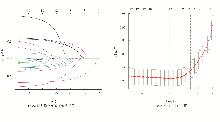
Figure 2
Lasso regression"
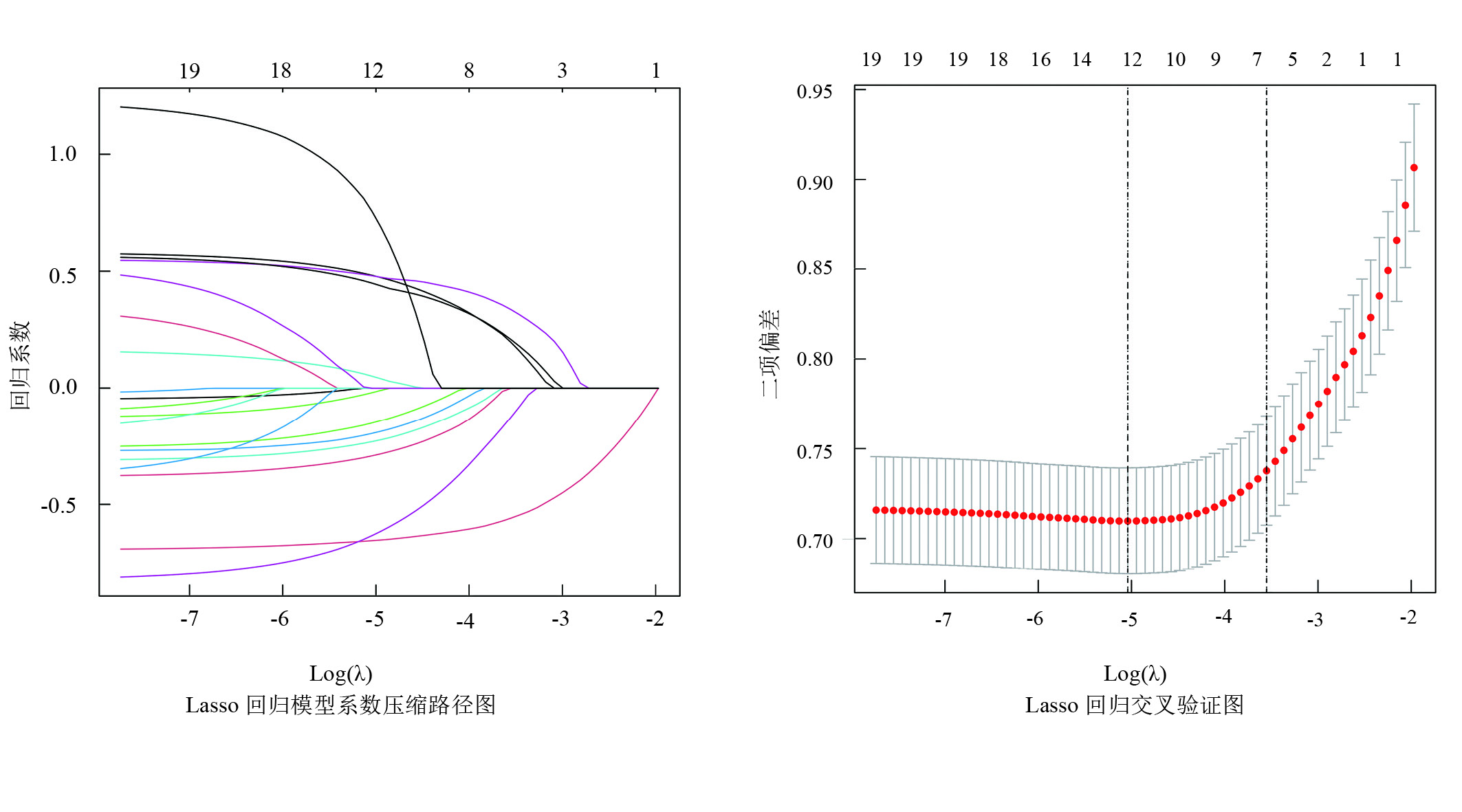
Table 2
Variable assignment explanation"
| 自变量 | 赋值 |
|---|---|
| 年龄 | 60~< 70 = 1;70~< 80 = 2;≥ 80 = 3 |
| 受教育程度 | 文盲 = 1;小学及以下 = 2;初中 = 3;高中 = 4;大学专科及以上 = 5 |
| 居住地 | 农村 = 0;城市 = 1 |
| IADL | 正常 = 0;受损 = 1 |
| 抑郁 | 否 = 0;是 = 1 |
Table 3
Logistic regression analysis of cognitive impairment in older adults with heart disease"
| 预测变量 | β | SE | Wald/χ2值 | P值 | OR(95%CI) |
|---|---|---|---|---|---|
| 常数 | -1.038 | 0.148 | 49.040 | < 0.001 | 0.354 |
| 受教育程度(以文盲为参照) | 178.906 | < 0.001 | |||
| 小学及以下 | -1.432 | 0.172 | 69.341 | < 0.001 | 0.239(0.171~0.335) |
| 初中 | -2.606 | 1.048 | 6.183 | 0.013 | 0.074(0.009~0.576) |
| 高中或职高 | -2.135 | 0.201 | 112.988 | < 0.001 | 0.118(0.080~0.175) |
| 大专及以上 | -3.014 | 0.378 | 63.498 | < 0.001 | 0.049(0.023~0.103) |
| 年龄(以60~< 70岁为参照) | 34.372 | < 0.001 | |||
| 70~< 80岁 | 0.422 | 0.156 | 7.337 | 0.007 | 1.525(1.124~2.071) |
| ≥ 80岁 | 1.634 | 0.289 | 31.885 | < 0.001 | 5.125(2.906~9.038) |
| 居住地类型(以农村为参照) | -0.838 | 0.211 | 15.715 | < 0.001 | 0.433(0.286~0.655) |
| IADL(以正常为参照) | 0.571 | 0.148 | 14.973 | < 0.001 | 1.771(1.326~2.365) |
| 抑郁(以否为参照) | 0.603 | 0.151 | 16.038 | < 0.001 | 1.827(1.360~2.454) |
Figure 3
Nomogram for predicting cognitive impairment risk among older adults with heart disease"
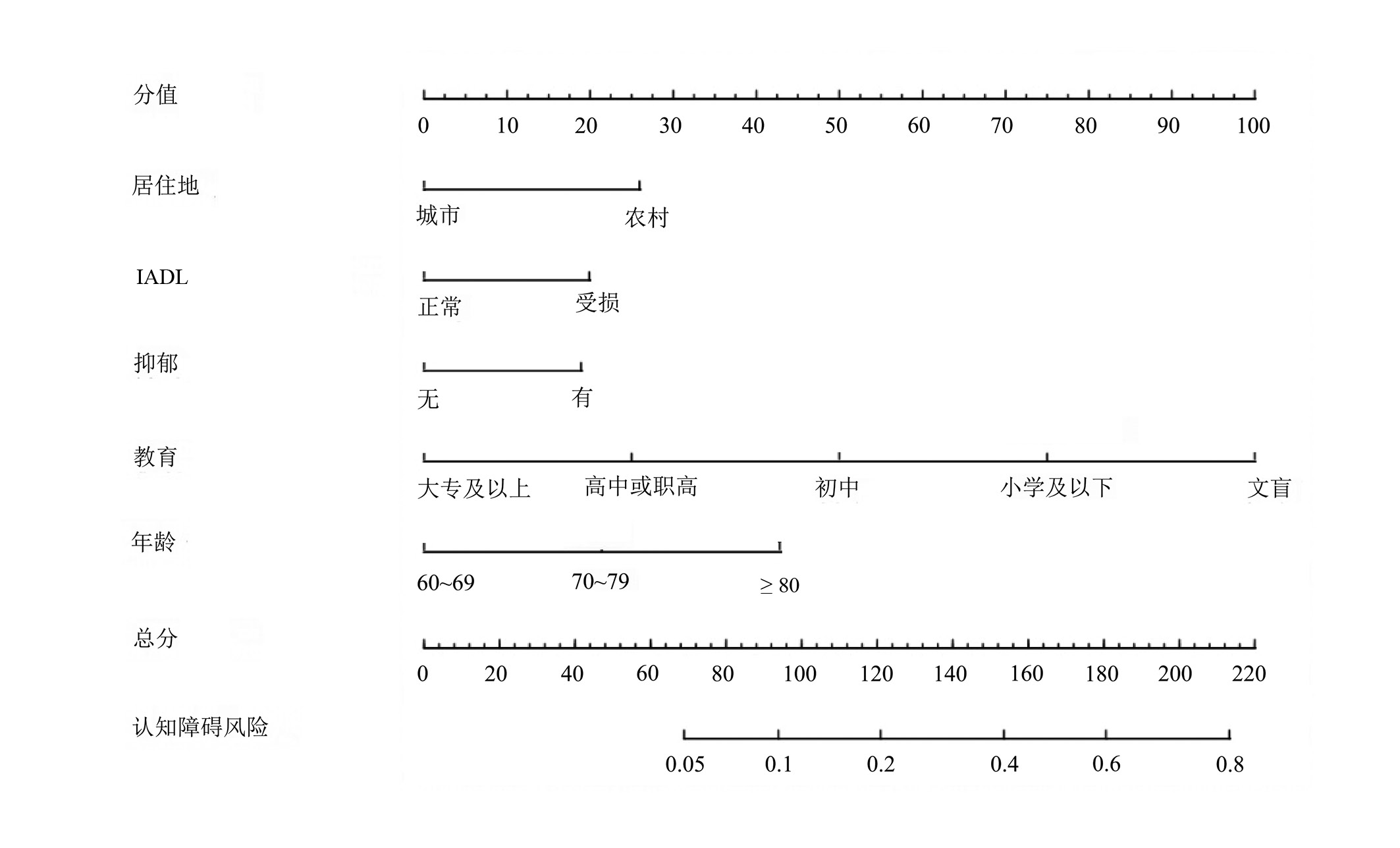
Figure 4
ROC curves of the prediction model predicting concurrent cognitive impairment in older adults with heart disease"
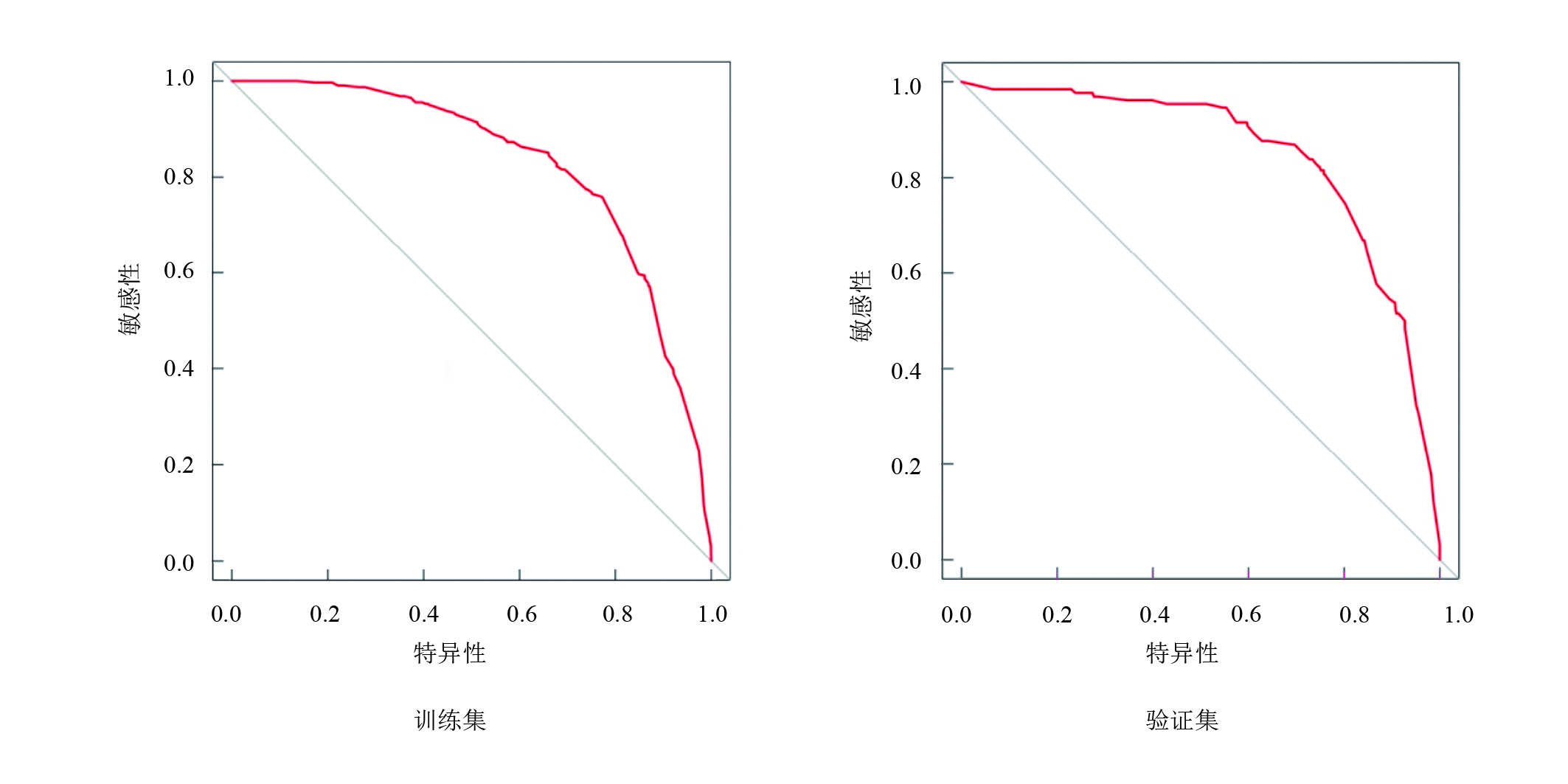
Figure 5
Calibration curve of the prediction model"
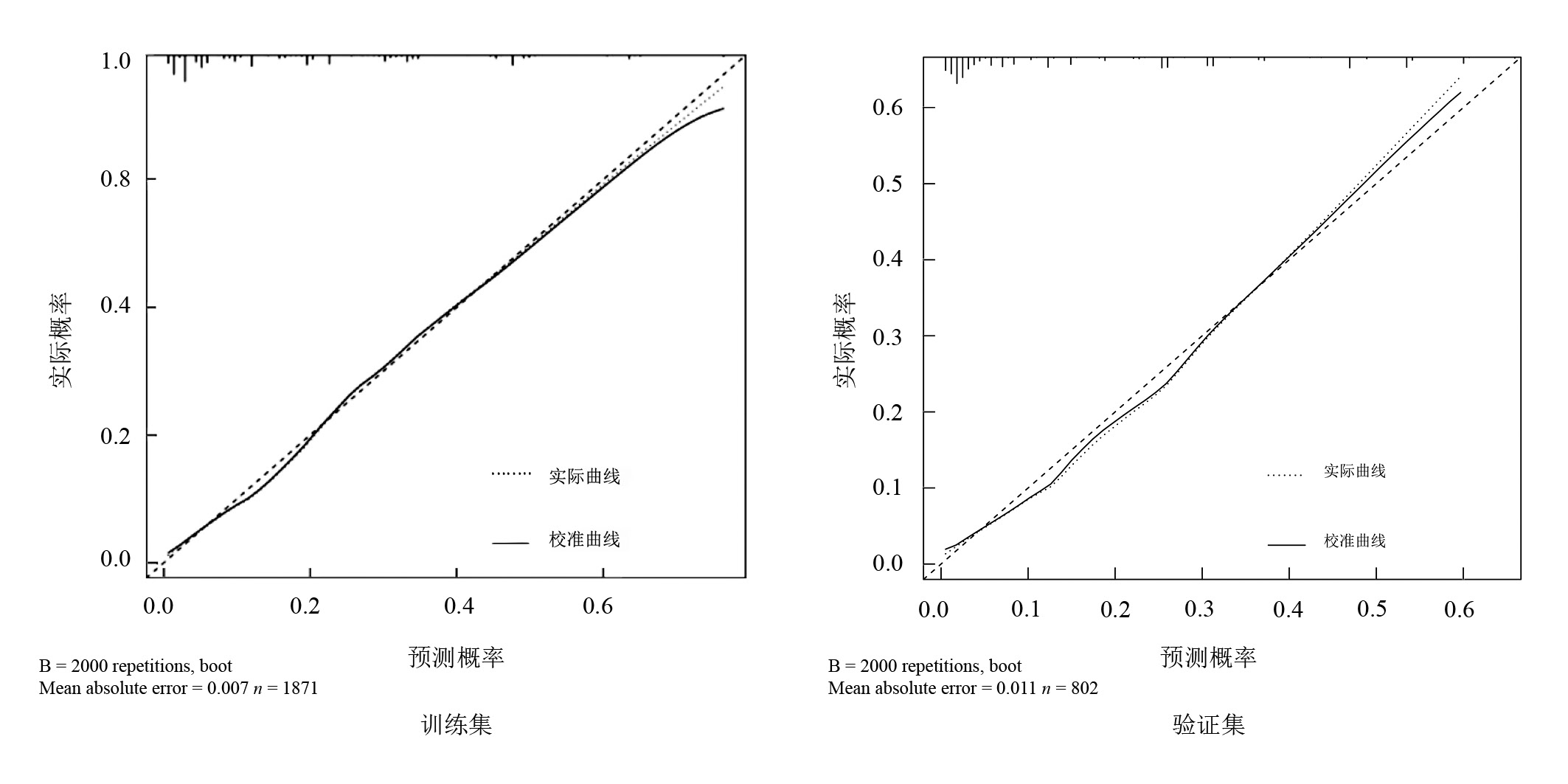
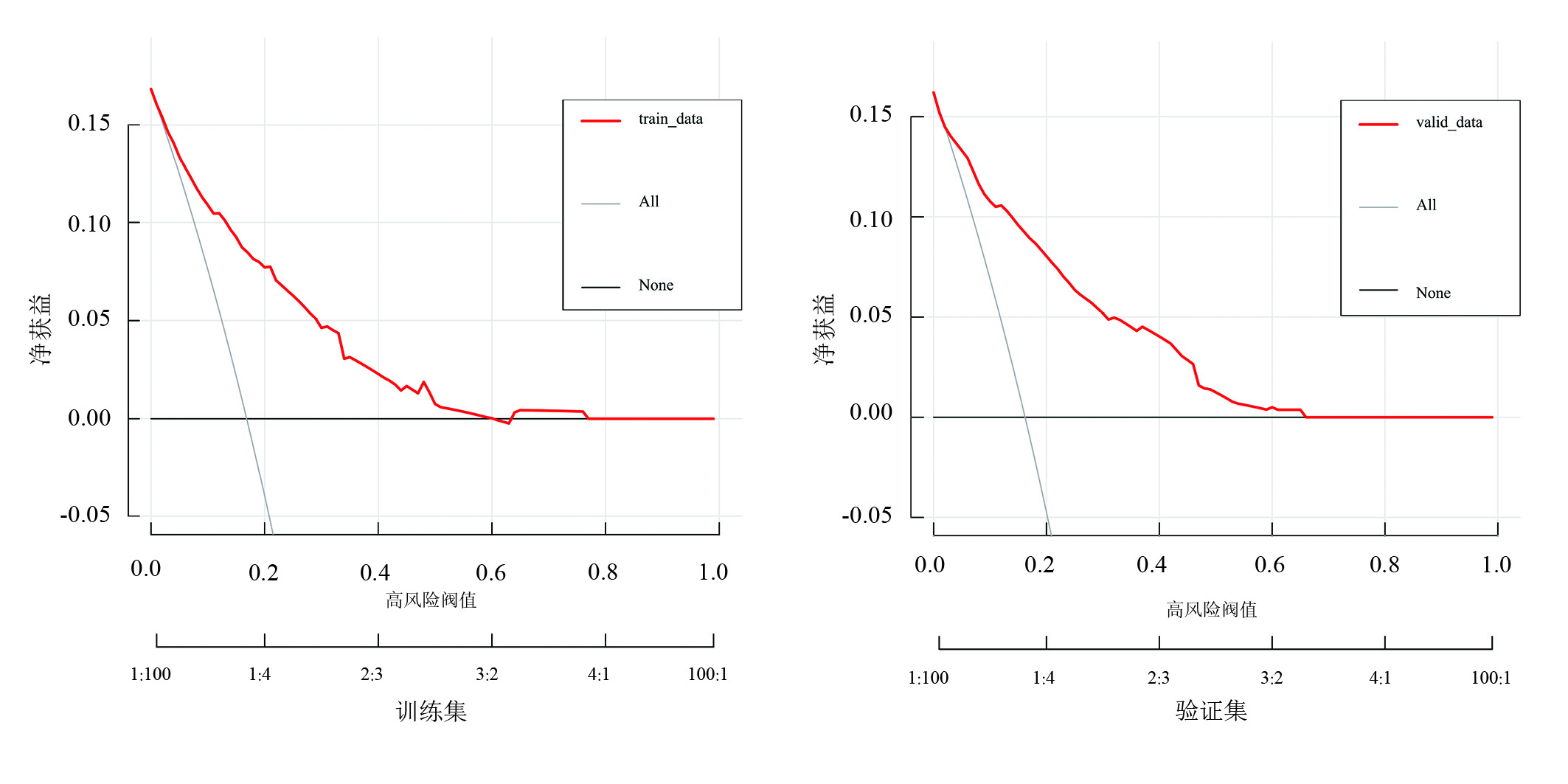
Figure 6
DCA analysis of the prediction model"
| [1] |
Van Nieuwerkerk A C, Delewi R, Wolters F J, et al. Cognitive impairment in patients with cardiac disease: implications for clinical practice[J]. Stroke, 2023, 54(8): 2181-2191.
doi: 10.1161/STROKEAHA.123.040499 pmid: 37272393 |
| [2] |
Stewart R. Cardiovascular disease and frailty: What are the mechanistic links?[J]. Clin Chem, 2019, 65(1): 80-86.
doi: 10.1373/clinchem.2018.287318 pmid: 30504259 |
| [3] | 刘明波, 何新叶, 杨晓红, 等. «中国心血管健康与疾病报告2023»要点解读[J]. 中国全科医学, 2025, 28(1): 20-38. |
| Liu M B, He X Y, Yang X H, et al. Interpretation of Report on Cardiovascular Health and Diseases in China 2023[J]. Chin Gen Prac, 2025, 28(1): 20-38. | |
| [4] |
Wang H, Li Y, Chai K, et al. Mortality in patients admitted to hospital with heart failure in China: a nationwide cardiovascular association database-heart failure centre registry cohort study[J]. Lancet Glob Health, 2024, 12(4): e611-e622.
doi: 10.1016/S2214-109X(23)00605-8 pmid: 38485428 |
| [5] |
Van Der Velpen I F, Yancy C W, Sorond F A, et al. Impaired cardiac function and cognitive brain aging[J]. Can J Cardiol, 2017, 33(12): 1587-1596.
doi: S0828-282X(17)30372-0 pmid: 28966021 |
| [6] |
Rovio S P, Pahkala K, Raitakari O T. Cognitive decline before and after incident coronary heart disease[J]. J Am Coll Cardiol, 2019, 73(24): 3051-3053.
doi: S0735-1097(19)34930-7 pmid: 31221252 |
| [7] |
Lowenstern A, Wang T Y. Rethinking cognitive impairment in the management of older patients with cardiovascular disease[J]. J Am Heart Assoc, 2019, 8(4): e011968.
doi: 10.1161/JAHA.119.011968 |
| [8] | 孙宇超, 冯晶, 雷子辉, 等. 中国中老年人群抑郁症状与认知功能关系[J]. 中国公共卫生, 2024, 40(10): 1206-1211. |
| Sun Y C, Feng J, Lei Z H, et al. Correlation between depressive symptoms and cognitive function in middle-aged and elderly population in China: an analysis of CHARLS baseline data[J]. Chin J Public Health, 2024, 40(10): 1206-1211. | |
| [9] |
Livingston G, Huntley J, Sommerlad A, et al. Dementia prevention, intervention, and care: 2020 report of the Lancet Commission[J]. Lancet, 2020, 396: 413-446.
doi: S0140-6736(20)30367-6 pmid: 32738937 |
| [10] |
Oud F M M, Spies P E, Braam R L, et al. Recognition of cognitive impairment and depressive symptoms in older patients with heart failure[J]. Neth Heart J, 2021, 29: 377-382.
doi: 10.1007/s12471-020-01527-6 pmid: 33320302 |
| [11] |
Zhao Y, Hu Y, Smith J P, et al. Cohort profile: the China Health and Retirement Longitudinal Study (CHARLS)[J]. Int J Epidemiol, 2014, 43(1): 61-68.
doi: 10.1093/ije/dys203 pmid: 23243115 |
| [12] | 贾沁洁, 刘德敏, 王倩, 等. 俯身呼吸困难与心力衰竭的相关性及诊断价值分析[J]. 中国心血管杂志, 2025, 30(3): 284-291. |
| Jia Q J, Liu D M, Wang Q, et al. Correlation and diagnostic value of bendopnea and heart failure[J]. Chin J Cardiovasc Med, 2025, 30(3): 284-291. | |
| [13] | 张雪, 张敏, 恽文伟. 近期皮质下小梗死患者血管周围间隙扩大与脑类淋巴系统功能及认知功能的相关性研究[J]. 中国脑血管病杂志, 2025, 22(7): 453-464. |
| Zhang X, Zhang M, Yun W W. Correlation between enlarged perivascular spaces and glymphatic system function with cognitive function in patients with recent subcortical small infarction[J]. Chin J Cerebrovasc Dis, 2025, 22(7): 453-464. | |
| [14] |
Li C, Jin S, Cao X, et al. Catastrophic health expenditure among Chinese adults living alone with cognitive impairment: findings from the CHARLS[J]. BMC Geriatr, 2022, 22(1): 640.
doi: 10.1186/s12877-022-03341-8 pmid: 35922775 |
| [15] |
徐天昕, 何雅荻, 蔡正杰, 等. 四川省成都市中老年人体力活动与抑郁症状的关系[J]. 中国医学科学院学报, 2024, 46(4): 497-506.
doi: 10.3881/j.issn.1000-503X.15929 |
| Xu T X, He Y D, Cai Z J, et al. Relationship between physical activity and depressive symptoms among middle-aged and older adults in Chengdu, Sichuan, China[J]. Acta Acad Med Sin, 2024, 46(4): 497-506. | |
| [16] |
Andresen E M, Malmgren J A, Carter W B, et al. Screening for depression in well older adults: evaluation of a short form of the CES-D (Center for Epidemiologic Studies Depression Scale)[J]. Am J Prev Med, 1994, 10(2): 77-84.
pmid: 8037935 |
| [17] | 陈玲, 郝志梅, 魏霞霞, 等. 三种ADL量表在我国中老年人失能评定中的应用比较:基于CHARLS 2018的数据分析[J]. 现代预防医学, 2021, 48(13): 2401-2404, 2413. |
| Chen L, Hao Z M, Wei X X, et al. Comparison of three ADL scales in sidability assessment of middle-aged and elderly people in China-based on the analysis of CHARLS 2018[J]. Mod Prev Med, 2021, 48(13): 2401-2404, 2413. | |
| [18] | 王晓蕾, 许燕玲, 黄晓莉, 等. 稳定性冠状动脉心脏病患者心绞痛程度与其认知功能的相关性研究[J]. 解放军护理杂志, 2017, 34(4): 26-30. |
| Wang X L, Xu Y L, Huang X L, et al. Study on the correlation between the angina pectoris severity and the cognitive function in patients with stable coronary artery disease[J]. Nurs J Chin PLA, 2017, 34(4): 26-30. | |
| [19] | McGrath R, Hackney K J, Ratamess N A, et al. Absolute and body mass index normalized handgrip strength percentiles by gender, ethnicity, and hand dominance in Americans[J]. Adv Geriatr Med Res, 2020, 2(1): e200005. |
| [20] | 问芳芳, 程苗苗, 赵翠芬, 等. 老年稳定性冠心病患者认知衰弱风险预测模型的建立[J]. 护理学杂志, 2021, 36(10): 21-26. |
| Wen F F, Cheng M M, Zhao C F, et al. Development of a cognitive frailty prediction model for elderly patients with stable coronary artery disease[J]. J Nurs Sci, 2021, 36(10): 21-26. | |
| [21] | 张爽, 陈影, 姜宗良, 等. 社区老年糖尿病患者认知衰弱现状及影响因素分析[J]. 中国护理管理, 2020, 20(3): 383-388. |
| Zhang S, Chen Y, Jiang Z L, et al. Study on cognitive frailty and the influencing factors in community aged with diabetes[J]. Chin Nurs Manag, 2020, 20(3): 383-388. | |
| [22] |
朱玲玲, 常红, 蔡卫新, 等. 认知-运动双重任务训练对血管性轻度认知障碍老年患者的效果[J]. 中国康复理论与实践, 2021, 27(1): 37-42.
doi: 10.3969/j.issn.1006-9771.2021.01.005 |
| Zhu L L, Chang H, Cai W X, et al. Effects of cognitive-motor dual task training on vascular mild cognitive impairment for old patients[J]. Chin J Rehabil Theory Pract, 2021, 27(1): 37-42. | |
| [23] |
禹延雪, 白茹玉, 于文龙, 等. ≥ 60岁人群认知功能障碍发生现状及影响因素研究[J]. 中国全科医学, 2023, 26(21): 2581-2588.
doi: 10.12114/j.issn.1007-9572.2023.0004 |
|
Yu Y X, Bai R Y, Yu W L, et al. Occurrence status and influencing factors of cognitive dysfunction in population aged 60 and above[J]. Chin Gen Prac, 2023, 26(21): 2581-2588.
doi: 10.12114/j.issn.1007-9572.2023.0004 |
|
| [24] |
李弈晴, 程桂荣, 许浪, 等. 生活方式在心血管代谢性疾病患病时长与轻度认知功能障碍关联中的作用研究[J]. 中国全科医学, 2025, 28(11): 1329-1335.
doi: 10.12114/j.issn.1007-9572.2024.0225 |
| Li Y Q, Cheng G R, Xu L, et al. The impact of lifestyle on the relationshiop between the duration of cardiovascular metabolic diseases and mild cognitive impairment[J]. Chin Gen Prac, 2025, 28(11): 1329-1335. | |
| [25] | 杨胜利, 刘金盼. 我国公共交通设施水平对农村居民健康状况的影响机制研究[J]. 医学与社会, 2025, 38(8): 42-49. |
| Yang S L, Liu J P. Research on mechanism of the impact of public transportation facilities on the health status of rural residents in China[J]. Med Soc, 2025, 38(8): 42-49. | |
| [26] | Warraich H J, Kitzman D W, Whellan D J, et al. Physical function, frailty, cognition, depression, and quality of life in hospitalized adults ≥ 60 years with acute decompensated heart failure with preserved versus reduced ejection fraction[J]. Circ Heart Fail, 2018, 11: e005254. |
| [27] | 甄文凤, 马辛, 王红星. 老年单双相抑郁障碍探索性眼球运动和促肾上腺皮质激素及皮质醇水平比较[J]. 中国神经精神疾病杂志, 2019, 45(11): 647-651. |
| Zhen W F, Ma X, Wang H X. Comparisons of exploratory eye movement, adrenocorticotropic hormone and cortisol levels in bipolar and unipolar depression aged patients[J]. Chin J Nerv Ment Dis, 2019, 45(11): 647-651. | |
| [28] | 卢洁, 李小虎. 心脑交互视角下缺血性心脏病认知功能障碍的影像学研究[J]. 中国医学影像技术, 2025, 41(8): 1200-1206. |
| Lu J, Li X H. Neuroimaging advances in cognitive impairment associated with ischemic heart disease from a heart-brain interaction perspective[J]. Chin J Med Imaging Techno, 2025, 41(8): 1200-1206. | |
| [29] |
陈颖勇, 张正敏, 左倩倩, 等. 社区老年人认知衰弱风险预测模型的构建及验证[J]. 中华护理杂志, 2022, 57(2): 197-203.
doi: 10.3761/j.issn.0254-1769.2022.02.012 |
|
Chen Y Y, Zhang Z M, Zuo Q Q, et al. Construction and validation of a prediction model for the risk of cognitive frailty among the elderly in a community[J]. Chin J Nurs, 2022, 57(2): 197-203.
doi: 10.3761/j.issn.0254-1769.2022.02.012 |
|
| [30] |
Sato S, Demura S, Kobayashi H, et al. Characteristics of ADL ability on partially dependent older adults: comparison among different ambulatory activities levels[J]. Appl Human Sci, 1999, 18(5): 169-174.
pmid: 10584396 |
| [31] | 穆跃瑄, 杜本峰. 社区室外活动场地对中国老年人抑郁变化的影响研究[J]. 中国卫生统计, 2024, 41(5): 667-670. |
| Mu Y X, Du B F. The effect of neighborhood outdoor activity space on depression among Chinese older adults[J]. Chin J Health Stat, 2024, 41(5): 667-670. | |
| [32] |
刘梦雅, 张利, 张梦, 等. 中国老年人内在能力与日常生活活动的相关性:基于中国健康与养老追踪调查数据[J]. 中国康复理论与实践, 2023, 29(10): 1140-1146.
doi: 10.3969/j.issn.1006-9771.2023.10.004 |
| Liu M Y, Zhang L, Zhang M, et al. Correlation between intrinsic capacity and activities of daily living for old adults in China: based on China Health and Retirement Longitudinal Study[J]. Chin J Rehabil Theory Pract, 2023, 29(10): 1140-1146. |
| [1] | Jiang Yang, Peng Hao, Yin Xingxiao, Li Yanqi, Song Yanping, Yao Na, Shen Zhen, Chen Qigang. Effect of virtual reality-based exergaming on multidimensional outcomes in individuals with cognitive impairment: a three-level meta-analysis based on the ICF framework [J]. Chinese Journal of Rehabilitation Theory and Practice, 2026, 32(9): 1003-1015. |
| [2] | Sun Fengyi, Yin Haiyan, Yin Tingting, Yang Bingqing, Gu Jianpeng, Wang Yan, Bai Yamei, Xu Guihua, Song Yulei. Application of central auditory testing combined with electroencephalogram characteristics in the early screening of mild cognitive impairment due to Alzheimer's disease [J]. Chinese Journal of Rehabilitation Theory and Practice, 2026, 32(9): 1016-1024. |
| [3] | Su Panpan, He Chuan, Qiongji , Meng Dianhuai. Comparison of static balance characteristics under different standing postures in older patients with post-stroke hemiplegia [J]. Chinese Journal of Rehabilitation Theory and Practice, 2026, 32(9): 1052-1060. |
| [4] | GUAN Yujie, LIU Keyan, YANG Keqin, LIANG Yulin, ZHANG Jinpeng, ZHAO Bin. Effect of cluster scalp acupuncture combined with Taijiquan on brain functional connectivity and network topology for patients with post-stroke depression [J]. Chinese Journal of Rehabilitation Theory and Practice, 2026, 32(6): 621-630. |
| [5] | GUI Shun, ZHANG Jianfei, HUANG Huizhi. Prediction of neurological function rehabilitation outcome for stroke patients using interpretable machine learning models [J]. Chinese Journal of Rehabilitation Theory and Practice, 2026, 32(4): 463-472. |
| [6] | ZHANG Liyin. Depression in Parkinson's disease and its association with cognition, balance and quality of life [J]. Chinese Journal of Rehabilitation Theory and Practice, 2026, 32(2): 174-180. |
| [7] | CHEN Junli, ZHANG Han, ZHANG Yefan, ZHANG Yanqiu, GAO Runguo, GAO Qianqian, CAI Weiqin, LI Haiyan, JI Lihong, DONG Zhiwei, JING Qi. Construction of a community-family management model for older adults with mild cognitive impairment [J]. Chinese Journal of Rehabilitation Theory and Practice, 2026, 32(1): 90-100. |
| [8] | DU Lilu, YAO Renkui, ZHAO Yanyu, LI Mengxuan, ZOU Min, ZHANG Gongfa. Impact of meaning in life and living arrangements on association between activities of daily living and depression in older adults [J]. Chinese Journal of Rehabilitation Theory and Practice, 2025, 31(8): 987-992. |
| [9] | SHAN Lei, LIU Ying, ZHANG Xin, CHI Qianqian, ZHU Xiaomin. Effect of accelerated intermittent theta burst stimulation on post-stroke depression [J]. Chinese Journal of Rehabilitation Theory and Practice, 2025, 31(7): 822-829. |
| [10] | WU Xiaohui, JIANG Lei, ZHU Jingru, XIE Lihui. Deep learning for diagnosis of mild cognitive impairment in older adults: a scoping review [J]. Chinese Journal of Rehabilitation Theory and Practice, 2025, 31(6): 674-681. |
| [11] | CHEN Junli, ZHANG Han, SHI Zhixue, LIU Ya, ZHAO Yingzhe, DONG Zhiwei, JI Lihong, LI Haiyan, CHEN Fangfang, WANG Chunping, MA Anning, JING Qi. Development of a community toolkit for identifying and managing mild cognitive impairment among older adults [J]. Chinese Journal of Rehabilitation Theory and Practice, 2025, 31(6): 692-702. |
| [12] | XU Xiaohong, ZHONG Xiaoke, SUN Siyi, ZHANG Qi, CHENG Huaichun. Psychological benefits of art therapy for older adults with mild cognitive impairment: a systematic review [J]. Chinese Journal of Rehabilitation Theory and Practice, 2025, 31(2): 165-171. |
| [13] | YANG Yicheng, WANG Dandan, SHEN Qunce, ZHANG Lei, WU Xueping. Effect of exercise on cancer patients with anxiety and depression during chemotherapy: a meta-analysis [J]. Chinese Journal of Rehabilitation Theory and Practice, 2025, 31(2): 184-193. |
| [14] | XUE Lei. Factors relating with exercise duration of phase I cardiac rehabilitation for patients after percutaneous coronary intervention [J]. Chinese Journal of Rehabilitation Theory and Practice, 2025, 31(12): 1414-1420. |
| [15] | YAN Ruxiu, SONG Luping, HUANG Fubiao, LIANG Yanhua, CUI Yao, YANG Hao. Effect of computerized cognitive remediation therapy on post-stroke cognitive impairment [J]. Chinese Journal of Rehabilitation Theory and Practice, 2025, 31(12): 1439-1449. |
| Viewed | ||||||
|
Full text |
|
|||||
|
Abstract |
|
|||||
|
||
