



Chinese Journal of Rehabilitation Theory and Practice ›› 2026, Vol. 32 ›› Issue (10): 1154-1164.doi: 10.3969/j.issn.1006-9771.2026.10.004
Previous Articles Next Articles
Wang Liyuan1, Ma Xin1, Li Jing1, Zhang Jian2, Du Yanyan1, Chen Xiaohong1, Liu Hua1( )
Received:2026-07-27
Revised:2026-09-28
Accepted:2026-09-30
Published:2026-10-25
Online:2026-10-23
Contact:
Liu Hua
E-mail:liuhua@cupes.edu.cn
Supported by:CLC Number:
Wang Liyuan, Ma Xin, Li Jing, Zhang Jian, Du Yanyan, Chen Xiaohong, Liu Hua. Patient-reported outcome measures for adolescents with spinal dysfunction: a systematic review based on COSMIN and ICF-CY[J]. Chinese Journal of Rehabilitation Theory and Practice, 2026, 32(10): 1154-1164.
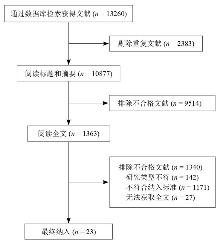
Figure 1
Flowchart of literature screening"
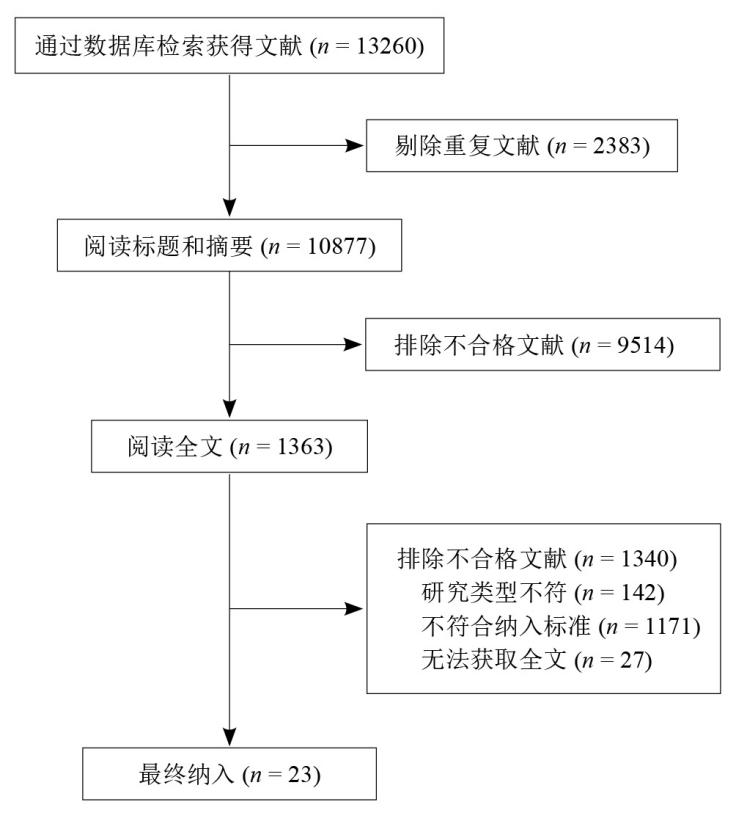

Table 1
Characteristics of included studies"
| 量表 | 纳入文献 | 国家 | 样本量/n | 研究对象 | 年龄/岁 | 条目数/维度数 | 重测时间/d |
|---|---|---|---|---|---|---|---|
| BrQ | Fernandes等[ | 巴西 | 84 | AIS | 10~18 | 34/8 | 7 |
| Lim等[ | 韩国 | 120 | AIS | 10~16 | 34/8 | 14 | |
| Peeters等[ | 荷兰 | 80 | AIS | 12~18 | 34/8 | 28 | |
| Zhang等[ | 中国 | 250 | AIS | 10~17 | 34/8 | 7 | |
| EQ-5D-Y-5L | Bonsel等[ | 荷兰 | 107 | AIS | 12~18 | NR | 7~14 |
| ISYQOL | Babaee等[ | 伊朗 | 178 | AIS、SK | 10~18 | 20/2 | 14 |
| Cheng等[ | 中国 | 131 | AIS | 10~18 | 20/2 | 14 | |
| Forest等[ | 加拿大 | 111 | AIS | 10~18 | 20/2 | 7、14 | |
| Liu等[ | 中国 | 138 | AIS | 10~18 | 20/2 | 14 | |
| Park等[ | 韩国 | 120 | AIS | 10~17 | 20/2 | 14 | |
| QLPSD | Hu等[ | 中国 | 129 | AIS | 10~18 | 21/5 | 14 |
| Korkmaz等[ | 土耳其 | 125 | AIS | 10~16 | 21/5 | 42 | |
| Park等[ | 韩国 | 120 | AIS | 10~17 | 21/5 | 14 | |
| SAQ | Babaee等[ | 伊朗 | 106 | AIS | 10~17 | 20/9 | 14 |
| Carreon等[ | 美国 | 1802 | AIS | 14.8±2.1 | 14/2 | 14 | |
| Lee等[ | 韩国 | 160 | AIS | 10~16 | 20/9 | 14 | |
| SJ-27 | Doi等[ | 日本 | 384 | AIS | 10~18 | 27/5 | NR |
| Kim等[ | 韩国 | 140 | AIS | 10~18 | 27/5 | 14 | |
| SRS-22r | Garg等[ | 印度 | 108 | AIS | 10~18 | NR | 10~14 |
| Monticone等[ | 意大利 | 223 | AIS | 10~18 | 22/5 | 7 | |
| Oeffinger等[ | 美国 | 1823 | AIS | 14.9±2.2 | 22/5 | NR | |
| Potoupnis等[ | 希腊 | 117 | AIS | 12~18 | NR | 14 | |
| YSQ | Nyirö等[ | 德国 | 131 | 颈部或背部疼痛青少年 | 10~16 | NR | 14 |
Table 2
Methodological quality and measurement properties of PROMs"
| 量表 | 纳入文献 | 内容效度 | 结构效度 | 内部一致性 | 重测信度 | 假设检验 | 测量误差 | 反应度 | ||||||||
|---|---|---|---|---|---|---|---|---|---|---|---|---|---|---|---|---|
| 相关性 | 全面性 | 理解性 | 指标 | 评价 | Cronbach α | 评价 | ICC/Kappa | 评价 | 相关性 | 评价 | 指标 | 评价 | AUC | 评价 | ||
| BrQ | Fernandes等[ | NR | NR | Da,b/? | NR | NR | 0.36~0.93 | D/? | 0.34~0.86 | D/- | 1个量表 | D/+ | SEM | D/? | NR | NR |
| Lim等[ | NR | NR | Da,b/? | NR | NR | 0.86~0.90 | D/? | 0.85~0.93 | D/+ | 1个量表 | D/? | NR | NR | NR | NR | |
| Peeters等[ | NR | NR | Da,b/? | NR | NR | 0.35~0.89 | D/? | 0.62~0.91 | D/- | 1个量表 | D/? | NR | NR | NR | NR | |
| Zhang等[ | NR | NR | Da,b/? | NR | NR | 0.83 | D/? | 0.78~0.91 | D/+ | 1个量表 | D/? | NR | NR | NR | NR | |
| EQ-5D-Y-5L | Bonsel等[ | NR | NR | NR | NR | NR | NR | NR | 0.19~0.69 | D/- | 1个量表 | V/- | NR | NR | NR | NR |
| ISYQOL | Babaee等[ | NR | NR | Da,b/? | NR | NR | 0.70~0.80 | D/? | 0.82~0.95 | D/+ | 1个量表 | D/? | NR | NR | NR | NR |
| Cheng等[ | NR | NR | Da,b/? | Rasch | D/? | 0.90/0.89 | D/? | 0.95/0.96 | D/+ | 7个量表 | D/? | SEM | D/? | NR | NR | |
| Forest等[ | NR | NR | Da,b/? | NR | NR | 0.81/0.85 | D/? | 0.96/0.90 | D/+ | 2个量表 | D/+ | SEM | D/? | NR | NR | |
| Liu等[ | NR | NR | Da/? | NR | NR | 0.75/0.88 | D/? | 0.72/0.80 | A/+ | 1个量表 | D/? | NR | NR | NR | NR | |
| Park等[ | NR | NR | Da,b/? | EFA 2个因子 | D/+ | 0.77~0.87 | D/+ | 0.73~0.81 | D/+ | 1个量表 | D/+ | NR | NR | NR | NR | |
| QLPSD | Hu等[ | NR | NR | Da,b/? | PCA | I/+ | 0.77~0.91 | D/+ | 0.78~0.92 | D/+ | 2个量表 | D/? | NR | NR | NR | NR |
| Korkmaz等[ | NR | NR | Db/? | EFA 5个因子 | D/+ | 0.78~0.97 | D/+ | 0.82~0.97 | D/+ | 1个量表 | D/? | NR | NR | NR | NR | |
| Park等[ | NR | NR | Da,b/? | EFA 5个因子 | D/? | 0.80~0.92 | D/? | 0.72~0.82 | D/+ | 1个量表 | D/+ | NR | NR | NR | NR | |
| SAQ | Babaee等[ | NR | NR | Da,b/? | PCA | I/- | 0.65~0.72 | D/? | 0.85~0.98 | D/+ | 1个量表 | D/? | NR | NR | NR | NR |
| Carreon等[ | NR | NR | NR | PCA | I/? | 0.88~0.89 | D/? | 0.81~0.91 | D/+ | 1个量表 | D/? | NR | NR | NR | NR | |
| Lee等[ | NR | NR | Da,b/? | NR | NR | 0.87~0.91 | D/? | 0.86~0.95 | D/+ | 1个量表 | D/? | NR | NR | NR | NR | |
| SJ-27 | Doi等[ | NR | NR | Da,b/? | CATPCA | I/? | 0.91 | D/? | NR | NR | 1个量表 | D/? | NR | NR | NR | NR |
| Kim等[ | NR | NR | Da,b/? | EFA 5个因子 | D/+ | 0.77~0.90 | D/+ | 0.74~0.91 | D/+ | 1个量表 | D/+ | NR | NR | NR | NR | |
| SRS-22r | Garg等[ | NR | NR | Da,b/? | NR | NR | 0.61~0.84 | D/? | 0.92~0.96 | D/+ | 1个量表 | D/? | NR | NR | NR | NR |
| Monticone等[ | NR | NR | Da,b/? | EFA 4个因子 | A/? | 0.65~0.78 | D/? | 0.97~1.00 | D/+ | 1个量表 | D/? | NR | NR | NR | NR | |
| Oeffinger等[ | NR | NR | NR | CFI = 0.98 | D/+ | 0.69~0.87 | D/- | NR | NR | NR | NR | NR | NR | NR | NR | |
| Potoupnis等[ | NR | NR | NR | EFA 5个因子 | D/? | 0.66~0.92 | D/? | 0.78~0.88 | D/+ | 1个量表 | D/? | NR | NR | NR | NR | |
| YSQ | Nyirö等[ | NR | NR | Db/? | NR | NR | NR | NR | 0.60~0.88 | V/- | 1个量表 | V/+ | NR | NR | AUC | D/- |
Table 3
Evidence quality grading and recommendation levels of modified GRADE of PROMs"
| 量表 | 内容效度 | 结构效度 | 内部一致性 | 重测信度 | 假设检验 | 测量误差 | 反应度 | 推荐等级 | |||||||
|---|---|---|---|---|---|---|---|---|---|---|---|---|---|---|---|
| 评价 | 证据质量 | 评价 | 证据质量 | 评价 | 证据质量 | 评价 | 证据质量 | 评价 | 证据质量 | 评价 | 证据质量 | 评价 | 证据质量 | ||
| BrQ | ? | 中 | NR | NR | ? | 中 | ± | 低 | ± | 低 | ? | 中 | NR | NR | B |
| EQ-5D-Y-5L | NR | NR | NR | NR | NR | NR | - | 中 | - | 高 | NR | NR | NR | NR | C |
| ISYQOL | ? | 中 | ± | 低 | ± | 低 | + | 中 | ± | 低 | ? | 中 | NR | NR | B |
| QLPSD | ? | 中 | ± | 低 | ± | 低 | + | 中 | ± | 低 | NR | NR | NR | NR | B |
| SAQ | ? | 中 | ± | 极低 | ? | 中 | + | 中 | ? | 中 | NR | NR | NR | NR | B |
| SJ-27 | ? | 中 | ± | 极低 | ± | 低 | + | 中 | ± | 低 | NR | NR | NR | NR | B |
| SRS-22r | ? | 中 | ± | 低 | ± | 低 | + | 中 | ? | 中 | NR | NR | NR | NR | B |
| YSQ | ? | 中 | NR | NR | NR | NR | - | 高 | + | 高 | NR | NR | - | 中 | C |
Table 4
Content characteristics of PROMs based on ICF-CY"
| 量表 | 评估内容 | 身体功能与结构 | 活动和参与 | 环境因素 |
|---|---|---|---|---|
| BrQ | 总体健康感知 躯体功能 情绪功能 自尊与外貌感知 活力 学校活动能力 躯体疼痛 社会功能 | b126气质和人格功能 b130能量和驱力功能 b134睡眠功能 b140注意力功能 b152情绪功能 b1801身体意象 b280痛觉 b440呼吸功能 b455运动耐受功能 | d160集中注意力 d4153维持坐姿 d450步行 d4551攀登 d4552跑步 d540穿着 d550吃 d710基本人际交往 d750非正式社会关系 d760家庭人际关系 d820学校教育 d9205社会活动 | e1101药品 e1151个人日常生活中用的辅助用品和技术 e5800卫生的服务 |
| EQ-5D-Y-5L | 行动能力 自我照顾 日常活动 疼痛或不适 担心、伤心或不开心 | b152情绪功能 b280痛觉 | d230进行日常事务 d450步行 d510盥洗自身 d540穿着 | |
| ISYQOL | 脊柱健康 支具 | b152情绪功能 b1801身体意象 b280痛觉 b710关节活动功能 | d410改变身体的基本姿势 d540穿着 d710基本人际交往 d910社区生活 | e1151个人日常生活中用的辅助用品和技术 e5800卫生的服务 |
| QLPSD | 心理社会功能 睡眠障碍 背部疼痛 身体形象 背部灵活性 | b134睡眠功能 b152情绪功能 b1801身体意象 b2801身体单一部位疼痛 | d4100躺下 d4105屈身 d430举起和搬运物体 d540穿着 d640做家务 d710基本人际交往 d750非正式社会关系 d910社区生活 d920娱乐和休闲 | |
| SAQ | 总体外观感知 侧弯曲度 肋骨及侧腰隆起 躯干偏移 腰部 肩部 驼背 胸廓 术后瘢痕 | b1801身体意象 b530体重维持功能 s6302乳房和乳头 s710头颈部的结构 s720肩部的结构 s740骨盆部的结构 s750下肢的结构 s760躯干的结构 s7700骨 | ||
| SJ-27 | 躯体疼痛 活动受限 躯体活动 自我形象 心理健康 | b126气质和人格功能 b152情绪功能 b1801身体意象 b2801身体单一部位疼痛 b660生殖功能 b710关节活动功能 | d4150保持躺姿 d4153保持坐姿 d4154保持站姿 d430举起和搬运物体 d510盥洗自身 d540穿着 d710基本人际交往 d740正式人际关系 d750非正式社会关系 d760家庭人际关系 d770亲密关系 d9201运动 d9205社会活动 | |
| SRS-22r | 功能/活动 疼痛 自我形象/外貌 心理健康 对管理的满意度 | b152情绪功能 b1801身体意象 b280痛觉 s760躯干的结构 | d4150保持躺姿 d640做家务 d710基本人际交往 d750非正式社会关系 d760家庭人际关系 d820学校教育 d850有报酬的就业 d870经济自给 d9201运动 d9205社会活动 | e1101药品 e5800卫生的服务 |
| YSQ | 脊柱疼痛 疼痛相关行为 家庭影响 | b2801身体单一部位疼痛 | d820学校教育 d850有报酬的就业 d9201运动 | e310直系亲属家庭 e5800卫生的服务 |
| [1] | 姚斌彬, 周淳浩, 王红卫. 体育运动对青少年脊柱健康的影响[J]. 中国学校体育, 2025, 44(1): 86-88. |
| [2] |
Montgomery L R C, Swain M, Dario A B, et al. Does sedentary behaviour cause spinal pain in children and adolescents? A systematic review with meta-analysis[J]. Br J Sports Med, 2025, 59(6): 409-422.
doi: 10.1136/bjsports-2024-108648 |
| [3] |
Mei Y, Lin Y F, Gong Z, et al. Prevalence of incorrect posture among school adolescents after the COVID-19 pandemic: a large population-based scoliosis screening in China[J]. J Orthop Surg Res, 2025, 20: 156.
doi: 10.1186/s13018-025-05479-8 pmid: 39939858 |
| [4] |
Maekawa M, Yoshizawa E, Hayata G, et al. Physical and psychological effects of postural educational intervention for students experienced school refusal[J]. Curr Psychol, 2023, 42(5): 3510-3519.
doi: 10.1007/s12144-021-01677-9 |
| [5] | De Miranda A P O C, Penha P J, Pereira L G, et al. Posture of adolescent and the relationship with body mass index, sex, and physical activity[J]. Child Obes, 2022, 18(5): 342-349. |
| [6] |
Kuru Çolak T, Durmuş B B, Saatçi E Z, et al. Systematic review of clinical outcome parameters of conservative treatment of adolescent idiopathic scoliosis patients[J]. J Clin Med, 2025, 14(4): 1063.
doi: 10.3390/jcm14041063 |
| [7] | Parent E C, Vaclavik M, Bourgoin C, et al. Inventory of patient-reported outcome measures used in the non-operative care of scoliosis: a scoping review[J]. Children (Basel), 2023, 10(2): 239. |
| [8] |
An M, Tanaka R, Hirota N, et al. A scoping review of adapted physical activity interventions for children and youth with disabilities using International Classification of Functioning, Disability and Health: Children and Youth version as a reference[J]. Int J Dev Disabil, 2023, 70(7): 1127-1152.
doi: 10.1080/20473869.2022.2161987 |
| [9] |
姜静远, 李安巧, 邱服冰, 等. 基于ICF-CY儿童青少年身体活动指南的内容分析与比较[J]. 中国康复理论与实践, 2020, 26(9): 993-1004.
doi: 10.3969/j.issn.1006-9771.2020.09.001 |
| Jiang J Y, Li A Q, Qiu F B, et al. Content analysis and comparison of physical activity guidelines for children and adolescents based on ICF-CY[J]. Chin J Rehabil Theory Pract, 2020, 26(9): 993-1004. | |
| [10] |
Mokkink L B, De Vet H C W, Prinsen C A C, et al. COSMIN risk of bias checklist for systematic reviews of patient-reported outcome measures[J]. Qual Life Res, 2018, 27(5): 1171-1179.
doi: 10.1007/s11136-017-1765-4 pmid: 29260445 |
| [11] |
Mokkink L B, Elsman E B M, Terwee C B. COSMIN guideline for systematic reviews of patient-reported outcome measures version 2.0[J]. Qual Life Res, 2024, 33(11): 2929-2939.
doi: 10.1007/s11136-024-03761-6 |
| [12] | 施月仙, 张海明, 黄亚琪, 等. 选择健康测量工具的共识标准(COSMIN)偏倚风险评价清单的解读[J]. 中国护理管理, 2021, 21(7): 1053-1057. |
| Shi Y X, Zhang H M, Huang Y Q, et al. Interpretation of the COSMIN risk of bias checklist for selecting health measurement instruments[J]. Chin Nurs Manag, 2021, 21(7): 1053-1057. | |
| [13] |
Prinsen C A C, Mokkink L B, Bouter L M, et al. COSMIN guideline for systematic reviews of patient-reported outcome measures[J]. Qual Life Res, 2018, 27(5): 1147-1157.
doi: 10.1007/s11136-018-1798-3 pmid: 29435801 |
| [14] | 陈祎婷, 沈蓝君, 彭健, 等. 改良版定量系统评价证据分级方法对患者报告结局测量工具的评价[J]. 解放军护理杂志, 2020, 37(10): 57-60. |
| Chen Y T, Shen L J, Peng J, et al. Evaluation of patient-reported outcome measures using the modified GRADE approach[J]. Nurs J Chin PLA, 2020, 37(10): 57-60. | |
| [15] |
Cieza A, Geyh S, Chatterji S, et al. ICF linking rules: an update based on lessons learned[J]. J Rehabil Med, 2005, 37(4): 212-218.
doi: 10.1080/16501970510040263 pmid: 16024476 |
| [16] |
Fernandes I P, Gomes M V P, Andrade R M, et al. Translation, cross-cultural adaptation and clinimetric properties of the Brazilian Portuguese version of the Brace Questionnaire[J]. Spine Deform, 2024, 12(5): 1337-1343.
doi: 10.1007/s43390-024-00883-2 |
| [17] |
Lim J M, Goh T S, Shin J K, et al. Validation of the Korean version of the Brace Questionnaire[J]. Br J Neurosurg, 2018, 32(6): 678-681.
doi: 10.1080/02688697.2018.1501464 pmid: 30146912 |
| [18] |
Peeters C M M, Bonsel J M, Munnik-Hagewoud R, et al. Validity and reliability of the adapted Dutch version of the Brace Questionnaire (BrQ)[J]. Acta Orthop, 2023, 94: 460-465.
doi: 10.2340/17453674.2023.18492 pmid: 37670558 |
| [19] |
Zhang X, Wang D, Yao M, et al. Reliability and validity of Chinese version of Brace Questionnaire for adolescent idiopathic scoliosis: a cross-sectional study[J]. Medicine (Baltimore), 2021, 100(33): e26965.
doi: 10.1097/MD.0000000000026965 |
| [20] |
Bonsel J M, Peeters C M M, Reijman M, et al. A head-to-head comparison of the adult EQ-5D-5L and youth EQ-5D-Y-5L in adolescents with idiopathic scoliosis[J]. J Patient Rep Outcomes, 2025, 9(1): 13.
doi: 10.1186/s41687-025-00842-z pmid: 39878911 |
| [21] |
Babaee T, Esfandiari E, Rouhani N, et al. The Italian Spine Youth Quality of Life questionnaire: reliability and validity of the Persian version in adolescents with spinal deformities[J]. Spine Deform, 2022, 10(4): 775-782.
doi: 10.1007/s43390-022-00475-y |
| [22] | Cheng A Y, Jim P K, Kwan N W, et al. Cross-cultural adaptation and psychometric properties of the traditional Chinese version of the Italian Spine Youth Quality of Life (ISYQOL) questionnaire[J]. Healthcare (Basel), 2023, 11(19): 2683. |
| [23] |
Forest C, Parent E, Chémaly O, et al. Cross-cultural French-Canadian adaptation and psychometric assessment of the Italian Spine Youth Quality of Life (ISYQOL) questionnaire[J]. Spine J, 2022, 22(11): 1893-1902.
doi: 10.1016/j.spinee.2022.07.094 pmid: 35870800 |
| [24] |
Liu S, Liang J, Xu N, et al. Reliability and validity of simplified Chinese version of the Italian Spine Youth Quality of Life questionnaire in adolescents with idiopathic scoliosis[J]. BMC Musculoskelet Disord, 2021, 22(1): 568.
doi: 10.1186/s12891-021-04462-8 |
| [25] |
Park S H, Goh T S, Son S M, et al. Validation of the Italian Spine Youth Quality of Life (ISYQOL) in Korean population[J]. J Clin Neurosci, 2021, 92: 165-168.
doi: 10.1016/j.jocn.2021.08.015 pmid: 34509245 |
| [26] |
Hu M, Cai Z, Yang Y, et al. Reliability and validity of the adapted Chinese version of the Quality of Life Profile for Spine Deformities in adolescents with idiopathic scoliosis[J]. Global Spine J, 2024, 14(4): 1269-1276.
doi: 10.1177/21925682221139462 |
| [27] |
Korkmaz M D, Korkmaz M, Alt Y F, et al. Adaptation and validation of the Turkish version of the Quality of Life Profile for Spine Deformities in idiopathic scoliosis[J]. Acta Orthop Traumatol Turc, 2024, 58(3): 182-186.
doi: 10.5152/j.aott.2024.23078 |
| [28] | Park S H, Goh T S, Park Y G, et al. Validation of a Korean version of the Quality-of-Life Profile for Spine Deformities (QLPSD) in patients with adolescent idiopathic scoliosis[J]. Eur Rev Med Pharmacol Sci, 2022, 26(1): 84-89. |
| [29] |
Babaee T, Moradi V, Rouhani N, et al. Assessment of reliability and validity of the adapted Persian version of the Spinal Appearance Questionnaire in adolescents with idiopathic scoliosis[J]. Spine Deform, 2022, 10(2): 317-326.
doi: 10.1007/s43390-021-00414-3 |
| [30] | Carreon L Y, Sanders J O, Polly D W, et al. Spinal Appearance Questionnaire: factor analysis, scoring, reliability, and validity testing[J]. Spine, 2011, 36(18): E1240-E1244. |
| [31] |
Lee J S, Shin J K, Goh T S, et al. Validation of the Korean version of the Spinal Appearance Questionnaire[J]. J Back Musculoskelet Rehabil, 2017, 30(6): 1203-1208.
doi: 10.3233/BMR-150480 pmid: 28655125 |
| [32] |
Doi T, Inoue H, Arai Y, et al. Reliability and validity of a novel quality of life questionnaire for female patients with adolescent idiopathic scoliosis: Scoliosis Japanese Questionnaire-27: a multicenter, cross-sectional study[J]. BMC Musculoskelet Disord, 2018, 19(1): 99.
doi: 10.1186/s12891-018-2025-7 |
| [33] |
Kim H S, Kim K, Cho Y J, et al. Validation of the Scoliosis Japanese Questionnaire-27 in Korean patients with adolescent idiopathic scoliosis[J]. J Clin Neurosci, 2024, 129: 110830.
doi: 10.1016/j.jocn.2024.110830 |
| [34] |
Garg B, Mehta N, Swamy A M, et al. Reliability and validity of a cross-culturally adapted Hindi version of the SRS-22r questionnaire in Indian patients[J]. Spine Deform, 2020, 8(5): 885-891.
doi: 10.1007/s43390-020-00106-4 |
| [35] | Monticone M, Baiardi P, Calabrò D, et al. Development of the Italian version of the revised Scoliosis Research Society-22 Patient Questionnaire, SRS-22r-I: cross-cultural adaptation, factor analysis, reliability, and validity[J]. Spine, 2010, 35(24): E1412-E1417. |
| [36] | Oeffinger D J, Iwinski H, Talwalkar V, et al. Psychometric analysis and the implications for the use of the Scoliosis Research Society Questionnaire (SRS-22r English) for individuals with adolescent idiopathic scoliosis[J]. N Am Spine Soc J, 2024, 19: 100545. |
| [37] |
Potoupnis M, Papavasiliou K, Kenanidis E, et al. Reliability and concurrent validity of the adapted Greek version of the Scoliosis Research Society-22r Questionnaire. a cross-sectional study performed on conservatively treated patients[J]. Hippokratia, 2012, 16(3): 225-229.
pmid: 23935288 |
| [38] |
Nyirö L, Potthoff T, Siegenthaler M H, et al. Translation and validation of the German version of the Young Spine Questionnaire[J]. BMC Pediatr, 2021, 21(1): 359.
doi: 10.1186/s12887-021-02804-y pmid: 34429090 |
| [39] |
Terwee C B, Prinsen C A C, Chiarotto A, et al. COSMIN methodology for evaluating the content validity of patient-reported outcome measures: a Delphi study[J]. Qual Life Res, 2018, 27(5): 1159-1170.
doi: 10.1007/s11136-018-1829-0 pmid: 29550964 |
| [40] |
Norris M, Lecavalier L. Evaluating the use of exploratory factor analysis in developmental disability psychological research[J]. J Autism Dev Disord, 2010, 40(1): 8-20.
doi: 10.1007/s10803-009-0816-2 pmid: 19609833 |
| [41] |
Smit T H. On growth and scoliosis[J]. Eur Spine J, 2024, 33(6): 2439-2450.
doi: 10.1007/s00586-024-08276-9 pmid: 38705903 |
| [42] |
Van Kampen D A, Willems W J, Van Beers L W, et al. Determination and comparison of the smallest detectable change (SDC) and the minimal important change (MIC) of four-shoulder patient-reported outcome measures (PROMs)[J]. J Orthop Surg Res, 2013, 8: 40.
doi: 10.1186/1749-799X-8-40 pmid: 24225254 |
| [43] |
Terwee C B, Roorda L D, Knol D L, et al. Linking measurement error to minimal important change of patient-reported outcomes[J]. J Clin Epidemiol, 2009, 62(10): 1062-1067.
doi: 10.1016/j.jclinepi.2008.10.011 pmid: 19230609 |
| [44] |
Stone L E, Sindewald R, Kelly M P. Self-image in spinal deformity: a state-of-the-art review[J]. Spine Deform, 2024, 12(5): 1179-1202.
doi: 10.1007/s43390-024-00875-2 pmid: 38696080 |
| [45] |
Paradkar R, Paradkar R, Singh M, et al. The impact of the social determinants of health on adolescent idiopathic scoliosis: a systematic review[J]. Spine Deform, 2025, 13(4): 997-1006.
doi: 10.1007/s43390-025-01065-4 |
| [1] | YANG Tongnian, REN Jie, XIAO Hui. Effect of physical activity on anxiety for children and adolescents: a systematic review of systematic reviews [J]. Chinese Journal of Rehabilitation Theory and Practice, 2025, 31(8): 883-888. |
| [2] | WANG Xiaofeng, HU Mengqiao, WANG Yan, WEI Kun, XU Wenzhu, REN Dan, MA Ye. Effect of exoskeleton robot-assisted gait training on lower limb function after stroke and spinal cord injury: a systematic review [J]. Chinese Journal of Rehabilitation Theory and Practice, 2025, 31(8): 914-921. |
| [3] | GU Yiqing, CHENG Shupeng, LI Yongqiang, MAO Erli, LI Jian'an. Capping versus non-capping decannulation strategy in adult tracheostomized patients: a systematic review [J]. Chinese Journal of Rehabilitation Theory and Practice, 2025, 31(6): 666-673. |
| [4] | WANG Mei, ZHU Wenping. Health benefits of physical activity in patients with type 2 diabetes: a systematic review of systematic reviews [J]. Chinese Journal of Rehabilitation Theory and Practice, 2025, 31(5): 553-560. |
| [5] | YE Lü, CHANG Jing, LING Hairun. Effect of exercise intervention on internet behavioral addictions: a systematic review of systematic reviews [J]. Chinese Journal of Rehabilitation Theory and Practice, 2025, 31(4): 431-440. |
| [6] | ZHU Zhiqiang, XU Qiaoling, SHAO Xueyun. Health benefits of physical activity for obese and overweight children: a systematic review of systematic reviews [J]. Chinese Journal of Rehabilitation Theory and Practice, 2025, 31(3): 296-305. |
| [7] | CAI Qian, ZHANG Xi, SU Hairong, LIU Na, HUANG Ying, LI Jiqiang, XIA Jin'gen, ZHENG Decai. Inspiratory muscle training for weaning outcomes in patients with weaning failure: a systematic review [J]. Chinese Journal of Rehabilitation Theory and Practice, 2025, 31(3): 306-313. |
| [8] | XU Xiaohong, ZHONG Xiaoke, SUN Siyi, ZHANG Qi, CHENG Huaichun. Psychological benefits of art therapy for older adults with mild cognitive impairment: a systematic review [J]. Chinese Journal of Rehabilitation Theory and Practice, 2025, 31(2): 165-171. |
| [9] | DUAN Fuwen, ZHANG Beiqi, LI Li. Preventive effect of exercise interventions on sport-related concussion: a systematic review [J]. Chinese Journal of Rehabilitation Theory and Practice, 2025, 31(12): 1385-1397. |
| [10] | LIU Dongfei, YAN Huiyi, YANG Fan, ZHANG Shuai. Effect of exercise interventions on multidimensional health outcomes in children and adolescents with Down syndrome: a meta-analysis [J]. Chinese Journal of Rehabilitation Theory and Practice, 2025, 31(12): 1398-1413. |
| [11] | YANG Wenrui, CUI Sidong, ZENG Li. Effect of virtual and augmented reality on cognition, emotion and adaptive behavior in children and adolescents with autism spectrum disorder: a systematic review [J]. Chinese Journal of Rehabilitation Theory and Practice, 2024, 30(9): 1026-1033. |
| [12] | ZHOU Jing, ZHANG Xiaoxiao, DING Zhongbing, CHEN Jianchao, WEI Xingxing, LIN Shuqi. Effect of speech and language rehabilitation on children with intellectual and developmental disabilities: a systematic review [J]. Chinese Journal of Rehabilitation Theory and Practice, 2024, 30(8): 894-902. |
| [13] | YANG Jiakun, ZHANG Xiaoxia. Effect of adapted physical activity on functioning, activity and participation in children with intellectual and developmental disabilities: a systematic review [J]. Chinese Journal of Rehabilitation Theory and Practice, 2024, 30(7): 768-777. |
| [14] | TANG Letian, HUANG Zhaoxin, LIU Chao, XIAO Xiaofei. Effect of high blood flow restriction training on patients after anterior cruciate ligament reconstruction: a systematic review [J]. Chinese Journal of Rehabilitation Theory and Practice, 2024, 30(7): 789-796. |
| [15] | WEI Xiaowei. Effect of digital empowerment techniques on physical activity and health for children with intellectual and developmental disabilities: a systematic review [J]. Chinese Journal of Rehabilitation Theory and Practice, 2024, 30(5): 497-504. |
| Viewed | ||||||
|
Full text |
|
|||||
|
Abstract |
|
|||||
|
||
