



《Chinese Journal of Rehabilitation Theory and Practice》 ›› 2020, Vol. 26 ›› Issue (2): 232-236.doi: 10.3969/j.issn.1006-9771.2020.02.017
Previous Articles Next Articles
GULIJIAKELA Ai-shan,CHEN Chan,GAO Tian-hao,LING Jun-qi,SUN Li-min,BAI Yu-long( )
Received:2019-01-14
Revised:2019-05-05
Published:2020-02-25
Online:2020-03-19
Contact:
BAI Yu-long
E-mail:dr_baiyl@fudan.edu.cn
Supported by:CLC Number:
GULIJIAKELA Ai-shan,CHEN Chan,GAO Tian-hao,LING Jun-qi,SUN Li-min,BAI Yu-long. Effect of Repetitive Transcranial Magnetic Stimulation Combined with Conventional Rehabilitation on Upper Extremity Function for A Patient with Complex Regional Pain Syndrome I after Distal Radius Fracture[J]. 《Chinese Journal of Rehabilitation Theory and Practice》, 2020, 26(2): 232-236.
"
"

"

"
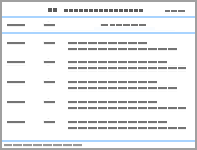
| 时间 | 肘关节 | 前臂 | 腕关节 | |
|---|---|---|---|---|
| 屈曲/伸展 | 旋前/旋后 | 屈曲/伸展 | 桡侧偏/尺侧偏 | |
| 治疗前 | 87 | 55 | 20 | 5 |
| 治疗后 | 100 | 90 | 42 | 30 |
"
| 时间 | 拇指 | 示指 | 中指 | 环指 | 小指 | |||||||||
|---|---|---|---|---|---|---|---|---|---|---|---|---|---|---|
| MCP | PIP | MCP | PIP | DIP | MCP | PIP | DIP | MCP | PIP | DIP | MCP | PIP | DIP | |
| 治疗前 | 25 | 20 | 20 | 20 | 15 | 25 | 35 | 0 | 10 | 20 | 10 | 5 | 15 | 10 |
| 治疗后 | 35 | 45 | 43 | 55 | 40 | 44 | 60 | 35 | 30 | 45 | 20 | 26 | 30 | 20 |
| [1] |
de Mos M, de Bruijn A G, Huygen F J, et al. The incidence of complex regional pain syndrome: a population-based study[J]. Pain, 2007, 129(1):12-20.
doi: 10.1016/j.pain.2006.09.008 |
| [2] |
Sandroni P, Benrud-Larson L M, McClelland R L, et al. Complex regional pain syndrome type I: incidence and prevalence in Olmsted county, a population-based study[J]. Pain, 2003, 103(1-2):199-207.
pmid: 12749974 |
| [3] |
Harden R N, Bruehl S, Perez R S, et al. Validation of proposed diagnostic criteria (the "Budapest Criteria") for Complex Regional Pain Syndrome[J]. Pain, 2010, 150(2):268-274.
doi: 10.1016/j.pain.2010.04.030 |
| [4] | Bean D J, Johnson M H, Kydd R R. The outcome of complex regional pain syndrome type 1: a systematic review[J]. Pain, 2014, 15(7):677-690. |
| [5] | Dutton K, Littlejohn G. Terminology, criteria, and definitions in complex regional pain syndrome: challenges and solutions[J]. J Pain Res, 2015, 8:871-877. |
| [6] |
Eisenberg E, Chistyakov A V, Yudashkin M, et al. Evidence for cortical hyperexcitability of the affected limb representation area in CRPS: a psychophysical and transcranial magnetic stimulation study[J]. Pain, 2005, 113(1-2):99-105.
pmid: 15621369 |
| [7] |
Li W W, Sabsovich I, Guo T Z, et al. The role of enhanced cutaneous IL-1beta signaling in a rat tibia fracture model of complex regional pain syndrome[J]. Pain, 2009, 144(3):303-313.
doi: 10.1016/j.pain.2009.04.033 |
| [8] |
Santamato A, Ranieri M, Panza F, et al. Role of biphosphonates and lymphatic drainage type Leduc in the complex regional pain syndrome (shoulder-hand syndrome)[J]. Pain Med, 2009, 10(1):179-185.
doi: 10.1111/j.1526-4637.2008.00539.x |
| [9] |
Herlyn P, Müller-Hilke B, Wendt M, et al. Frequencies of polymorphisms in cytokines, neurotransmitters and adrenergic receptors in patients with complex regional pain syndrome type I after distal radial fracture[J]. Clin J Pain, 2010, 26(3):175-181.
doi: 10.1097/AJP.0b013e3181bff8b9 |
| [10] |
Baron R, Schattschneider J, Binder A, et al. Relation between sympathetic vasoconstrictor activity and pain and hyperalgesia in complex regional pain syndromes: a case-control study[J]. Lancet, 2002, 359(9318):1655-1660.
pmid: 12020526 |
| [11] |
Oaklander A L, Rissmiller J G, Gelman L B, et al. Evidence of focal small-fiber axonal degeneration in complex regional pain syndrome-I (reflex sympathetic dystrophy)[J]. Pain, 2006, 120(3):235-243.
pmid: 16427737 |
| [12] | Smart K M, Wand B M, O'Connell N E. Physiotherapy for pain and disability in adults with complex regional pain syndrome (CRPS) types I and II [J]. Cochrane Datadase Syst Rev, 2016, 2: CD010853 |
| [13] |
Diaz-Garcia R J, Chung K C. The evolution of distal radius fracture management: a historical treatise[J]. Hand Clin, 2012, 28(2):105-111.
doi: 10.1016/j.hcl.2012.02.007 pmid: 22554653 |
| [14] | Beil F T, Barvencik F, Gebauer M, et al. The distal radius, the most frequent fracture localization in humans: a histomorphometric analysis of the microarchitecture of 60 human distal radii and its changes in aging[J]. J Trauma, 2011, 70(1):154-158. |
| [15] |
Li Z, Smith B P, Tuohy C, et al. Complex regional pain syndrome after hand surgery[J]. Hand Clin, 2010, 26(2):281-289.
doi: 10.1016/j.hcl.2009.11.001 |
| [16] |
Safaz I, Tok F, Taşkaynatan M A, et al. Manual lymphatic drainage in management of edema in a case with CRPS: why the(y) wait?[J]. Rheumatol Int, 2011, 31(3):387-390.
doi: 10.1007/s00296-009-1187-x |
| [17] |
Demos M, Huygen F J, Stricker B H, et al. The association between ACE inhibitors and the complex regional pain syndrome: suggestions for a neuro-inflammatory pathogenesis of CRPS[J]. Pain, 2009, 142(3):218-224.
doi: 10.1016/j.pain.2008.12.032 |
| [18] |
Moseley G L, Herbert R D, Parsons T, et al. Intense pain soon after wrist fracture strongly predicts who will develop complex regional pain syndrome: prospective cohort study[J]. J Pain, 2014, 15(1):16-23.
doi: 10.1016/j.jpain.2013.08.009 |
| [19] |
Jellad A, Salah S, Ben Salah Frih Z. Complex regional pain syndrome type I: incidence and risk factors in patients with fracture of the distal radius[J]. Arch Phys Med Rehabil, 2014, 95(3):487-492.
doi: 10.1016/j.apmr.2013.09.012 |
| [20] | Goh E L, Chidambaram S, Ma D . Complex regional pain syndrome: a recent update[J]. Burns Trauma, 2017, 5(1):2. |
| [21] |
Klein M M, Treister R, Raij T, et al. Transcranial magnetic stimulation of the brain: guidelines for pain treatment research[J]. Pain, 2015, 156(9):1601-1614.
doi: 10.1097/j.pain.0000000000000210 pmid: 25919472 |
| [22] |
Lefaucheur J P, André-Obadia N, Antal A, et al. Evidence-based guidelines on the therapeutic use of repetitive transcranial magnetic stimulation (rTMS)[J]. Clin Neurophysiol, 2014, 125(11):2150-2206.
doi: 10.1016/j.clinph.2014.05.021 |
| [23] |
Lolloca C, Ludman T, Bouhassira D, et al. Neuropathic pain[J]. Nat Rev Dis Primers, 2017, 3:17002.
doi: 10.1038/nrdp.2017.2 |
| [24] |
Finnerup N B, Haroutounian S, Kamerman P, et al. Neuropathic pain: an updated grading system for research and clinical practice[J]. Pain, 2016, 157(8):1599-1606.
doi: 10.1097/j.pain.0000000000000492 pmid: 27115670 |
| [25] |
Mercier C, Léonard G. Interactions between pain and the motor cortex: insights from research on phantom limb pain and complex regional pain syndrome[J]. Physiother Can, 2011, 63(3):305-314.
doi: 10.3138/ptc.2010-08p |
| [26] |
Schwenkreis P, Janssen F, Rommel O, et al. Bilateral motor cortex disinhibition in complex regional pain syndrome (CRPS) type I of the hand[J]. Neurology, 2003, 61(4):515-519.
pmid: 12939426 |
| [27] |
Eisenberg E, Chistyakov A V, Yudashkin M, et al. Evidence for cortical hyperexcitability of the affected limb representation area in CRPS: a psychophysical and transcranial magnetic stimulation study[J]. Pain, 2005, 113(1-2):99-105.
pmid: 15621369 |
| [28] |
Garcia-Larrea L, Peyron R. Motor cortex stimulation for neuropathic pain: from phenomenology to mechanisms[J]. Neuroimage, 2007, 37(1):71-79.
doi: 10.1016/j.neuroimage.2007.05.018 |
| [29] |
Lefaucheur J P, Drouot X, Ménard-Lefaucheur I, et al. Motor cortex rTMS restores defective intracortical inhibition in chronic neuropathic pain[J]. Neurology, 2006, 67(9):1568-1574.
pmid: 17101886 |
| [1] | LIU Ping, ZHOU Nan, XUE Xiaojie, SHAO Weibo. Application of rehabilitation therapy techniques for post-stroke dysphagia: a bibliometric analysis [J]. Chinese Journal of Rehabilitation Theory and Practice, 2026, 32(3): 294-303. |
| [2] | QIU Aizhen, WANG Min, WANG Qiushuang, WU Ye, BAO Kexiu. Effect of repetitive transcranial magnetic stimulation augmentation on group cognitive training for high-functioning autism spectrum disorder comorbided with attention-deficit/hyperactivity disorder, and electrophysiological mechanisms [J]. Chinese Journal of Rehabilitation Theory and Practice, 2025, 31(8): 979-986. |
| [3] | SUN Wanting, YASEN Ailipinai, GONG Xiang, XIAO Yue, GAN Zhaodan, LIU Mingjie, ZENG Lanting, MA Shuyue, LU Jun, XU Guangxu. Effect of high-frequency repetitive transcranial magnetic stimulation on upper limb function of stroke patients based on motor sequence learning [J]. Chinese Journal of Rehabilitation Theory and Practice, 2025, 31(7): 812-821. |
| [4] | FU Guojun, YU Xiufang, LÜ Xin, JI Lu, LIU Huaqing. Effect of composite electromagnetic stimulation combined with chin tuck against resistance on post-stroke patients with dysphagia [J]. Chinese Journal of Rehabilitation Theory and Practice, 2025, 31(6): 721-728. |
| [5] | LIU Pengcheng, QU Mengjian, LONG Liping, WANG Yalin, YANG Mingzhu, LIU Peiyong, ZHOU Jun, LIU Jing. Effect of pneumatic and electric hand training system with multiple sensory stimulation modalities combined with low-frequency repetitive transcranial magnetic stimulation on hand movement and tactile pressure sensation in patients with stroke [J]. Chinese Journal of Rehabilitation Theory and Practice, 2025, 31(4): 458-465. |
| [6] | CHEN Chen, MENG Zhaoxiang, YANG Kang, ZHANG Minjie, ZUO Ya'nan, WANG Kui, ZHANG Xibin, QUAN Yifeng, JIN Xing. Effect of intelligent mirror glove task-oriented training combined with low-frequency repetitive transcranial magnetic stimulation on hand function in patients with stroke: a randomized controlled trial [J]. Chinese Journal of Rehabilitation Theory and Practice, 2024, 30(7): 831-838. |
| [7] | WEN Cuifeng, YA Ru, HUANG Hao, LIAO Xuemei, BAI Yulong. Effect of mirror therapy on upper limb function and cerebral cortex activity in patients with type I complex regional pain syndrome after stroke: a randomized controlled trial [J]. Chinese Journal of Rehabilitation Theory and Practice, 2024, 30(10): 1203-1214. |
| [8] | LIU Dong, XU Zihan, LI Jiang, JU Ping. Effect of high-frequency repetitive transcranial magnetic stimulation in M1 region combined with dorsolateral prefrontal cortex on electroencephalogram θ frequency band amplitude of patients with neuropathic pain after spinal cord injury [J]. 《Chinese Journal of Rehabilitation Theory and Practice》, 2024, 30(1): 87-94. |
| [9] | CHEN Yiting, WANG Qian, CUI Shenhong, LI Yingcai, ZHANG Siyu, WEI Yanxu, REN Hui, LENG Jun, CHEN Bin. Effect of bilateral sequential repetitive transcranial magnetic stimulation on motor function of upper limbs in stroke patients [J]. 《Chinese Journal of Rehabilitation Theory and Practice》, 2023, 29(8): 926-932. |
| [10] | MENG Xiangqiang, XIONG Qi, CHEN Gengfa, BAI Yang, ZOU Tianzi, FENG Zhen. Effect of repetitive transcranial magnetic stimulation combined with median nerve electrical stimulation on patients with prolonged disorders of consciousness in different age [J]. 《Chinese Journal of Rehabilitation Theory and Practice》, 2023, 29(8): 940-947. |
| [11] | HU Xueyan, JIANG Xiaofeng, SHAN Lei, YANG Lingyu, CHEN Yudong, MA Lin, LIU Lixu, ZHANG Tong. Effect of low frequency or high frequency repetitive transcranial magnetic stimulation on stroke patients with nonfluent aphasia [J]. 《Chinese Journal of Rehabilitation Theory and Practice》, 2023, 29(3): 249-255. |
| [12] | SUN Fengbao, ZENG Yaqin, OUYANG Yao, JIN Zhenhua, ZHANG Xiaofeng. Effect of low frequency repetitive transcranial magnetic stimulation combined with bilateral isokinematic training on upper limb motor function of stroke patients [J]. Chinese Journal of Rehabilitation Theory and Practice, 2023, 29(3): 256-261. |
| [13] | LIANG Tianjia, LONG Yaobin, LU Liyan, ZHOU Jinying, HUANG Fucai, WU Yingchao, LONG Yaoxiang, WEI Xiaocui. Effect of proprioceptive neuromuscular facilitation rope training and repetitive transcranial magnetic stimulation on upper limb motor function of stroke patients with hemiplegia [J]. 《Chinese Journal of Rehabilitation Theory and Practice》, 2023, 29(3): 262-268. |
| [14] | HUANG Kaiqi, XIN Rong, LING Gengqiang, WANG Pu. Repetitive transcranial magnetic stimulation for lower limb dysfunction post stroke: a scoping review [J]. 《Chinese Journal of Rehabilitation Theory and Practice》, 2023, 29(3): 286-293. |
| [15] | MA Qishou, LI Zhongyuan, FU Weiwei, LIN Qian. Effect of repetitive transcranial magnetic stimulation on walking of stroke patients at recovery stage [J]. 《Chinese Journal of Rehabilitation Theory and Practice》, 2023, 29(2): 167-173. |
| Viewed | ||||||
|
Full text |
|
|||||
|
Abstract |
|
|||||
|
||
