



《Chinese Journal of Rehabilitation Theory and Practice》 ›› 2022, Vol. 28 ›› Issue (1): 62-68.doi: 10.3969/j.issn.1006-9771.2022.01.010
Previous Articles Next Articles
CHEN Lilin,HUANG Mudan,ZHENG Haiqing( )
)
Received:2021-07-25
Revised:2021-08-21
Published:2022-01-25
Online:2022-02-11
Contact:
ZHENG Haiqing
E-mail:zhenghaiqing0909@aliyun.com
Supported by:CLC Number:
CHEN Lilin,HUANG Mudan,ZHENG Haiqing. Identification and evaluation of post-stroke spasticity: a scoping review[J]. 《Chinese Journal of Rehabilitation Theory and Practice》, 2022, 28(1): 62-68.
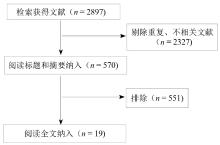
"

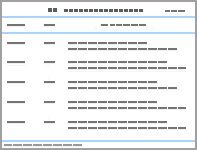
"
| 作者 | 国家 | n | 部位 | 评价工具 | 结局 |
|---|---|---|---|---|---|
| Poon等[ | 中国 | 78 | 踝 | CSS 比目鱼肌牵张反射 肌电图肌肉共收缩指数 | 重测信度0.78~0.97 |
| Choi等[ | 韩国 | 28 | 膝、踝 | 基于惯性传感器的MTS 传统MTS | 基于惯性传感器准确率高(均方根误差< 3.2°),重测信度和评估者间信度高(组内相关系数> 0.8) |
| Udby Blicher等[ (2009) | 丹麦 | 42 | 肘、腕 | MAS F波振幅 F波频率 M波振幅 | 痉挛组和非痉挛组间F波频率无显著性差异 |
| Leng等[ | 中国 | 27 | 腕 | MAS NeuroFlexor神经、弹性和黏性成分 MyotonPRO中F值、S值 EIM中电阻和电抗 | MAS评分降低不伴痉挛相关神经成分的变化 |
| Phadke等[ | 美国 | 36 | 腕 | MAS H反射 M波 Hmax/Mmax Hslp/Mslp HTH/MTH | Hmax/Mmax、Hslp/Mslp和HTH/MTH重测组内相关系数分别为0.85、0.88和0.69;H反射相关指标与MAS评分无相关性 |
| Kumru等[ | 西班牙 | 21 | 膝 | MAS H反射 M波 Hmax/Mmax T反射 屈肌反射 | MAS评分降低不伴H反射相关指标变化 |
| Fujiwara等[ | 日本 | 61 | 腕 | MAS SICI RI | RI-3的变化与腕痉挛程度的变化负相关 |
| Sangari等[ | 美国 | 60 | 膝 | MAS 钟摆实验 Hmax/Mmax MEP MRI | MEP与痉挛程度相关(r = 0.55) |
| Piscitelli等[ | 加拿大 | 44 | 肘 | CSS MEP TSRT | MEP阈值与痉挛程度呈正相关(r = 0.62);MEP振幅增量与痉挛程度负相关(r = -0.464),与TSRT增量强相关(r = 0.691) |
| Choudhury等[ | 英国、印度 | 114 | 腕 | MAS ARAT 关节活动席 VRT VART VSRT | 痉挛程度越高,惊跳反射越强 |
| Miller等[ | 美国 | 17 | 肘、踝 | MAS AGSI VEMP不对称指数、非痉挛侧校正振幅、痉挛侧校正振幅 | 不对称指数与抗重力痉挛指数正相关;非痉挛侧与痉挛侧校正振幅比与抗重力痉挛指数负相关 |
| Chen等[ | 美国 | 22 | 肘、腕、指 | MAS 背景肌电均方根值 肌电平均振幅 MEP | 痉挛相关的RST兴奋抑制皮质脊髓束电活动 |
| Rasool等[ | 美国 | 25 | 肘 | MAS 肌电均方根值 肌肉激活模式图(支持向量机) 肌电相关性和欧几里得距离 肌肉活动域 | 肌肉活动域的增大、肌肉激活区的转变与痉挛程度相关 |
| Misgeld等[ | 德国 | 14 | 膝、踝 | MAS 肌电图 ICA | ICA与MAS评分线性相关 |
| Ellis等[ | 丹麦 | 26 | 肘 | MAS 肌电平均振幅 | 屈肌协同运动是脑卒中患者功能障碍的主要原因,屈肌痉挛与被动支撑下运动受阻有关 |
| Yu等[ | 中国 | 15 | 肘 | MAS 肌电图 TSRT | sEMG-ANFIS模型与MAS线性相关,R2 = 0.97 |
| Afzal等[ | 美国 | 19 | 肘 | MAS 肌电图 TSRT | 脑卒中患者的痉挛侧和非痉挛侧均存在TSRT调节紊乱,与RST双侧下行调节脊髓运动神经元有关 |
| Turpin等[ | 加拿大 | 13 | 肘 | DSRT TSRT ΔTSRT | ΔTSRT与CSS负相关(r = -0.68),主动与被动伸肘时的TSRT有显著性差异,与不同活动状态下脊髓运动神经元兴奋性调节有关 |
| Levin等[ | 加拿大 | 33 | 肘 | MAS DSRT TSRT | 亚急性期与慢性期脑卒中患者间TSRT无显著性差异;拮抗肌和主动肌过度共同激活和交互抑制障碍可能与两组肌肉TSRT调节障碍有关 |
| [1] | Report on Stroke Prevention and Treatment in China Writing Group. Brief report on stroke prevention and treatment in China, 2019[J]. Chin J Cerebrovasc Dis, 2020, 17(5):272-281. |
| [2] |
URBAN P P, WOLF T, UEBELE M, et al. Occurence and clinical predictors of spasticity after ischemic stroke[J]. Stroke, 2010, 41(9):2016-2020.
doi: 10.1161/STROKEAHA.110.581991 |
| [3] |
LI S, FRANCISCO G E, RYMER W Z. A new definition of poststroke spasticity and the interference of spasticity with motor recovery from acute to chronic stages[J]. Neurorehabil Neural Repair, 2021, 35(7):601-610.
doi: 10.1177/15459683211011214 |
| [4] |
POON D M, HUI-CHAN C W. Hyperactive stretch reflexes, co-contraction, and muscle weakness in children with cerebral palsy[J]. Dev Med Child Neurol, 2009, 51(2):128-135.
doi: 10.1111/dmcn.2009.51.issue-2 |
| [5] |
FOSANG A L, GALEA M P, MCCOY A T, et al. Measures of muscle and joint performance in the lower limb of children with cerebral palsy[J]. Dev Med Child Neurol, 2003, 45(10):664-670.
doi: 10.1111/dmcn.2003.45.issue-10 |
| [6] | BARNES M P, JOHNSON G R. Upper Motor Neurone Syndrome and Spasticity: Clinical Management and Neurophysiology [M]. 2nd ed. Cambridge: Cambridge University Press, 2008. |
| [7] |
CHOI S, SHIN Y B, KIM S Y, et al. A novel sensor-based assessment of lower limb spasticity in children with cerebral palsy[J]. J Neuroeng Rehabil, 2018, 15(1):45.
doi: 10.1186/s12984-018-0388-5 |
| [8] | LI R Q, REN Y F, WU M L, et al. Research progress on the assessment of post-stroke spasticity[J]. Chin J Rehabil Med, 2018, 33(6):742-745. |
| [9] | MAYO M, DEFOREST B A, CASTELLANOS M, et al. Characterization of involuntary contractions after spinal cord injury reveals associations between physiological and self-reported measures of spasticity[J]. Front Integr Neurosci, 2017, 11:2. |
| [10] | EISEN A, ODUSOTE K. Amplitude of the F wave: a potential means of documenting spasticity[J]. Neurology, 1979, 9(1):1306-1309. |
| [11] |
WUPUER S, YAMAMOTO T, KATAYAMA Y, et al. F-wave suppression induced by suprathreshold high-frequency repetitive trascranial magnetic stimulation in poststroke patients with increased spasticity[J]. Neuromodulation, 2013, 16(3):206-211.
doi: 10.1111/j.1525-1403.2012.00520.x |
| [12] |
UDBY BLICHER J, NIELSEN J F. Evidence of increased motoneuron excitability in stroke patients without clinical spasticity[J]. Neurorehabil Neural Repair, 2009, 23(1):14-16.
doi: 10.1177/1545968308317439 |
| [13] |
LENG Y, LO W L A, HU C, et al. The effects of extracorporeal shock wave therapy on spastic muscle of the wrist joint in stroke survivors: evidence from neuromechanical analysis[J]. Front Neurosci, 2021, 14:580762.
doi: 10.3389/fnins.2020.580762 |
| [14] |
PHADKE C P, ROBERTSON C T, CONDLIFFE E G, et al. Upper-extremity H-reflex measurement post-stroke: reliability and inter-limb differences[J]. Clin Neurophysiol, 2012, 123(8):1606-1615.
doi: 10.1016/j.clinph.2011.12.012 |
| [15] |
KUMRU H, MURILLO N, SAMSO J V, et al. Reduction of spasticity with repetitive transcranial magnetic stimulation in patients with spinal cord injury[J]. Neurorehabil Neural Repair, 2010, 24(5):435-441.
doi: 10.1177/1545968309356095 |
| [16] |
DAY B L, MARSDEN C D, OBESO J A, et al. Reciprocal inhibition between the muscles of the human forearm[J]. J Physiol, 1984, 349:519-534.
doi: 10.1113/jphysiol.1984.sp015171 |
| [17] |
NAKASHIMA K, ROTHWELL J C, DAY B L, et al. Reciprocal inhibition between forearm muscles in patients with writer's cramp and other occupational cramps, symptomatic hemidystonia and hemiparesis due to stroke[J]. Brain, 1989, 112(3):681-697.
doi: 10.1093/brain/112.3.681 |
| [18] |
FUJIWARA T, TSUJI T, HONAGA K, et al. Transcranial direct current stimulation modulates the spinal plasticity induced with patterned electrical stimulation[J]. Clin Neurophysiol, 2011, 122(9):1834-1837.
doi: 10.1016/j.clinph.2011.02.002 |
| [19] | BURKE D, WISSEL J, DONNAN G A. Pathophysiology of spasticity in stroke[J]. Neurology, 2013, 80(3 Suppl 2):S20-S26. |
| [20] | FUJIWARA T, HONAGA K, KAWAKAMI M, et al. Modulation of cortical and spinal inhibition with functional recovery of upper extremity motor function among patients with chronic stroke[J]. Restor Neurol Neurosci, 2015, 33(6):883-894. |
| [21] |
LI S, FRANCISCO G E. New insights into the pathophysiology of post-stroke spasticity[J]. Front Hum Neurosci, 2015, 9:192.
doi: 10.3389/fpsyg.2018.00192 |
| [22] | SANGARI S, LUNDELL H, KIRSHBLUM S, et al. Residual descending motor pathways influence spasticity after spinal cord injury[J]. Ann Neurol, 2019, 86(1):28-41. |
| [23] |
PISCITELLI D, TURPIN N A, SUBRAMANIAN S K, et al. Deficits in corticospinal control of stretch reflex thresholds in stroke: implications for motor impairment[J]. Clin Neurophysiol, 2020, 131(9):2067-2078.
doi: 10.1016/j.clinph.2020.05.030 |
| [24] |
LI S, CHEN YT, FRANCISCO GE, et al. A unifying pathophysiological account for post-stroke spasticity and disordered motor control[J]. Front Neurol, 2019, 10:468.
doi: 10.3389/fneur.2019.00468 |
| [25] |
VAN LITH B J H, COPPENS M J M, NONNEKES J, et al. Start react during gait initiation reveals differential control of muscle activation and inhibition in patients with corticospinal degeneration[J]. J Neurol, 2018, 265(11):2531-2539.
doi: 10.1007/s00415-018-9027-0 |
| [26] |
CHOUDHURY S, SHOBHANA A, SINGH R, et al. The relationship between enhanced reticulospinal outflow and upper limb function in chronic stroke patients[J]. Neurorehabil Neural Repair, 2019, 33(5):375-383.
doi: 10.1177/1545968319836233 |
| [27] |
MILLER D M, KLEIN C S, SURESH N L, et al. Asymmetries in vestibular evoked myogenic potentials in chronic stroke survivors with spastic hypertonia: evidence for a vestibulospinal role[J]. Clin Neurophysiol, 2014, 125(10):2070-2078.
doi: 10.1016/j.clinph.2014.01.035 |
| [28] |
CHEN Y T, LI S, ZHOU P, et al. A startling acoustic stimulation (SAS)-TMS approach to assess the reticulospinal system in healthy and stroke subjects[J]. J Neurol Sci, 2019, 399:82-88.
doi: 10.1016/j.jns.2019.02.018 |
| [29] |
RASOOL G, AFSHARIPOUR B, SURESH N L, et al. Spatial analysis of multichannel surface EMG in hemiplegic stroke[J]. IEEE Trans Neural Syst Rehabil Eng, 2017, 25(10):1802-1811.
doi: 10.1109/TNSRE.7333 |
| [30] |
MISGELD B J, LUKEN M, HEITZMANN D, et al. Body-sensor-network-based spasticity detection[J]. IEEE J Biomed Health Inform, 2016, 20(3):748-755.
doi: 10.1109/JBHI.2015.2477245 |
| [31] |
ELLIS M D, SCHUT I, DEWALD J P A. Flexion synergy overshadows flexor spasticity during reaching in chronic moderate to severe hemiparetic stroke[J]. Clin Neurophysiol, 2017, 128(7):1308-1314.
doi: 10.1016/j.clinph.2017.04.028 |
| [32] |
YU S, CHEN Y, CAI Q, et al. A novel quantitative spasticity evaluation method based on surface electromyogram signals and Adaptive Neuro Fuzzy Inference System[J]. Front Neurosci, 2020, 14:462.
doi: 10.3389/fnins.2020.00462 |
| [33] |
MULLICK A A, MUSAMPA N K, FELDMAN A G, et al. Stretch reflex spatial threshold measure discriminates between spasticity and rigidity[J]. Clin Neurophysiol, 2013, 124(4):740-751.
doi: 10.1016/j.clinph.2012.10.008 |
| [34] |
AFZAL T, CHARDON M K, RYMER W Z, et al. Stretch reflex excitability in contralateral limbs of stroke survivors is higher than in matched controls[J]. J Neuroeng Rehabil, 2019, 16(1):154.
doi: 10.1186/s12984-019-0623-8 |
| [35] |
BLANCHETTE A K, MULLICK A A, MOÏN-DARBARI K, et al. Tonic stretch reflex threshold as a measure of ankle plantar-flexor spasticity after stroke[J]. Phys Ther, 2016, 96(5):687-695.
doi: 10.2522/ptj.20140243 |
| [36] |
TURPIN N A, FELDMAN A G, LEVIN M F. Stretch-reflex threshold modulation during active elbow movements in post-stroke survivors with spasticity[J]. Clin Neurophysiol, 2017, 128(10):1891-1897.
doi: 10.1016/j.clinph.2017.07.411 |
| [37] |
LEVIN M F, SOLOMON J M, SHAH A, et al. Activation of elbow extensors during passive stretch of flexors in patients with post-stroke spasticity[J]. Clin Neurophysiol, 2018, 129(10):2065-2074.
doi: 10.1016/j.clinph.2018.07.007 |
| [1] | ZHU Lili, ZHAO Jiaxin, CHENG Xue, WANG Huijuan, CHEN Xiaoxia. Experiences and needs of stroke patients during rehabilitation: a qualitative meta-synthesis [J]. Chinese Journal of Rehabilitation Theory and Practice, 2026, 32(3): 286-293. |
| [2] | LIU Ping, ZHOU Nan, XUE Xiaojie, SHAO Weibo. Application of rehabilitation therapy techniques for post-stroke dysphagia: a bibliometric analysis [J]. Chinese Journal of Rehabilitation Theory and Practice, 2026, 32(3): 294-303. |
| [3] | YANG Ling, WANG Qinglei, WANG Jie, XU Wenjie, WANG Tong, GUO Chuan, QIAN Xue. Activation patterns and mechanism in the prefrontal cortex of post-stroke anxiety patients: a study using functional near-infrared spectroscopy [J]. Chinese Journal of Rehabilitation Theory and Practice, 2026, 32(3): 329-336. |
| [4] | YUE Yuan, ZHANG Tong, LIU Yuanmin, WANG Ya'nan. Effect of lower extremity exoskeleton robots on balance and walking function of patients with post-stroke cerebellar ataxia [J]. Chinese Journal of Rehabilitation Theory and Practice, 2026, 32(1): 23-29. |
| [5] | WU Cheng, ZHANG Yunfeng, WANG Weining, YU Kewei, ZHANG Yanzheng, SHEN Jiarong, WU Yi. Effect of elbow-wrist functional orthosis on plantar pressure and balance function in stroke patients with hemiplegia [J]. Chinese Journal of Rehabilitation Theory and Practice, 2026, 32(1): 30-39. |
| [6] | ZHANG Junfeng, CHEN Hao, DU Yuzheng, LI Chen, YU Tao, YANG Yuanqing. Non-pharmacological management for post-stroke spasticity from 2004 to 2024: a bibliometric analysis [J]. Chinese Journal of Rehabilitation Theory and Practice, 2026, 32(1): 45-58. |
| [7] | GAO Kaixiang, LU Haitao. Research in neurorehabilitation from 2015 to 2024: a bibliometric analysis [J]. Chinese Journal of Rehabilitation Theory and Practice, 2026, 32(1): 59-68. |
| [8] | WEI Jingyi, WANG Xiaojing, WANG Ran, WEI Chen, MA Sai, LIU Xihua. Effect of acupuncture synchronized speech training on post-stroke motor aphasia [J]. Chinese Journal of Rehabilitation Theory and Practice, 2025, 31(9): 1000-1008. |
| [9] | WANG Xiaojing, WEI Jingyi, WEI Chen, WANG Ran, MA Sai, LIU Xihua. Effect of synchronous acupuncture and articulation training on spastic dysarthria after stroke [J]. Chinese Journal of Rehabilitation Theory and Practice, 2025, 31(9): 1009-1016. |
| [10] | ZHOU Xinyue, YE Ruixue, MA Yaqi, XU Ying, CAO Longyao, WANG Yulong. Researches on central post-stroke pain: a bibliometric analysis [J]. Chinese Journal of Rehabilitation Theory and Practice, 2025, 31(9): 1038-1049. |
| [11] | GAO Yunhan, HOU Shanshan, WANG Xinyu, ZHU Chongtian. Effect of brain-computer interface on upper limb motor dysfunction in stroke patients based on functional near-infrared spectroscopy [J]. Chinese Journal of Rehabilitation Theory and Practice, 2025, 31(9): 1066-1073. |
| [12] | WEI Chenjing, DUAN Jinjuan, CONG Yan, SUN Fengjiao, CAI Hongbo. Development of an assessment-adaptation-evaluation framework for wheelchair cushions [J]. Chinese Journal of Rehabilitation Theory and Practice, 2025, 31(9): 1092-1100. |
| [13] | GAO Fei, LIU Lixu, HU Xueyan, WU Xiaoli, YANG Lingyu, YANG Yuqi, YE Changqing, DU Xiaoxia. Effect of unilateral or bilateral transcranial direct current stimulation on post-stroke dysphagia [J]. Chinese Journal of Rehabilitation Theory and Practice, 2025, 31(9): 993-999. |
| [14] | YE Lü, CHEN Yuelin, LIU Yufei. Cognitive neuroscience paradigms and advances in physical activity and brain health in children: a scoping review [J]. Chinese Journal of Rehabilitation Theory and Practice, 2025, 31(8): 889-895. |
| [15] | ZHANG Ziang, CHEN Jing, SHEN Mengru, GENG Zongxiao, HAN Xue, ZHAO Xu, XU Lei. Comparison of effect of different types of exercise on gait and balance for stroke patients [J]. Chinese Journal of Rehabilitation Theory and Practice, 2025, 31(8): 896-905. |
| Viewed | ||||||
|
Full text |
|
|||||
|
Abstract |
|
|||||
|
||
