



《Chinese Journal of Rehabilitation Theory and Practice》 ›› 2023, Vol. 29 ›› Issue (11): 1296-1303.doi: 10.3969/j.issn.1006-9771.2023.00.003
Previous Articles Next Articles
QIAO Hujun1,2, HAO Xin2, LIU Xiaoyan3( ), WANG Guoxiang1,4()
Received:2023-09-11
Revised:2023-10-11
Published:2023-11-25
Online:2023-11-30
Contact:
LIU Xiaoyan, E-mail: liuxiaoyan2207@bjsjth.cn;WANG Guoxiang, E-mail: kwang63@163.com
CLC Number:
QIAO Hujun, HAO Xin, LIU Xiaoyan, WANG Guoxiang. Health benefits of exercise rehabilitation in older adults with sarcopenia: a systematic review of systematic reviews[J]. 《Chinese Journal of Rehabilitation Theory and Practice》, 2023, 29(11): 1296-1303.
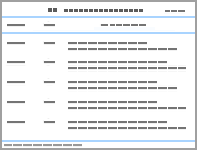
"
| 人群(Population) | 干预(Intervention) | 比较(Comparison) | 结局(Outcome) |
|---|---|---|---|
| 疾病和残疾类别 | 康复干预类型 | 干预类型 | 身体功能与结构 |
| 肌少症(FB3Z 未特指的肌肉疾患) | 运动康复(有氧、抗阻、平衡训练、步行) | 干预方案 | (上肢、下肢、躯干)肌肉力量(b730 肌肉力量功能) |
| 主要运动功能障碍 | 结合营养计划的运动康复 | 干预人群 | (上肢、下肢、躯干)肌肉耐力(b740 肌肉耐力功能) |
| 肌肉力量低下(b730 肌肉力量功能) | 结合护理的运动康复 | 干预情境 | (上肢、下肢、躯干)肌肉质量(s770 与运动有关的附属肌肉骨骼的结构) |
| 活动表现不佳 | 运动康复干预方案 | (上肢、下肢、躯干)肌肉控制和协调 (b760 随意运动控制功能) | |
| 年龄:60岁以上 | 干预方式 | 步态功能(b770 步态功能) | |
| 干预频率 | 平衡功能(b760 随意运动控制功能) | ||
| 干预强度 | 腿部伸展、腿举、背部力量或握力(b710 关节活动功能、b720 骨骼活动功能) | ||
| 干预持续时间 | 活动和参与 | ||
| 运动康复干预情境 | 步行速度(d450 步行) | ||
| 居家锻炼与康复 | 5次坐立测试时间(b710 关节活动功能、b720 骨骼活动功能) | ||
| 社区治疗与康复 | |||
| 医疗机构治疗与康复 |

"

"
| 作者 | 国家 | 样本特征 | 干预类型 | 干预情境 | 运动康复干预方案 | 比较 | 健康结局指标 |
|---|---|---|---|---|---|---|---|
| Vlietstra等[ | 荷兰 | 纳入文献:6篇 样本量:480 平均年龄:60岁以上 | 身体活动 | 居家锻炼与康复 社区治疗与康复 | 运动康复干预方案:抗阻运动(步态训练、平衡训练和力量训练);积极的家庭锻炼计划(全身振动训练) 干预频率:每次6~60 min,每周2~3次 干预强度:中等 干预持续时间:12~24周 | 与对照组相比,干预组老年人伸膝力量显著改善 | 身体结构与功能 肌力随着锻炼而改善(伸膝力量) 四肢肌肉质量显著改善 腿部肌肉质量显著改善 |
| Escriche-Escuder等[ | 西班牙 | 纳入文献:7篇 样本量:235 平均年龄:60岁以上 | 身体活动 | 未提及 | 运动康复干预方案:抗阻运动、有氧运动 干预频率:每周2~3次 干预强度:中至高等 干预持续时间:12~36周 | 与对照组相比,运动组肌力提高,其中大多数对照组采用了不同的运动方式 与对照组相比,运动组身体表现改善效果更明显,如运动执行时间减少,平衡功能改善 | 身体结构与功能 肌力(握力)显著改善 平衡功能改善 活动和参与 缩短患者5次坐立测试时间 步行速度显著改善 |
| Shen等[ | 中国 | 纳入文献:42篇 样本量:3 728 平均年龄:72.9岁 | 身体活动 结合营养计划的身体活动 | 社区治疗与康复 医疗机构治疗与康复 | 结合护理和营养的运动康复方案 运动康复干预方案:抗阻运动、有氧运动、平衡运动 干预频率:未提及 干预强度:未提及 干预持续时间:8~144周 | 与普通护理相比,有营养或无营养的抗阻运动以及抗阻运动与有氧和平衡训练相结合是提高生活质量的最有效干预措施 与单独运动相比,在运动中添加营养干预对握力的影响更大 与对照组相比,有或无营养的抗阻和平衡运动对改善身体功能最有效 与社区康复相比,结合营养的抗阻运动和平衡运动对在医院的老年人的握力影响更大 | 身体结构与功能 肌力(握力)显著改善 平衡功能改善 活动和参与 显著缩短老年人5次坐立测试时间 |
| Lee 等[ | 中国 | 纳入文献:10篇 样本量:12 512 平均年龄:60岁以上 | 身体活动 结合护理的运动康复 | 居家锻炼与康复 社区治疗与康复 医疗机构治疗与康复 | 结合护理的运动康复方案 运动康复干预方案:有氧、抗阻、力量、平衡和柔韧性训练;结合集体锻炼和应对策略、营养、健康教育和问题解决干预 干预频率:每次50~150 min,每周2~4次 干预强度:低至高等 干预持续时间:24~96周 | 与单纯的运动康复干预相比,使用综合护理形式的运动康复干预更有助于提高老年人握力 与低强度运动干预相比,中等强度或剧烈强度体育活动更有助于改善老年人的身体功能表现 与单一方式的运动干预相比,混合训练形式更有助于改善老年人肌肉质量 | 身体结构与功能 握力显著提高 骨骼肌质量有所改善 肌肉质量有所改善 活动和参与 步行速度显著提高 |
| Barajas-Galindo 等[ | 西班牙 | 纳入文献:12篇 样本量:954 平均年龄:60岁以上 | 身体活动(有氧、抗阻、平衡训练、步行) 结合营养计划的身体活动 结合护理的运动康复 | 居家锻炼与康复 社区治疗与康复 医疗机构治疗与康复 | 多模式运动康复方案:力量训练和多模式运动(包括神经肌肉、抗阻和有氧运动的组合)、步行 干预频率:每次20~90 min,每周2~4次 干预强度:低至高等 干预持续时间:6~72周 | 与低强度的力量训练相比,高强度力量训练对老年人的肌力改善效果更明显 与单一运动训练相比,多模式运动干预措施对老年人身体功能及其表现有效且耐受性更好 与低锻炼频率的组相比,锻炼频率更频繁(每周2次以上)的老年人功能改善效果更好 | 身体结构与功能 肌力得到改善 |
| De Mello等[ | 巴西 | 纳入文献:5篇 样本量:300 平均年龄:60岁以上 | 身体活动(抗阻、平衡训练) | 未提及 | 运动康复方案:抗阻运动(上肢、下肢弹力带练习) 干预频率:每次35~60 min,每周2~3次 干预强度:中至高等 干预持续时间:12周 | 与干预前相比,抗阻运动能显著改善老年人的肌力 | 身体结构与功能 肌力得到显著改善 活动和参与 步行速度显著提高 |
| Hernández-Lepe 等[ | 墨西哥 | 纳入文献:16篇 样本量:1 585 平均年龄:60岁以上 | 身体活动(有氧、抗阻、平衡训练、步态训练) 结合营养计划的身体活动 | 居家锻炼与康复 社区治疗与康复 | 结合营养的运动康复方案 运动康复干预方式:抗阻运动(负重和弹力带练习)、平衡运动和有氧训练、步态训练 干预频率:每周1~5次 干预强度:未提及 干预持续时间:8~24周 | 与单一运动训练相比,坚持联合干预(运动+补充营养)对老年人肌力、步态稳定性等功能改善效果更佳 | 身体结构与功能 维持并增加肌力 肌肉质量增加 步态稳定性 腿部伸展、腿举、背部力量或握力测试结果显著改善 |
| [1] |
袁媛, 杨剑. 慢性病和功能障碍老年人身体活动的健康效果:系统综述的系统综述[J]. 中国康复理论与实践, 2022, 28(9): 1003-1011.
doi: 10.3969/j.issn.1006-9771.2022.09.002 |
| YUAN Y, YANG J. Effect of physical activity on health conditions and functioning for aging people with chronic diseases and functioning: a systematic review of systematic reviews[J]. Chin J Rehabil Theory Pract, 2022, 28(9): 1003-1011. | |
| [2] |
CRUZ-JENTOFT A J, BAHAT G, BAUER J, et al. Sarcopenia: revised European Consensus on Definition and Diagnosis[J]. Age Ageing, 2019, 48(1): 16-31.
doi: 10.1093/ageing/afy169 |
| [3] |
DENNISON E M, SAYER A A, COOPER C. Epidemiology of sarcopenia and insight into possible therapeutic targets[J]. Nat Rev Rheumatol, 2017, 13(6): 340-347.
doi: 10.1038/nrrheum.2017.60 pmid: 28469267 |
| [4] |
BLASIMME A. Physical frailty, sarcopenia, and the enablement of autonomy: philosophical issues in geriatric medicine[J]. Aging Clin Exp Res, 2017, 29(1): 59-63.
doi: 10.1007/s40520-016-0714-3 pmid: 28188557 |
| [5] |
CHE S, MENG M, JIANG Y, et al. Perceptions of exercise and exercise instruction in patients with type 2 diabetes mellitus and sarcopenia: a qualitative study[J]. BMC Geriatr, 2022, 22 (1): 892.
doi: 10.1186/s12877-022-03519-0 |
| [6] |
KEMMLER W, WEINECK M, KOHL M, et al. High intensity resistance exercise training to improve body composition and strength in older men with osteosarcopenia. Results of the randomized controlled Franconian Osteopenia and Sarcopenia Trial (FrOST)[J]. Front Sports Act Living, 2020, 2(8): 4-16.
doi: 10.3389/fspor.2020.00004 |
| [7] |
CHEN H T, CHUNG Y C, CHEN Y J, et al. Effects of different types of exercise on body composition, muscle strength, and IGF-1 in the elderly with sarcopenic obesity[J]. J Am Geriatr Soc, 2017, 65(4): 827-832.
doi: 10.1111/jgs.2017.65.issue-4 |
| [8] |
ZHU L Y, CHAN R, KWOK T, et al. Effects of exercise and nutrition supplementation in community-dwelling older Chinese people with sarcopenia: a randomized controlled trial[J]. Age Ageing, 2019, 48(2): 220-228.
doi: 10.1093/ageing/afy179 |
| [9] |
姜静远, 邱卓英, 王国祥, 等. 世界卫生组织国际健康分类家族在康复中系统应用的方案与路线图[J]. 中国康复理论与实践, 2020, 26(11): 1241-1255.
doi: 10.3969/j.issn.1006-9771.2020.11.001 |
| JIANG J Y, QIU Z Y, WANG G X, et al. Systematic implementation of World Health Organization Family International Classifications in rehabilitation: protocol and roadmap[J]. Chin J Rehabil Theory Pract, 2020, 26(11): 1241-1255. | |
| [10] |
邱卓英, 李伦, 陈迪, 等. 基于世界卫生组织国际健康分类家族康复指南研究:理论架构和方法体系[J]. 中国康复理论与实践, 2020, 26(2): 125-135.
doi: 10.3969/j.issn.1006-9771.2020.02.001 |
| QIU Z Y, LI L, CHEN D, et al. Research on rehabilitation guidelines using World Health Organization Family International Classifications: framework and approaches[J]. Chin J Rehabil Theory Pract, 2020, 26(2): 125-135. | |
| [11] |
VLIETSTRA L, HENDRICKX W, WATERS D L. Exercise interventions in healthy older adults with sarcopenia: a systematic review and meta-analysis[J]. Australas J Ageing, 2018, 37(3): 169-183.
doi: 10.1111/ajag.12521 pmid: 29638028 |
| [12] |
ESCRICHE-ESCUDER A, FUENTES-ABOLAFIO I J, ROLDÁN-JIMÉNEZ C, et al. Effects of exercise on muscle mass, strength, and physical performance in older adults with sarcopenia: a systematic review and meta-analysis according to the EWGSOP criteria[J]. Exp Gerontol, 2021, 151(5): 111420.
doi: 10.1016/j.exger.2021.111420 |
| [13] |
SHEN Y, SHI Q, NONG K, et al. Exercise for sarcopenia in older people: a systematic review and network meta-analysis[J]. J Cachexia Sarcopenia Muscle, 2023, 14(3): 1199-1211.
doi: 10.1002/jcsm.v14.3 |
| [14] |
LEE S Y, TUNG H H, LIU C Y, et al. Physical activity and sarcopenia in the geriatric population: a systematic review[J]. J Am Med Dir Assoc, 2018, 19(5): 378-383.
doi: 10.1016/j.jamda.2018.02.003 |
| [15] | BARAJAS-GALINDO D E, GONZÁLEZ ARNÁIZ E, FERRERO VICENTE P, et al. Effects of physical exercise in sarcopenia. A systematic review[J]. Endocrinol Diabetes Nutr (Engl Ed), 2021, 68(3): 159-169. |
| [16] | DE MELLO R G B, DALLA CORTE R R, GIOSCIA J, et al. Effects of physical exercise programs on sarcopenia management, dynapenia, and physical performance in the elderly: a systematic review of randomized clinical trials[J]. J Aging Res, 2019, 2019(3): 1959486. |
| [17] |
HERNÁNDEZ-LEPE M A, MIRANDA-GIL M I, VALBUENA-GREGORIO E, et al. Exercise programs combined with diet supplementation improve body composition and physical function in older adults with sarcopenia: a systematic review[J]. Nutrients, 2023, 15(8): 19-32.
doi: 10.3390/nu15010019 |
| [18] |
GRÖNSTEDT H, VIKSTRÖM S, CEDERHOLM T, et al. Effect of sit-to-stand exercises combined with protein-rich oral supplementation in older persons: the older person's exercise and nutrition study[J]. J Am Med Dir Assoc, 2020, 21(9): 1229-1237.
doi: S1525-8610(20)30289-9 pmid: 32471657 |
| [19] |
TAKEUCHI I, YOSHIMURA Y, SHIMAZU S, et al. Effects of branched-chain amino acids and vitamin D supplementation on physical function, muscle mass and strength, and nutritional status in sarcopenic older adults undergoing hospital-based rehabilitation: a multicenter randomized controlled trial[J]. Geriatr Gerontol Int, 2019, 19(1): 12-17.
doi: 10.1111/ggi.2019.19.issue-1 |
| [20] |
RONDANELLI M, KLERSY C, TERRACOL G, et al. Whey protein, amino acids, and vitamin D supplementation with physical activity increases fat-free mass and strength, functionality, and quality of life and decreases inflammation in sarcopenic elderly[J]. Am J Clin Nutr, 2016, 103(3): 830-840.
doi: 10.3945/ajcn.115.113357 pmid: 26864356 |
| [21] |
UNTERBERGER S, ASCHAUER R, ZÖHRER P A, et al. Effects of an increased habitual dietary protein intake followed by resistance training on fitness, muscle quality and body composition of seniors: a randomised controlled trial[J]. Clin Nutr, 2022, 41(5): 1034-1045.
doi: 10.1016/j.clnu.2022.02.017 pmid: 35390727 |
| [22] |
MARTINEZ B P, BATISTA A K, GOMES I B, et al. Frequency of sarcopenia and associated factors among hospitalized elderly patients[J]. BMC Musculoskelet Disord, 2015, 16(3): 108.
doi: 10.1186/s12891-015-0570-x |
| [23] |
CHEN H T, WU H J, CHEN Y J, et al. Effects of 8-week kettlebell training on body composition, muscle strength, pulmonary function, and chronic low-grade inflammation in elderly women with sarcopenia[J]. Exp Gerontol, 2018, 112(4): 112-118.
doi: 10.1016/j.exger.2018.09.015 |
| [24] | PIASTRA G, PERASSO L, LUCARINI S, et al. Effects of two types of 9-month adapted physical activity program on muscle mass, muscle strength, and balance in moderate sarcopenic older women[J]. Biomed Res Int, 2018, 2018(3): 5095673. |
| [25] |
PAREJA-BLANCO F, RODRÍGUEZ-ROSELL D, AAGAARD P, et al. Time course of recovery from resistance exercise with different set configurations[J]. J Strength Cond Res, 2020, 34(10): 2867-2876.
doi: 10.1519/JSC.0000000000002756 |
| [1] | LIU Hua, WANG Liyuan, MA Xin, LI Jing, WANG Li. OBE-CDIO model of teaching for curriculum of exercise rehabilitation training [J]. Chinese Journal of Rehabilitation Theory and Practice, 2026, 32(3): 270-275. |
| [2] | GUO Yabin, ZENG Biyun, ZHOU Yang. Researches in sarcopenia-pain comorbidity from 2015 to 2025: a bibliometric analysis [J]. Chinese Journal of Rehabilitation Theory and Practice, 2026, 32(2): 151-161. |
| [3] | ZHANG Jihui, YI Longyue, YANG Yuanbin. Associated factors of balance dysfunction and its correlation with functional lower limb muscle strength in middle-aged and older adults: an analysis based on CHARLS database [J]. Chinese Journal of Rehabilitation Theory and Practice, 2026, 32(1): 13-22. |
| [4] | YANG Tongnian, REN Jie, XIAO Hui. Effect of physical activity on anxiety for children and adolescents: a systematic review of systematic reviews [J]. Chinese Journal of Rehabilitation Theory and Practice, 2025, 31(8): 883-888. |
| [5] | WANG Xiaofeng, HU Mengqiao, WANG Yan, WEI Kun, XU Wenzhu, REN Dan, MA Ye. Effect of exoskeleton robot-assisted gait training on lower limb function after stroke and spinal cord injury: a systematic review [J]. Chinese Journal of Rehabilitation Theory and Practice, 2025, 31(8): 914-921. |
| [6] | DUAN Linru, ZHENG Jiejiao, ZHENG Yongjun, DING Jianwei. Difference in posture control ability between elderly and young people [J]. Chinese Journal of Rehabilitation Theory and Practice, 2025, 31(7): 846-852. |
| [7] | GU Yiqing, CHENG Shupeng, LI Yongqiang, MAO Erli, LI Jian'an. Capping versus non-capping decannulation strategy in adult tracheostomized patients: a systematic review [J]. Chinese Journal of Rehabilitation Theory and Practice, 2025, 31(6): 666-673. |
| [8] | HUANG Longxian, GU Sijia, HUANG Youli, CHEN Limei. Research in sarcopenic dysphasia from 2015 to 2024: a bibliometric analysis [J]. Chinese Journal of Rehabilitation Theory and Practice, 2025, 31(6): 682-691. |
| [9] | WANG Mei, ZHU Wenping. Health benefits of physical activity in patients with type 2 diabetes: a systematic review of systematic reviews [J]. Chinese Journal of Rehabilitation Theory and Practice, 2025, 31(5): 553-560. |
| [10] | YE Lü, CHANG Jing, LING Hairun. Effect of exercise intervention on internet behavioral addictions: a systematic review of systematic reviews [J]. Chinese Journal of Rehabilitation Theory and Practice, 2025, 31(4): 431-440. |
| [11] | ZHU Zhiqiang, XU Qiaoling, SHAO Xueyun. Health benefits of physical activity for obese and overweight children: a systematic review of systematic reviews [J]. Chinese Journal of Rehabilitation Theory and Practice, 2025, 31(3): 296-305. |
| [12] | CAI Qian, ZHANG Xi, SU Hairong, LIU Na, HUANG Ying, LI Jiqiang, XIA Jin'gen, ZHENG Decai. Inspiratory muscle training for weaning outcomes in patients with weaning failure: a systematic review [J]. Chinese Journal of Rehabilitation Theory and Practice, 2025, 31(3): 306-313. |
| [13] | XU Xiaohong, ZHONG Xiaoke, SUN Siyi, ZHANG Qi, CHENG Huaichun. Psychological benefits of art therapy for older adults with mild cognitive impairment: a systematic review [J]. Chinese Journal of Rehabilitation Theory and Practice, 2025, 31(2): 165-171. |
| [14] | WANG Weiping, MA Yingchun. Factors affecting home-based exercise rehabilitation for chronic kidney disease patients: a qualitative analysis [J]. Chinese Journal of Rehabilitation Theory and Practice, 2025, 31(2): 235-241. |
| [15] | DUAN Fuwen, ZHANG Beiqi, LI Li. Preventive effect of exercise interventions on sport-related concussion: a systematic review [J]. Chinese Journal of Rehabilitation Theory and Practice, 2025, 31(12): 1385-1397. |
| Viewed | ||||||
|
Full text |
|
|||||
|
Abstract |
|
|||||
|
||
