


Chinese Journal of Rehabilitation Theory and Practice ›› 2024, Vol. 30 ›› Issue (4): 437-448.doi: 10.3969/j.issn.1006-9771.2024.04.009
Previous Articles Next Articles
CUI Tiantian1, YANG Yulin1, CUI Tengteng2, MA Lihong1( )
Received:2023-12-25
Revised:2024-03-05
Published:2024-04-25
Online:2024-05-08
Contact:
MA Lihong, E-mail: Supported by:CLC Number:
CUI Tiantian, YANG Yulin, CUI Tengteng, MA Lihong. Effect of different intensive training on upper limb motor function in children with cerebral palsy: a network meta-analysis[J]. Chinese Journal of Rehabilitation Theory and Practice, 2024, 30(4): 437-448.
Table1
PICO framework for the effect of upper extremity intensive training on children with cerebral palsy"
| 人群 (Population) | 干预 (Intervention) | 比较 (Comparison) | 结局 (Outcome) | |
|---|---|---|---|---|
| 脑瘫儿童 | 8D2Z脑瘫 | 干预措施 | 干预前后比较 | 上肢运动功能(QUEST) |
| < 18岁 | 常规康复治疗 | 干预方式比较 | b710关节活动功能 | |
| 常规康复治疗+上肢强化训练 | 干预组和对照组比较 | b760随意运动控制功能 | ||
| 干预时间 | 精细运动功能(AHA与PDMS-FM) | |||
| 干预场所 | d440精细手的使用 | |||
| d445手和手臂的使用 | ||||
| 日常生活活动能力(PEDI) | ||||
| d599自我照顾能力 | ||||
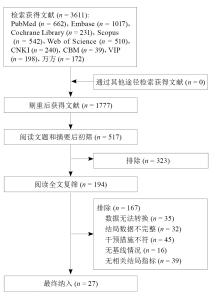
Figure 1
Flowchart of literature screening"
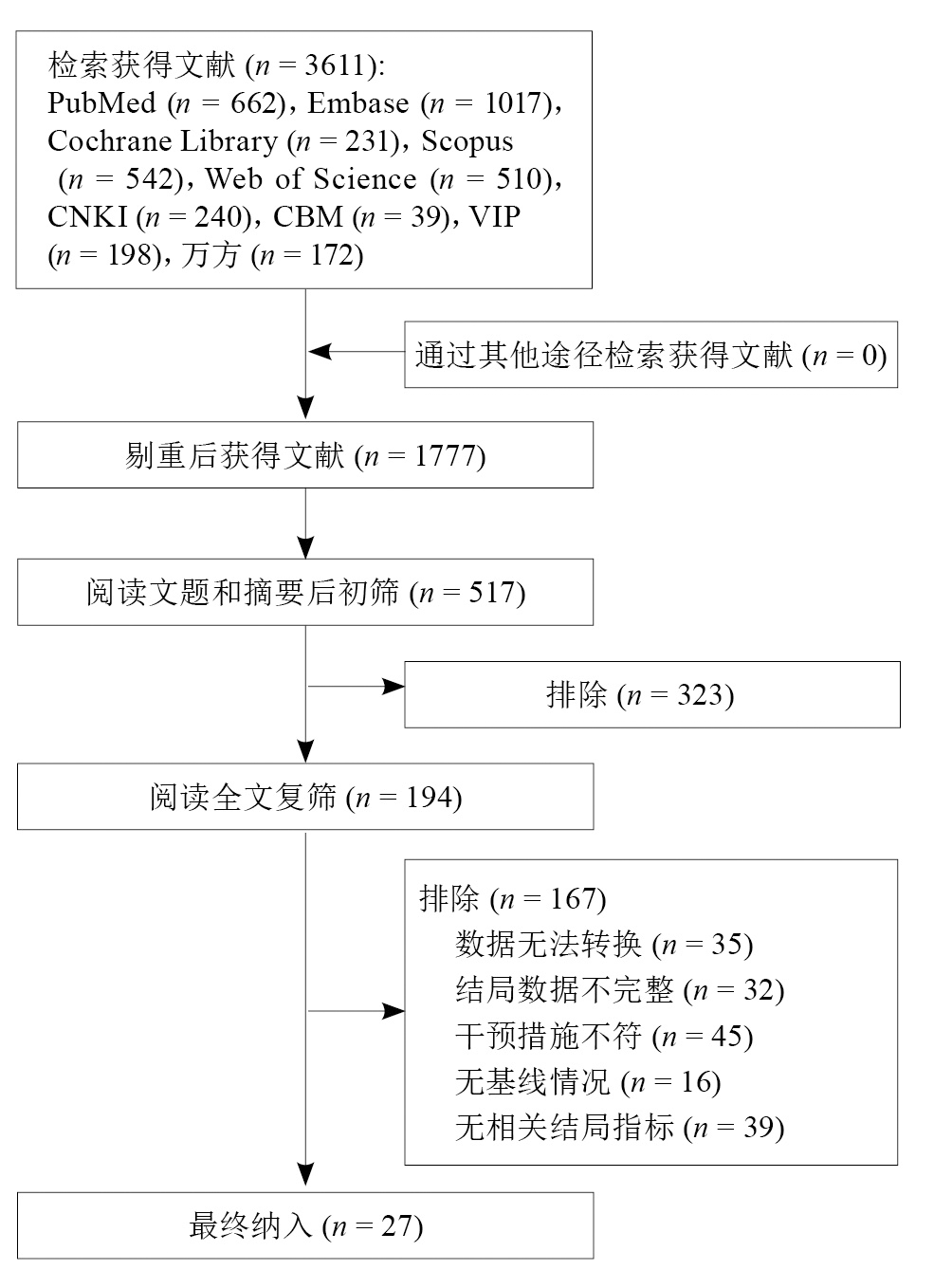
Figure 2
Risk of bias ratio"
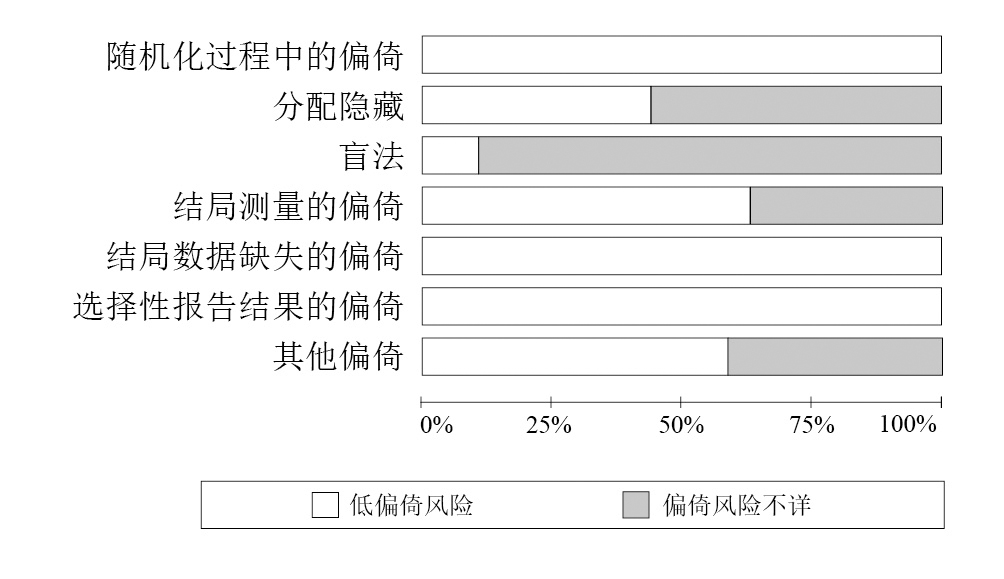
Table 2
PEDro scale scores of included studies"
| 纳入文献 | 资格 标准 | 随机 分配 | 分配 隐藏 | 基线 均衡 | 被试 施盲 | 治疗师施盲 | 评估者施盲 | 被试流失率≤15% | 意向性分析 | 组间统计比较 | 点估计和变异性测量 | 总分 |
|---|---|---|---|---|---|---|---|---|---|---|---|---|
| Abd El Wahab等[ | √ | √ | √ | √ | √ | √ | √ | 6 | ||||
| Fedrizzi等[ | √ | √ | √ | √ | √ | √ | √ | √ | √ | 8 | ||
| Figueiredo等[ | √ | √ | √ | √ | √ | √ | √ | 6 | ||||
| 李巧秀[ | √ | √ | √ | √ | √ | √ | √ | 6 | ||||
| 孙瑞雪等[ | √ | √ | √ | √ | √ | √ | √ | 6 | ||||
| 王臣等[ | √ | √ | √ | √ | √ | √ | √ | 6 | ||||
| Araneda等[ | √ | √ | √ | √ | √ | √ | √ | 6 | ||||
| Araneda等[ | √ | √ | √ | √ | √ | √ | √ | √ | √ | √ | 9 | |
| Bleyenheuft等[ | √ | √ | √ | √ | √ | √ | √ | √ | √ | √ | 9 | |
| Saussez等[ | √ | √ | √ | √ | √ | √ | √ | √ | 7 | |||
| De Brito Brandão等[ | √ | √ | √ | √ | √ | √ | √ | √ | √ | 8 | ||
| Eliasson等[ | √ | √ | √ | √ | √ | √ | √ | √ | √ | 8 | ||
| Ramey等[ | √ | √ | √ | √ | √ | √ | √ | √ | √ | 8 | ||
| Chen等[ | √ | √ | √ | √ | √ | √ | √ | √ | √ | √ | √ | 10 |
| Gordon等[ | √ | √ | √ | √ | √ | √ | √ | √ | √ | 8 | ||
| Sakzewski等[ | √ | √ | √ | √ | √ | √ | √ | √ | √ | 8 | ||
| Zafer等[ | √ | √ | √ | √ | √ | √ | √ | 6 | ||||
| Choudhary等[ | √ | √ | √ | √ | √ | √ | √ | √ | √ | √ | 9 | |
| Hoare等[ | √ | √ | √ | √ | √ | √ | √ | √ | √ | √ | √ | 10 |
| Hwang等[ | √ | √ | √ | √ | √ | √ | √ | √ | 7 | |||
| Mohamed等[ | √ | √ | √ | √ | √ | √ | √ | √ | √ | √ | 9 | |
| 刘鹏等[ | √ | √ | √ | √ | √ | √ | √ | √ | 7 | |||
| Bingöl等[ | √ | √ | √ | √ | √ | √ | √ | √ | √ | √ | √ | 10 |
| Bingöl等[ | √ | √ | √ | √ | √ | √ | √ | √ | √ | √ | 9 | |
| Chamudot等[ | √ | √ | √ | √ | √ | √ | √ | √ | √ | 8 | ||
| Deppe等[ | √ | √ | √ | √ | √ | √ | √ | √ | √ | √ | 9 | |
| Sakzewski等[ | √ | √ | √ | √ | √ | √ | √ | √ | √ | √ | 9 |
Table 3
Basic characteristics of included literatures"
| 纳入文献 | 国家 | 场所 | n | 年龄/岁 (试验组/对照组) | 干预措施 | 干预 周期 | 结局 指标 | ||
|---|---|---|---|---|---|---|---|---|---|
| 试验组 | 对照组 | 试验组 | 对照组 | ||||||
| Abd El Wahab等[ | 埃及 | 医院 | 15 | 15 | 3.64±0.48/4.11±0.93 | HABIT | CRT | 12周 | ① |
| Fedrizzi等[ | 意大利 | 机构 | 39(T1) | 33 | 2~8 | mCIMT(T1) | CRT | 10周 | ② |
| 33(T2) | HABIT(T2) | ||||||||
| Figueiredo等[ | 巴西 | 机构 | 19 | 20 | 9.42±3.58/9.67±4.16 | HABIT | CRT | 3周 | ③ |
| 李巧秀[ | 中国 | 医院 | 43 | 43 | 4.3±0.8 | HABIT | CRT | 8周 | ①②③ |
| 孙瑞雪等[ | 中国 | 医院 | 20 | 20 | 2.5~6 | HABIT | CRT | 12周 | ①②③ |
| 王臣等[ | 中国 | 医院 | 45 | 50 | 4.64±2.15/4.68±2.26 | HABIT | CRT | 8周 | ① |
| Araneda等[ | 比利时 | 实验室 | 16 | 15 | 9.3±4.25/9.3±5.3 | HABIT | CRT | 2周 | ④ |
| Araneda等[ | 比利时 | 医院 | 25 | 24 | 3±3.46/2.76±3.51 | HABIT | CRT | 2周 | ③④ |
| Bleyenheuft等[ | 比利时 | 医院 | 12 | 12 | 8.9 ± 1.7/8.5 ± 1.7 | HABIT | CRT | 2周 | ③④ |
| Saussez等[ | 比利时 | 实验室 | 20 | 20 | 9.1±2.9/9.0±3.1 | HABIT | CRT | 2周 | ③④ |
| De Brito Brandão等[ | 巴西 | 机构 | 8 | 7 | 5.5±1.92/6.58±1.11 | CIMT | CRT | 2周 | ③ |
| Eliasson等[ | 瑞典 | 医院 | 18 | 13 | 0.5±0.49/0.42±0.46 | CIMT | CRT | 6周 | ④ |
| Ramey等[ | 美国 | 医院 | 25 | 23 | 3.4±1.2/4.5±2.1 | CIMT | CRT | 4周 | ①②③④ |
| Chen等[ | 中国 | 医院 | 24 | 23 | 8.7±1.9/8.8±2.0 | CIMT | CRT | 4周 | ① |
| Gordon等[ | 美国 | 实验室 | 21 | 21 | 6.3±2.2/6.4±1.11 | CIMT | HABIT | 3周 | ②④ |
| Sakzewski等[ | 澳大利亚 | 实验室 | 32 | 32 | 10.2±2.7 | CIMT | HABIT | 3周 | ④ |
| Zafer等[ | 巴基斯坦 | 研究所 | 9 | 9 | 8.75±3.06 | CIMT | HABIT | 2周 | ② |
| Choudhary等[ | 印度 | 医院 | 16 | 15 | 4.88±5.11/5.22±5.2 | mCIMT | CRT | 4周 | ② |
| Hoare等[ | 澳大利亚 | 诊所 | 17 | 17 | 3±4.5/2.97±4.73 | mCIMT | CRT | 8周 | ②③④ |
| Hwang等[ | 韩国 | 医院 | 12 | 12 | 1.33±2.42/1.44±1.79 | mCIMT | CRT | 3周 | ①③ |
| Mohamed等[ | 埃及 | 医院 | 20 | 20 | 7.7±0.86/7.75±0.91 | mCIMT | CRT | 12周 | ② |
| 刘鹏等[ | 中国 | 医院 | 20 | 20 | 2.94±0.88/3.04±0.86 | mCIMT | CRT | 12周 | ①② |
| Bingol等[ | 土耳其 | 学校 | 16 | 16 | 10.75±2.95/10.12±2.96 | mCIMT | HABIT | 10周 | ② |
| Bingol等[ | 土耳其 | 学校 | 15 | 15 | 8.73±1.66/8.33±1.44 | mCIMT | HABIT | 16周 | ② |
| Chamudot等[ | 以色列 | 机构 | 17 | 16 | 0.93±0.64 | mCIMT | HABIT | 8周 | ④ |
| Deppe等[ | 德国 | 机构 | 24 | 18 | 5.83±1.83/6.83±2.08 | mCIMT | HABIT | 4周 | ③④ |
| Sakzewski等[ | 澳大利亚 | 医院 | 32 | 31 | 10.1±2.6/10.2±2.6 | mCIMT | HABIT | 2周 | ④ |
Figure 3
Evidence relationship diagram for QUEST score"
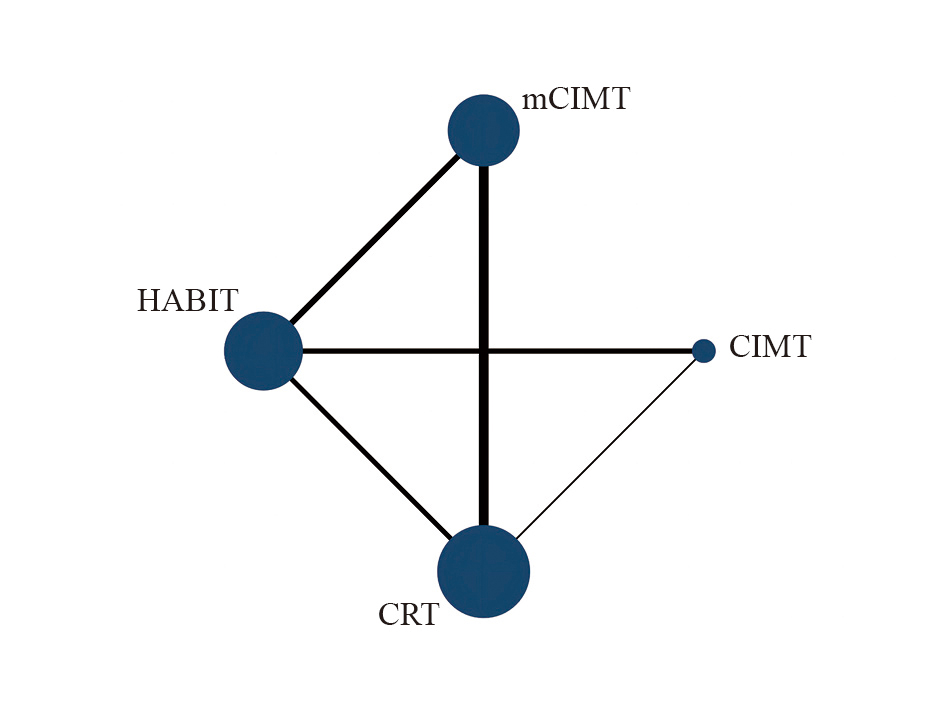
Table 4
Network meta-analysis results of QUEST score"
| 方法 | CIMT | mCIMT | HABIT |
|---|---|---|---|
| mCIMT | 1.11 (0.58, 2.11) | ||
| HABIT | 1.44 (0.81, 2.56) | 1.30 (0.86, 1.96) | |
| CRT | 1.91 (1.06, 3.43)a | 1.72 (1.21, 2.45)a | 1.33 (0.90, 1.95) |
Figure 4
Cumulative probability plot of QUEST score"
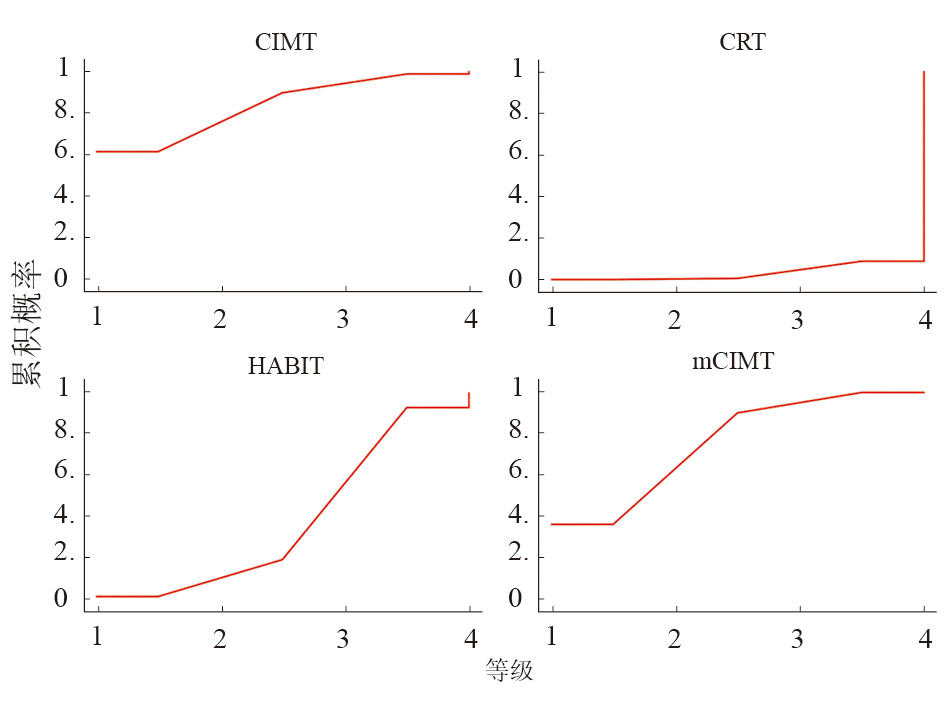
Figure 5
Evidence relationship diagram for AHA score"
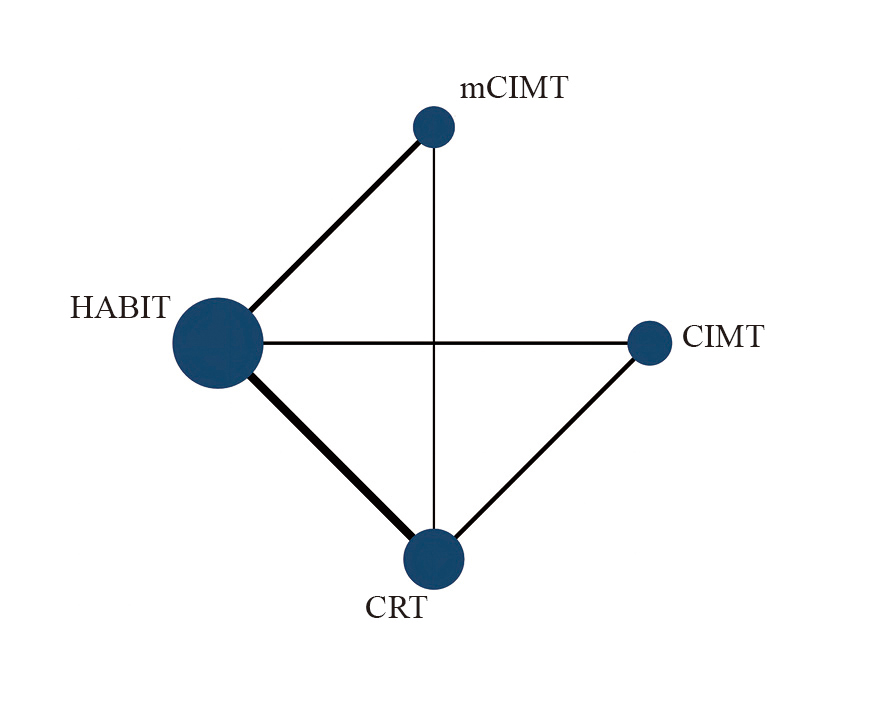
Table 5
Network meta-analysis results of AHA score"
| 方法 | CIMT | mCIMT | HABIT |
|---|---|---|---|
| mCIMT | 1.69 (0.99, 2.86) | ||
| HABIT | 1.32 (0.89, 1.97) | 0.78 (0.54, 1.14) | |
| CRT | 2.74 (1.80, 4.17)a | 1.63 (1.04, 2.55)a | 2.07 (1.49, 2.88)a |
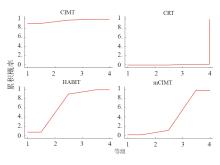
Figure 6
Cumulative probability plot of AHA score"
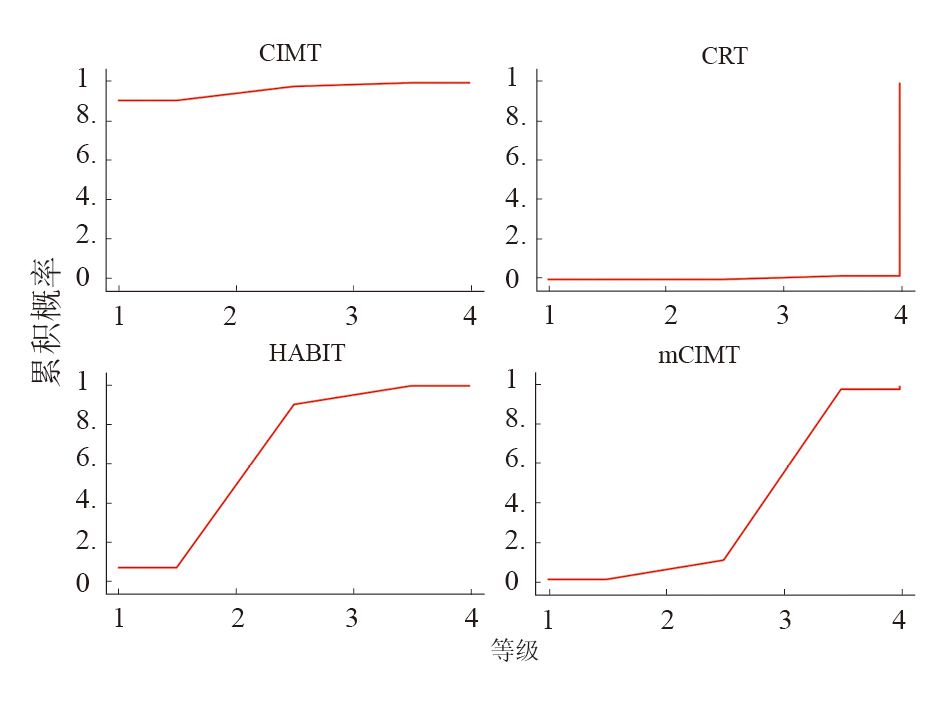
Figure 7
Evidence relationship diagram for PDMS-FM score"
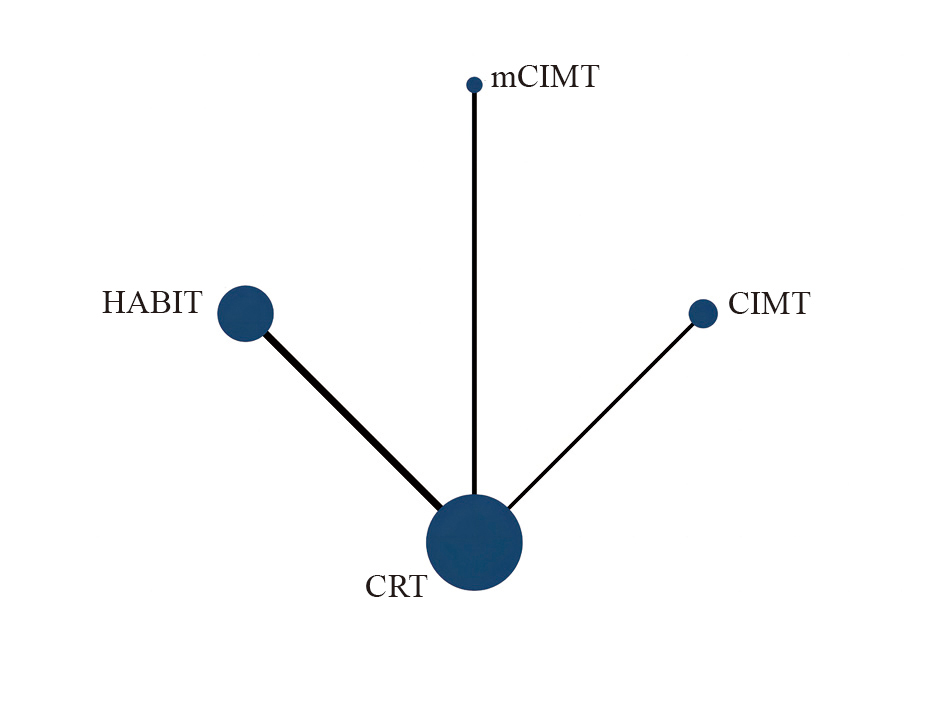
Table 6
Network meta-analysis results of PDMS-FM score"
| 方法 | CIMT | mCIMT | HABIT |
|---|---|---|---|
| mCIMT | 1.95 (0.98,3.87) | ||
| HABIT | 1.72 (1.02,2.89)a | 0.88 (0.48,1.62) | |
| CRT | 3.38 (2.20,5.19)a | 1.74 (1.02,2.96)a | 1.97 (1.47,2.63)a |
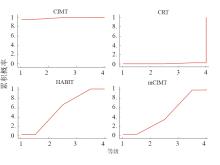
Figure 8
Cumulative probability plot of PDMS-FM score"
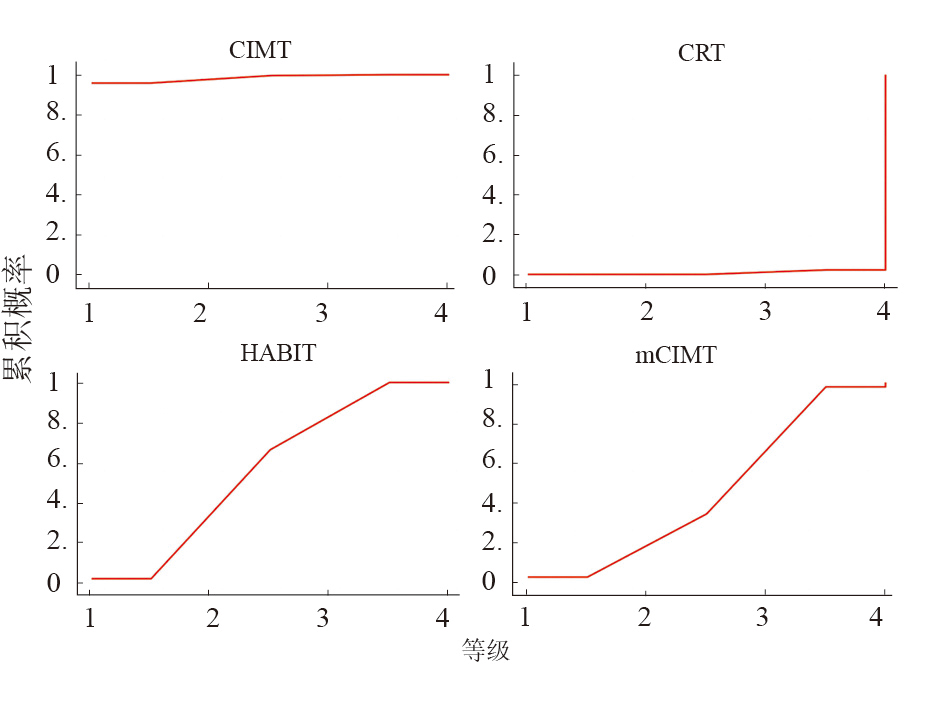
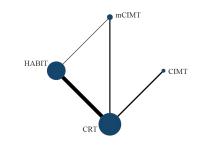
Figure 9
Evidence relationship diagram for PEDI scores"
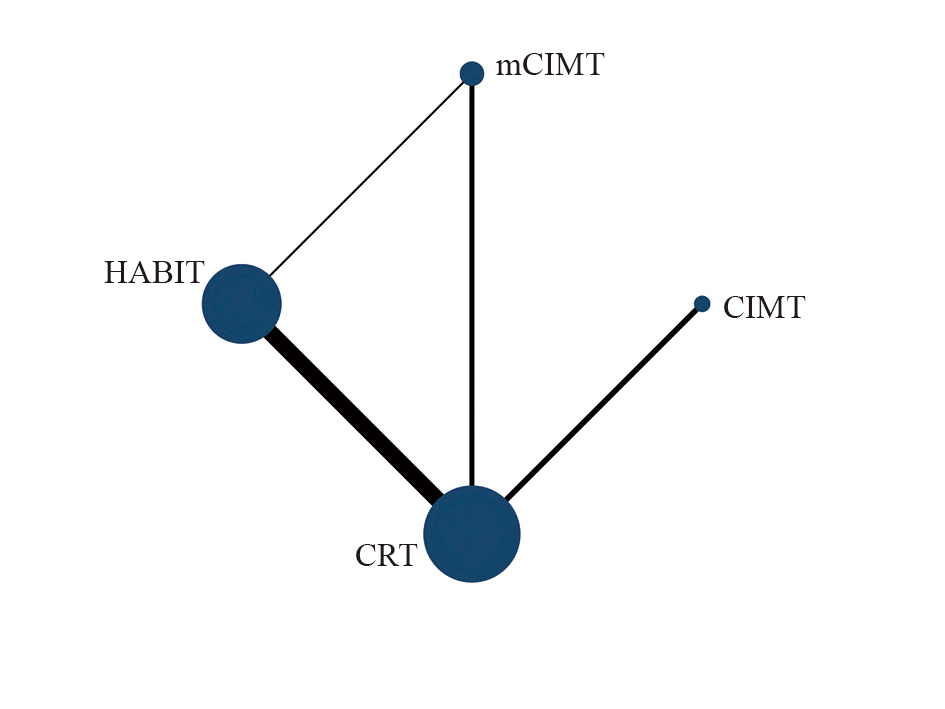
Table 7
Network meta-analysis results of PEDI score"
| 方法 | CIMT | mCIMT | HABIT |
|---|---|---|---|
| mCIMT | 1.60 (0.29,8.81) | ||
| HABIT | 0.98 (0.22,4.33) | 0.61 (0.20,1.91) | |
| CRT | 2.30 (0.61,8.70) | 1.44 (0.49,4.21) | 2.35 (1.21,4.59)a |
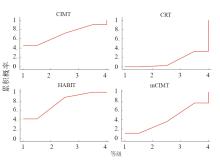
Figure 10
Cumulative probability plot of PEDI score"
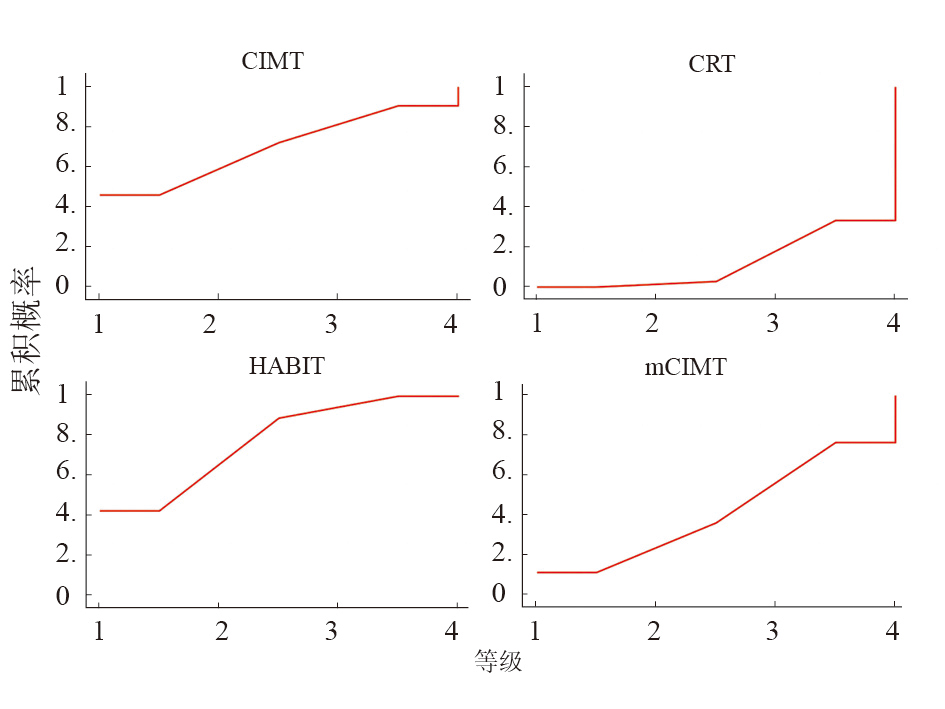
Table 8
GRADE quality of evidence of included studies"
| 结局指标 | n | 样本量 | 偏倚风险 | 不一致性 | 间接性 | 不精确性 | 发表偏倚 | 证据质量 |
|---|---|---|---|---|---|---|---|---|
| AHA评分 | 12 | 501 | 1① | 1② | 0 | 0 | 0 | 低 |
| QUEST评分 | 12 | 513 | 1① | 0 | 0 | 0 | 0 | 中 |
| PDMS-FM评分 | 8 | 439 | 1① | 0 | 0 | 0 | 0 | 中 |
| PEDI评分 | 12 | 472 | 1① | 1② | 0 | 0 | 0 | 低 |
| [1] |
MCGUIRE D O, TIAN L H, YEARGIN-ALLSOPP M, et al. Prevalence of cerebral palsy, intellectual disability, hearing loss, and blindness, National Health Interview Survey, 2009-2016[J]. Disabil Health J, 2019, 12(3): 443-451.
doi: S1936-6574(19)30005-6 pmid: 30713095 |
| [2] |
DAMIANO D L, LONGO E. Early intervention evidence for infants with or at risk for cerebral palsy: an overview of systematic reviews[J]. Dev Med Child Neurol, 2021, 63(7): 771-784.
doi: 10.1111/dmcn.14855 pmid: 33825199 |
| [3] |
OUYANG R G, YANG C N, QU Y L, et al. Effectiveness of hand-arm bimanual intensive training on upper extremity function in children with cerebral palsy: a systematic review[J]. Eur J Paediatr Neurol, 2020, 25: 17-28.
doi: 10.1016/j.ejpn.2019.12.017 |
| [4] | BLEYENHEUFT Y, ARNOULD C, BRANDãO M, et al. Hand and arm bimanual intensive therapy including lower extremity (HABIT-ILE) in children with cerebral palsy: a randomized trial[J]. Dev Med Child Neurol, 2014, 56: 83-84. |
| [5] |
KLEPPER S E, KRASINSKI D C, GILB M C, et al. Comparing unimanual and bimanual training in upper extremity function in children with unilateral cerebral palsy[J]. Pediatr Phys Ther, 2017, 29(4): 288-306.
doi: 10.1097/PEP.0000000000000438 pmid: 28953170 |
| [6] | REGALADO A, DECKER B, FLAHERTY B M, et al. Effectiveness of constraint-induced movement therapy for children with hemiparesis associated with cerebral palsy: a systematic review[J]. Am J Occup Ther, 2023, 77(3): 7703205160. |
| [7] |
ALAHMARI K, TEDLA J S, SANGADALA D R, et al. Effectiveness of hand-arm bimanual intensive therapy on hand function among children with unilateral spastic cerebral palsy: a meta-analysis[J]. Eur Neurol, 2020, 83(2): 131-137.
doi: 10.1159/000507325 pmid: 32348996 |
| [8] |
GORDON A M. To constrain or not to constrain, and other stories of intensive upper extremity training for children with unilateral cerebral palsy[J]. Dev Med Child Neurol, 2011, 53(4): 56-61.
doi: 10.1111/dmcn.2011.53.issue-s4 |
| [9] |
HUNG Y C, SPINGARN A, FRIEL K M, et al. Intensive unimanual training leads to better reaching and head control than bimanual training in children with unilateral cerebral palsy[J]. Phys Occup Ther Pediatr, 2020, 40(5): 491-505.
doi: 10.1080/01942638.2020.1712513 |
| [10] |
FRIEL K M, FERRE C L, BRANDAO M, et al. Improvements in upper extremity function following intensive training are independent of corticospinal tract organization in children with unilateral spastic cerebral palsy: a clinical randomized trial[J]. Front Neurol, 2021, 12: 660780.
doi: 10.3389/fneur.2021.660780 |
| [11] |
MAILLEUX L, DE BEUKELAER N, CARBONE M B, et al. Early interventions in infants with unilateral cerebral palsy: a systematic review and narrative synthesis[J]. Res Dev Disabil, 2021, 117: 104058.
doi: 10.1016/j.ridd.2021.104058 |
| [12] | World Heath Organization. International Classification of Diseases 11th Revision[EB/OL]. (2019-10-17) [2021-06-16]. https://int/browse11/1-m/en. |
| [13] | 世界卫生组织. 国际功能、残疾和健康分类(国际中文增补版)[M]. 邱卓英,译. 日内瓦: 世界卫生组织, 2015. |
| World Health Organization. International Classification of Functioning, Disability and Health (Chinese Version)[M]. QIU Z Y, trans trans. Geneva: World Health Organization, 2015. | |
| [14] |
BRIGNARDELLO-PETERSEN R, GUYATT G H, MUSTAFA R A, et al. GRADE guidelines 33: addressing imprecision in a network meta-analysis[J]. J Clin Epidemiol, 2021, 139: 49-56.
doi: 10.1016/j.jclinepi.2021.07.011 |
| [15] |
ABD EL WAHAB M, HAMED N E S. Effect of hand-arm bimanual intensive therapy on fine-motor performance in children with hemiplegic cerebral palsy[J]. Egypt J Med Hum Genet, 2015, 16(1): 55-59.
doi: 10.1016/j.ejmhg.2014.07.005 |
| [16] |
FEDRIZZI E, ROSA-RIZZOTTO M, TURCONI A C, et al. Unimanual and bimanual intensive training in children with hemiplegic cerebral palsy and persistence in time of hand function improvement: 6-month follow-up results of a multisite clinical trial[J]. J Child Neurol, 2013, 28(2): 161-175.
doi: 10.1177/0883073812443004 pmid: 22580904 |
| [17] |
FIGUEIREDO P R P, MANCINI M C, FEITOSA A M, et al. Hand-arm bimanual intensive therapy and daily functioning of children with bilateral cerebral palsy: a randomized controlled trial[J]. Dev Med Child Neurol, 2020, 62(11): 1274-1282.
doi: 10.1111/dmcn.v62.11 |
| [18] | 李巧秀. 上肢双侧强化锻炼在偏瘫脑瘫患儿中的应用效果[J]. 中国实用神经疾病杂志, 2017, 20(8): 46-48. |
| LI Q X. Effect of bilateral strengthening exercise of the upper limbs in children with hemiplegic cerebral palsy[J]. Chin J Practical Nerv Dis, 2017, 20(8): 46-48. | |
| [19] |
孙瑞雪, 姜志梅, 徐磊, 等. 手-臂双侧强化训练对偏瘫脑瘫儿童上肢功能及日常活动能力的影响[J]. 中国儿童保健杂志, 2016, 24(1): 108-110.
doi: 10.11852/zgetbjzz2016-24-01-34 |
| SUN R X, JIANG Z M, XU L, et al. Effect of hand-arm bimanual intensive training on the children's upper limb function and ability of daily activity with hemiplegic cerebral palsy[J]. Chin J Child Health Care, 2016, 24(1): 108-110. | |
| [20] | 王臣, 易颖, 茅旭辉, 等. 团体式手-臂双侧强化干预对脑瘫患儿运动功能和功能独立性的影响[J]. 全科医学临床与教育, 2021, 19(2): 165-167. |
| WANG C, YI Y, MAO X H, et al. Effects of group-based hand-arm bimanual intensive training on motor function and functional independence in children with cerebral palsy[J]. Clin Edu Gen Pract, 2021, 19(2): 165-167. | |
| [21] |
ARANEDA R, HERMAN E, DELCOUR L, et al. Mirror movements after bimanual intensive therapy in children with unilateral cerebral palsy: a randomized controlled trial[J]. Dev Med Child Neurol, 2022, 64(11): 1383-1391.
doi: 10.1111/dmcn.v64.11 |
| [22] |
ARANEDA R, EBNER-KARESTINOS D, PARADIS J, et al. Changes induced by early hand-arm bimanual intensive therapy including lower extremities in young children with unilateral cerebral palsy: a randomized clinical trial[J]. JAMA Pediatr, 2024, 178(1): 19-28.
doi: 10.1001/jamapediatrics.2023.4809 |
| [23] |
BLEYENHEUFT Y, ARNOULD C, BRANDAO M B, et al. Hand and arm bimanual intensive therapy including lower extremity (HABIT-ILE) in children with unilateral spastic cerebral palsy: a randomized trial[J]. Neurorehabil Neural Repair, 2015, 29(7): 645-657.
doi: 10.1177/1545968314562109 pmid: 25527487 |
| [24] |
SAUSSEZ G, BAILLY R, ARANEDA R, et al. Efficacy of integrating a semi-immersive virtual device in the HABIT-ILE intervention for children with unilateral cerebral palsy: a non-inferiority randomized controlled trial[J]. J NeuroEng Rehabil, 2023, 20(1): 98-113.
doi: 10.1186/s12984-023-01218-4 pmid: 37516873 |
| [25] |
DE BRITO BRANDÃO M, MANCINI M C, VAZ D V, et al. Adapted version of constraint-induced movement therapy promotes functioning in children with cerebral palsy: a randomized controlled trial[J]. Clin Rehabil, 2010, 24(7): 639-647.
doi: 10.1177/0269215510367974 pmid: 20530645 |
| [26] |
ELIASSON A C, NORDSTRAND L, EK L, et al. The effectiveness of Baby-CIMT in infants younger than 12 months with clinical signs of unilateral-cerebral palsy; an explorative study with randomized design[J]. Res Dev Disabil, 2018, 72: 191-201.
doi: 10.1016/j.ridd.2017.11.006 |
| [27] | RAMEY S L, DELUCA S C, STEVENSON R D, et al. Constraint-induced movement therapy for cerebral palsy: a randomized trial[J]. Pediatrics, 2021, 148(5): e2020033878. |
| [28] |
CHEN C L, KANG L J, HONG W H, et al. Effect of therapist-based constraint-induced therapy at home on motor control, motor performance and daily function in children with cerebral palsy: a randomized controlled study[J]. Clin Rehabil, 2013, 27(3): 236-245.
doi: 10.1177/0269215512455652 |
| [29] |
GORDON A M, HUNG Y C, BRANDAO M, et al. Bimanual training and constraint-induced movement therapy in children with hemiplegic cerebral palsy: a randomized trial[J]. Neurorehabil Neural Repair, 2011, 25(8): 692-702.
doi: 10.1177/1545968311402508 pmid: 21700924 |
| [30] |
SAKZEWSKI L, ZIVIANI J, ABBOTT D F, et al. Equivalent retention of gains at 1 year after training with constraint-induced or bimanual therapy in children with unilateral cerebral palsy[J]. Neurorehabil Neural Repair, 2011, 25(7): 664-671.
doi: 10.1177/1545968311400093 pmid: 21427273 |
| [31] | ZAFER H, AMJAD I, MALIK A N, et al. Effectiveness of constraint-induced movement therapy as compared to bimanual therapy in upper motor function outcome in child with hemiplegic cerebral palsy[J]. Pak J Med Sci, 2016, 32(1): 181-184. |
| [32] |
CHOUDHARY A, GULATI S, KABRA M, et al. Efficacy of modified constraint-induced movement therapy in improving upper limb function in children with hemiplegic cerebral palsy: a randomized controlled trial[J]. Brain Dev, 2013, 35(9): 870-876.
doi: 10.1016/j.braindev.2012.11.001 |
| [33] |
HOARE B, IMMS C, VILLANUEVA E, et al. Intensive therapy following upper limb botulinum toxin A injection in young children with unilateral cerebral palsy: a randomized trial[J]. Dev Med Child Neurol, 2013, 55(3): 238-247.
doi: 10.1111/dmcn.12054 pmid: 23236956 |
| [34] |
HWANG Y S, KWON J Y. Effects of modified constraint-induced movement therapy in real-world arm use in young children with unilateral cerebral palsy: a single-blind randomized trial[J]. Neuropediatrics, 2020, 51(4): 259-266.
doi: 10.1055/s-0040-1702220 pmid: 32143221 |
| [35] | MOHAMED R A, YOUSEF A M, RADWAN N L, et al. Efficacy of different approaches on quality of upper extremity function, dexterity and grip strength in hemiplegic children: a randomized controlled study[J]. Eur Rev Med Pharmacol Sci, 2021, 25(17): 5412-5423. |
| [36] |
刘鹏, 苏春, 邵磊, 等. 基于中文版上肢技巧质量测试的改良强制性运动疗法对偏瘫型脑性瘫痪儿童上肢功能的效果[J]. 中国康复理论与实践, 2022, 28(8): 897-902.
doi: 10.3969/j.issn.1006-9771.2022.08.004 |
| LIU P, SU C, SHAO L, et al. Effect of modified constraint-induced movement therapy based on Chinese version of Quality of Upper Extremity Skills Test on upper limb function for children with hemiplegic cerebral palsy[J]. Chin J Rehabil Theory Pract, 2022, 28(8): 897-902. | |
| [37] |
BINGÖL H, GÜNEL M K. Comparing the effects of modified constraint-induced movement therapy and bimanual training in children with hemiplegic cerebral palsy mainstreamed in regular school: a randomized controlled study[J]. Arch Pediatr, 2022, 29(2): 105-115.
doi: 10.1016/j.arcped.2021.11.017 |
| [38] |
BINGÖL H, KEREM GUNEL M, ALKAN H. The efficacy of two models of intensive upper limb training on health-related quality of life in children with hemiplegic cerebral palsy mainstreamed in regular schools: a double-blinded, randomized controlled trial[J]. Physiother Theory Pract, 2023, 39(1): 10-25.
doi: 10.1080/09593985.2021.1999355 |
| [39] | CHAMUDOT R, PARUSH S, RIGBI A, et al. Effectiveness of modified constraint-induced movement therapy compared with bimanual therapy home programs for infants with hemiplegia: a randomized controlled trial[J]. Am J Occup Ther, 2018, 72(6):1-9. |
| [40] |
DEPPE W, THUEMMLER K, FLEISCHER J, et al. Modified constraint-induced movement therapy versus intensive bimanual training for children with hemiplegia: a randomized controlled trial[J]. Clin Rehabil, 2013, 27(10): 909-920.
doi: 10.1177/0269215513483764 |
| [41] |
SAKZEWSKI L, PROVAN K, ZIVIANI J, et al. Comparison of dosage of intensive upper limb therapy for children with unilateral cerebral palsy: How big should the therapy pill be?[J]. Res Dev Disabil, 2015, 37(2): 9-16.
doi: 10.1016/j.ridd.2014.10.050 |
| [42] |
YANG F A, LEE T H, HUANG S W, et al. Upper limb manual training for children with cerebral palsy: a systematic review and network meta-analysis of randomized controlled trials[J]. Clin Rehabil, 2023, 37(4): 516-533.
doi: 10.1177/02692155221137698 |
| [43] | HARIKISHOR BABU J, RAJA SRINIVAS M, KOWSHIK, et al. Effectiveness of modified constraint-induce movement therapy compared to hand-arm bimanual intensive therapy on quality of upper extremity function in hemiplegic cerebral palsy children: an experimental study[J]. NeuroQuantology, 2023, 21(1): 888-925. |
| [44] |
REID L B, ROSE S E, BOYD R N. Rehabilitation and neuroplasticity in children with unilateral cerebral palsy[J]. Nat Rev Neurol, 2015, 11(7): 390-400.
doi: 10.1038/nrneurol.2015.97 pmid: 26077839 |
| [45] |
SAKZEWSKI L, ZIVIANI J, BOYD R N. Efficacy of upper limb therapies for unilateral cerebral palsy: a meta-analysis[J]. Pediatrics, 2014, 133(1): e175-e204.
doi: 10.1542/peds.2013-0675 |
| [46] | DIONISIO M C, TERRILL A L. Constraint-induced movement therapy for infants with or at risk for cerebral palsy: a scoping review[J]. Am J Occup Ther, 2022, 76(2): 7602205120. |
| [47] | HOARE B, WALLEN M, THORLEY M, et al. Constraint-induced movement therapy in children with unilateral cerebral palsy: a cochrane review update[J]. Dev Med Child Neurol, 2019, 61(4): 43. |
| [48] | SHARMA P, GUPTA M, KALRA R. Recent advancements in interventions for cerebral palsy: a review[J]. J Neurorestoratol, 2023, 11(3): 100071. |
| [49] | GULRANDHE P, ACHARYA S, PATEL M, et al. Pertinence of constraint-induced movement therapy in neurological rehabilitation: a scoping review[J]. Cureus, 2023, 15(9): e45192. |
| [50] |
BLEYENHEUFT Y, EBNER-KARESTINOS D, SURANA B, et al. Hand-arm bimanual intensive therapy including the lower extremities (HABIT-ILE) for children with bilateral cerebral palsy in GMFCS levels II to IV[J]. Dev Med Child Neurol, 2016, 56(3): 290.
doi: 10.1111/dmcn.2014.56.issue-3 |
| [51] |
GORDON A M, CHARLES J, WOLF S L. Methods of constraint-induced movement therapy for children with hemiplegic cerebral palsy: development of a child-friendly intervention for improving upper-extremity function[J]. Arch Phys Med Rehabil, 2005, 86(4): 837-844.
doi: 10.1016/j.apmr.2004.10.008 |
| [52] |
BLEYENHEUFT Y, DRICOT L, EBNER-KARESTINOS D, et al. Motor skill training may restore impaired corticospinal tract fibers in children with cerebral palsy[J]. Neurorehabil Neural Repair, 2020, 34(6): 533-546.
doi: 10.1177/1545968320918841 pmid: 32407247 |
| [53] |
JUENGER H, LINDER-LUCHT M, WALTHER M, et al. Cortical neuromodulation by constraint-induced movement therapy in congenital hemiparesis: an fMRI study[J]. Neuropediatrics, 2007, 38(3): 130-136.
pmid: 17985262 |
| [54] |
MARTIN J H. The corticospinal system: from development to motor control[J]. Neuroscientist, 2005, 11(2): 161-173.
doi: 10.1177/1073858404270843 pmid: 15746384 |
| [55] |
EYRE J, TAYLOR J, VILLAGRA F, et al. Evidence of activity-dependent withdrawal of corticospinal projections during human development[J]. Neurology, 2001, 57(9): 1543-1554.
pmid: 11706088 |
| [56] |
RIOULT-PEDOTTI M S, FRIEDMAN D, HESS G, et al. Strengthening of horizontal cortical connections following skill learning[J]. Nat Neurosci, 1998, 1(3): 230-234.
doi: 10.1038/678 |
| [57] |
NASCIMENTO L, GLORIA A, HABIB E. Effects of constraint-induced movement therapy as a rehabilitation strategy for the affected upper limb of children with hemiparesis: a systematic review of the literature[J]. Brazil J Phys Ther, 2009, 13: 97-102.
doi: 10.1590/S1413-35552009005000022 |
| [58] | JAMALI A R, AMINI M. The effects of constraint-induced movement therapy on functions of children with cerebral palsy[J]. Iran J Child Neurol, 2018, 12(4): 16-27. |
| [59] |
SOHN W J, SANGER T D. Constraint-induced intervention as an emergent phenomenon from synaptic competition in biological systems[J]. J Comput Neurosci, 2021, 49(2): 175-188.
doi: 10.1007/s10827-021-00782-9 pmid: 33825082 |
| [60] |
CHAMUDOT R, PARUSH S, RIGBI A, et al. Brain lesions as a predictor of therapeutic outcomes of hand function in infants with unilateral cerebral palsy[J]. J Child Neurol, 2018, 33(14): 918-924.
doi: 10.1177/0883073818801632 pmid: 30307370 |
| [61] |
TERVAHAUTA M H, GIROLAMI G L, ØBERG G K. Efficacy of constraint-induced movement therapy compared with bimanual intensive training in children with unilateral cerebral palsy: a systematic review[J]. Clin Rehabil, 2017, 31(11): 1445-1456.
doi: 10.1177/0269215517698834 pmid: 29050511 |
| [62] |
GORDON A M, SCHNEIDER J A, CHINNAN A, et al. Efficacy of a hand-arm bimanual intensive therapy (HABIT) in children with hemiplegic cerebral palsy: a randomized control trial[J]. Develop Med Child Neurol, 2007, 49(11): 830-838.
doi: 10.1111/dmcn.2007.49.issue-11 |
| [63] |
THORLEY M, LANNIN N, CUSICK A, et al. Reliability of the quality of upper extremity skills test for children with cerebral palsy aged 2 to 12 years[J]. Phys Occup Ther Pediatr, 2012, 32(1): 4-21.
doi: 10.3109/01942638.2011.602389 pmid: 21838618 |
| [64] |
KLEPPER S E, CLAYTON KRASINSKI D, GILB M C, et al. Comparing unimanual and bimanual training in upper extremity function in children with unilateral cerebral palsy[J]. Pediatr Phys Ther, 2017, 29(4): 288-306.
doi: 10.1097/PEP.0000000000000438 pmid: 28953170 |
| [1] | WU Cheng, ZHANG Yunfeng, WANG Weining, YU Kewei, ZHANG Yanzheng, SHEN Jiarong, WU Yi. Effect of elbow-wrist functional orthosis on plantar pressure and balance function in stroke patients with hemiplegia [J]. Chinese Journal of Rehabilitation Theory and Practice, 2026, 32(1): 30-39. |
| [2] | GAO Yunhan, HOU Shanshan, WANG Xinyu, ZHU Chongtian. Effect of brain-computer interface on upper limb motor dysfunction in stroke patients based on functional near-infrared spectroscopy [J]. Chinese Journal of Rehabilitation Theory and Practice, 2025, 31(9): 1066-1073. |
| [3] | WANG Xiaofeng, HU Mengqiao, WANG Yan, WEI Kun, XU Wenzhu, REN Dan, MA Ye. Effect of exoskeleton robot-assisted gait training on lower limb function after stroke and spinal cord injury: a systematic review [J]. Chinese Journal of Rehabilitation Theory and Practice, 2025, 31(8): 914-921. |
| [4] | LIU Xuan, GAO Ling, CHU Fengming, CHEN Jie, ZHANG Ming. Effect of brain-computer interface combined with upper limb rehabilitation robot on upper limb function of stroke patients [J]. Chinese Journal of Rehabilitation Theory and Practice, 2025, 31(6): 703-710. |
| [5] | ZHOU Tiantian, ZHANG Tong, ZHANG Qi, LIANG Yanhua, ZHANG Yanqing, YUE Qing, LI Sijia. Effect of Lokomat robotic-assisted gait training on lower limb motor function in children with hemiplegia [J]. Chinese Journal of Rehabilitation Theory and Practice, 2025, 31(6): 711-720. |
| [6] | BAI Min, CAO Lihua, YE Ziqi, ZHOU Dingjie, LI Xueping. Effect of electromyographic perception-assisted robotic training combined with paired association stimulation on upper limb function in hemiplegic patients after stroke [J]. Chinese Journal of Rehabilitation Theory and Practice, 2025, 31(5): 505-512. |
| [7] | SHI Bin, XU Ning, ZHOU Guangxue. Application of mirror therapy in motor function rehabilitation for stroke: a bibliometric analysis from 2005 to 2024 [J]. Chinese Journal of Rehabilitation Theory and Practice, 2025, 31(5): 561-572. |
| [8] | CHEN Chuanyi, QI Liuxin, LI Aihua, NI Yan, SUN Wei, WANG Jiangna. Lower limb coordination and variability in children with spastic cerebral palsy during flat ground walking: a vector coding technique study [J]. Chinese Journal of Rehabilitation Theory and Practice, 2025, 31(5): 613-620. |
| [9] | LI Xinlei, WEI Wei, SONG Jian, ZHAO Yuqing, KONG Weicheng, CAI Jiayu, SHI Haoran, XUE Xiehua. Application of resting-state electroencephalography in assessment of upper limb motor function of stroke patients [J]. Chinese Journal of Rehabilitation Theory and Practice, 2025, 31(4): 448-457. |
| [10] | SU Panpan, YE Peng, LU Qian, HE Chuan, LU Xiao. Effect of visual deprivation training combined with proprioceptive training on balance in hemiplegic patients after stroke [J]. Chinese Journal of Rehabilitation Theory and Practice, 2025, 31(3): 254-263. |
| [11] | GENG Wenhui, ZHOU Yanhong, YIN Junpu, HAN Lei, GAO Yang. Shoulder joint range of motion after operation for breast cancer [J]. Chinese Journal of Rehabilitation Theory and Practice, 2025, 31(3): 356-364. |
| [12] | HE Aiqun, LI Jingbo, LIU Hai'ou, SONG Qiushuang, HE Maoli, LIN Rumin. Effect of bilateral upper limb training after priming upper limb robot training on upper limb function in stroke patients with severe hemiplegia [J]. Chinese Journal of Rehabilitation Theory and Practice, 2025, 31(11): 1265-1270. |
| [13] | ZHANG Hao, XU Chuanlei, WEI Zhenxing, MA Lihong. Comparison of different virtual reality technologies on motor function in Parkinson's disease: a network meta-analysis [J]. Chinese Journal of Rehabilitation Theory and Practice, 2025, 31(11): 1290-1302. |
| [14] | XU Sheng, ZHANG Min, YANG Qingqing, WANG Qinglei, GENG Ayan, WANG Tong, GUO Chuan. Effect of functional electrical stimulation hand cycling on functional connection of brain networks in stroke patients: a study based on functional near-infrared spectroscopy [J]. Chinese Journal of Rehabilitation Theory and Practice, 2025, 31(10): 1181-1187. |
| [15] | YU Zifu, YANG Xiaoxia, ZHAO Xia, CAO Xinyan, CHEN Liangxia, LIU Xihua. Effect of scalp combined with intradermal-needle acupuncture synchronized rehabilitation therapy on upper limb motor function after stroke [J]. Chinese Journal of Rehabilitation Theory and Practice, 2025, 31(10): 1194-1205. |
| Viewed | ||||||
|
Full text |
|
|||||
|
Abstract |
|
|||||
|
||
