



Chinese Journal of Rehabilitation Theory and Practice ›› 2025, Vol. 31 ›› Issue (3): 274-286.doi: 10.3969/j.issn.1006-9771.2025.03.004
Previous Articles Next Articles
SHEN Junfan1,2, GENG Ayan1,2, HU Wenxuan2,3, KAN Chaojie3, WANG Tong1,2( ), GUO Chuan1,2()
Received:2024-11-27
Revised:2024-12-12
Published:2025-03-25
Online:2025-03-25
Contact:
GUO Chuan, E-mail: Supported by:CLC Number:
SHEN Junfan, GENG Ayan, HU Wenxuan, KAN Chaojie, WANG Tong, GUO Chuan. Application of corticomuscular coherence in the field of rehabilitation medicine: a bibliometric analysis[J]. Chinese Journal of Rehabilitation Theory and Practice, 2025, 31(3): 274-286.

Figure 1
Annual publication volume"
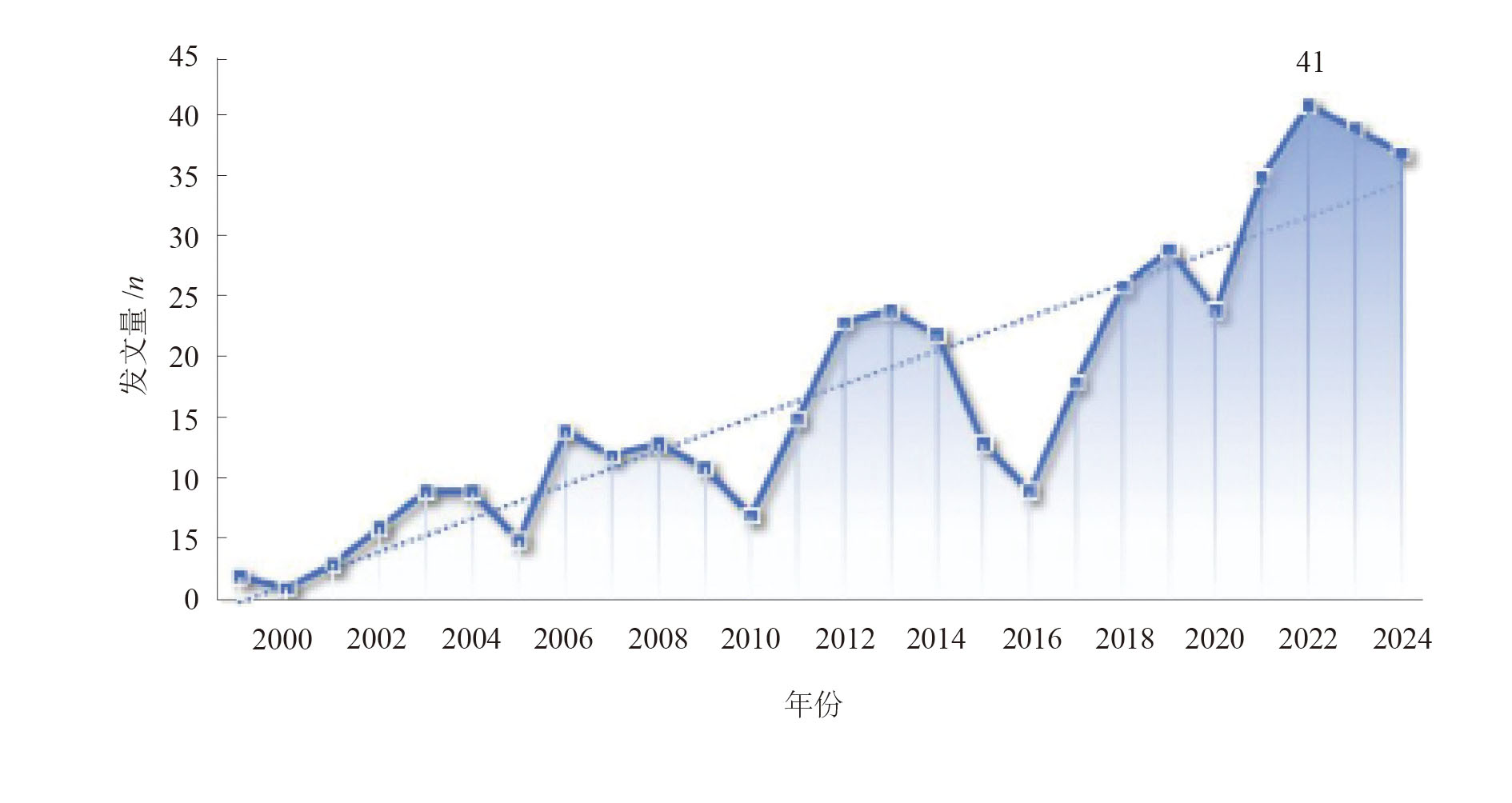
Figure 2
Co-occurrence map of countries/regions"
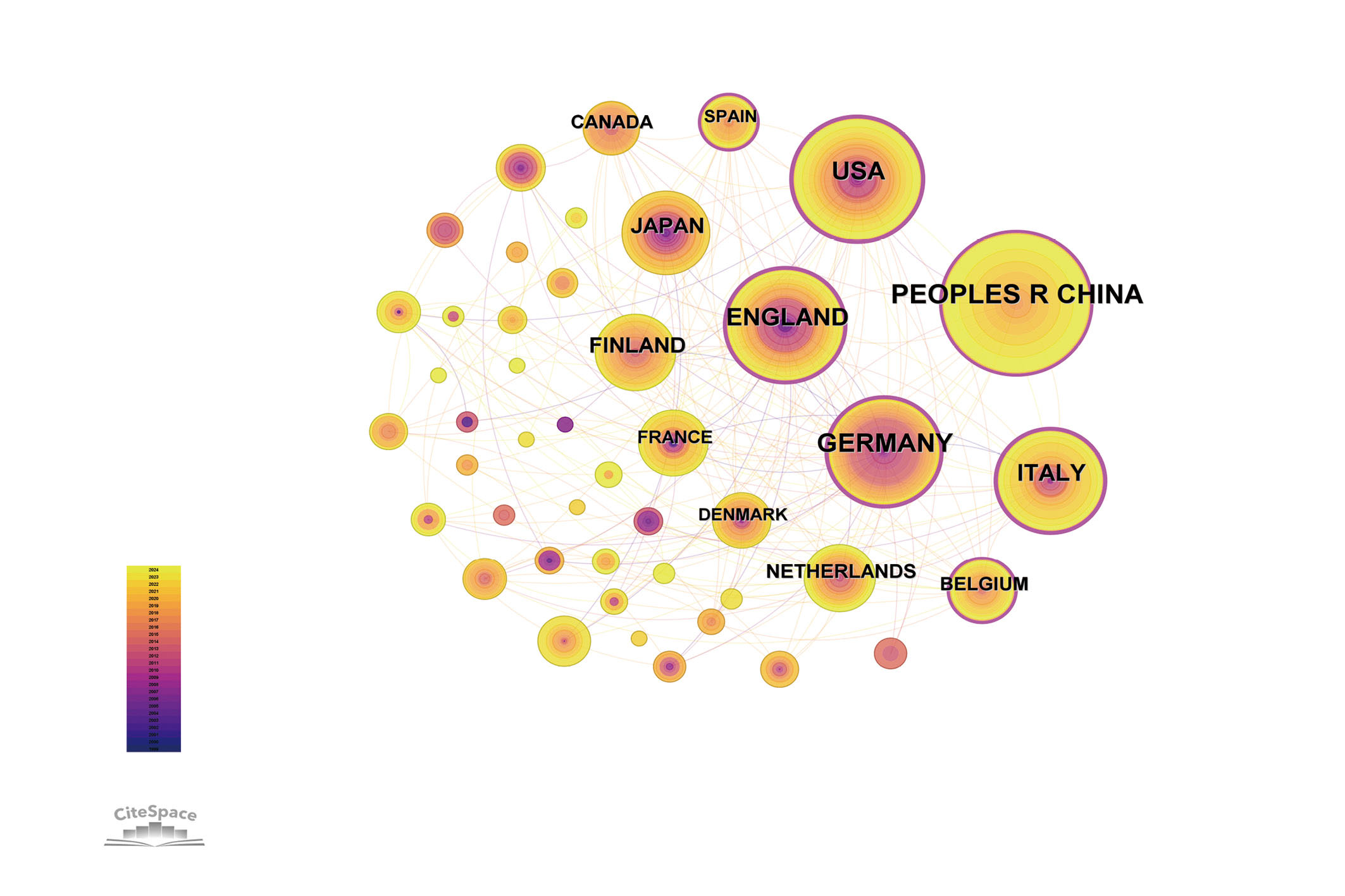
Table 1
Top five countries/regions by publication volume"
| 排名 | 国家/地区 | 发文量/n | 中心性 |
|---|---|---|---|
| 1 | 中国 | 97 | 0.13 |
| 2 | 德国 | 85 | 0.34 |
| 3 | 美国 | 69 | 0.23 |
| 4 | 英国 | 63 | 0.30 |
| 5 | 意大利 | 53 | 0.24 |
Figure 3
Co-occurrence map of institutions"
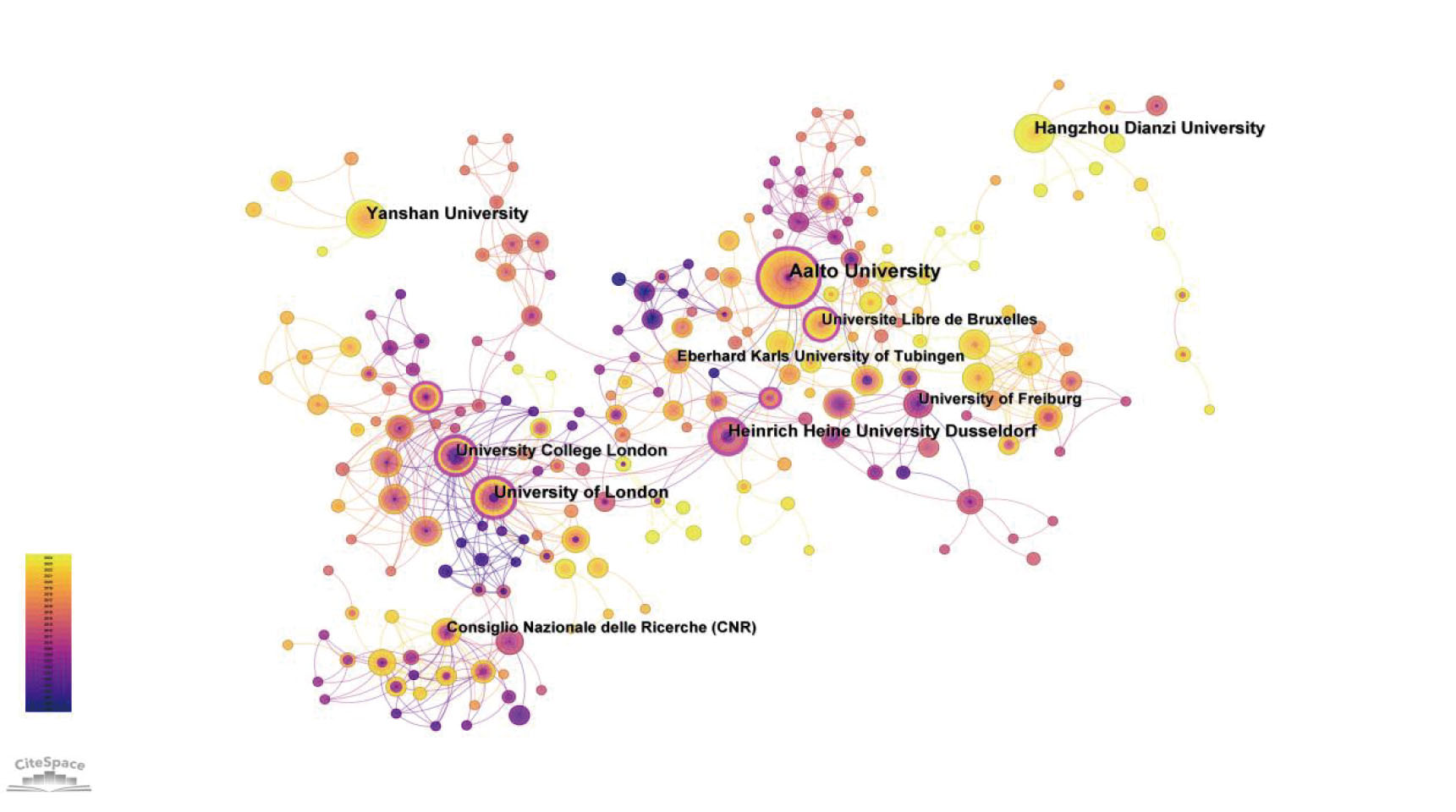
Table 2
Top five institutions by publication volume"
| 排名 | 机构 | 发文量/n | 中心性 |
|---|---|---|---|
| 1 | Aalto University | 33 | 0.38 |
| 2 | University of London | 20 | 0.24 |
| 3 | Yanshan University | 19 | 0.00 |
| 4 | Hangzhou Dianzi University | 18 | 0.00 |
| 5 | Heinrich Heine University Dusseldorf | 17 | 0.32 |
Figure 4
Co-occurrence map of authors"
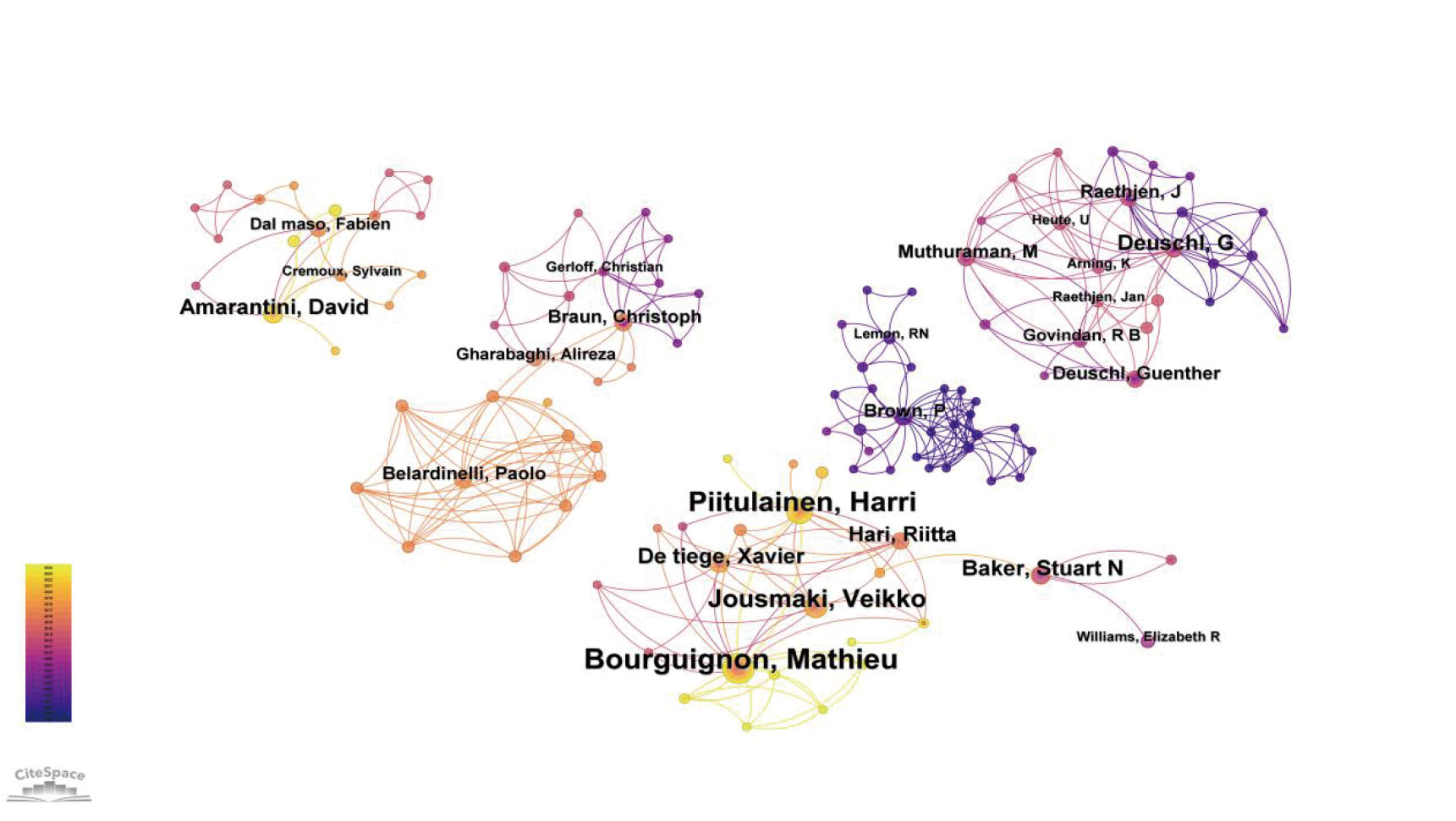
Table 3
Top five authors by publication volume"
| 排名 | 作者 | 发文量/n |
|---|---|---|
| 1 | Tjitske Heida | 18 |
| 2 | Mathieu Bourguignon | 18 |
| 3 | Harri Piitulainen | 15 |
| 4 | Xi Xugang | 13 |
| 5 | Xie Ping | 12 |
Figure 5
Co-citation map of journals"
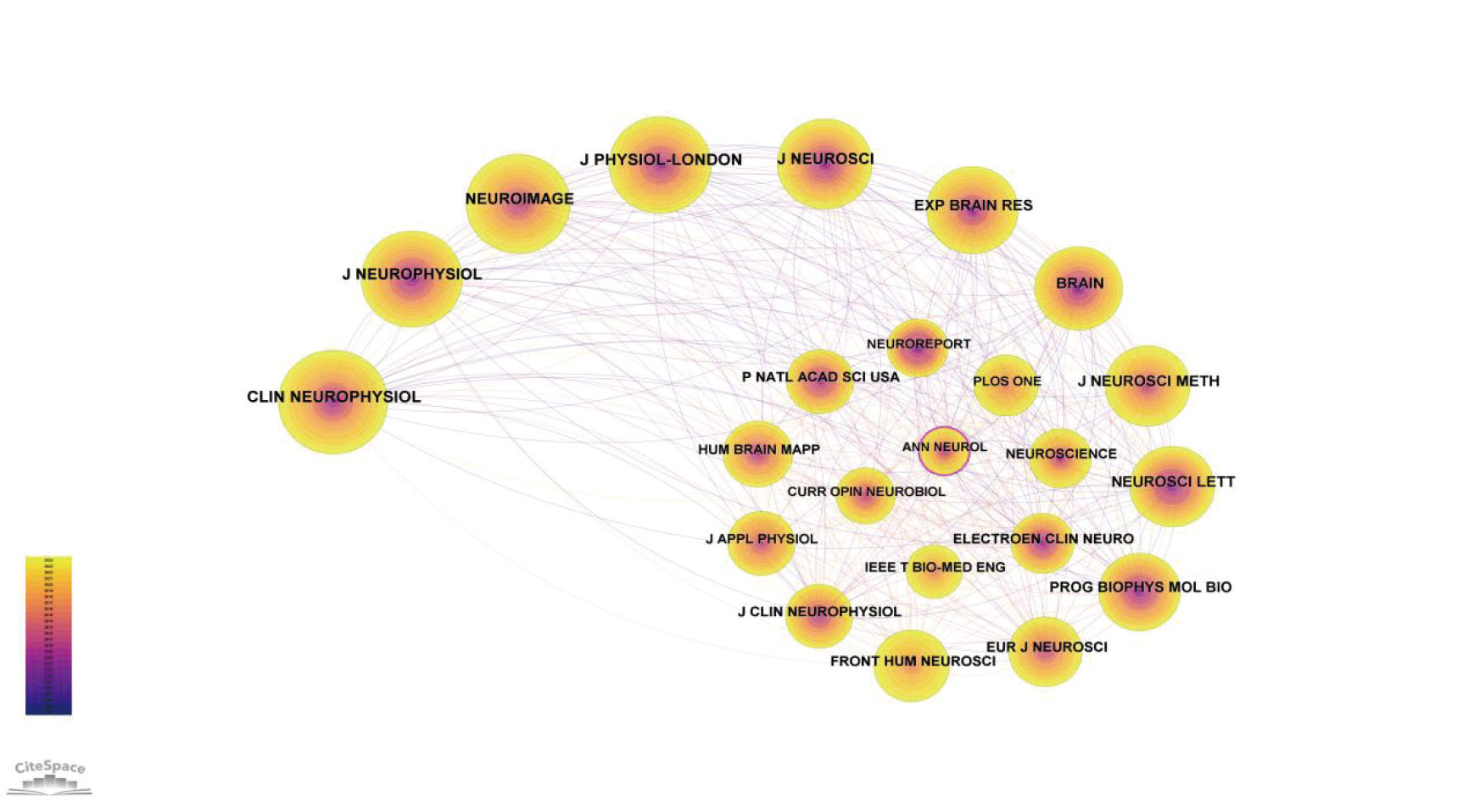
Table 4
Top five journals by citation"
| 排名 | 期刊 | 频次 | IF(2024) | JCR(2024) |
|---|---|---|---|---|
| 1 | Clin Neurophysiol | 395 | 2.4 | Q3 |
| 2 | J Physiol-London | 367 | 5.5 | Q1 |
| 3 | Neuroimage | 365 | 4.2 | Q1 |
| 4 | J Neurophysiol | 345 | 2.5 | Q2 |
| 5 | J Neurosci | 302 | 4.4 | Q1 |
Figure 6
Overlay analysis of journals dual maps"
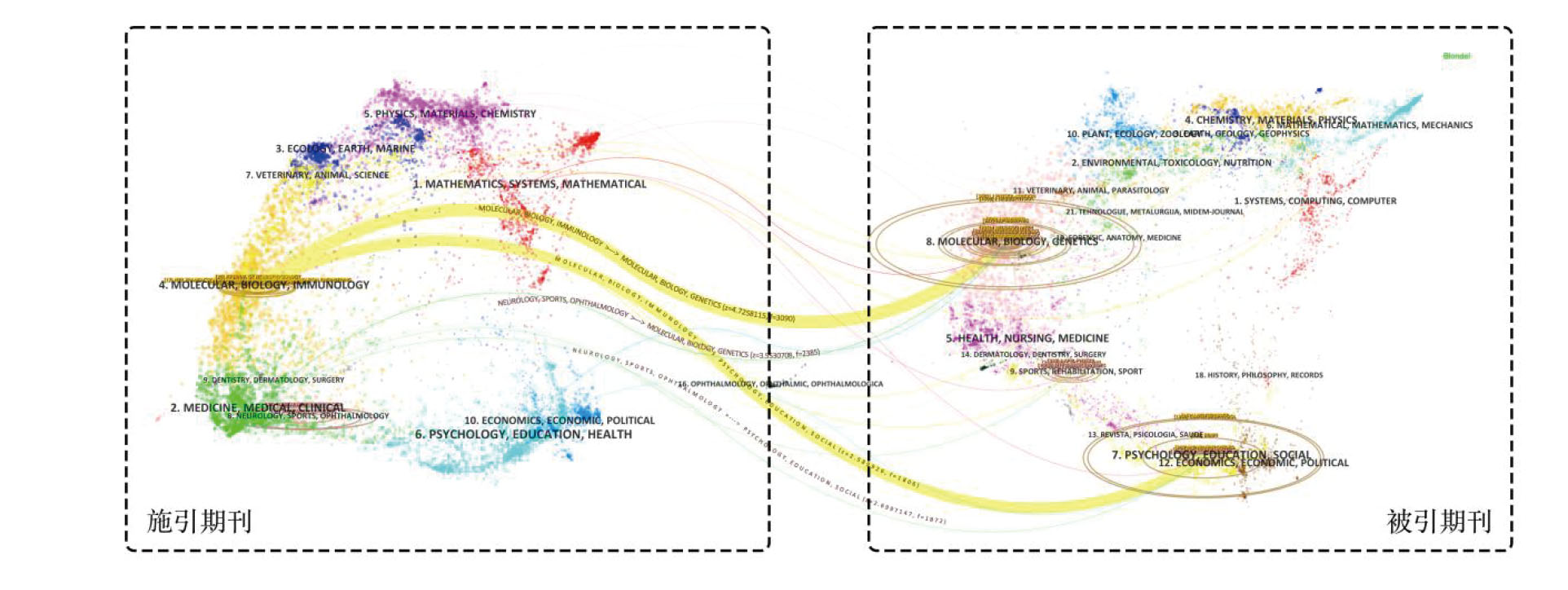
Figure 7
Co-citation map of cited literatures"
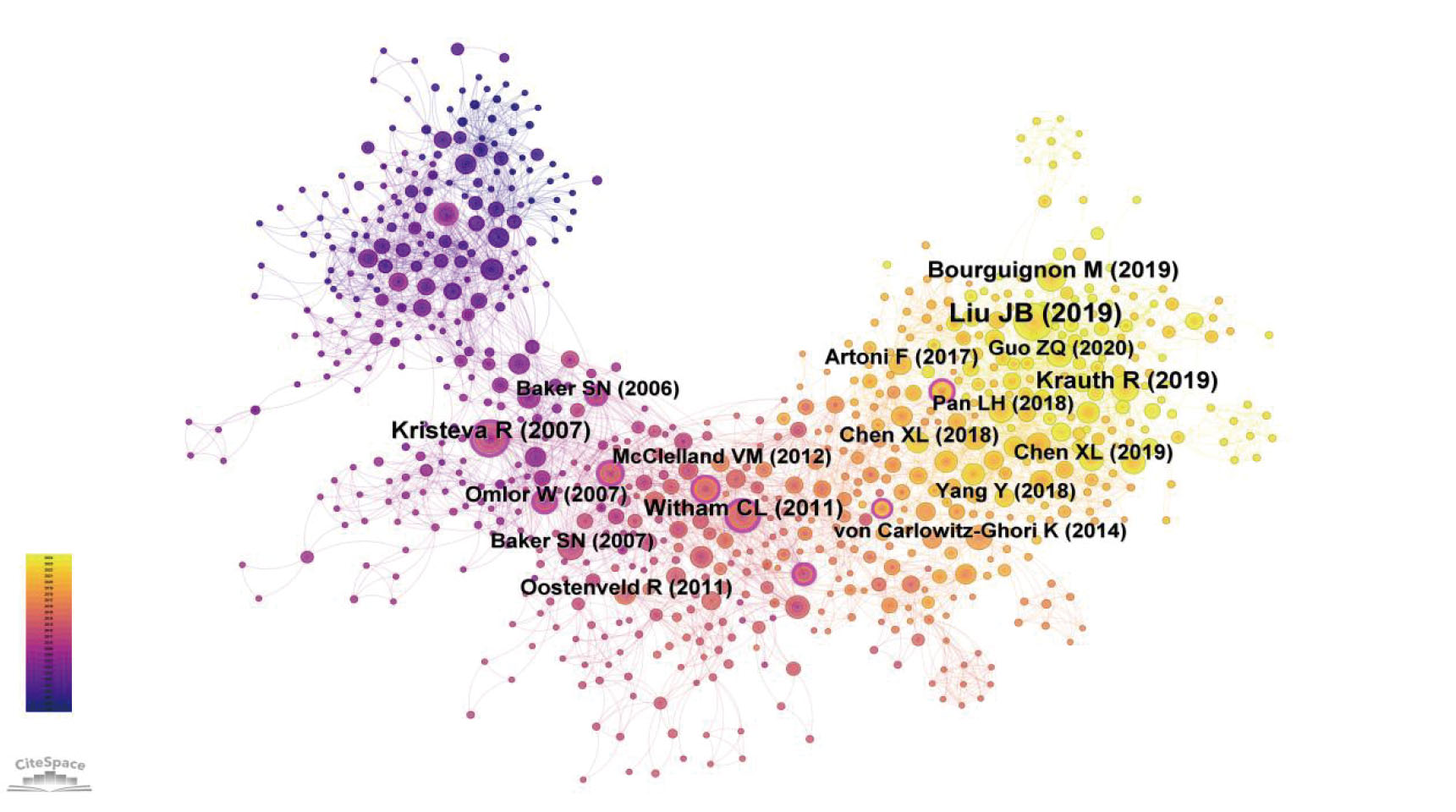
Table 5
Top five articles by citation"
| 排名 | 文献 | 作者 | 年份 | 被引频次 |
|---|---|---|---|---|
| 1 | Corticomuscular coherence and its applications: a review[ | Liu等 | 2019 | 43 |
| 2 | Beta-range cortical motor spectral power and corticomuscular coherence as a mechanism for effective corticospinal interaction during steady-state motor output[ | Kristeva等 | 2007 | 27 |
| 3 | Cortico-muscular coherence is reduced acutely post-stroke and increases bilaterally during motor recovery: a pilot study[ | Krauth等 | 2019 | 26 |
| 4 | Coupling between human brain activity and body movements: insights from non-invasive electromagnetic recordings[ | Bourguignon等 | 2019 | 25 |
| 5 | Contributions of descending and ascending pathways to corticomuscular coherence in humans[ | Witham等 | 2011 | 23 |
Figure 8
Co-occurrence map of keywords"
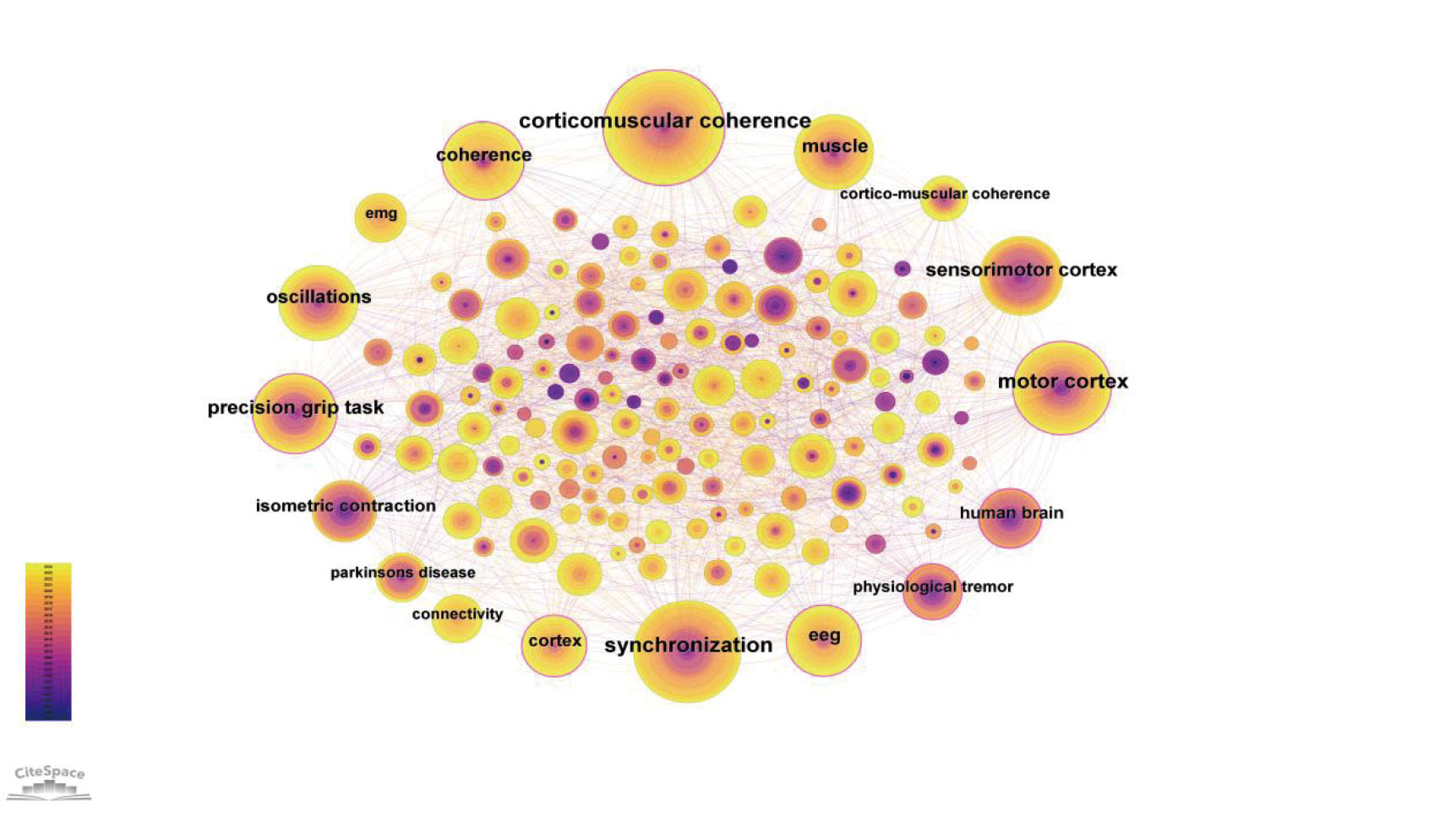
Table 6
High-frequency and high-centrality keywords"
| 排名 | 关键词 | 频次 | 关键词 | 中心性 |
|---|---|---|---|---|
| 1 | synchronization | 136 | motor cortex | 0.16 |
| 2 | motor cortex | 121 | cortex | 0.15 |
| 3 | precision grip task | 82 | EEG | 0.12 |
| 4 | sensorimotor cortex | 82 | precision grip task | 0.11 |
| 5 | oscillations | 77 | human brain | 0.11 |
| 6 | EEG | 64 | synchronization | 0.10 |
| 7 | cortex | 53 | oscillations | 0.09 |
| 8 | isometric contraction | 52 | isometric contraction | 0.09 |
| 9 | human brain | 48 | EMG | 0.09 |
| 10 | EMG | 40 | physiological tremor | 0.09 |
Figure 9
Clustering map of keywords"
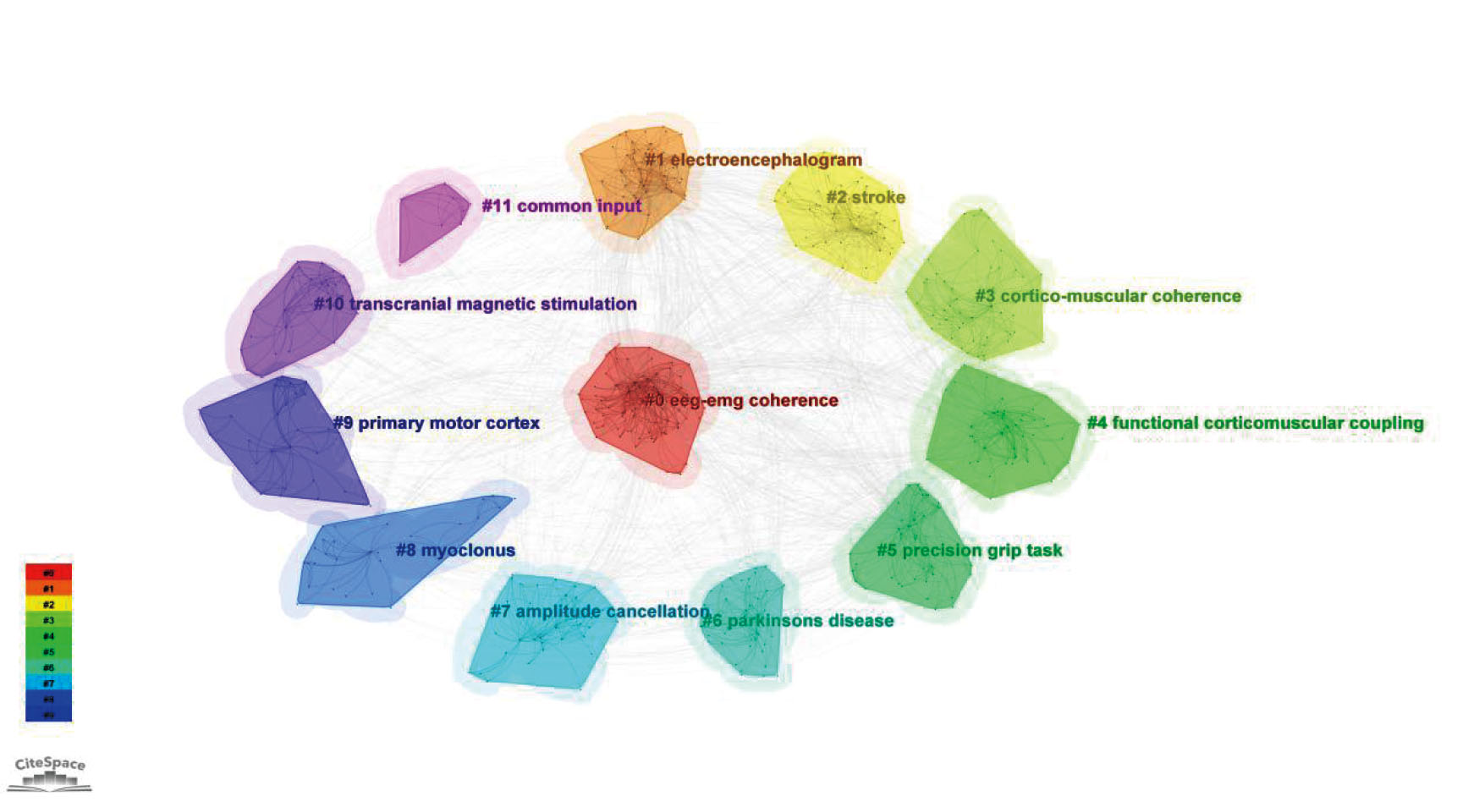
Figure 10
Bursting keywords"
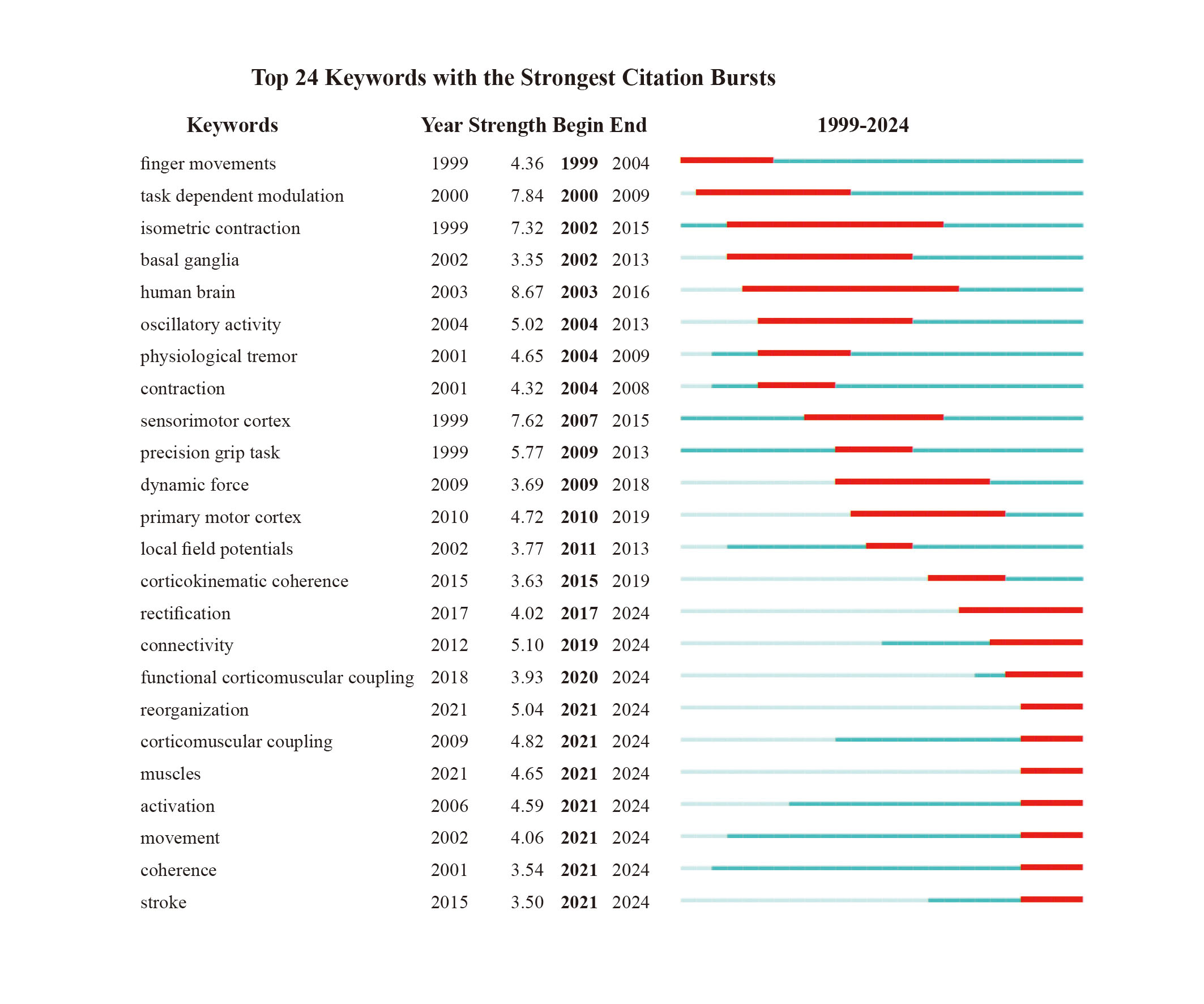
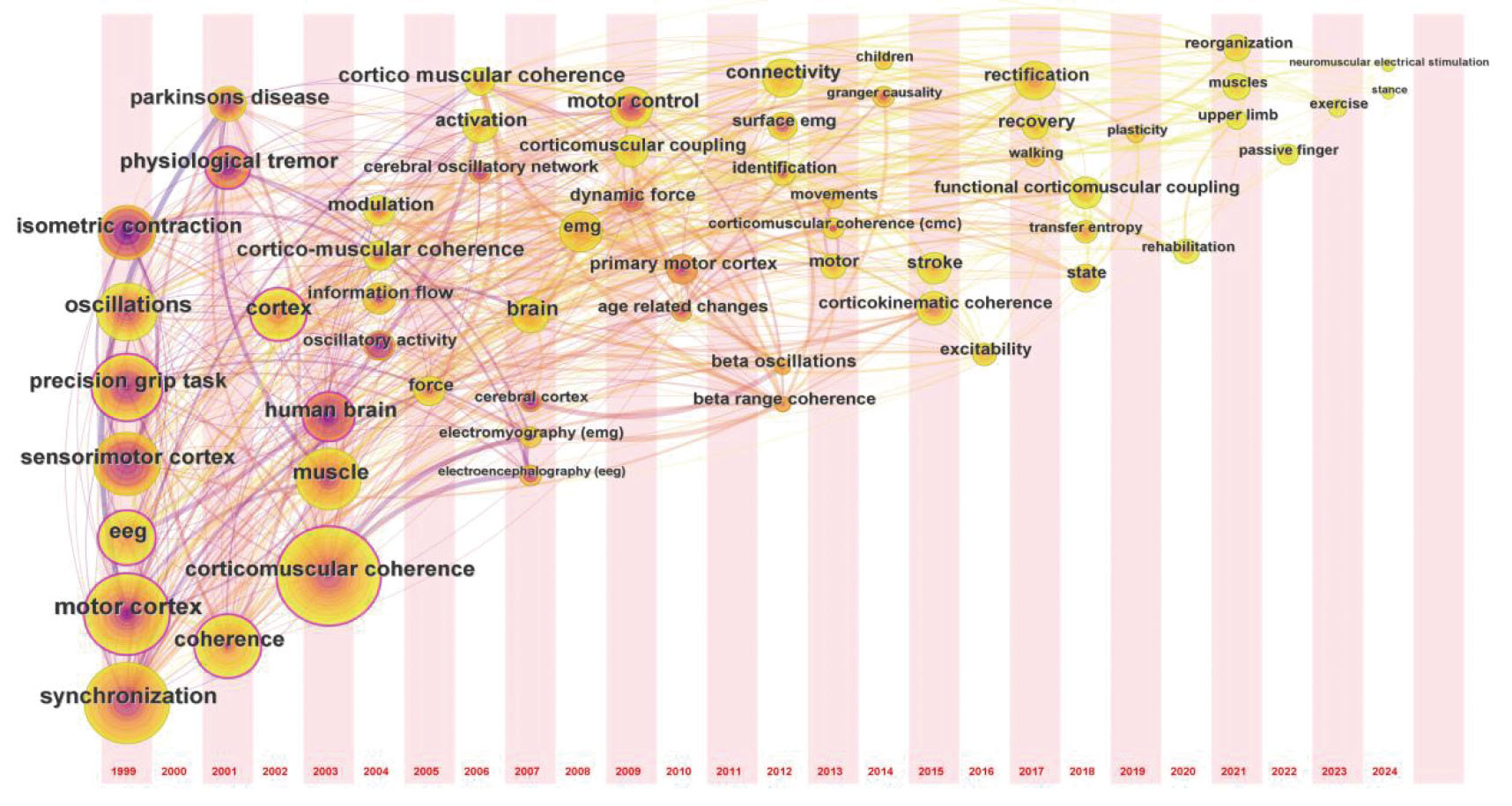
Figure 11
Dynamic evolution map of keyword frontiers"
| [1] | PENG J Z, ZIKEREYA T, SHAO Z S, et al. The neuromechanical of beta-band corticomuscular coupling within the human motor system[J]. Front Neurosci, 2024, 18: 1441002. |
| [2] | GAO Z, LÜ S, RAN X, et al. Influencing factors of corticomuscular coherence in stroke patients[J]. Front Hum Neurosci, 2024, 18: 1354332. |
| [3] | LIU J B, SHENG Y X, LIU H H. Corticomuscular coherence and its applications[J]. Front Hum Neurosci, 2019, 13: 100. |
| [4] | 陈悦, 陈超美, 刘则渊, 等. CiteSpace知识图谱的方法论功能[J]. 科学学研究, 2015, 33(2): 242-253. |
| CHEN Y, CHEN C M, LIU Z Y, et al. The methodology function of CiteSpace mapping knowledge domains[J]. Stud Sci Sci, 2015, 33(2): 242-253. | |
| [5] | XIE P. Study of international anticancer research trends via co-word and document co-citation visualization analysis[J]. Scientometrics, 2015, 105(1): 611-622. |
| [6] | CHEN C. Searching for intellectual turning points: progressive knowledge domain visualization[J]. Proc Natl Acad Sci U S A, 2004, 101(Suppl 1): 5303-5310. |
| [7] | LUO H, CAI Z, HUANG Y, et al. Study on pain catastrophizing from 2010 to 2020: a bibliometric analysis via CiteSpace[J]. Front Psychol, 2021, 12: 759347. |
| [8] | LI Y, ZHENG J J, WU X, et al. Postural control of Parkinson's disease: a visualized analysis based on Citespace knowledge graph[J]. Front Aging Neurosci, 2023, 15: 1136177. |
| [9] | CHEN C, DUBIN R, KIM M C. Emerging trends and new developments in regenerative medicine: a scientometric update (2000-2014)[J]. Expert Opin Biol Ther, 2014, 14(9): 1295-1317. |
| [10] | ZHENG T, JIANG T, HUANG Z, et al. Knowledge domain and trend of disease-modifying therapies for multiple sclerosis: a study based on CiteSpace[J]. Heliyon, 2024, 10(5): e26173. |
| [11] |
KRISTEVA R, PATINO L, OMLOR W. Beta-range cortical motor spectral power and corticomuscular coherence as a mechanism for effective corticospinal interaction during steady-state motor output[J]. Neuroimage, 2007, 36(3): 785-792.
doi: 10.1016/j.neuroimage.2007.03.025 pmid: 17493837 |
| [12] |
KRAUTH R, SCHWERTNER J, VOGT S, et al. Cortico-muscular coherence is reduced acutely post-stroke and increases bilaterally during motor recovery: a pilot study[J]. Front Neurol, 2019, 10: 126.
doi: 10.3389/fneur.2019.00126 pmid: 30842752 |
| [13] | BOURGUIGNON M, JOUSMÄKI V, DALAI S S, et al. Coupling between human brain activity and body movements: Insights from non-invasive electromagnetic recordings[J]. Neuroimage, 2019, 203: 116177. |
| [14] | WITHAM C L, RIDDLE C N, BAKER M R, et al. Contributions of descending and ascending pathways to corticomuscular coherence in humans[J]. J Physiol, 2011, 589(Pt 15): 3789-3800. |
| [15] | FAUVET M, GASQ D, CHALARD A, et al. Temporal dynamics of corticomuscular coherence reflects alteration of the central mechanisms of neural motor control in post-stroke patients[J]. Front Hum Neurosci, 2021, 15: 682080. |
| [16] | WANG Z, HUANG C, LI X. Research trends and hotspot analysis of conjunctival bacteria based on CiteSpace software[J]. Biomed Res Int, 2020, 2020: 2580795. |
| [17] | ZHANG J, SONG L, XU L, et al. Knowledge domain and emerging trends in ferroptosis research: a bibliometric and knowledge-map analysis[J]. Front Oncol, 2021, 11: 686726. |
| [18] |
石曼欣妤, 孟德涛, 方伯言. 帕金森病康复研究进展的可视化分析[J]. 中国康复理论与实践, 2022, 28(9): 1060-1064.
doi: 10.3969/j.issn.1006-9771.2022.09.008 |
| SHI M X Y, MENG D T, FANG B Y. Advance in Parkinson's disease rehabilitation: a visualization analysis[J]. Chin J Rehabil Theory Pract, 2022, 28(9): 1060-1064. | |
| [19] |
徐峰, 张秦, 陈小云, 等. 腰痛康复研究的文献计量学和可视化分析[J]. 中国康复理论与实践, 2021, 27(3): 349-360.
doi: 10.3969/j.issn.1006-9771.2021.03.017 |
| XU F, ZHANG Q, CHEN X Y, et al. Advance in researches of low back pain: a bibliometrics and visualization study[J]. Chin J Rehabil Theory Pract, 2021, 27(3): 349-360. | |
| [20] | KIRAZ M, DEMIR E. A bibliometric analysis of publications on spinal cord injury during 1980-2018[J]. World Neurosurg, 2020, 136: e504-e513. |
| [21] |
BOURGUIGNON M, PIITULAINEN H, DE TIÈGE X, et al. Corticokinematic coherence mainly reflects movement-induced proprioceptive feedback[J]. Neuroimage, 2015, 106: 382-390.
doi: 10.1016/j.neuroimage.2014.11.026 pmid: 25463469 |
| [22] | MONGOLD S J, PIITULAINEN H, LEGRAND T, et al. Temporally stable beta sensorimotor oscillations and corticomuscular coupling underlie force steadiness[J]. Neuroimage, 2022, 261. |
| [23] | DÉMAS J, BOURGUIGNON M, BAILLY R, et al. Test-retest reliability of corticokinematic coherence in young children with cerebral palsy: an observational longitudinal study[J]. Neurophysiol Clin, 2024, 54(4): 102965. |
| [24] | MONGOLD S J, GEORGIEV C, LEGRAND T, et al. Afferents to action: cortical proprioceptive processing assessed with corticokinematic coherence specifically relates to gross motor skills[J]. eNeuro, 2024, 11(1): ENEURO.0384-23.2023. |
| [25] | NURMI T, HAKONEN M, BOURGUIGNON M, et al. Proprioceptive response strength in the primary sensorimotor cortex is invariant to the range of finger movement[J]. Neuroimage, 2023, 269: 119937. |
| [26] | DE SETA V, TOPPI J, COLAMARINO E, et al. Cortico-muscular coupling to control a hybrid brain-computer interface for upper limb motor rehabilitation: a pseudo-online study on stroke patients[J]. Front Hum Neurosci, 2022, 16: 1016862. |
| [27] | CHOWDHURY A, DUTTA A, PRASAD G. Corticomuscular co-activation based hybrid brain-computer interface for motor recovery monitoring[J]. IEEE Access, 2020, 8: 174542-174557. |
| [28] |
PICHIORRI F, TOPPI J, DE SETA V, et al. Exploring high-density corticomuscular networks after stroke to enable a hybrid brain-computer interface for hand motor rehabilitation[J]. J Neuroeng Rehabil, 2023, 20(1): 5.
doi: 10.1186/s12984-023-01127-6 pmid: 36639665 |
| [29] | COLAMARINO E, DE SETA V, MASCIULLO M, et al. Corticomuscular and intermuscular coupling in simple hand movements to enable a hybrid brain-computer interface[J]. Int J Neural Syst, 2021, 31(11): 2150052. |
| [30] | GAO L, WU H J, CHENG W, et al. Enhanced descending corticomuscular coupling during hand grip with static force compared with enhancing force[J]. Clin EEG Neurosci, 2021, 52(6): 436-443. |
| [31] | KHADEMI F, NAROS G, NICKSIRAT A, et al. Rewiring cortico-muscular control in the healthy and poststroke human brain with proprioceptive β-band neurofeedback[J]. J Neurosci, 2022, 42(36): 6861-6877. |
| [32] | BRAMBILLA C, PIROVANO I, MIRA R M, et al. Combined use of EMG and EEG techniques for neuromotor assessment in rehabilitative applications: a systematic review[J]. Sensors, 2021, 21(21): 7014. |
| [33] | SUN J, JIA T, LI Z, et al. Enhancement of EEG-EMG coupling detection using corticomuscular coherence with spatial-temporal optimization[J]. J Neural Eng, 2023, 20(3). doi: 10.1088/1741-2552/accd9b. |
| [34] | SUN J, JIA T, LIN P J, et al. Multiscale canonical coherence for functional corticomuscular coupling analysis[J]. IEEE J Biomed Health Inform, 2024, 28(2): 812-822. |
| [35] | CHEN X, ZHANG Y, CHENG S, et al. Transfer spectral entropy and application to functional corticomuscular coupling[J]. IEEE Trans Neural Syst Rehabil Eng, 2019, 27(5): 1092-1102. |
| [36] | ZOKAEI N, QUINN A J, HU M T, et al. Reduced cortico-muscular beta coupling in Parkinson's disease predicts motor impairment[J]. Brain Commun, 2021, 3(3): fcab179. |
| [37] |
SANTOS P, HEIMLER B, KOREN O, et al. Dopamine improves defective cortical and muscular connectivity during bilateral control of gait in Parkinson's disease[J]. Commun Biol, 2024, 7(1): 495.
doi: 10.1038/s42003-024-06195-5 pmid: 38658666 |
| [38] |
DELCAMP C, CORMIER C, CHALARD A, et al. Botulinum toxin combined with rehabilitation decrease corticomuscular coherence in stroke patients[J]. Clin Neurophysiol, 2022, 136: 49-57.
doi: 10.1016/j.clinph.2021.12.019 pmid: 35131638 |
| [39] | XU R, ZHANG H, LIU S, et al. cTBS over primary motor cortex increased contralateral corticomuscular coupling and interhemispheric functional connection[J]. J Neural Eng, 2024, 21(1). doi: 10.1088/1741-2552/ad1dc4. |
| [40] | CHEN X L, XIE P, ZHANG Y Y, et al. Abnormal functional corticomuscular coupling after stroke[J]. Neuroimage Clin, 2018, 19: 147-159. |
| [41] | BAO S C, CHEN C, YUAN K, et al. Disrupted cortico-peripheral interactions in motor disorders[J]. Clin Neurophysiol, 2021, 132(12): 3136-3151. |
| [42] |
CREMOUX S, TALLET J, DAL MASO F, et al. Impaired corticomuscular coherence during isometric elbow flexion contractions in humans with cervical spinal cord injury[J]. Eur J Neurosci, 2017, 46(4): 1991-2000.
doi: 10.1111/ejn.13641 pmid: 28699218 |
| [43] | WANG T, TANG J, XI X, et al. Corticomuscular coupling analysis in stroke rehabilitation based on variational mode decomposition-transfer entropy[J]. IEEE Trans Neural Syst Rehabil Eng, 2024, 32: 3506-3514. |
| [1] | LIU Ping, ZHOU Nan, XUE Xiaojie, SHAO Weibo. Application of rehabilitation therapy techniques for post-stroke dysphagia: a bibliometric analysis [J]. Chinese Journal of Rehabilitation Theory and Practice, 2026, 32(3): 294-303. |
| [2] | PU Xinyu, WANG Jingxuan, WANG Hujun, XIU Anda, WANG Yingpeng. Application of repetitive peripheral magnetic stimulation in rehabilitation therapy: a bibliometric analysis [J]. Chinese Journal of Rehabilitation Theory and Practice, 2026, 32(3): 304-316. |
| [3] | SUN Kui, HUANG Hailun, LIU Yongai, GAO Heng. Brain-computer interface technology in treatment for spinal cord injury: a bibliometric analysis [J]. Chinese Journal of Rehabilitation Theory and Practice, 2026, 32(3): 317-328. |
| [4] | HE Zhaonan, ZHANG Tingting, HE Zhaoke, MENG Lijun. Topic mining and content analysis of rehabilitation ethics research in China based on BERTopic model [J]. Chinese Journal of Rehabilitation Theory and Practice, 2026, 32(2): 132-141. |
| [5] | GUO Yabin, ZENG Biyun, ZHOU Yang. Researches in sarcopenia-pain comorbidity from 2015 to 2025: a bibliometric analysis [J]. Chinese Journal of Rehabilitation Theory and Practice, 2026, 32(2): 151-161. |
| [6] | ZHANG Junfeng, CHEN Hao, DU Yuzheng, LI Chen, YU Tao, YANG Yuanqing. Non-pharmacological management for post-stroke spasticity from 2004 to 2024: a bibliometric analysis [J]. Chinese Journal of Rehabilitation Theory and Practice, 2026, 32(1): 45-58. |
| [7] | GAO Kaixiang, LU Haitao. Research in neurorehabilitation from 2015 to 2024: a bibliometric analysis [J]. Chinese Journal of Rehabilitation Theory and Practice, 2026, 32(1): 59-68. |
| [8] | DONG Lijun, XU Shihao, CHEN Qiuhua, ZHANG Lu, YIN Xiaobing. Application of virtual reality technology in managing negative emotions and postoperative rehabilitation in perioperative patients from 2015 to 2025: a bibliometric analysis [J]. Chinese Journal of Rehabilitation Theory and Practice, 2026, 32(1): 69-82. |
| [9] | ZHOU Xinyue, YE Ruixue, MA Yaqi, XU Ying, CAO Longyao, WANG Yulong. Researches on central post-stroke pain: a bibliometric analysis [J]. Chinese Journal of Rehabilitation Theory and Practice, 2025, 31(9): 1038-1049. |
| [10] | LU Dandan, YAO Jingzhi, LI Zi, WANG Kewen, SUN Xinliao, CHEN Jianmin, XU Jianwen. Physical therapy for Parkinson's disease from 2014 to 2023: a bibliometric analysis [J]. Chinese Journal of Rehabilitation Theory and Practice, 2025, 31(8): 906-913. |
| [11] | SONG Zhuman, LIU Na, LIU Yang, DING Xuemei, ZHANG Xiaoli. Mental health in parents of children with autism spectrum disorder: a bibliometric analysis from 2016 to 2025 [J]. Chinese Journal of Rehabilitation Theory and Practice, 2025, 31(7): 790-801. |
| [12] | HUANG Longxian, GU Sijia, HUANG Youli, CHEN Limei. Research in sarcopenic dysphasia from 2015 to 2024: a bibliometric analysis [J]. Chinese Journal of Rehabilitation Theory and Practice, 2025, 31(6): 682-691. |
| [13] | SHI Bin, XU Ning, ZHOU Guangxue. Application of mirror therapy in motor function rehabilitation for stroke: a bibliometric analysis from 2005 to 2024 [J]. Chinese Journal of Rehabilitation Theory and Practice, 2025, 31(5): 561-572. |
| [14] | ZHOU Bo, SHE Wanbin, XIANG Songbai. Application of artificial intelligence in diagnosis and intervention for children with autism spectrum disorder: a bibliometric analysis [J]. Chinese Journal of Rehabilitation Theory and Practice, 2025, 31(5): 573-580. |
| [15] | LAI Haifang, LIU Benhui, CUI Lijun, HUA Longang, XIE Qing. Application of transcranial magnetic stimulation in rehabilitation field: a bibliometric analysis from 2014 to 2024 [J]. Chinese Journal of Rehabilitation Theory and Practice, 2025, 31(5): 581-591. |
| Viewed | ||||||
|
Full text |
|
|||||
|
Abstract |
|
|||||
|
||
