



Chinese Journal of Rehabilitation Theory and Practice ›› 2026, Vol. 32 ›› Issue (5): 550-560.doi: 10.3969/j.issn.1006-9771.2026.05.005
Previous Articles Next Articles
NI Tianhao1,2, BI Siyu1,3, DAI Yuan4, QIAN Hong5, WANG Yongli1,2( ), WAN Qin1,2, HUANG Zhaoming1,2
Received:2025-08-01
Revised:2025-11-10
Published:2026-05-25
Online:2026-05-26
Contact:
WANG Yongli
E-mail:wylkangfu@126.com
Supported by:CLC Number:
NI Tianhao, BI Siyu, DAI Yuan, QIAN Hong, WANG Yongli, WAN Qin, HUANG Zhaoming. Development and validation of assessment and diagnostic tools for apraxia of speech of Chinese Putonghua[J]. Chinese Journal of Rehabilitation Theory and Practice, 2026, 32(5): 550-560.

Table 1
Evaluation sections and items"
| 版块 | 条目 |
|---|---|
| 语音 | 歪曲、替代、添加、摸索、句长/复杂性增加时 |
| 韵律 | 单字中、字与字间、语速、语调、重音 |
| 轮替 | 交替、顺序 |
Table 2
CAADT scores"
| 评分 | 严重程度 | 描述 |
|---|---|---|
| 0 | 无损伤 | 表现与年龄相符,未观察到异常表现 |
| 1 | 轻度损伤 | 存在轻度异常表现或异常表现发生频次低 |
| 2 | 中度损伤 | 存在中等程度异常表现或异常表现发生频次中等 |
| 3 | 重度损伤 | 存在重度异常表现,或大多数情况下出现异常表现 |
| 4 | 完全损伤 | 几乎所有情况下均出现异常表现或无法完成任务 |
Table 3
The final version of the evaluation sections and items"
| 版块 | 评估条目 | 操作定义 |
|---|---|---|
| 语音 | 1.1歪曲 | 复述语料,记录声母/韵母歪曲次数 |
| 1.2替代 | 复述语料,记录替代类型和音位 | |
| 1.3添加/省略 | 复述语料,记录音位省略或添加的次数和音位 | |
| 1.4摸索 | 观察复述时口面部异常摸索动作,记录次数 | |
| 1.5句长/复杂性增加时 | 复述3、5、7、9、11字句,计算错误率随句长增幅 | |
| 韵律 | 2.1字间停顿 | 朗读、自发语、看图叙事过程中,计算停顿次数和时长 |
| 2.2语速 | 朗读、自发语、看图叙事过程中,计算言语速率和构音速率 | |
| 2.3语调 | 朗读、自发语、看图叙事过程中,计算基频相关声学参数 | |
| 2.4重音 | 朗读含重读符号句子,计算重音出现率和音节时长 | |
| 轮替 | 3.1交替运动 | /papapa/, /tatata/,/kakaka/任选其一,4 s内快速重复,记录正确完成个数和构音速率 |
| 3.2顺序运动 | 4 s内重复发音/pataka/,记录正确完成个数 |
Table 4
Comparison of baseline data between two groups"
| 组别 | n | 性别(男/女)/n | 年龄/岁 | 卒中类型(出血/梗死/梗死伴出血)/n |
|---|---|---|---|---|
| 对照组 | 10 | 6/4 | 54.20±4.54 | 6/4/0 |
| 试验组 | 51 | 44/7 | 51.31±1.46 | 32/17/2 |
| χ2/t值 | -0.750 | 0.510 | ||
| P值 | 0.070 | 0.456 | 0.775 |
Table 5
Internal consistency results"
| 版块 | 条目数量 | α系数 |
|---|---|---|
| 语音 | 5 | 0.934 |
| 韵律 | 4 | 0.922 |
| 轮替 | 2 | 0.454 |
| 总分 | 11 | 0.937 |
Table 6
Inter-rater reliability results"
| 版块 | Kendall W | P值 |
|---|---|---|
| 语音 | 0.833 | <0.001 |
| 韵律 | 0.720 | <0.001 |
| 轮替 | 0.598 | <0.001 |
| 总分 | 0.937 | <0.001 |
Table 7
Test-retest reliability results"
| 版块 | r值 | P值 |
|---|---|---|
| 语音 | 0.978 | <0.001 |
| 韵律 | 0.841 | <0.001 |
| 轮替 | 0.853 | <0.001 |
| 总分 | 0.977 | <0.001 |
Table 8
CVI of final version of CAADT and the sections"
| 版块 | 专家评分 | 3/4分的个数 | I-CVI | 评价 | |||||
|---|---|---|---|---|---|---|---|---|---|
| A | B | C | D | E | F | ||||
| 语音 | 4 | 4 | 4 | 4 | 4 | 4 | 6 | 1 | 优秀 |
| 韵律 | 4 | 4 | 4 | 4 | 4 | 4 | 6 | 1 | 优秀 |
| 轮替 | 4 | 4 | 3 | 4 | 4 | 4 | 6 | 1 | 优秀 |
| S-CVI | 1 | 优秀 | |||||||
Table 9
I-CVI of the final version of CAADT items"
| 版块 | 评估条目 | 专家评议 | 3/4分的个数 | I-CVI | 评价 | |||||
|---|---|---|---|---|---|---|---|---|---|---|
| A | B | C | D | E | F | |||||
| 语音 | 歪曲 | 4 | 4 | 4 | 4 | 4 | 4 | 6 | 1 | 优秀 |
| 替代 | 4 | 3 | 4 | 4 | 4 | 3 | 6 | 1 | 优秀 | |
| 添加/省略 | 3 | 4 | 3 | 3 | 2 | 4 | 5 | 0.83 | 较好 | |
| 摸索 | 4 | 4 | 4 | 4 | 4 | 4 | 6 | 1 | 优秀 | |
| 句长/复杂性增加时 | 4 | 4 | 4 | 4 | 4 | 4 | 6 | 1 | 优秀 | |
| 韵律 | 字与字间 | 4 | 4 | 4 | 4 | 4 | 4 | 6 | 1 | 优秀 |
| 语速 | 4 | 4 | 4 | 4 | 4 | 4 | 6 | 1 | 优秀 | |
| 语调 | 3 | 4 | 4 | 4 | 3 | 4 | 6 | 1 | 优秀 | |
| 重音 | 4 | 2 | 4 | 3 | 4 | 4 | 5 | 0.83 | 较好 | |
| 轮替 | 交替 | 4 | 4 | 3 | 4 | 4 | 4 | 6 | 1 | 优秀 |
| 顺序 | 4 | 2 | 4 | 4 | 3 | 3 | 5 | 0.83 | 较好 | |
| S-CVI | 0.95 | 优秀 | ||||||||
Table 10
Internal validity results"
| 版块 | 语音 | 韵律 | 轮替 |
|---|---|---|---|
| 语音 | 1 | 0.579 | 0.435 |
| 韵律 | 1 | 0.379 | |
| 轮替 | 1 |
Table 11
Comparison of CAADT scores between two groups"
| 组别 | n | 总分 | t值 | P值 |
|---|---|---|---|---|
| 对照组 | 10 | 5.70±1.67 | 5.610 | <0.001 |
| 试验组 | 51 | 27.27±1.66 |
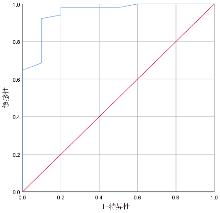
Figure 1
ROC curve"
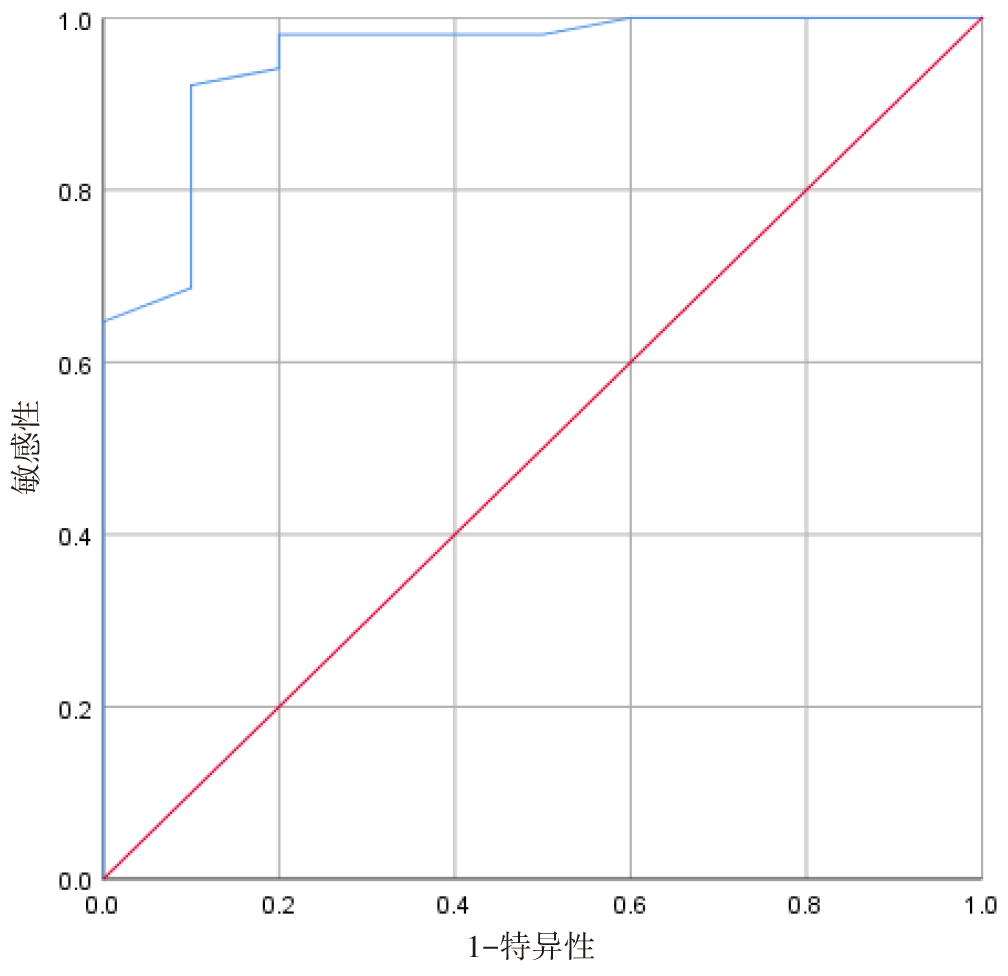
Table 1
CAADT score"
| 评分 | 严重程度 | 描述 |
|---|---|---|
| 0 | 无损伤 | 表现与年龄相符,未观察到异常表现 |
| 1 | 轻度损伤 | 存在轻度异常表现或异常表现发生频次低 |
| 2 | 中度损伤 | 存在中等程度异常表现或异常表现发生频次中等 |
| 3 | 重度损伤 | 存在重度异常表现,或大多数情况下出现异常表现 |
| 4 | 完全损伤 | 几乎所有情况下均出现异常表现或无法完成任务 |

Figure 1
Describe the assessment picture"

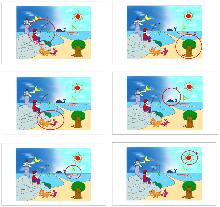
Figure 2
Describe the assessment picture(divided into sections)"

| [1] | DARLEY F L. Apraxia of speech: 107 years of terminological confusion[C]. Denver, Colorado: the 44th Annual Convention of the American Speech and Hearing Association, 1968. |
| [2] | DUFFY J R. Motor speech disorders e-book: substrates, differential diagnosis, and management[M]. [S.l.]: Elsevier Health Sciences, 2019. |
| [3] | 李思奇, 张玉梅. 言语失用的诊疗进展[J]. 中国康复医学杂志, 2021, 36(2): 227-231. |
| [4] |
UTIANSKI R L, JOSEPHS K A. An update on apraxia of speech[J]. Curr Neurol Neurosci Rep, 2023, 23(7): 353-359.
doi: 10.1007/s11910-023-01275-1 |
| [5] |
CASTRO N, HULA W D, ASHAIE S A. Defining aphasia: content analysis of six aphasia diagnostic batteries[J]. Cortex, 2023, 166: 19-32.
doi: 10.1016/j.cortex.2023.05.005 pmid: 37295235 |
| [6] |
ZIEGLER W, STAIGER A, SCHOLDERLE T. Profiles of dysarthria: clinical assessment and treatment[J]. Brain Sci, 2023, 14(1): 11.
doi: 10.3390/brainsci14010011 |
| [7] |
WONG E C H, WONG M N, VELLEMAN S L. Assessment and diagnostic standards of apraxia of speech in Chinese-speaking adults and children: a scoping review[J]. Am J Speech Lang Pathol, 2023, 32(1): 316-340.
doi: 10.1044/2022_AJSLP-21-00355 |
| [8] |
BASILAKOS A. Contemporary approaches to the management of post-stroke apraxia of speech[J]. Semin Speech Lang, 2018, 39(1): 25-36.
doi: 10.1055/s-0037-1608853 pmid: 29359303 |
| [9] | WERTZ R T, LA POINTE L L, ROSENBEK J C. Apraxia of speech: the disorders and its management[M]. New York: Grune and Stratton, 1984. |
| [10] |
DIONISIOS T, MAKRINA K, AGLAIA Z, et al. The Apraxia Battery for Adults-2 (ABA-2): a second pilot study and validation of the test in aphasic Greek population[J]. Ann Gen Psychiatry, 2010, 9(S1): S120.
doi: 10.1186/1744-859X-9-S1-S120 |
| [11] | DUFFY J R, MARTIN P R, CLARK H M, et al. The Apraxia of Speech Rating Scale: reliability, validity, and utility[J]. Am J Speech Lang Pathol, 2023, 32(2): 21-23. |
| [12] | 盛凤. 基于声带运动的痉挛型神经性言语障碍韵律干预研究[D]. 上海: 华东师范大学, 2023. |
| SHENG F. A study on prosodic intervention for spastic dysarthria based on vocal fold movement[D]. Shanghai: East China Normal University, 2023. | |
| [13] |
KENT R D, KIM Y, CHEN L. Oral and laryngeal diadochokinesis across the life span: a scoping review of methods, reference data, and clinical applications[J]. J Speech Lang Hear Res, 2022, 65(2): 574-623.
doi: 10.1044/2021_JSLHR-21-00396 |
| [14] |
MD NOR A, MASSO S, BALLARD K J. Identifying segmental and prosodic errors associated with the increasing word length effect in acquired apraxia of speech[J]. Int J Speech Lang Pathol, 2022, 24(3): 294-306.
doi: 10.1080/17549507.2022.2061593 |
| [15] | 尹敏敏. 神经性言语障碍言语韵律评估指标的构建及干预研究[D]. 上海: 华东师范大学, 2020. |
| YIN M M. A study on the construction and intervention of speech prosody evaluation index in dysarthria[D]. Shanghai: East China Normal University, 2020. | |
| [16] | 中华神经科学会, 中华神经外科学会. 各类脑血管疾病诊断要点[J]. 中华神经科杂志, 1996(6): 60-61. |
| [17] | 高素荣, 褚月发, 石舜琴, 等. 汉语失语检查法标准化的研究[J]. 中国心理卫生杂志, 1992(3): 125-128, 143. |
| GAO S R, CHU Y F, SHI S Q, et al. Standardized aphasia battery of Chinese[J]. Chin Ment Health J, 1992(3): 125-128, 143. | |
| [18] | 王荫华. 西方失语症成套测验(WAB)介绍(一)[J]. 中国康复理论与实践, 1997, 3(2): 87-89. |
| [19] | 程琮, 刘一志, 王如德. Kendall协调系数W检验及其SPSS实现[J]. 泰山医学院学报, 2010, 31(7): 487-490. |
| CHENG C, LIU Y Z, WANG R D. The test for Kendall's coefficient of concordance conducted by SPSS[J]. J Taishan Med Coll, 2010, 31(7): 487-490. | |
| [20] |
DAVIS L L. Instrument review: getting the most from a panel of experts[J]. Appl Nurs Res, 1992, 5(4): 194-197.
doi: 10.1016/S0897-1897(05)80008-4 |
| [21] | 史静琤, 莫显昆, 孙振球. 量表编制中内容效度指数的应用[J]. 中南大学学报(医学版), 2012, 37(2): 49-52. |
| SHI J Z, MO X K, SUN Z Q. Content validity index in scale development[J]. J Cent South Univ (Med Sci), 2012, 37(2): 49-52. | |
| [22] | 陈卫中, 倪宗瓒, 潘晓平, 等. 用ROC曲线确定最佳临界点和可疑值范围[J]. 现代预防医学, 2005, 32(7): 729-731. |
| CHEN W Z, NI Z Z, PAN X P, et al. Receiver operating characteristic curves to determine the optimal operating point and doubtable value interval[J]. Mod Prev Med, 2005, 32(7): 729-731. | |
| [23] |
JOSEPHS K A, DUFFY J R, MARTIN P R, et al. Acoustic analysis and neuroimaging correlates of diadochokinetic rates in mild-moderate primary progressive apraxia of speech[J]. Brain Lang, 2023, 240: 105254.
doi: 10.1016/j.bandl.2023.105254 |
| [24] |
ALLISON K M, CORDELLS C, IUZZINI-SEIGEL J, et al. Differential diagnosis of apraxia of speech in children and adults: a scoping review[J]. J Speech Lang Hear Res, 2020, 63(9): 2952-2994.
doi: 10.1044/2020_JSLHR-20-00061 |
| [1] | LIU Rui, GAO Zhenmei, ZHOU Xingyu, ZHANG Qi, WU Jianlin. Application of digital health technologies in upper limb motor function rehabilitation after stroke from 2015 to 2025: a bibliometric analysis [J]. Chinese Journal of Rehabilitation Theory and Practice, 2026, 32(5): 534-549. |
| [2] | AN Yongyi, LI Xuemei, CHANG Xueyou, ZHAO Yaning, HUANG Hailing, YANG Yadong. Effect of blood flow restriction training under different intensities combined with low-intensity resistance training on motor function in elderly stroke patients with frailty [J]. Chinese Journal of Rehabilitation Theory and Practice, 2026, 32(5): 561-570. |
| [3] | CHEN Zhu, ZHAI Liru, CAO Cunxia, PENG Xiaohua, HUANG Tao. Effect of phrenic nerve-abdominal muscle electrical stimulation on pulmonary ventilation distribution in stroke patients: a study with electrical impedance tomography [J]. Chinese Journal of Rehabilitation Theory and Practice, 2026, 32(5): 571-576. |
| [4] | LI Xinyuan, ZHENG Jiejiao, WU Xuejiao, DUAN Linru, GAO Yufei. Effect of cerebellar intermittent theta-burst stimulation on postural control and fall risk in patients with stroke [J]. Chinese Journal of Rehabilitation Theory and Practice, 2026, 32(5): 577-587. |
| [5] | GU Yuhong, DUAN Jinxiu, XUE Mingyang, YANG Jie, WU Xia, LIU Hua, GAO Yufang, ZHANG Menghui, YE Caide. Effect of medical-community linkage model on psychological status and motor function in community-dwelling patients with stroke [J]. Chinese Journal of Rehabilitation Theory and Practice, 2026, 32(5): 597-603. |
| [6] | HUANG Cheng, SHEN Yangyi, LU Biying, LIU Tong, LIU Yue. Application of action observation therapy in stroke rehabilitation from 2016 to 2025: a bibliometric analysis [J]. Chinese Journal of Rehabilitation Theory and Practice, 2026, 32(4): 399-410. |
| [7] | GUI Shun, ZHANG Jianfei, HUANG Huizhi. Prediction of neurological function rehabilitation outcome for stroke patients using interpretable machine learning models [J]. Chinese Journal of Rehabilitation Theory and Practice, 2026, 32(4): 463-472. |
| [8] | ZHU Lili, ZHAO Jiaxin, CHENG Xue, WANG Huijuan, CHEN Xiaoxia. Experiences and needs of stroke patients during rehabilitation: a qualitative meta-synthesis [J]. Chinese Journal of Rehabilitation Theory and Practice, 2026, 32(3): 286-293. |
| [9] | LIU Ping, ZHOU Nan, XUE Xiaojie, SHAO Weibo. Application of rehabilitation therapy techniques for post-stroke dysphagia: a bibliometric analysis [J]. Chinese Journal of Rehabilitation Theory and Practice, 2026, 32(3): 294-303. |
| [10] | YANG Ling, WANG Qinglei, WANG Jie, XU Wenjie, WANG Tong, GUO Chuan, QIAN Xue. Activation patterns and mechanism in the prefrontal cortex of post-stroke anxiety patients: a study using functional near-infrared spectroscopy [J]. Chinese Journal of Rehabilitation Theory and Practice, 2026, 32(3): 329-336. |
| [11] | MENG Lijun. Challenges and reflections on ethical review of rehabilitation research for children with disabilities [J]. Chinese Journal of Rehabilitation Theory and Practice, 2026, 32(2): 142-150. |
| [12] | YUE Yuan, ZHANG Tong, LIU Yuanmin, WANG Ya'nan. Effect of lower extremity exoskeleton robots on balance and walking function of patients with post-stroke cerebellar ataxia [J]. Chinese Journal of Rehabilitation Theory and Practice, 2026, 32(1): 23-29. |
| [13] | WU Cheng, ZHANG Yunfeng, WANG Weining, YU Kewei, ZHANG Yanzheng, SHEN Jiarong, WU Yi. Effect of elbow-wrist functional orthosis on plantar pressure and balance function in stroke patients with hemiplegia [J]. Chinese Journal of Rehabilitation Theory and Practice, 2026, 32(1): 30-39. |
| [14] | ZHANG Junfeng, CHEN Hao, DU Yuzheng, LI Chen, YU Tao, YANG Yuanqing. Non-pharmacological management for post-stroke spasticity from 2004 to 2024: a bibliometric analysis [J]. Chinese Journal of Rehabilitation Theory and Practice, 2026, 32(1): 45-58. |
| [15] | GAO Kaixiang, LU Haitao. Research in neurorehabilitation from 2015 to 2024: a bibliometric analysis [J]. Chinese Journal of Rehabilitation Theory and Practice, 2026, 32(1): 59-68. |
| Viewed | ||||||
|
Full text |
|
|||||
|
Abstract |
|
|||||
|
||
