



Chinese Journal of Rehabilitation Theory and Practice ›› 2026, Vol. 32 ›› Issue (4): 373-386.doi: 10.3969/j.issn.1006-9771.2026.04.001
Previous Articles Next Articles
QI Yuanyuan1, GAO Haifeng2, LIU Lina1, XIE Yujie1, XU Jing1, GAO Feng2, CHEN Liang2, YANG Degang2, LI Jun2( )
Received:2025-11-10
Revised:2026-01-30
Published:2026-04-25
Online:2026-05-06
Contact:
LI Jun
E-mail:jia2021crrc@163.com
CLC Number:
QI Yuanyuan, GAO Haifeng, LIU Lina, XIE Yujie, XU Jing, GAO Feng, CHEN Liang, YANG Degang, LI Jun. Spinal cord stimulation for spinal cord injury from 1999 to 2025: a bibliometric analysis[J]. Chinese Journal of Rehabilitation Theory and Practice, 2026, 32(4): 373-386.
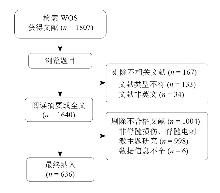
Figure 1
Flowchart of literature screening"
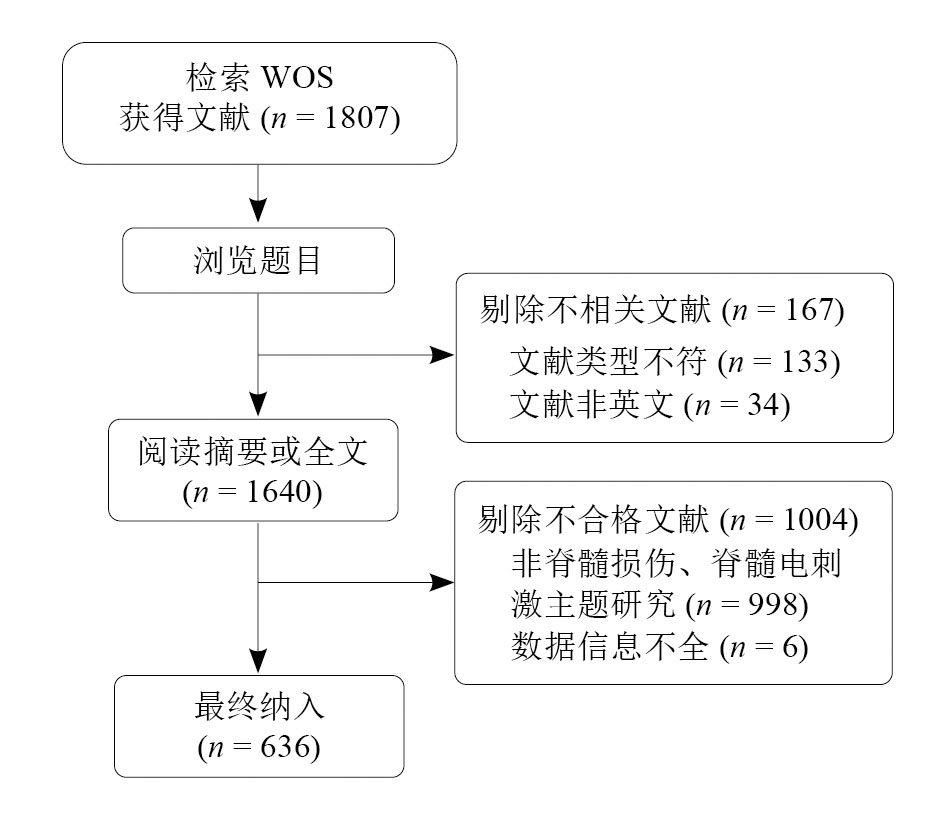
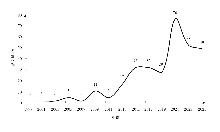
Figure 2
Annual volume of literatures"

Table 1
Top five countries of publication volume"
| 排名 | 国家 | 发文量/n | 被引量 | 平均被引量 | 连接强度 |
|---|---|---|---|---|---|
| 1 | 美国 | 429 | 18997 | 44.28 | 334 |
| 2 | 俄罗斯 | 98 | 8380 | 85.51 | 167 |
| 3 | 中国 | 70 | 1642 | 23.46 | 57 |
| 4 | 英国 | 62 | 3950 | 63.71 | 122 |
| 5 | 加拿大 | 58 | 2096 | 36.14 | 78 |
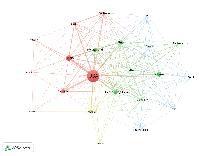
Figure 3
Co-occurrence map of countries"

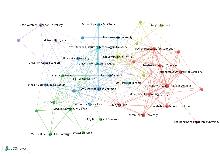
Figure 4
Co-occurrence map of institutions"

Table 2
Top five institutions by publication volume"
| 排名 | 机构 | 发文量/n | 被引量 | 平均被引量 | 连接强度 |
|---|---|---|---|---|---|
| 1 | University of California, Los Angeles | 76 | 7296 | 96.00 | 148 |
| 2 | University of Louisville | 57 | 3411 | 59.84 | 73 |
| 3 | Pavlov Institute of Physiology | 52 | 6775 | 130.29 | 120 |
| 4 | Case Western Reserve University | 36 | 778 | 21.61 | 29 |
| 5 | Mayo Clinic | 36 | 1121 | 31.14 | 55 |
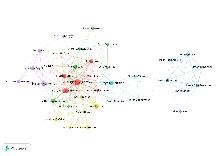
Figure 5
Co-occurrence map of authors"

Table 3
Top five authors by publication volume"
| 排名 | 作者 | 国家 | 机构 | 发文量/n | 被引量 | 平均被 引量 | H指数 | 连接强度 |
|---|---|---|---|---|---|---|---|---|
| 1 | V. Reggie Edgerton | 美国 | Ranchos Los Amigos National Rehabilitation Center | 70 | 6608 | 94.40 | 108 | 241 |
| 2 | Yury Gerasimenko | 美国 | Pavlov Institute of Physiology | 57 | 6002 | 105.30 | 7 | 198 |
| 3 | Susan J. Harkema | 美国 | University of Louisville | 44 | 3206 | 72.86 | 50 | 81 |
| 4 | Igor Lavrov | 美国 | Mayo Clinic | 36 | 2413 | 67.03 | 27 | 115 |
| 5 | Roland R. Roy | 美国 | University of California, Los Angeles | 36 | 3083 | 85.64 | 85 | 140 |
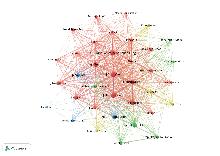
Figure 6
Co-citation map of journals"

Table 4
Top five journals by publication volume"
| 排名 | 期刊 | 发文量/n | 被引量 | 平均被引量 | IF | JCR |
|---|---|---|---|---|---|---|
| 1 | Journal of Clinical Medicine | 31 | 350 | 11.29 | 2.9 | Q1 |
| 2 | Frontiers in Neuroscience | 26 | 555 | 21.35 | 3.2 | Q2 |
| 3 | Journal of Neurophysiology | 26 | 886 | 34.08 | 2.1 | Q3 |
| 4 | Experimental Neurology | 21 | 571 | 27.19 | 4.2 | Q1 |
| 5 | IEEE Transactions on Neural Systems and Rehabilitation Engineering | 21 | 735 | 35.00 | 5.2 | Q1 |
Table 5
Top five most cited references"
| 排名 | 作者 | 年份 | 题名 | 期刊 | 被引频次 | 连接强度 |
|---|---|---|---|---|---|---|
| 1 | Susan J. Harkema等[ | 2011 | Effect of epidural stimulation of the lumbosacral spinal cord on voluntary movement, standing, and assisted stepping after motor complete paraplegia: a case study | The Lancet | 281 | 2696 |
| 2 | Claudia A. Angeli等 [ | 2014 | Altering spinal cord excitability enables voluntary movements after chronic complete paralysis in humans | Brain | 204 | 2259 |
| 3 | Claudia A. Angeli等[ | 2018 | Recovery of over-ground walking after chronic motor complete spinal cord injury | New England Journal of Medicine | 159 | 1855 |
| 4 | Fabien B. Wagner等[ | 2018 | Targeted neurotechnology restores walking in humans with spinal cord injury | Nature | 157 | 1770 |
| 5 | Megan L. Gill等[ | 2018 | Neuromodulation of lumbosacral spinal networks enables independent stepping after complete paraplegia | Nature Medicine | 150 | 1785 |
Table 6
Top five keywords of frequency"
| 排名 | 关键词 | 出现频次 | 平均频次 |
|---|---|---|---|
| 1 | spinal cord injury | 436 | 36.61 |
| 2 | spinal cord stimulation | 389 | 38.78 |
| 3 | neuromodulation | 214 | 36.55 |
| 4 | functional recovery | 169 | 43.79 |
| 5 | electrical stimulation | 161 | 34.25 |
Figure 7
Co-occurrence map of keywords"
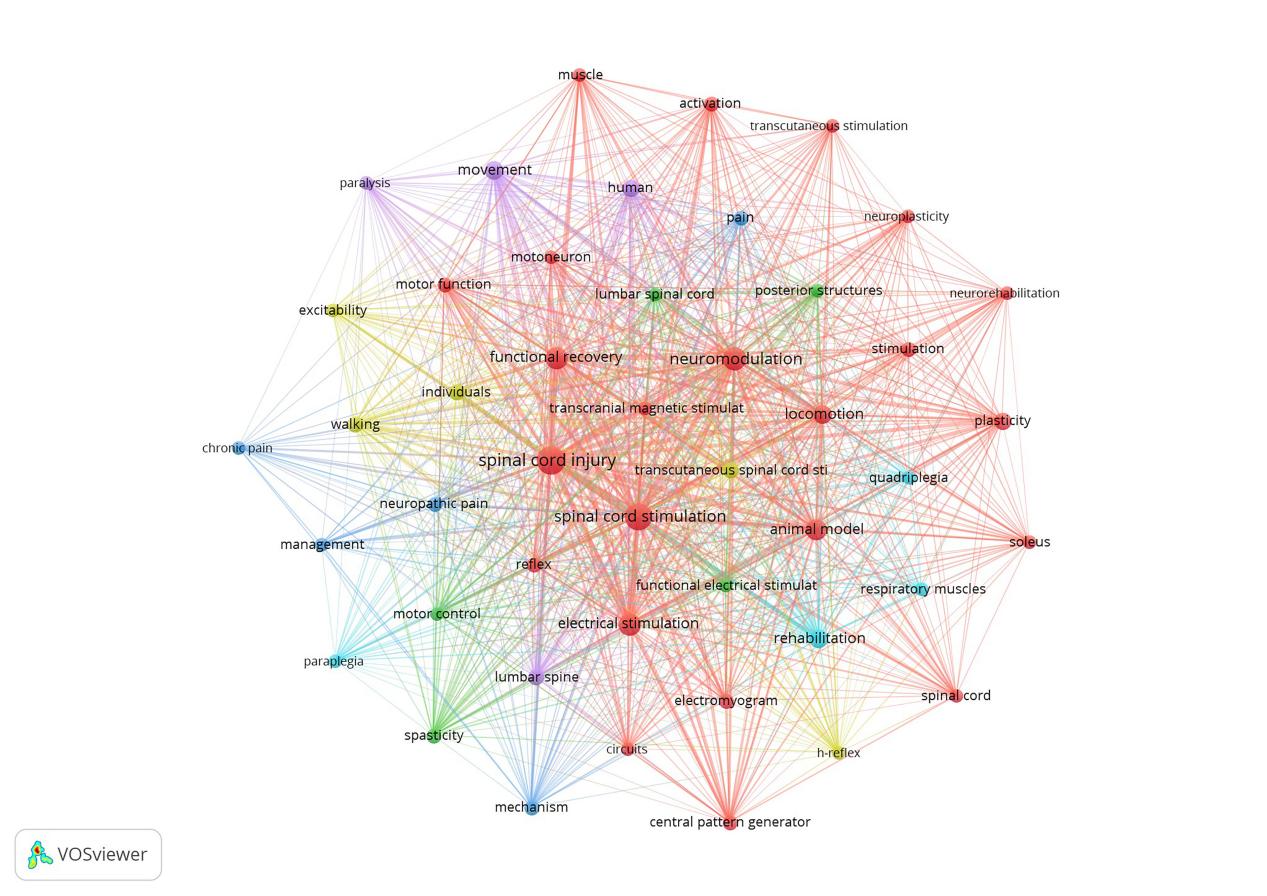
Figure 8
Temporal co-occurrence map of keywords"
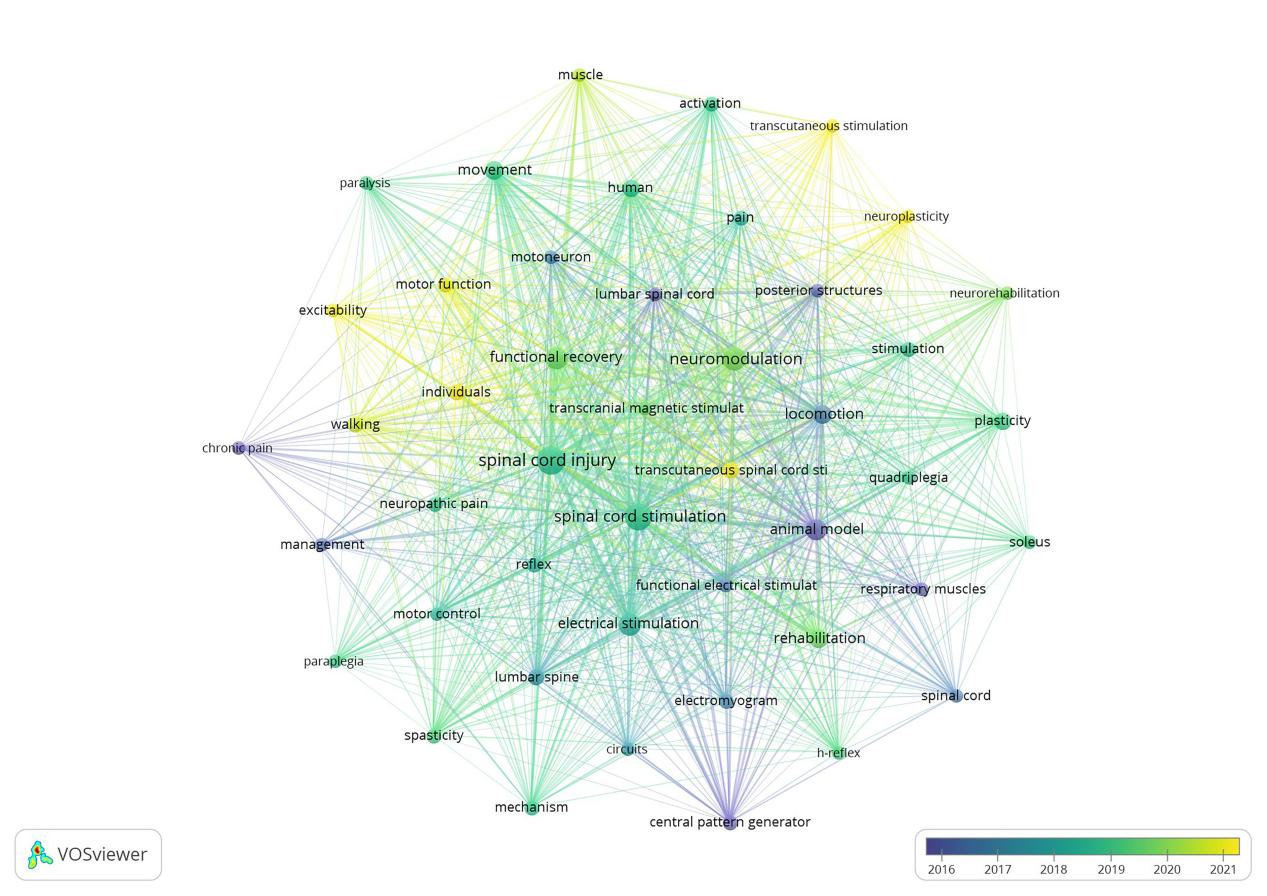
Table 7
Keyword clusters and related keywords"
| 聚类号 | 标签 | LLR聚类代表关键词 |
|---|---|---|
| #0 | spinal cord stimulation | spinal cord stimulation、electrode、column stimulation、neurostimulation、neuropathic pain、back surgery syndrome、dorsal horn neurons、spinal reflexes、autonomic reflex pathway、cortical excitability |
| #1 | motor recovery | motor recovery、functional recovery、hand function、gait、neural plasticity、circuit reorganization、pattern generators、interlimb coordination、motor training |
| #2 | artificial intelligence | artificial intelligence、system、guidelines、strategy、classification、computational simulation |
| #3 | lower limb | lower limb、soleus H reflex、leg muscles、reflex、reciprocal inhibition、muscle strength、motor rehabilitation、fatigue、voluntary movement |
| #4 | dysfunction | dysfunction、neurogenic bladder、external urethral sphincter、neural control、dysesthetic pain、lower urinary tract、back pain |
| #5 | modulation | modulation、activity-dependent plasticity、stimulation、motor control、pattern、volitional control、corticospinal tract |
| #6 | cough | restore cough、expiratory muscles、cervical spinal cord、high-frequency stimulation、current density、BDNF |
| #7 | autonomic function | autonomic function、cardiovascular function、bowel management、autonomic dysreflexia、orthostatic hypotension |
| #8 | respiratory muscles | respiratory muscles、abdominal muscles、contractile property、mechanical insufflation exsufflation、airway pressure、tetraplegic subjects |
| #9 | spinal cord | spinal cord、cord dorsum potentials、spinally evoked motor potentials、spasticity、epidural spinal stimulation |
| #10 | diaphragm pacing | diaphragm pacing、diaphragm、intercostal muscles、phrenic nerve、respiratory paralysis、motor complete paraplegia、contusion injury、inspiratory muscles、intermittent hypoxia、cervical cord |
| #11 | functional electrical stimulation | functional electrical stimulation、dorsal column stimulation、central pattern generator、intraspinal microstimulation、bladder contractions、locomotion、assistive technology、dynamic contractions |
| #12 | spinal cord injury | spinal cord injury、neuromodulation、bladder control、detrusor hyperreflexia、electric stimulation therapy、araplegia、conditional stimulation、afferents |
| #13 | interneurons | Interneurons、fictive locomotion、control of movement、circuits、lumbar cord、afferent stimulation、spatiotemporal neuromodulation、axon regeneration |
| #14 | brain-computer interfaces | brain-computer interfaces、EEG、implantation、functional restoration、ambulation、motoneurons |
Figure 9
Clustering map of keywords"
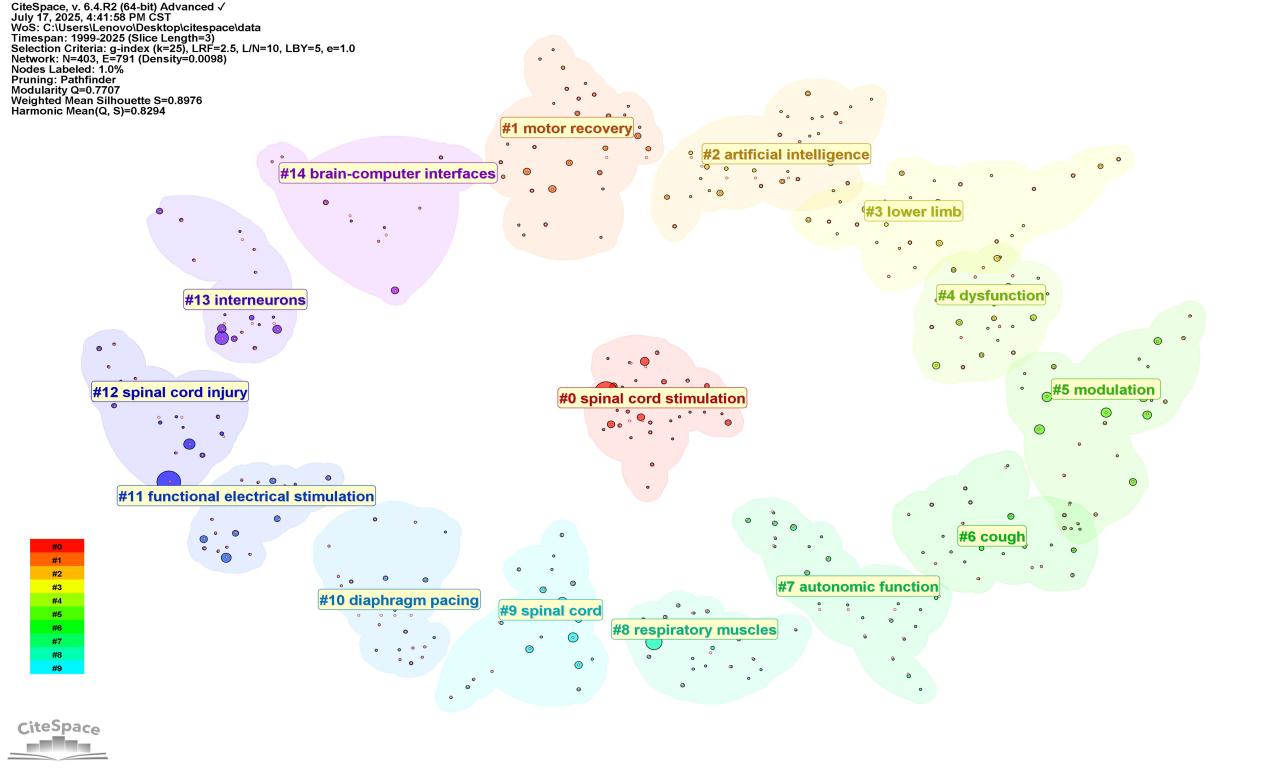
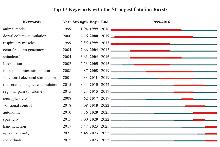
Figure 10
Bursting keywords"

| [1] | 刘宏炜. 创伤性脊柱脊髓损伤诊断与治疗专家共识(2022版)[J]. 中国老年保健医学, 2022, 20(4): 6-9. |
| LIU H W. Expert consensus on diagnosis and treatment of traumatic spinal cord injury (2022 edition) [J]. Chin J Geriatr Care, 2022, 20(4): 6-9. | |
| [2] |
LU Y, SHANG Z, ZHANG W, et al. Global incidence and characteristics of spinal cord injury since 2000-2021: a systematic review and meta-analysis [J]. BMC Med, 2024, 22(1): 285.
doi: 10.1186/s12916-024-03514-9 pmid: 38972971 |
| [3] | 张浩, 刘宇, 肖世宁, 等. 中国创伤性脊髓损伤患者流行病学特征的Meta分析[J]. 中国脊柱脊髓杂志, 2023, 33(5): 397-407. |
| ZHANG H, LIU Y, XIAO S N, et al. Epidemiological characteristics of traumatic spinal cord injury in China: a meta-analysis[J]. Chin J Spine Spinal Cord, 2023, 33(5): 397-407. | |
| [4] | 陈星月, 陈栋, 陈春慧, 等. 中国创伤性脊髓损伤流行病学和疾病经济负担的系统评价[J]. 中国循证医学杂志, 2018, 18(2): 143-150. |
| CHEN X Y, CHEN D, CHEN C H, et al. Epidemiology and economic burden of traumatic spinal cord injury in China: a systematic review[J]. Chin J Evidence-Based Med, 2018, 18(2): 143-150. | |
| [5] | 邓亮强, 刘震洋, 牛剑平, 等. 脊髓电刺激对脊髓损伤治疗的研究进展[J]. 国际神经病学神经外科学杂志, 2024, 51(6): 75-81. |
| DENG L Q, LIU Z Y, NIU J P, et al. Research progress on spinal cord stimulation for the treatment of spinal cord injury[J]. J Int Neurol Neurosurg, 2024, 51(6): 75-81. | |
| [6] |
DOOLEY D M, SHARKEY J, KELLER W, et al. Treatment of demyelinating and degenerative diseases by electro stimulation of the spinal cord[J]. Med Prog Technol, 1978, 6(1): 1-14.
pmid: 310508 |
| [7] |
MELZACK R, WALL P D. Pain mechanisms: a new theory[J]. Science, 1965, 150(3699): 971-979.
doi: 10.1126/science.150.3699.971 pmid: 5320816 |
| [8] |
SHEALY C N, MORTIMER J T, ESWICK J B. Electrical inhibition of pain by stimulation of the dorsal columns: preliminary clinical report[J]. Anesth Analg, 1967, 46(4): 489-491.
pmid: 4952225 |
| [9] | BAROLAT G, MYKLEBUST J B, WENNINGER W. Enhancement of voluntary motor function following spinal cord stimulation: case study[J]. Appl Neurophysiol, 1986, 49(6): 307-314. |
| [10] |
BROADUS R N. Toward a definition of "bibliometrics"[J]. Scientometrics, 1987, 12(5): 373-379.
doi: 10.1007/BF02016680 |
| [11] |
HARKEMA S, GERASIMENKO Y, HODES J, et al. Effect of epidural stimulation of the lumbosacral spinal cord on voluntary movement, standing, and assisted stepping after motor complete paraplegia: a case study[J]. Lancet, 2011, 377(9781): 1938-1947.
doi: 10.1016/S0140-6736(11)60547-3 pmid: 21601270 |
| [12] |
ANGELI C A, EDGERTON V R, GERASIMENKO Y P, et al. Altering spinal cord excitability enables voluntary movements after chronic complete paralysis in humans[J]. Brain, 2014, 137(Pt 5): 1394-1409.
doi: 10.1093/brain/awu038 pmid: 24713270 |
| [13] |
ANGELI C A, BOAKYE M, MORTON R A, et al. Recovery of over-ground walking after chronic motor complete spinal cord injury[J]. N Engl J Med, 2018, 379(13): 1244-1250.
doi: 10.1056/NEJMoa1803588 |
| [14] |
WAGNER F B, MIGNARDOT J B, LE GOFF-MIGNARDOT C G, et al. Targeted neurotechnology restores walking in humans with spinal cord injury[J]. Nature, 2018, 563(7729): 65-71.
doi: 10.1038/s41586-018-0649-2 |
| [15] |
GILL M L, GRAHN P J, CALVERT J S, et al. Neuromodulation of lumbosacral spinal networks enables independent stepping after complete paraplegia[J]. Nat Med, 2018, 24(11): 1677-1682.
doi: 10.1038/s41591-018-0175-7 pmid: 30250140 |
| [16] | 章沿锋, 蔡世宏, 柳成江, 等. 国产脊髓电刺激系统在小尾寒羊植入的长期安全性和组织相容性研究[J]. 中国疼痛医学杂志, 2024, 30(8): 568-577. |
| ZHANG Y F, CAI S H, LIU C J, et al. Long-term safety and histocompatibility of a domestically produced spinal cord stimulation system implanted in small-tailed Han sheep[J]. Chin J Pain Med, 2024, 30(8): 568-577. | |
| [17] |
AYANWUYI L, TOKARSKA N, MCLEAN N A, et al. Brief electrical nerve stimulation enhances intrinsic repair capacity of the focally demyelinated central nervous system[J]. Neural Regen Res, 2022, 17(5): 1042-1050.
doi: 10.4103/1673-5374.324848 pmid: 34558531 |
| [18] |
HAHM S C, YOON Y W, KIM J. High-frequency transcutaneous electrical nerve stimulation alleviates spasticity after spinal contusion by inhibiting activated microglia in rats[J]. Neurorehabil Neural Repair, 2015, 29(4): 370-381.
doi: 10.1177/1545968314545172 |
| [19] |
HACHMANN J T, YOUSAK A, WALLNER J J, et al. Epidural spinal cord stimulation as an intervention for motor recovery after motor complete spinal cord injury[J]. J Neurophysiol, 2021, 126(6): 1843-1859.
doi: 10.1152/jn.00020.2021 pmid: 34669485 |
| [20] |
MORAUD E M, CAPOGROSSO M, FORMENTO E, et al. Mechanisms underlying the neuromodulation of spinal circuits for correcting gait and balance deficits after spinal cord injury[J]. Neuron, 2016, 89(4): 814-828.
doi: 10.1016/j.neuron.2016.01.009 pmid: 26853304 |
| [21] |
GREINER N, BARRA B, SCHIAVONE G, et al. Recruitment of upper-limb motoneurons with epidural electrical stimulation of the cervical spinal cord[J]. Nat Commun, 2021, 12(1): 435.
doi: 10.1038/s41467-020-20703-1 pmid: 33469022 |
| [22] |
CHALIF J I, CHAVARRO V S, MENSAH E, et al. Epidural spinal cord stimulation for spinal cord injury in humans: a systematic review[J]. J Clin Med, 2024, 13(4): 1090.
doi: 10.3390/jcm13041090 |
| [23] |
CAPOGROSSO M, WAGNER F B, GANDAR J, et al. Configuration of electrical spinal cord stimulation through real-time processing of gait kinematics[J]. Nat Protoc, 2018, 13(9): 2031-2061.
doi: 10.1038/s41596-018-0030-9 pmid: 30190556 |
| [24] |
MINASSIAN K, PERSY I, RATTAY F, et al. Human lumbar cord circuitries can be activated by extrinsic tonic input to generate locomotor-like activity[J]. Hum Mov Sci, 2007, 26(2): 275-295.
doi: 10.1016/j.humov.2007.01.005 |
| [25] |
BERTRAND S, CAZALETS J R. The respective contribution of lumbar segments to the generation of locomotion in the isolated spinal cord of newborn rat[J]. Eur J Neurosci, 2002, 16(9): 1741-1750.
pmid: 12431227 |
| [26] |
SHAPKOVA E Y, SCHOMBURG E D. Two types of motor modulation underlying human stepping evoked by spinal cord electrical stimulation (SCES)[J]. Acta Physiol Pharmacol Bulg, 2001, 26(3): 155-157.
pmid: 11695529 |
| [27] |
FORMENTO E, MINASSIAN K, WAGNER F, et al. Electrical spinal cord stimulation must preserve proprioception to enable locomotion in humans with spinal cord injury[J]. Nat Neurosci, 2018, 21(12): 1728-1741.
doi: 10.1038/s41593-018-0262-6 pmid: 30382196 |
| [28] |
ASBOTH L, FRIEDLI L, BEAUPARLANT J, et al. Cortico-reticulo-spinal circuit reorganization enables functional recovery after severe spinal cord contusion[J]. Nat Neurosci, 2018, 21(4): 576-588.
doi: 10.1038/s41593-018-0093-5 pmid: 29556028 |
| [29] |
SEÁÑEZ I, CAPOGROSSO M. Motor improvements enabled by spinal cord stimulation combined with physical training after spinal cord injury: review of experimental evidence in animals and humans[J]. Bioelectron Med, 2021, 7(1): 16.
doi: 10.1186/s42234-021-00077-5 |
| [30] |
KUMAR K, TOTH C, NATH R K, et al. Improvement of limb circulation in peripheral vascular disease using epidural spinal cord stimulation: a prospective study[J]. J Neurosurg, 1997, 86(4): 662-669.
pmid: 9120631 |
| [31] |
PIEDADE G S, VESPER J, REICHSTEIN D, et al. Spinal cord stimulation in non-reconstructable critical limb ischemia: a retrospective study of 71 cases[J]. Acta Neurochir, 2023, 165(4): 967-973.
doi: 10.1007/s00701-022-05448-8 |
| [32] |
KLINKOVA A, KAMENSKAYA O, ASHURKOV A, et al. The clinical outcomes in patients with critical limb ischemia one year after spinal cord stimulation[J]. Ann Vasc Surg, 2020, 62: 356-364.
doi: S0890-5096(19)30171-2 pmid: 30802587 |
| [33] |
MANNHEIMER C, ELIASSON T, AUGUSTINSSON L E, et al. Electrical stimulation versus coronary artery bypass surgery in severe angina pectoris: the ESBY study[J]. Circulation, 1998, 97(12): 1157-1163.
pmid: 9537342 |
| [34] |
CUI J G, LINDEROTH B, MEYERSON B A. Effects of spinal cord stimulation on touch-evoked allodynia involve GABAergic mechanisms. An experimental study in the mononeuropathic rat [J]. Pain, 1996, 66(2/3): 287-295.
doi: 10.1016/0304-3959(96)03069-2 |
| [35] |
SONG Z, MEYERSON B A, LINDEROTH B. Spinal 5-HT receptors that contribute to the pain-relieving effects of spinal cord stimulation in a rat model of neuropathy[J]. Pain, 2011, 152(7): 1666-1673.
doi: 10.1016/j.pain.2011.03.012 pmid: 21514998 |
| [36] | MATTIE R, LIN A B, BHANDAL H, et al. Spinal cord stimulation for the treatment of complex regional pain syndrome: a systematic review of randomized controlled trials[J]. Interv Pain Med, 2024, 3(4): 100527. |
| [37] |
HOIKKANEN T, NISSEN M, IKÄHEIMO T M, et al. Long-term outcome of spinal cord stimulation in complex regional pain syndrome[J]. Neurosurgery, 2021, 89(4): 597-609.
doi: 10.1093/neuros/nyab239 pmid: 34245150 |
| [38] |
COURTINE G, GERASIMENKO Y, VAN DEN BRAND R, et al. Transformation of nonfunctional spinal circuits into functional states after the loss of brain input[J]. Nat Neurosci, 2009, 12(10): 1333-1342.
doi: 10.1038/nn.2401 pmid: 19767747 |
| [39] |
ROWALD A, KOMI S, DEMESMAEKER R, et al. Activity-dependent spinal cord neuromodulation rapidly restores trunk and leg motor functions after complete paralysis[J]. Nat Med, 2022, 28(2): 260-271.
doi: 10.1038/s41591-021-01663-5 pmid: 35132264 |
| [40] |
MORITZ C, FIELD-FOTE E C, TEFERTILLER C, et al. Non-invasive spinal cord electrical stimulation for arm and hand function in chronic tetraplegia: a safety and efficacy trial[J]. Nat Med, 2024, 30(5): 1276-1283.
doi: 10.1038/s41591-024-02940-9 pmid: 38769431 |
| [41] |
SCHIEFERDECKER S, NEUDORFER C, EL MAJDOUB F, et al. A retrospective case series of high-frequency spinal cord stimulation (HF10-SCS) in neurogenic bladder incontinence[J]. Oper Neurosurg, 2019, 17(1): 14-20.
doi: 10.1093/ons/opy236 pmid: 30169840 |
| [42] |
ZANDER H J, KOWALSKI K E, DIMARCO A F, et al. Model-based optimization of spinal cord stimulation for inspiratory muscle activation[J]. Neuromodulation, 2022, 25(8): 1317-1329.
doi: 10.1111/ner.13415 |
| [43] |
LEGG DITTERLINE B E, ASLAN S C, WANG S, et al. Restoration of autonomic cardiovascular regulation in spinal cord injury with epidural stimulation: a case series[J]. Clin Auton Res, 2021, 31(2): 317-320.
doi: 10.1007/s10286-020-00693-2 |
| [44] |
SQUAIR J W, GAUTIER M, MAHE L, et al. Neuroprosthetic baroreflex controls haemodynamics after spinal cord injury[J]. Nature, 2021, 590(7845): 308-314.
doi: 10.1038/s41586-020-03180-w |
| [45] |
FLETT S, GARCIA J, COWLEY K C. Spinal electrical stimulation to improve sympathetic autonomic functions needed for movement and exercise after spinal cord injury: a scoping clinical review[J]. J Neurophysiol, 2022, 128(3): 649-670.
doi: 10.1152/jn.00205.2022 pmid: 35894427 |
| [46] |
NIGHTINGALE T E, WALTER M, WILLIAMS A M M, et al. Ergogenic effects of an epidural neuroprosthesis in one individual with spinal cord injury[J]. Neurology, 2019, 92(7): 338-340.
doi: 10.1212/WNL.0000000000006923 pmid: 30635485 |
| [47] | MALONE I G, KELLY M N, NOSACKA R L, et al. Closed-loop, cervical, epidural stimulation elicits respiratory neuroplasticity after spinal cord injury in freely behaving rats[J]. eNeuro, 2022, 9(1): ENEURO.426-21.2021.. |
| [48] |
ZHANG T, JIA Y, WANG N, et al. Recent advances in potential mechanisms of epidural spinal cord stimulation for movement disorders[J]. Exp Neurol, 2025, 392: 115330.
doi: 10.1016/j.expneurol.2025.115330 |
| [49] |
LAM C M, LATIF U, SACK A, et al. Advances in spinal cord stimulation[J]. Bioengineering, 2023, 10(2): 185.
doi: 10.3390/bioengineering10020185 |
| [50] |
KAPURAL L, YU C, DOUST M W, et al. Novel 10-kHz high-frequency therapy (HF10 therapy) is superior to traditional low-frequency spinal cord stimulation for the treatment of chronic back and leg pain: the SENZA-RCT randomized controlled trial[J]. Anesthesiology, 2015, 123(4): 851-860.
doi: 10.1097/ALN.0000000000000774 pmid: 26218762 |
| [51] |
KAPURAL L, YU C, DOUST M W, et al. Comparison of 10-kHz high-frequency and traditional low-frequency spinal cord stimulation for the treatment of chronic back and leg pain: 24-month results from a multicenter, randomized, controlled pivotal trial[J]. Neurosurgery, 2016, 79(5): 667-677.
pmid: 27584814 |
| [52] |
DEER T, SLAVIN K V, AMIRDELFAN K, et al. Success using neuromodulation with BURST (SUNBURST) study: results from a prospective, randomized controlled trial using a novel burst waveform[J]. Neuromodulation, 2018, 21(1): 56-66.
doi: 10.1111/ner.12698 pmid: 28961366 |
| [53] |
CAYLOR J, REDDY R, YIN S, et al. Spinal cord stimulation in chronic pain: evidence and theory for mechanisms of action[J]. Bioelectron Med, 2019, 5(1): 12.
doi: 10.1186/s42234-019-0023-1 |
| [54] | RUSSO M, BROOKER C, COUSINS M J, et al. Sustained long-term outcomes with closed-loop spinal cord stimulation: 12-month results of the prospective, multicenter, open-label avalon study[J]. Neurosurgery, 2020, 87(4): E485-E495. |
| [55] |
MEKHAIL N, LEVY R M, DEER T R, et al. Long-term safety and efficacy of closed-loop spinal cord stimulation to treat chronic back and leg pain (Evoke): a double-blind, randomised, controlled trial[J]. Lancet Neurol, 2020, 19(2): 123-134.
doi: S1474-4422(19)30414-4 pmid: 31870766 |
| [56] |
SAMEJIMA S, KHORASANI A, RANGANATHAN V, et al. Brain-computer-spinal interface restores upper limb function after spinal cord injury[J]. IEEE Trans Neural Syst Rehabil Eng, 2021, 29: 1233-1242.
doi: 10.1109/TNSRE.2021.3090269 |
| [57] |
LORACH H, GALVEZ A, SPAGNOLO V, et al. Walking naturally after spinal cord injury using a brain-spine interface[J]. Nature, 2023, 618(7963): 126-133.
doi: 10.1038/s41586-023-06094-5 |
| [58] |
FLESHER S N, DOWNEY J E, WEISS J M, et al. A brain-computer interface that evokes tactile sensations improves robotic arm control[J]. Science, 2021, 372(6544): 831-836.
doi: 10.1126/science.abd0380 pmid: 34016775 |
| [59] |
JASZCZUK P, BRATELJ D, CAPONE C, et al. Advances in neuromodulation and digital brain-spinal cord interfaces for spinal cord injury[J]. Int J Mol Sci, 2025, 26(13): 6021.
doi: 10.3390/ijms26136021 |
| [60] |
HAGEDORN J M, GEORGE T K, AIYER R, et al. Artificial intelligence and pain medicine: an introduction[J]. J Pain Res, 2024, 17: 509-518.
doi: 10.2147/JPR.S429594 pmid: 38328019 |
| [61] |
PRUNSKIS J V, MASYS T, PYLES S T, et al. The application of artificial intelligence to enhance spinal cord stimulation efficacy for chronic pain management: current evidence and future directions[J]. Curr Pain Headache Rep, 2025, 29(1): 85.
doi: 10.1007/s11916-025-01400-4 |
| [62] |
ESTES S, ZARKOU A, HOPE J M, et al. Combined transcutaneous spinal stimulation and locomotor training to improve walking function and reduce spasticity in subacute spinal cord injury: a randomized study of clinical feasibility and efficacy[J]. J Clin Med, 2021, 10(6): 1167.
doi: 10.3390/jcm10061167 |
| [63] |
EDGERTON V R, COURTINE G, GERASIMENKO Y P, et al. Training locomotor networks[J]. Brain Res Rev, 2008, 57(1): 241-254.
doi: 10.1016/j.brainresrev.2007.09.002 pmid: 18022244 |
| [64] | LI L, ZHANG B, ZHAO W, et al. Multimodal technologies for closed-loop neural modulation and sensing[J]. Adv Healthc Mater, 2024, 13(24): e2303289. |
| [1] | ZHANG Yingxin, LIU Genlin, CHEN Di, ZHANG Hongxia, TIAN Yifan, WANG Yiji, JING Yang, CHENG Ruidong, ZHANG Shaomin, YAO Jiafeng, SUN Bo, SUN Xiaomeng. MRI findings of spinal cord atrophy after spinal cord injury in children and their injury level [J]. Chinese Journal of Rehabilitation Theory and Practice, 2026, 32(4): 387-392. |
| [2] | LU Xiaolei, WANG Yiji, LIU Genlin, ZHENG Ying, HAO Chunxia, ZHANG Ying, KANG Haiqiong, WEI Bo, MENG Qianru, ZHOU Hongjun. Characteristics of 150 patients with spinal cord injury complicated with spasticity [J]. Chinese Journal of Rehabilitation Theory and Practice, 2026, 32(4): 393-398. |
| [3] | HUANG Cheng, SHEN Yangyi, LU Biying, LIU Tong, LIU Yue. Application of action observation therapy in stroke rehabilitation from 2016 to 2025: a bibliometric analysis [J]. Chinese Journal of Rehabilitation Theory and Practice, 2026, 32(4): 399-410. |
| [4] | LIU Ping, ZHOU Nan, XUE Xiaojie, SHAO Weibo. Application of rehabilitation therapy techniques for post-stroke dysphagia: a bibliometric analysis [J]. Chinese Journal of Rehabilitation Theory and Practice, 2026, 32(3): 294-303. |
| [5] | PU Xinyu, WANG Jingxuan, WANG Hujun, XIU Anda, WANG Yingpeng. Application of repetitive peripheral magnetic stimulation in rehabilitation therapy: a bibliometric analysis [J]. Chinese Journal of Rehabilitation Theory and Practice, 2026, 32(3): 304-316. |
| [6] | SUN Kui, HUANG Hailun, LIU Yongai, GAO Heng. Brain-computer interface technology in treatment for spinal cord injury: a bibliometric analysis [J]. Chinese Journal of Rehabilitation Theory and Practice, 2026, 32(3): 317-328. |
| [7] | HE Zhaonan, ZHANG Tingting, HE Zhaoke, MENG Lijun. Topic mining and content analysis of rehabilitation ethics research in China based on BERTopic model [J]. Chinese Journal of Rehabilitation Theory and Practice, 2026, 32(2): 132-141. |
| [8] | GUO Yabin, ZENG Biyun, ZHOU Yang. Researches in sarcopenia-pain comorbidity from 2015 to 2025: a bibliometric analysis [J]. Chinese Journal of Rehabilitation Theory and Practice, 2026, 32(2): 151-161. |
| [9] | ZHANG Junfeng, CHEN Hao, DU Yuzheng, LI Chen, YU Tao, YANG Yuanqing. Non-pharmacological management for post-stroke spasticity from 2004 to 2024: a bibliometric analysis [J]. Chinese Journal of Rehabilitation Theory and Practice, 2026, 32(1): 45-58. |
| [10] | GAO Kaixiang, LU Haitao. Research in neurorehabilitation from 2015 to 2024: a bibliometric analysis [J]. Chinese Journal of Rehabilitation Theory and Practice, 2026, 32(1): 59-68. |
| [11] | DONG Lijun, XU Shihao, CHEN Qiuhua, ZHANG Lu, YIN Xiaobing. Application of virtual reality technology in managing negative emotions and postoperative rehabilitation in perioperative patients from 2015 to 2025: a bibliometric analysis [J]. Chinese Journal of Rehabilitation Theory and Practice, 2026, 32(1): 69-82. |
| [12] | ZHOU Xinyue, YE Ruixue, MA Yaqi, XU Ying, CAO Longyao, WANG Yulong. Researches on central post-stroke pain: a bibliometric analysis [J]. Chinese Journal of Rehabilitation Theory and Practice, 2025, 31(9): 1038-1049. |
| [13] | LU Dandan, YAO Jingzhi, LI Zi, WANG Kewen, SUN Xinliao, CHEN Jianmin, XU Jianwen. Physical therapy for Parkinson's disease from 2014 to 2023: a bibliometric analysis [J]. Chinese Journal of Rehabilitation Theory and Practice, 2025, 31(8): 906-913. |
| [14] | WANG Xiaofeng, HU Mengqiao, WANG Yan, WEI Kun, XU Wenzhu, REN Dan, MA Ye. Effect of exoskeleton robot-assisted gait training on lower limb function after stroke and spinal cord injury: a systematic review [J]. Chinese Journal of Rehabilitation Theory and Practice, 2025, 31(8): 914-921. |
| [15] | REN Liangxiang, MEI Peipei, MAO Erli, TANG Yifan, WANG Xue, YE Yiqing. Needs of full participation in intestinal management for primary caregivers of patients with neurogenic bowel dysfunction after spinal cord injury: a qualitative study [J]. Chinese Journal of Rehabilitation Theory and Practice, 2025, 31(8): 965-971. |
| Viewed | ||||||
|
Full text |
|
|||||
|
Abstract |
|
|||||
|
||
