



Chinese Journal of Rehabilitation Theory and Practice ›› 2026, Vol. 32 ›› Issue (5): 508-521.doi: 10.3969/j.issn.1006-9771.2026.05.002
Previous Articles Next Articles
CHENG Yaning1a,2, CHEN Di1a,2, TANG Chenchen1b, TIAN Yifan1a,2, LIU Lixu3, ZHANG Yingxin1a,2, WANG Yizheng3, HUANG Yaling4( )
Received:2026-02-03
Published:2026-05-25
Online:2026-05-26
Contact:
HUANG Yaling
E-mail:bjhyl2008@163.com
Supported by:CLC Number:
CHENG Yaning, CHEN Di, TANG Chenchen, TIAN Yifan, LIU Lixu, ZHANG Yingxin, WANG Yizheng, HUANG Yaling. Constructing an actor-network theory for integrating sports activity into rehabilitation based on Rehabilitation in Health Service System[J]. Chinese Journal of Rehabilitation Theory and Practice, 2026, 32(5): 508-521.

Table 1
List of main materials"
| 体育领域 | 康复领域 |
|---|---|
| 《中华人民共和国体育法》[ | 《健康服务体系中的康复》[ |
| 《全民健身计划(2021-2025)》[ | 《全球残疾人健康公平报告》[ |
| 《社会体育指导员(2020年版)——国家职业技能标准》[ | 《康复胜任力架构》[ |
| 《“健康中国2030”规划纲要》[ | 《“健康中国2030”规划纲要》[ |
| 《临床运动处方实践专家共识(2025)》[ | 《临床运动处方实践专家共识(2025)》[ |
| 学术文献研究成果等 | 学术文献研究成果等 |
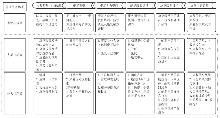
Figure 1
Actors in rehabilitation services"
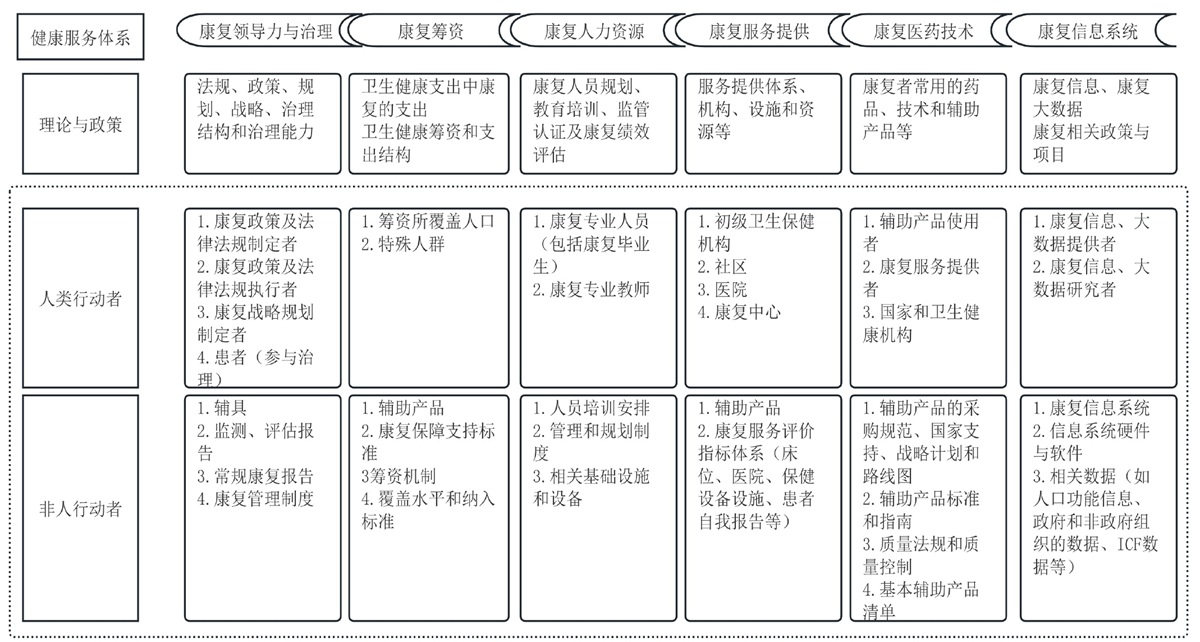
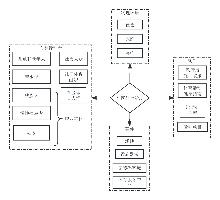
Figure 2
Actors in community sports activity"
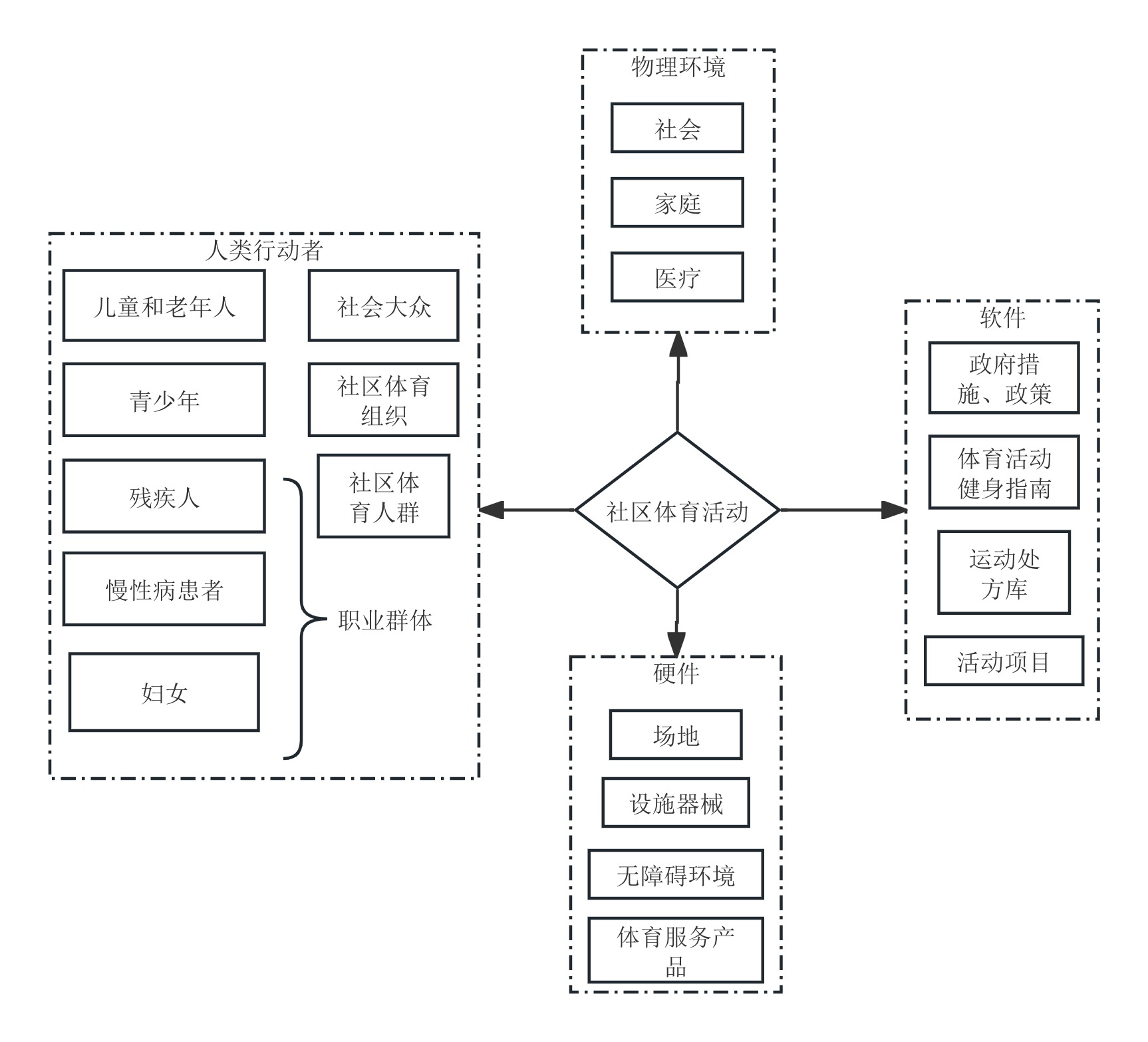
Table 2
Classification of school sports activity"
| 一级分类 | 二级分类 |
|---|---|
| 普通学校 | 城市普通学校 |
| 农村普通学校 | |
| 特殊学校 | 城市特殊学校 |
| 农村特殊学校 |
Figure 3
Actors in school sports activity"
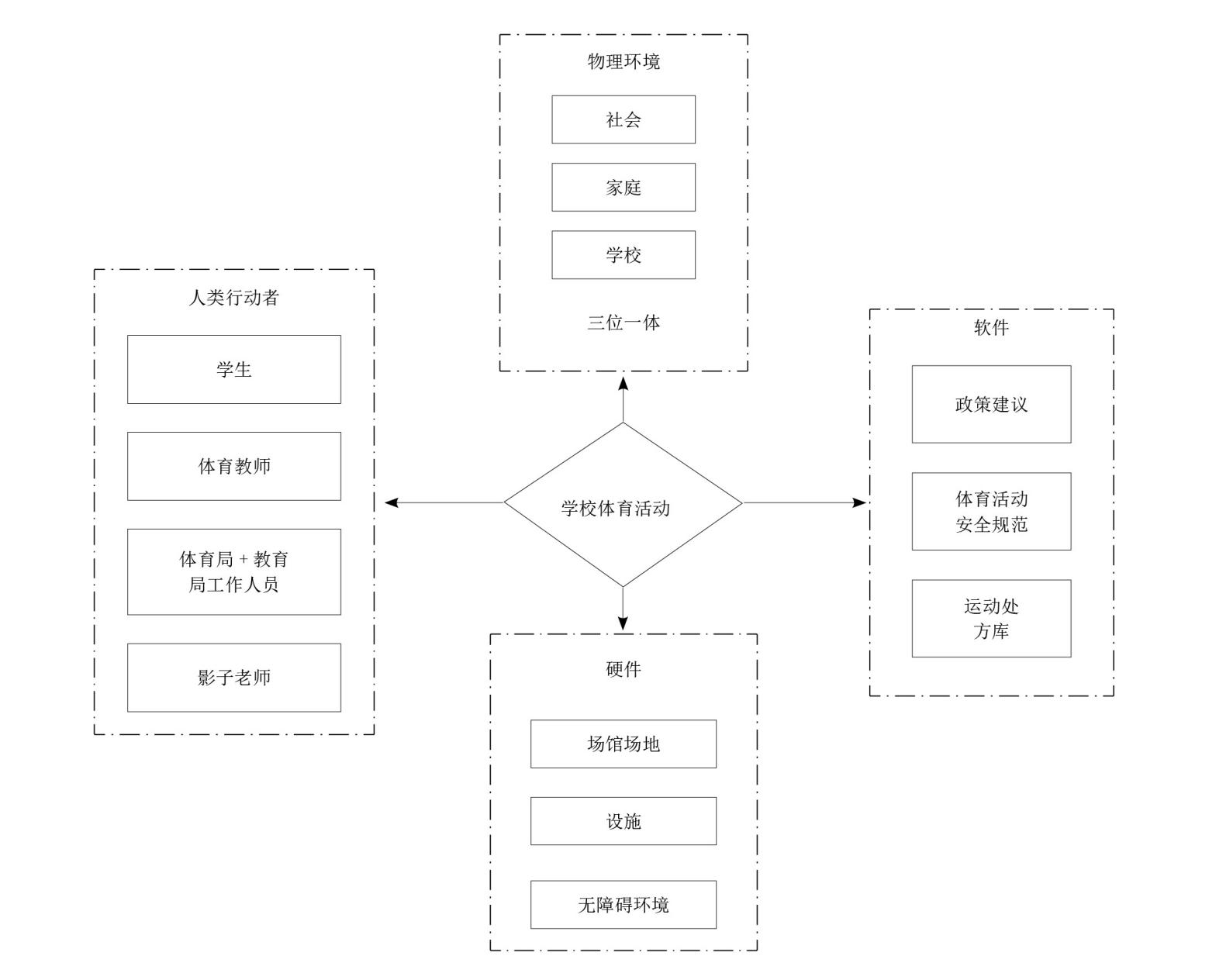
Table 3
Classification of family sports activity"
| 一级分类 | 二级分类 | 目的 |
|---|---|---|
| 普通家庭 | 活动参与者 | 提升身体素质、提高生活质量、接轨学校体育 |
| 正常环境 | ||
| 残疾人家庭 | 活动参与者 | 提升/恢复身体素质、提高生活质量、融入社会 |
| 无障碍环境 |
Figure 4
Actors in family sports activity"
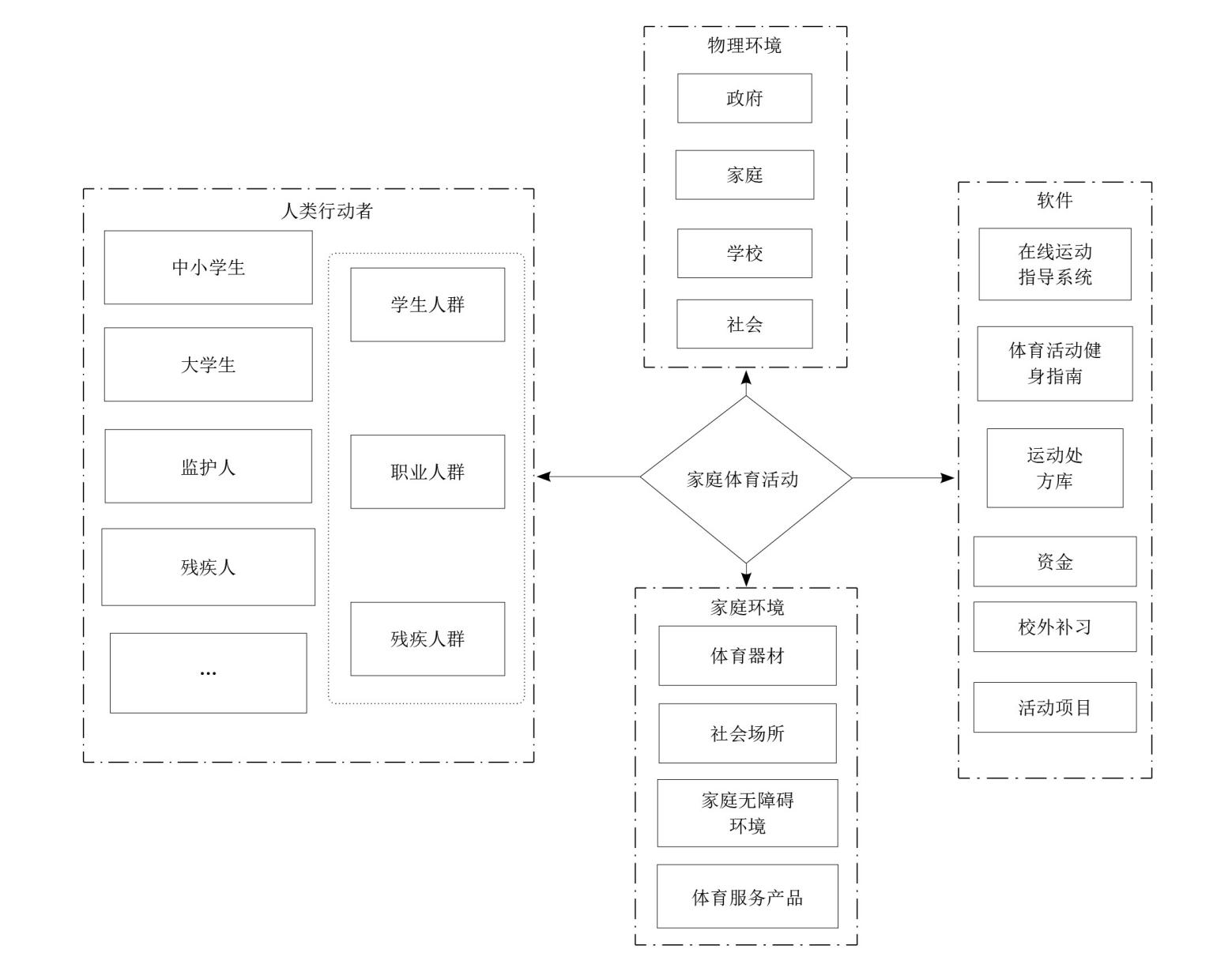
Table 4
Classification of medical-related sports activity"
| 一级分类 | 二级分类 |
|---|---|
| 主动运动 | 医疗机构内 |
| 社会 | |
| 运动想象 | 医疗机构内 |
| 被动运动 | 医疗机构内 |
| 居家 |
Figure 5
Actors in medical-related sports activity"
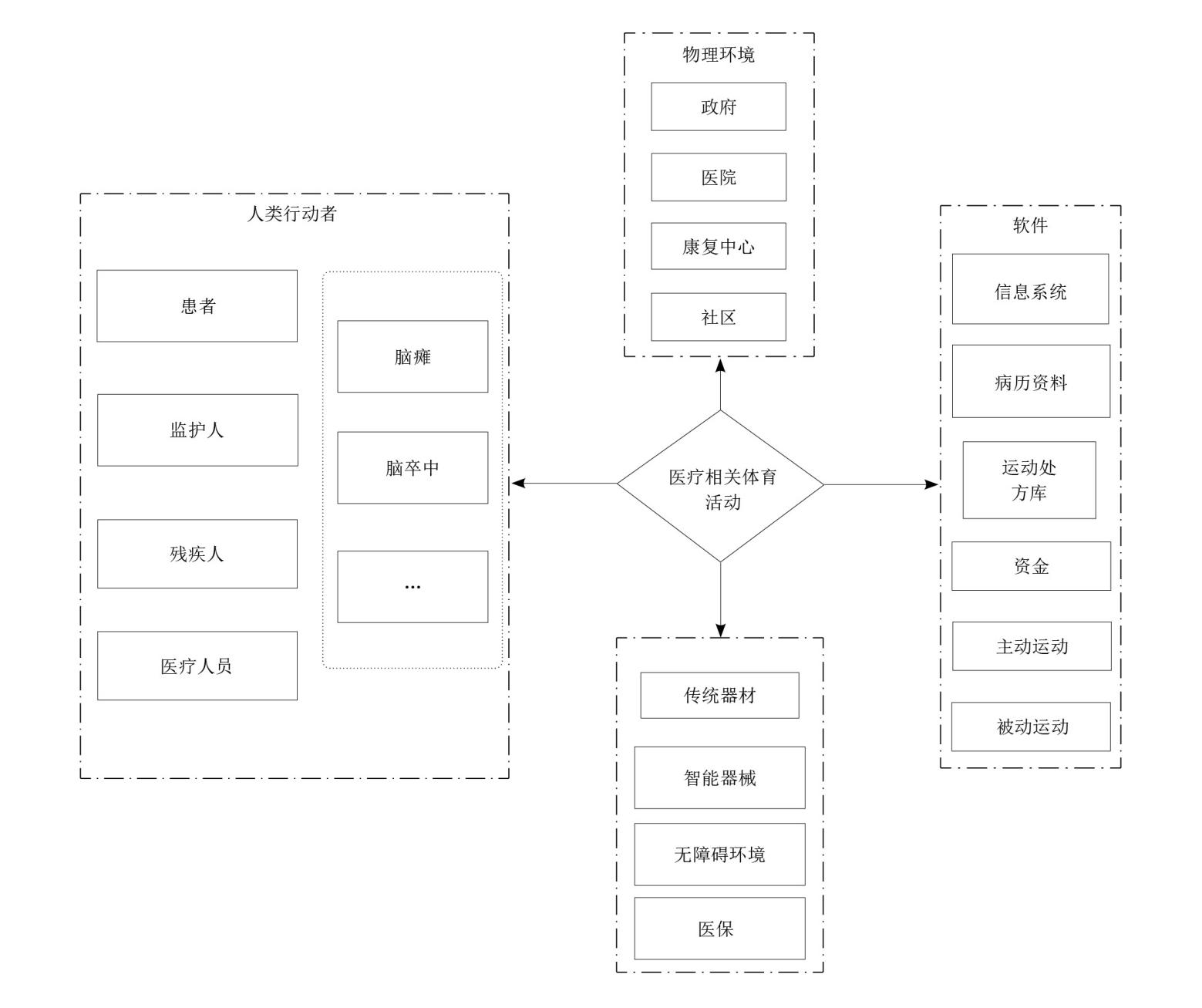
Figure 6
Integrated actors diagram for rehabilitation services and sports activity"
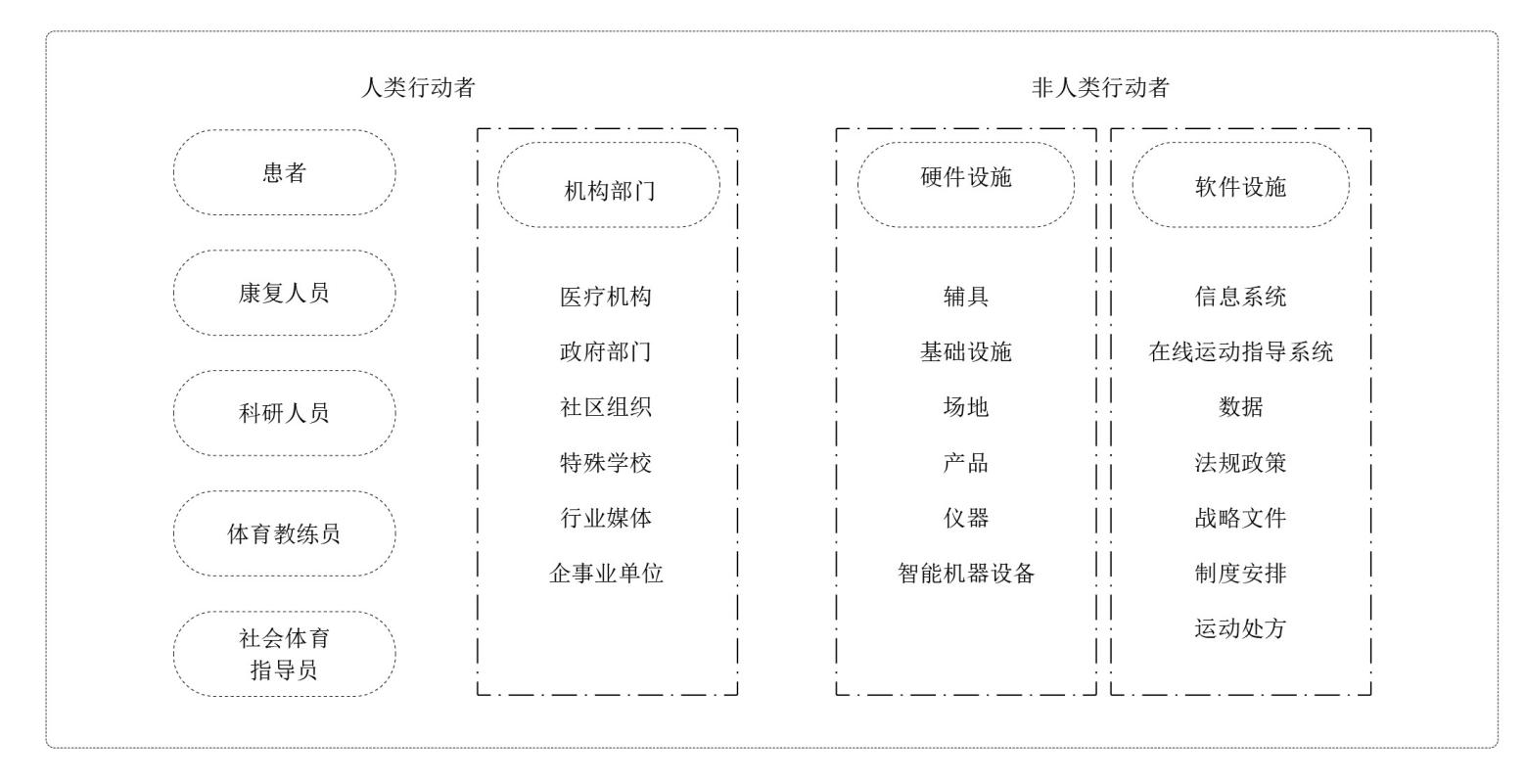
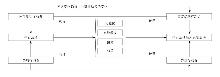
Figure 7
Theoretical framework of integrating sports activity into rehabilitation from the perspective of ANT"
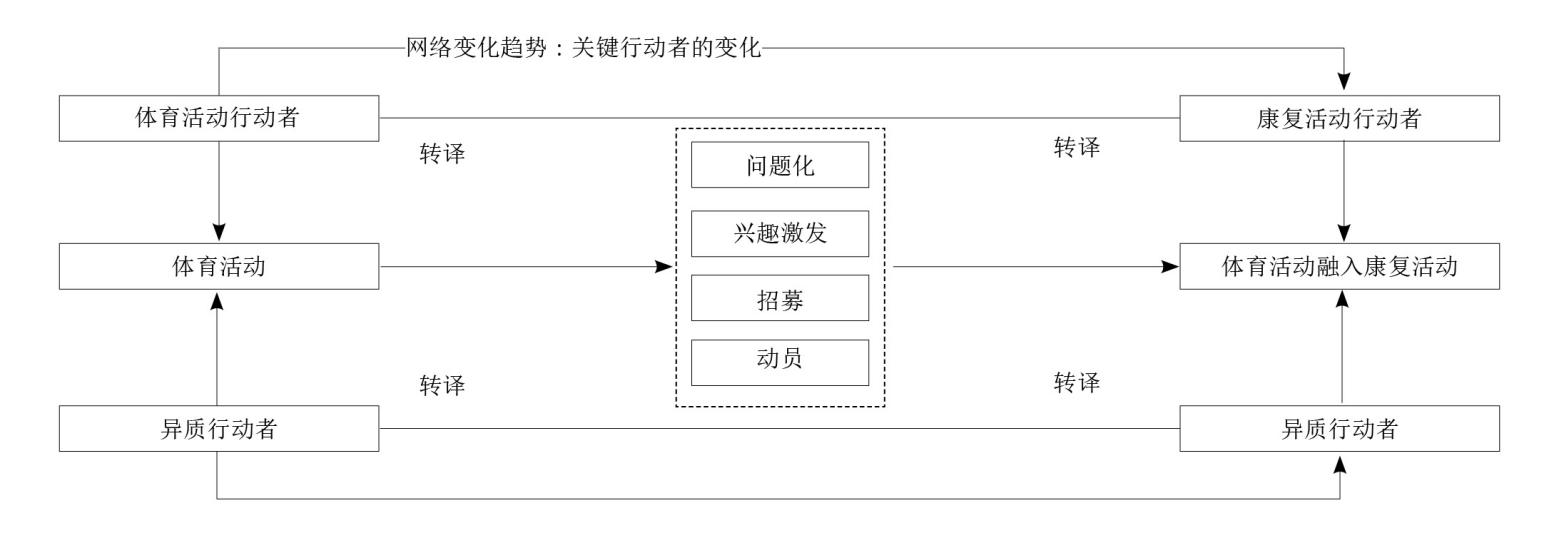
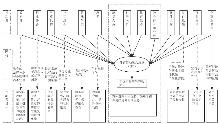
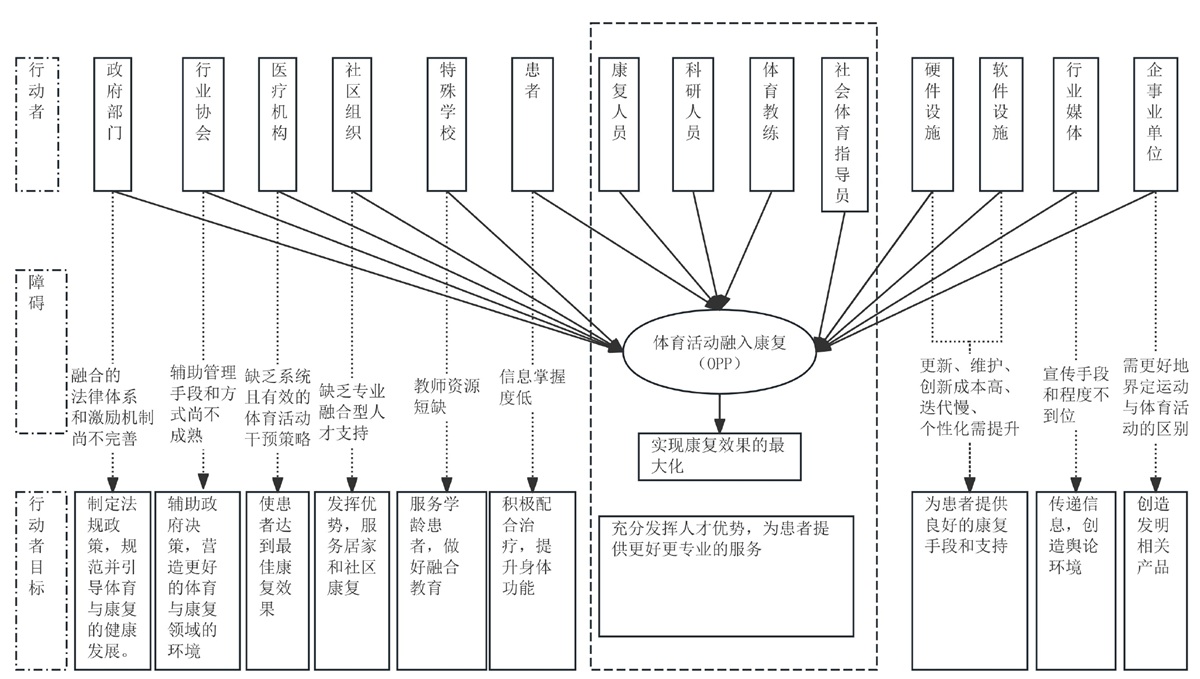
Figure 8
OPP"
| [1] |
田益凡, 叶海燕, 刘叶, 等. ICF框架下的康复大数据标准研究[J]. 中国康复理论与实践, 2024, 30(11): 1262-1271.
doi: 10.3969/j.issn.1006-9771.2024.11.004 |
| TIAN Y F, YE H Y, LIU Y, et al. Rehabilitation big data standards under ICF framework[J]. Chin J Rehabil Theory Pract, 2024, 30(11): 1262-1271. | |
| [2] |
邱卓英, 郭键勋, 李伦, 等. 世界卫生组织康复指南«健康服务体系中的康复»:背景、理论架构与方法、主要内容和实施[J]. 中国康复理论与实践, 2020, 26(1): 16-20.
doi: 10.3969/j.issn.1006-9771.2020.01.003 |
| QIU Z Y, KWOK J K F, LI L, et al. WHO rehabilitation in health system: background, framework and approach, contents and implementation[J]. Chin J Rehabil Theory Pract, 2020, 26(1): 16-20. | |
| [3] |
杨桃, 王国祥, 邱卓英, 等. 基于ICF的社区体育活动服务架构与指导方法研究[J]. 中国康复理论与实践, 2019, 25(11): 1241-1247.
doi: 10.3969/j.issn.1006-9771.2019.11.001 |
| YANG T, WANG G X, QIU Z Y, et al. Framework and approach of service and guidance of community-based physical activities using ICF[J]. Chin J Rehabil Theory Pract, 2019, 25(11): 1241-1247. | |
| [4] | 连斌, 王杰宁, 吴勤峰, 等. 医康融合:内涵、特征及推动路径[J]. 中国康复医学杂志, 2023, 38(4): 534-538. |
| [5] |
杨剑, 石孝宇, 张园. 健康服务视域下体育康复养生本科专业建设:基于ICF和RCF[J]. 中国康复理论与实践, 2024, 30(12): 1391-1399.
doi: 10.3969/j.issn.1006-9771.2024.12.004 |
| YANG J, SHI X Y, ZHANG Y. Constructing undergraduate programs of exercise rehabilitation and health in the context of health services: an ICF and RCF approach[J]. Chin J Rehabil Theory Pract, 2024, 30(12): 1391-1399. | |
| [6] | 张伟国, 蒋亚斌, 卢文云. 体医融合协同创新的机制、困境与破局:基于行动者网络理论的分析[J]. 上海体育大学学报, 2024(8): 48-60. |
| ZHANG W G, JIANG Y B, LU W Y. Mechanism, dilemma and breakthrough of collaborative innovation in sports-medicine integration: analysis based on actor-network theory[J]. J Shanghai Univ Sport, 2024(8): 48-60. | |
| [7] |
邱服冰, 邱卓英, 王国祥, 等. 体育活动融入现代健康服务体系的政策架构与方法体系[J]. 中国康复理论与实践, 2021, 27(8): 881-888.
doi: 10.3969/j.issn.1006-9771.2021.08.002 |
| QIU F B, QIU Z Y, WANG G X, et al. Policy framework and methodological system of inclusive development of health service system and physical activity[J]. Chin J Rehabil Theory Pract, 2021, 27(8): 881-888. | |
| [8] | 欧阳忠明, 李书涵. 代际学习项目如何运行?行动者网络理论视阈下的个案研究[J]. 现代远程教育研究, 2021, 33(2): 84-95. |
| OUYANG Z M, LI S H. How does the intergenerational learning program operate? A case study based on the perspective of actor-network theory[J]. Mod Dist Educ Res, 2021, 33(2): 84-95. | |
| [9] | 叶继红, 成君. 行动者网络理论视角下基层智慧治理的逻辑与进路:以苏州市G区"住枫桥"App为例[J]. 中共天津市委党校学报, 2022, 24(1): 76-85. |
| YE J H, CHENG J. The logic and approach of grass-roots governance from the perspective of actor network theory: take the "living in Fengqiao" App in G district of S city as an example[J]. J Party School Tianjin Commit the CPC, 2022, 24(1): 76-85. | |
| [10] |
CHOI B K, YEO W, WON D. The implication of ANT (actor-network-theory) methodology for R & D policy in open innovation paradigm[J]. Knowl Manag Res Pract, 2018, 16(3): 315-326.
doi: 10.1080/14778238.2018.1471329 |
| [11] | 全国人民代表大会常务委员会. 中华人民共和国体育法[S]. 北京: 中国法制出版社, 2022. |
| [12] | 中华人民共和国国务院. 国务院关于印发全民健身计划(2021—2025年)的通知[EB/OL]. (2021-08-03) [2026-05-17]. http://www.gov.cn/zhengce/content/2021-08/03/content_5629218.htm. |
| [13] | 中华人民共和国人力资源和社会保障部, 国家体育总局. 社会体育指导员(2020年版)——国家职业技能标准[S]. 北京: 中国劳动社会保障出版社, 2020. |
| Ministry of Human Resources and Social Security of the People's Republic of China, General Administration of Sport of China. Social sports instructor (2020 edition)—national occupational skill standard[S]. Beijing: China Labor and Social Security Publishing House, 2020. | |
| [14] | World Health Organization. Global report on health equity for persons with disabilities[R]. Geneva: World Health Organization, 2022. |
| [15] | World Health Organization. Rehabilitation competency framework[R]. Geneva: World Health Organization, 2020. |
| [16] | 中共中央, 国务院. "健康中国2030"规划纲要[R/OL]. (2016-10-25) [2026-05-17]. http://www.gov.cn/zhengce/2016-10/25/content_5124174.htm. |
| [17] | 国家体育总局运动医学研究所, 中国女医师协会医学体育专委会, 中国体育科学学会运动医学分会, 等. 临床运动处方实践专家共识(2025)[J]. 中国运动医学杂志, 2025, 44(5): 341-357. |
| [18] |
世界卫生组织. 健康服务体系中的康复[J]. 邱卓英,郭键勋,李伦,译. 中国康复理论与实践, 2020, 26(1): 1-14.
doi: 10.3969/j.issn.1006-9771.2020.01.001 |
| World Health Organization. Rehabilitation in health systems[J]. QIU Z Y, KWOK J K F, LI L, trans. Chin J Rehabil Theory Pract, 2020, 26(1): 1-14. | |
| [19] |
邱卓英, 李伦, 陈迪, 等. 基于世界卫生组织国际健康分类家族康复指南研究:理论架构和方法体系[J]. 中国康复理论与实践, 2020, 26(2): 125-135.
doi: 10.3969/j.issn.1006-9771.2020.02.001 |
| QIU Z Y, LI L, CHEN D, et al. Research on rehabilitation guidelines using World Health Organization Family International Classifications: framework and approaches[J]. Chin J Rehabil Theory Pract, 2020, 26(2): 125-135. | |
| [20] | STUCKI G, CIEZA A, MELVIN J, 等. «国际功能、残疾和健康分类»:对康复策略进行统一概念描述的模式[J]. 中国康复理论与实践, 2008, 14(12): 1103-1107. |
| STUCKI G, CIEZA A, MELVIN J, et al. The International Classification of Functioning, Disability and Health: a unifying model for the conceptual description of the rehabilitation strategy[J]. Chin J Rehabil Theory Pract, 2008, 14(12): 1103-1107. | |
| [21] |
汤修齐, 邱服冰, 邱卓英, 等. 国际康复政策架构与核心内容研究:基于世界卫生组织康复政策文件的内容分析[J]. 中国康复理论与实践, 2021, 27(9): 996-1005.
doi: 10.3969/j.issn.1006-9771.2021.09.002 |
| TANG X Q, QIU F B, QIU Z Y, et al. Theoretical framework and key elements of international rehabilitation policy: contents analysis of WHO rehabilitation policy documents[J]. Chin J Rehabil Theory Pract, 2021, 27(9): 996-1005. | |
| [22] |
田益凡, 陈迪, 程亚宁, 等. 基于ICF的康复大数据理论架构研究[J]. 中国康复理论与实践, 2024, 30(9): 1043-1052.
doi: 10.3969/j.issn.1006-9771.2024.09.007 |
| TIAN Y F, CHEN D, CHENG Y N, et al. Theoretical framework of rehabilitation big data based on ICF[J]. Chin J Rehabil Theory Pract, 2024, 30(9): 1043-1052. | |
| [23] | 陈立典. 发展社区康复,构建低成本广覆盖的健康服务体系[J]. 康复学报, 2018, 28(5): 1-4. |
| CHEN L D. Developing community based rehabilitation to build a low-cost and wide-coverage health care service system[J]. Rehabil Med, 2018, 28(5): 1-4. | |
| [24] |
杨亚茹, 邱卓英, 陈迪, 等. 基于世界卫生组织全球数字健康战略架构的数字康复的政策、标准和技术模式研究[J]. 中国康复理论与实践, 2025, 31(2): 125-135.
doi: 10.3969/j.issn.1006-9771.2025.02.001 |
| YANG Y R, QIU Z Y, CHEN D, et al. Policies,standards and technological models of digital rehabilitation aligned with the framework of WHO's global digital health strategy[J]. Chin J Rehabil Theory Pract, 2025, 31(2): 125-135. | |
| [25] | 闫莹雪, 俞思伟, 张县, 等. 泛美国家卫生健康信息系统成熟度评估模型研究及启示[J]. 中国数字医学, 2021, 16(5): 18-22. |
| YAN Y X, YU S W, ZHANG X, et al. Research on the maturity evaluation model of pan-American National Health Information System and its enlightenment[J]. Chin Digital Medicine, 2021, 16(5): 18-22. | |
| [26] |
张镨心, 钟欢, 刘春. 国外数字健康信息系统持续使用意愿研究综述及最新进展[J]. 现代情报, 2020, 40(9): 166-175.
doi: 10.3969/j.issn.1008-0821.2020.09.018 |
| ZHANG P X, ZHONG H, LIU C. Review and latest development of research on the continuance intention of digital health information system in foreign countries[J]. Mod Inform, 2020, 40(9): 166-175. | |
| [27] | 王飞. "体康融合"背景下特殊教育学校儿童体育锻炼探讨[J]. 中国学校卫生, 2025, 46(6): 后插2-后插3. |
| [28] |
荣先凤, 李方晖, 谭嘉俐. 基于世界卫生组织康复胜任力架构建设运动康复专业[J]. 中国康复理论与实践, 2024, 30(6): 639-647.
doi: 10.3969/j.issn.1006-9771.2024.06.003 |
| RONG X F, LI F H, TAN J L. Construction of exercise rehabilitation specialty based on World Health Organization rehabilitation competency framework[J]. Chin J Rehabil Theory Pract, 2024, 30(6): 639-647. | |
| [29] | 胡兰兰, 黄亚玲. 面向中国式现代化的全民健身与全民健康深度融合:基本遵循、落实难点与推进路径[J]. 山东体育学院学报, 2025, 41(4): 18-27. |
| HU L L, HUANG Y L. Deep integration of national fitness and national health based on the Chinese modernization: basic compliance,implementation difficulties and promotion paths[J]. J Shandong Institute Phys Educ Sport, 2025, 41(4): 18-27. | |
| [30] |
王国祥, 姜静远, 邱卓英, 等. 康复体育政策架构、优先领域及其核心内容:基于WHO康复政策内容分析[J]. 中国康复理论与实践, 2022, 28(12): 1380-1389.
doi: 10.3969/j.issn.1006-9771.2022.12.002 |
| WANG G X, JIANG J Y, QIU Z Y, et al. Framework, core contents and priority of rehabilitation of physical activity and exercise in health service: a content analysis of WHO rehabilitation policies[J]. Chin J Rehabil Theory Pract, 2022, 28(12): 1380-1389. | |
| [31] | 谢环羽, 陆阳. 行动者网络视角下档案馆与中小学教育跨界合作分析[J]. 浙江档案, 2025(11): 30-33, 36. |
| [32] | 刘素霞, 杜江霞, 梅强, 等. 中小企业安全生产协同治理路径与机制[J]. 中国安全生产科学技术, 2023, 19(11): 49-54. |
| LIU S X, DU J X, MEI Q, et al. Cooperative governance path and mechanism of work safety of small and medium-sized enterprises[J]. J Safety Sci Technol, 2023, 19(11): 49-54. | |
| [33] | 谭清美, 赵真. 军民融合产业协同创新网络运行机制研究:基于行动者网络理论的视角[J]. 南京航空航天大学学报(社会科学版), 2022, 24(1): 84-90, 107. |
| TAN Q M, ZHAO Z. Research on the operation mechanism of collaborative innovation network in military-civilian integration industry: from the perspective of actor network theory[J]. J Nanjing Univ Aeron Astron (Soc Sci), 2022, 24(1): 84-90, 107. | |
| [34] | 王琬婷, 林星, 吴鹊, 等. 老年人数字健康素养的治理难点与优化策略:基于行动者网络理论[J]. 卫生经济研究, 2025, 42(5): 16-19. |
| WANG W T, LIN X, WU Q, et al. Governance difficulties and optimization strategies for digital health literacy in the elderly: based on actor network theory[J]. Health Econom Res, 2025, 42(5): 16-19. | |
| [35] | World Health Organization. Global action plan on physical activity 2018-2030: more active people for a healthier world[R]. Geneva: World Health Organization, 2018. |
| [36] | United Nations News. Walk, cycle, dance and play: UN health agency recommends new action plan for good health[EB/OL]. (2018-06-04) [2026-04-08]. https://news.un.org/en/story/2018/06/1011251. |
| [37] | 王进, 周坤. 马来西亚泰莱大学产教融合的行动者网络研究[J]. 高教发展与评估, 2023, 39(1): 84-93. |
| WANG J, ZHOU K. A study on the actor network of industry education integration at Universiti Teknologi Malaysia[J]. High Educ Dev Eval, 2023, 39(1): 84-93. | |
| [38] | 杨丽波, 黎婷婷. 新时期深化职业教育产教融合的路径研究:行动者网络理论的视角[J]. 高等职业教育探索, 2021, 20(2): 42-47. |
| YANG L B, LI T T. Research on the approach to deepen the integration of industry and vocational education in the new era: from the perspective of actor network theory[J]. High Voc Educ Explor, 2021, 20(2): 42-47. | |
| [39] | 黄河, 杜长亮, 刘东升, 等. 学生运动员的成长:兼论体教融合的路径创新[J]. 体育科学, 2022, 42(10): 87-96, 封3. |
| HUANG H, DU C L, LIU D S, et al. The growing-up of student athletes: on the path innovation of the integration of sports and education[J]. Chin Sport Sci, 2022, 42(10): 87-96, Inside Back Cover. | |
| [40] | 孙彦, 王萌. 行动者网络理论视域下乡村幼儿教师信息化教学能力的提升路径[J]. 南京晓庄学院学报, 2024, 40(3): 72-77. |
| SUN Y, WANG M. The path to enhancing the informationization teaching ability of rural preschool teachers from the perspective of actor network theory[J]. J Nanjing Xiaozhuang Univ, 2024, 40(3): 72-77. | |
| [41] | 张学义, 冯筱扬, 庄桂山. 行动者网络理论视域下的脑机融合技术[J]. 东南大学学报(哲学社会科学版), 2023, 25(2): 32-38. |
| ZHANG X Y, FENG X Y, ZHUANG G S. Brain computer fusion technology from the perspective of actor network theory[J]. J Southeast Univ (Philosophy and Social Science), 2023, 25(2): 32-38. | |
| [42] | 方引青, 吴洪. 基于行动者网络理论的虚拟世界融合动力机制探析[J]. 价值工程, 2013(30): 1-4, 5. |
| FANG Y Q, WU H. A dynamic mechanism of virtual world's integration based on actor network theory[J]. Value Eng, 2013(30): 1-4, 5. | |
| [43] |
王国祥, 邱服冰, 杨剑. 中国运动康复专业人才培养体系的构建[J]. 中国康复理论与实践, 2020, 26(10): 1133-1141.
doi: 10.3969/j.issn.1006-9771.2020.10.003 |
| WANG G X, QIU F B, YANG J. Establishment of education system of professionals in the fields of sports and exercises rehabilitation in China[J]. Chin J Rehabil Theory Pract, 2020, 26(10): 1133-1141. | |
| [44] | 李金正, 王霞. 从"三元论"到"行动者网络":融媒体时代的编辑主体间性再思考:兼谈编辑学研究的人类学转向[J]. 出版发行研究, 2022(2): 5-10. |
| LI J Z, WANG X. From the "trilemma" to the "actor network": rethinking the intersubjectivity of editing in the era of integrated media: also discussing the anthropological turn of editing research[J]. Publishing Res, 2022(2): 5-10. |
| [1] | AN Na, CHEN Di, YANG Yaru, QIU Zhuoying, WANG Zhongyan. Digitally empowered precision rehabilitation services for rural persons with disabilities based on ICF [J]. Chinese Journal of Rehabilitation Theory and Practice, 2026, 32(5): 604-610. |
| [2] | JIANG Jingyuan, WANG Guoxiang. Theoretical framework and optimization path of rehabilitation fitness and sports services for people with disabilities from the perspective of the World Health Organization health service system [J]. Chinese Journal of Rehabilitation Theory and Practice, 2026, 32(5): 497-507. |
| [3] | CHEN Zhu, ZHAI Liru, CAO Cunxia, PENG Xiaohua, HUANG Tao. Effect of phrenic nerve-abdominal muscle electrical stimulation on pulmonary ventilation distribution in stroke patients: a study with electrical impedance tomography [J]. Chinese Journal of Rehabilitation Theory and Practice, 2026, 32(5): 571-576. |
| [4] | GU Yuhong, DUAN Jinxiu, XUE Mingyang, YANG Jie, WU Xia, LIU Hua, GAO Yufang, ZHANG Menghui, YE Caide. Effect of medical-community linkage model on psychological status and motor function in community-dwelling patients with stroke [J]. Chinese Journal of Rehabilitation Theory and Practice, 2026, 32(5): 597-603. |
| [5] | WEI Liwei, TANG Zhiqing, LI Hongxia, QIAO Kejiao. Differences and influencing factors between employment preferences and actual career destinations of rehabilitation medicine postgraduate students under Healthy China Strategy [J]. Chinese Journal of Rehabilitation Theory and Practice, 2026, 32(5): 611-620. |
| [6] | GUI Shun, ZHANG Jianfei, HUANG Huizhi. Prediction of neurological function rehabilitation outcome for stroke patients using interpretable machine learning models [J]. Chinese Journal of Rehabilitation Theory and Practice, 2026, 32(4): 463-472. |
| [7] | LIU Hua, LI Jing, WANG Liyuan, MA Xin, WANG Li. Application of presentation-assimilation-discussion-based classroom-community collaborative teaching in sports rehabilitation therapy under sports-medicine integration [J]. Chinese Journal of Rehabilitation Theory and Practice, 2026, 32(4): 482-487. |
| [8] | SHI Ying, SUN Xiaomeng, CHENG Jun, CHEN Di, TIAN Yifan, MA Yingchun, WANG Xinxin, YE Haiyan. Construction of a renal rehabilitation, diagnosis and quality control information platform [J]. Chinese Journal of Rehabilitation Theory and Practice, 2026, 32(4): 488-496. |
| [9] | QIAN Liguo, WU Tongxuan, ZHANG Qiaoyun, XING Jian, YANG Yanyan. Design and application effect of continuing education case library combined with case-based learning for rehabilitation therapists [J]. Chinese Journal of Rehabilitation Theory and Practice, 2026, 32(3): 249-257. |
| [10] | AN Le, QIN Xiaoxia, GU Bin, HU Guobing, TIAN Weiyi. A competency model for "dual-qualified" teachers in vocational undergraduate rehabilitation therapy programs based on the integration of rehabilitation competency framework and multi-source standards [J]. Chinese Journal of Rehabilitation Theory and Practice, 2026, 32(3): 258-269. |
| [11] | LIU Hua, WANG Liyuan, MA Xin, LI Jing, WANG Li. OBE-CDIO model of teaching for curriculum of exercise rehabilitation training [J]. Chinese Journal of Rehabilitation Theory and Practice, 2026, 32(3): 270-275. |
| [12] | LIU Xia, ZHANG Yuanmin, GE Shuhui, LIU Jinmei, SUN Chenming, WANG Yuanhui, LIU Jing, LI Wenfu. Cultivation mode of rehabilitation therapy talents in local colleges and universities under the background of New Medicine [J]. Chinese Journal of Rehabilitation Theory and Practice, 2026, 32(3): 276-285. |
| [13] | ZHU Lili, ZHAO Jiaxin, CHENG Xue, WANG Huijuan, CHEN Xiaoxia. Experiences and needs of stroke patients during rehabilitation: a qualitative meta-synthesis [J]. Chinese Journal of Rehabilitation Theory and Practice, 2026, 32(3): 286-293. |
| [14] | LIU Ping, ZHOU Nan, XUE Xiaojie, SHAO Weibo. Application of rehabilitation therapy techniques for post-stroke dysphagia: a bibliometric analysis [J]. Chinese Journal of Rehabilitation Theory and Practice, 2026, 32(3): 294-303. |
| [15] | PU Xinyu, WANG Jingxuan, WANG Hujun, XIU Anda, WANG Yingpeng. Application of repetitive peripheral magnetic stimulation in rehabilitation therapy: a bibliometric analysis [J]. Chinese Journal of Rehabilitation Theory and Practice, 2026, 32(3): 304-316. |
| Viewed | ||||||
|
Full text |
|
|||||
|
Abstract |
|
|||||
|
||
