



Chinese Journal of Rehabilitation Theory and Practice ›› 2026, Vol. 32 ›› Issue (4): 411-425.doi: 10.3969/j.issn.1006-9771.2026.04.005
Previous Articles Next Articles
LIU Rihua1,2, ZHANG Xingyue1,2, QI Fengxue1,2( )
Received:2025-11-18
Revised:2026-01-27
Published:2026-04-25
Online:2026-05-06
Contact:
QI Fengxue
E-mail:fengxue.qi@hotmail.com
Supported by:CLC Number:
LIU Rihua, ZHANG Xingyue, QI Fengxue. Transcranial direct current stimulation for motor skill in adult: a scoping review[J]. Chinese Journal of Rehabilitation Theory and Practice, 2026, 32(4): 411-425.

Table 1
PICO framework"
| 人群(Population) | 干预(Intervention) | 比较(Comparison) | 结局(Outcome) |
|---|---|---|---|
| 成年人 ≥ 18岁 运动水平 非运动员 运动员 | 干预方式 经颅直流电刺激(正极刺激或负极刺激) 干预参数 目标靶区、刺激时长、电流强度、电极尺寸 | 伪刺激对照组比较 不同干预方案比较 不同被试特征比较 | 开放性运动技能表现 篮球(伊利诺伊运球测验、有防守三分投篮准确率、运球急停后接单手肩上投篮准确率) 跆拳道(踢腿频率测试) 高尔夫(推杆测试、一号木杆挥杆测试) 足球(拉夫堡足球传球测试) 冰球(不稳定平台射门准确性测试) 电子竞技(CSGO射击游戏测试、停止信号游戏测试) 排球(扣球速度和扣球一致性测试、模拟比赛表现) 闭锁性运动技能表现 篮球(投篮准确率、无防守三分投篮准确率、罚球准确率、定点单手肩上投篮准确率、1 min记时单手肩上投篮准确率) 射击(固定靶射击测试) 游泳(3 min系绳游泳测试、800 m自由泳测试) 骑行(5×6 s冲刺骑行测试、3 min骑行冲刺测试、15 km骑行测试、递增负荷骑行测试) 赛艇(5 km划行时间测试、2 km划行时间测试) 排球(发球技术表现) 跑步(5 km跑测试) |
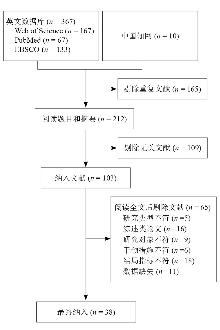
Figure 1
Flowchart of literature screening"
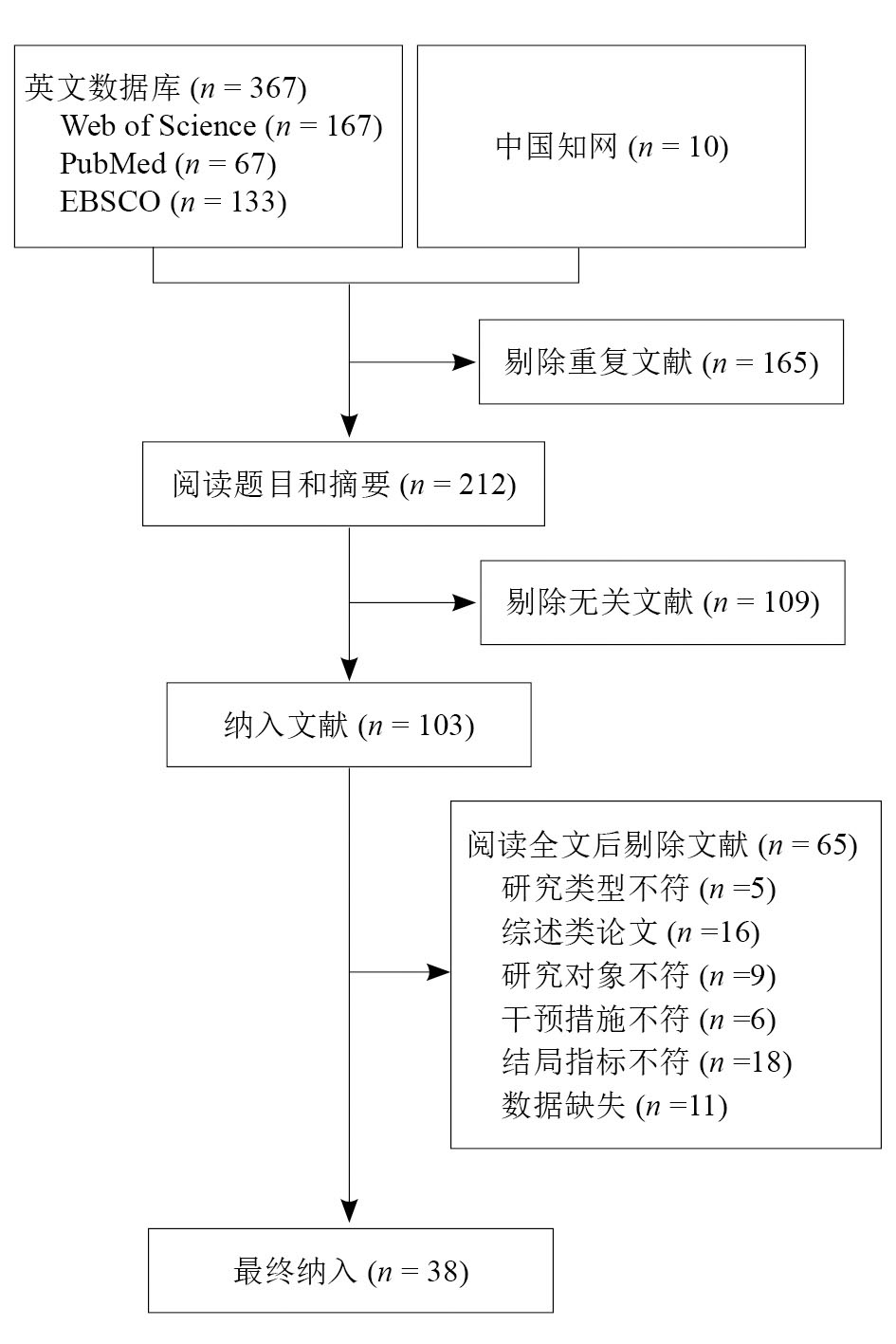
Table 2
Score of PEDro scale of the included literatures"
| 纳入文献 | 明确的纳入与排除标准 | 随机分配 | 分配隐藏 | 基线相似性 | 受试者盲法 | 干预人员盲法 | 评估人员盲法 | 结局随访完整性 | 意向性分析 | 组间统计比较 | 点估计值与变异性数据报告 | 得分 |
|---|---|---|---|---|---|---|---|---|---|---|---|---|
| Veldema等[ | √ | √ | √ | √ | √ | √ | √ | √ | √ | √ | √ | 10 |
| Naghizadeh等[ | √ | √ | √ | √ | √ | √ | √ | √ | 7 | |||
| Moreira等[ | √ | √ | √ | √ | √ | √ | √ | √ | √ | √ | √ | 10 |
| Mahdipour等[ | √ | √ | √ | √ | √ | √ | 5 | |||||
| Bahrami等[ | √ | √ | √ | √ | √ | √ | √ | 6 | ||||
| Mahdipour等[ | √ | √ | √ | √ | √ | √ | √ | 6 | ||||
| Mousavi等[ | √ | √ | √ | √ | √ | √ | 5 | |||||
| Moscaleski等[ | √ | √ | √ | √ | √ | √ | √ | √ | √ | √ | √ | 10 |
| 张娜等[ | √ | √ | √ | √ | √ | √ | √ | √ | 7 | |||
| 刘洁等[ | √ | √ | √ | √ | √ | √ | 5 | |||||
| Zhu等[ | √ | √ | √ | √ | √ | √ | √ | 6 | ||||
| Parma等[ | √ | √ | √ | √ | √ | √ | √ | 6 | ||||
| Mangat等[ | √ | √ | √ | √ | √ | √ | √ | √ | √ | √ | 9 | |
| Harris等[ | √ | √ | √ | √ | √ | √ | √ | 6 | ||||
| Lee等[ | √ | √ | √ | √ | √ | √ | √ | 6 | ||||
| 张光宗[ | √ | √ | √ | √ | √ | √ | √ | √ | √ | √ | √ | 10 |
| Mesquita等[ | √ | √ | √ | √ | √ | √ | √ | √ | 7 | |||
| Mesquita等[ | √ | √ | √ | √ | √ | √ | √ | √ | 7 | |||
| Rocha等[ | √ | √ | √ | √ | √ | √ | √ | 6 | ||||
| Pantovic等[ | √ | √ | √ | √ | √ | √ | √ | √ | √ | √ | √ | 10 |
| Kamali等[ | √ | √ | √ | √ | √ | √ | √ | √ | √ | √ | √ | 10 |
| De Sousa Fortes等[ | √ | √ | √ | √ | √ | √ | √ | √ | √ | √ | √ | 10 |
| Valenzuela等[ | √ | √ | √ | √ | √ | √ | √ | √ | √ | √ | 9 | |
| Penna等[ | √ | √ | √ | √ | √ | √ | 5 | |||||
| Shiravand等[ | √ | √ | √ | √ | √ | √ | √ | √ | √ | √ | 9 | |
| Huang等[ | √ | √ | √ | √ | √ | √ | √ | 6 | ||||
| Hanson等[ | √ | √ | √ | √ | √ | √ | √ | 6 | ||||
| Filipas等[ | √ | √ | √ | √ | √ | √ | √ | √ | √ | √ | 9 | |
| 梁志强等[ | √ | √ | √ | √ | √ | √ | √ | √ | √ | √ | 9 | |
| 李凤等[ | √ | √ | √ | √ | √ | √ | √ | √ | √ | √ | 9 | |
| Liang等[ | √ | √ | √ | √ | √ | √ | √ | √ | 7 | |||
| Ramos等[ | √ | √ | √ | √ | √ | √ | √ | √ | √ | √ | 9 | |
| Zhang等[ | √ | √ | √ | √ | √ | √ | √ | 6 | ||||
| Toth等[ | √ | √ | √ | √ | √ | √ | √ | 6 | ||||
| Friehs等[ | √ | √ | √ | √ | √ | √ | √ | 6 | ||||
| Park等[ | √ | √ | √ | √ | √ | √ | √ | √ | 7 | |||
| 郑铭浩等[ | √ | √ | √ | √ | √ | √ | √ | √ | 7 | |||
| Dos Santos等[ | √ | √ | √ | √ | √ | √ | √ | 6 |
Table 3
Basic characteristics of the included literatures"
| 纳入文献 | 国家 | 研究类型 | 样本特征 | 结局指标信息 | 主要结局 | |||
|---|---|---|---|---|---|---|---|---|
| n | 身份 | 运动 | 评价指标 | 类型 | ||||
| Veldema等[ | 德国 | 随机交叉试验 | 男:19 女:33 | 运动员 (篮球) | 篮球 | 1.投篮准确率测试 2.伊利诺伊运球测验 | 1.闭锁性 2.开放性 | 投篮准确率显著提升; 伊利诺伊运球表现显著提升 |
| Naghizadeh等[ | 伊朗 | 随机对照试验 | 男:26 | 运动员 (篮球) | 篮球 | 投篮准确率测试 | 闭锁性 | 干预即刻无影响,干预24 h后投篮准确率显著提升,且1周后进一步提高 |
| Moreira等[ | 巴西 | 随机交叉试验 | 女:8 | 运动员 (篮球) | 篮球 | 三分投篮准确率测试 (1.有防守;2.无防守) | 1.开放性 2.闭锁性 | 有防守或无防守的三分投篮准确率无变化 |
| Mahdipour等[ | 伊朗 | 随机对照试验 | 女:45 | 非运动员 | 篮球 | 罚球准确率测试 | 闭锁性 | 相较于tDCS干预视觉皮质,干预运动皮质组罚球准确率显著提升 |
| Bahrami等[ | 伊朗 | 随机对照试验 | 男:18 | 运动员 (篮球) | 篮球 | 三分投篮准确率测试 | 闭锁性 | 疲劳状态下的三分投篮准确率显著提升 |
| Mahdipour等[ | 伊朗 | 随机对照试验 | 女:30 | 运动员 (篮球) | 篮球 | 罚球准确率测试 | 闭锁性 | 罚球准确率显著提升 |
| Mousavi等[ | 伊朗 | 随机对照试验 | 男:36 | 运动员 (篮球) | 篮球 | 罚球准确率测试 | 闭锁性 | 罚球准确率显著提升 |
| Moscaleski等[ | 巴西 | 随机交叉试验 | 女:9 | 运动员 (篮球) | 篮球 | 罚球准确率测试 | 闭锁性 | 罚球准确率无变化 |
| 张娜等[ | 中国 | 随机交叉试验 | 男:20 女:9 | 运动员 (篮球) | 篮球 | 投篮准确率测试 | 闭锁性 | 投篮准确率显著提升 |
| 刘洁等[ | 中国 | 随机对照试验 | 男:30 | 运动员 (篮球) | 篮球 | 1.定点单手肩上投篮 2.1 min记时单手肩上投篮 3.运球急停后接单手肩上投篮 | 1.闭锁性 2.闭锁性 3.开放性 | 定点单手肩上投篮表现、1 min记时单手肩上投篮、运球急停后接单手肩上投篮的表现均显著提升 |
| Zhu等[ | 中国 | 随机对照试验 | 27 | 非运动员 | 高尔夫 | 高尔夫推杆测试 | 闭锁性 | 高尔夫推杆测试成绩显著提升 |
| Parma等[ | 巴西 | 随机对照试验 | 男:24 女:24 | 非运动员 | 高尔夫 | 高尔夫推杆测试 | 闭锁性 | 高尔夫推杆测试成绩无变化 |
| Mangat等[ | 加拿大 | 随机对照试验 | 36 | 非运动员 | 高尔夫 | 高尔夫推杆测试 | 闭锁性 | 相较于正极tDCS组,负极tDCS组的高尔夫推杆测试成绩显著改善 |
| Harris等[ | 英国 | 随机对照试验 | 男:37 女:36 | 非运动员 | 高尔夫 | 高尔夫推杆测试 | 闭锁性 | 高尔夫推杆测试成绩无变化 |
| Lee等[ | 韩国 | 随机交叉试验 | 男:10 | 运动员 (高尔夫) | 高尔夫 | 高尔夫推杆测试 | 闭锁性 | 高尔夫推杆测试成绩显著改善 |
| 张光宗[ | 中国 | 随机交叉试验 | 女:10 | 运动员 (高尔夫) | 高尔夫 | 一号木杆挥杆测试 | 闭锁性 | 挥杆测试表现显著改善 |
| Mesquita等[ | 巴西 | 随机交叉试验 | 男:8 女:4 | 运动员 (跆拳道) | 跆拳道 | 踢腿频率测试 | 开放性 | 最大踢腿频率测试表现无变化 |
| Mesquita等[ | 巴西 | 随机交叉试验 | 男:12 女:7 | 运动员 (跆拳道) | 跆拳道 | 踢腿频率测试 | 开放性 | 与伪刺激组相比,正极tDCS组的最大踢腿频率测试表现显著下降 |
| Rocha等[ | 巴西 | 随机交叉试验 | 男:60 | 运动员 (10人); 非运动员(50人) | 射击 | 固定靶射击测试 | 闭锁性 | 两组的射击测试表现均显著提升 |
| Pantovic等[ | 美国 | 随机交叉试验 | 男:2 女:2 | 运动员 (射击) | 射击 | 固定靶射击测试 | 闭锁性 | 射击测试表现无变化 |
| Kamali等[ | 伊朗 | 随机对照试验 | 男:8 女:8 | 运动员 (射击) | 射击 | 固定靶射击测试 | 闭锁性 | 射击测试表现显著提升 |
| De Sousa Fortes等[ | 巴西 | 随机交叉试验 | 女:19 | 运动员 (游泳) | 游泳 | 3 min系绳游泳测试 | 闭锁性 | 系绳游泳测试表现显著提升 |
| Valenzuela等[ | 西班牙 | 随机交叉试验 | 男:8 | 运动员 (游泳) | 游泳 | 800 m自由泳测试 | 闭锁性 | 800 m自由泳测试无变化 |
| Penna等[ | 巴西 | 随机交叉试验 | 男:10 | 运动员 (游泳) | 游泳 | 800 m自由泳测试 | 闭锁性 | 800 m自由泳测试无变化 |
| Shiravand等[ | 伊朗 | 随机交叉试验 | 男:16 | 运动员 (足球) | 足球 | 拉夫堡足球传球测试 | 开放性 | 拉夫堡足球传球测试表现显著提升 |
| Huang等[ | 中国 | 随机交叉试验 | 男:9 | 非运动员 | 骑行 | 5×6 s冲刺骑行测试 | 闭锁性 | 5×6 s冲刺骑行测试表现显著提升 |
| Hanson等[ | 美国 | 随机对照试验 | 男:9 女:14 | 非运动员 | 骑行 | 3 min骑行冲刺测试 | 闭锁性 | 3 min骑行冲刺测试表现无变化 |
| Filipas等[ | 意大利 | 随机交叉试验 | 男:12 | 运动员 (自行车) | 骑行 | 15 km骑行测试 | 闭锁性 | 15 km骑行测试表现显著提升 |
| 梁志强等[ | 中国 | 随机对照试验 | 75 | 非运动员 | 骑行 | 递增负荷骑行测试 | 闭锁性 | 递增负荷骑行测试表现显著提升 |
| 李凤等[ | 中国 | 随机对照试验 | 40 | 非运动员 | 骑行 | 递增负荷骑行测试 | 闭锁性 | 递增负荷骑行测试时长、输出功率无显著变化,转速显著提升 |
| Liang等[ | 中国 | 随机交叉试验 | 女:8 | 运动员 (赛艇) | 赛艇 | 5 km划行时间测试 | 闭锁性 | 5 km划行表现无显著变化 |
| Ramos等[ | 巴西 | 随机交叉试验 | 男:7 | 运动员 (赛艇) | 赛艇 | 2 km划行时间测试 | 闭锁性 | 2 km划行表现显著提升 |
| Zhang等[ | 中国 | 随机交叉试验 | 男:13 女:8 | 运动员 (冰球) | 冰球 | 冰球射门准确性测试 (不稳定平台) | 开放性 | M1组的冰球射门准确性测试表现显著提升 |
| Toth等[ | 爱尔兰 | 随机对照试验 | 134 | 非运动员 | 电子竞技 | CSGO射击游戏测试 | 开放性 | CSGO 射击游戏测试表现显著提升 |
| Friehs等[ | 德国 | 随机对照试验 | 男:11 女:37 | 非运动员 | 电子竞技 | 停止信号游戏 | 开放性 | 停止信号游戏表现显著提升 |
| Park等[ | 韩国 | 随机交叉试验 | 女:13 | 运动员 (排球) | 排球 | 扣球速度和扣球一致性测试 | 开放性 | 扣球速度和扣球一致性测试表现显著提升 |
| 郑铭浩等[ | 中国 | 随机对照试验 | 男:28 | 运动员 (排球) | 排球 | 1.发球技术表现 2.模拟比赛表现 | 1.闭锁性 2.开放性 | 发球技术和模拟比赛表现显著提升 |
| Dos Santos等[ | 巴西 | 随机对照试验 | 18 | 运动员 | 跑步 | 5 km跑测试 | 闭锁性 | 5 km跑测试表现显著提升 |
Table 4
Intervention parameters of tDCS of the included literatures"
| 纳入文献 | 目标靶区 | 刺激时长/min | 电流强度/mA | 电极尺寸/cm2 |
|---|---|---|---|---|
| Veldema等[ | A:双侧M1;C:对侧眶上 | 20 | 1.0 | 35 |
| Naghizadeh等[ | A:左侧M1;C:左侧DLPFC | 20 | 1.5 | 35 |
| Moreira等[ | A:左侧DLPFC;C:右侧DLPFC | 20 | 2.0 | 35 |
| Mahdipour等[ | A:左侧M1/Oz;C:对侧眶上/Cz | 15 | 1.5 | 35 |
| Bahrami等[ | A:左侧DLPFC;C:右眶上 | 25 | 1.5 | 25 |
| Mahdipour等[ | A:左侧M1;C:右眶上 | 15 | 1.5 | 35 |
| Mousavi等[ | A:左侧M1;C:右眶上 | 20 | 2.0 | 35 |
| Moscaleski等[ | C/S:DLPFC (HD-tDCS) | 20 | 2.0 | - |
| 张娜等[ | A:双侧M1;C:双侧三角肌 | 10 | 2.0 | 35 |
| 刘洁等[ | A:右侧M1;C:左眶上 | 20 | 2.0 | - |
| Zhu等[ | A:右眶上;C:左侧DLPFC | 15 | 1.5 | 25 |
| Parma等[ | A:左侧M1;C:右侧M1 | 20 | 1.5 | 25 |
| Mangat等[ | A:C1;C:对侧眶上/C1 | 20 | 1.0 | 25 |
| Harris等[ | A:右侧DLPFC;C:对侧眶上 | 5 | 1.5 | 25 |
| Lee等[ | A:双侧M1 (Halo Sport) | 20 | 2.0 | - |
| 张光宗[ | A:左侧M1;C:右眶上 | 20 | 2.0 | 35 |
| Mesquita等[ | A:双侧M1;C:同侧肩上 | 15 | 1.5 | A:35;C:25 |
| Mesquita等[ | A:双侧M1;C:同侧肩上 | 15 | 1.5 | A:35;C:25 |
| Rocha等[ | A:右侧DLPFC;C:左眶上 | 20 | 2.0 | 35 |
| Pantovic等[ | A:左侧DLPFC;C:对侧眶上 | 25 | 2.0 | 25 |
| Kamali等[ | A:右侧小脑;C:左侧DLPFC | 20 | 2.0 | 35 |
| De Sousa Fortes等[ | A:左侧DLPFC;C:右侧眶上 | 30 | 2.0 | 25 |
| Valenzuela等[ | A:左侧M1;C:对侧眶上 | 20 | 2.0 | 25 |
| Penna等[ | A:左颞皮质;C:同侧肩上 | 30 | 2.0 | 35 |
| Shiravand等[ | A:左侧DLPFC;C:右侧DLPFC | 20 | 2.0 | 35 |
| Huang等[ | A:双侧M1 (Halo Sport) | 20 | 2.0 | 24 |
| Hanson等[ | A:双侧M1;(Halo Sport) | 20 | 2.0 | 28 |
| Filipas等[ | A:双侧DLPFC;C:FP1/F7/C3和FP2/F8/C4 (HD-tDCS) | 20 | 1.5 | 3.14 |
| 梁志强等[ | A/C:M1、SMC、PMC (多焦点tDCS) | 20 | 1.6 | 3.14 |
| 李凤等[ | A/C:M1、SMC、PMC (多焦点tDCS) | 20 | 1.6 | 3.14 |
| Liang等[ | A:M1;C:C5、C6 | 20 | 2.2 | 24 |
| Ramos等[ | A:左颞皮质;C:右眶上 | 20 | 2.0 | 35 |
| Zhang等[ | A:M1(Cz)/小脑/M1+小脑; C:额上区/左三角肌/额上区+左三角肌 | 15 | 2.0 | 35 |
| Toth等[ | A:双侧M1 (Halo Sport) | 20 | 2.1 | - |
| Friehs等[ | A:右侧DLPFC;C:左侧三角肌 | 19 | 0.5 | A:9;C:35 |
| Park等[ | A:双侧M1 (Halo Sport) | 20 | 2.0 | 28 |
| 郑铭浩等[ | A:M1;C:FC3、CP3、C5、C1 | 15 | 2.0 | - |
| Dos Santos等[ | A:双侧M1;C:枕骨隆突 | 20 | 2.0 | - |
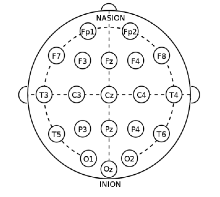
Figure 2
International 10-20 system for electrode placement on the brain"
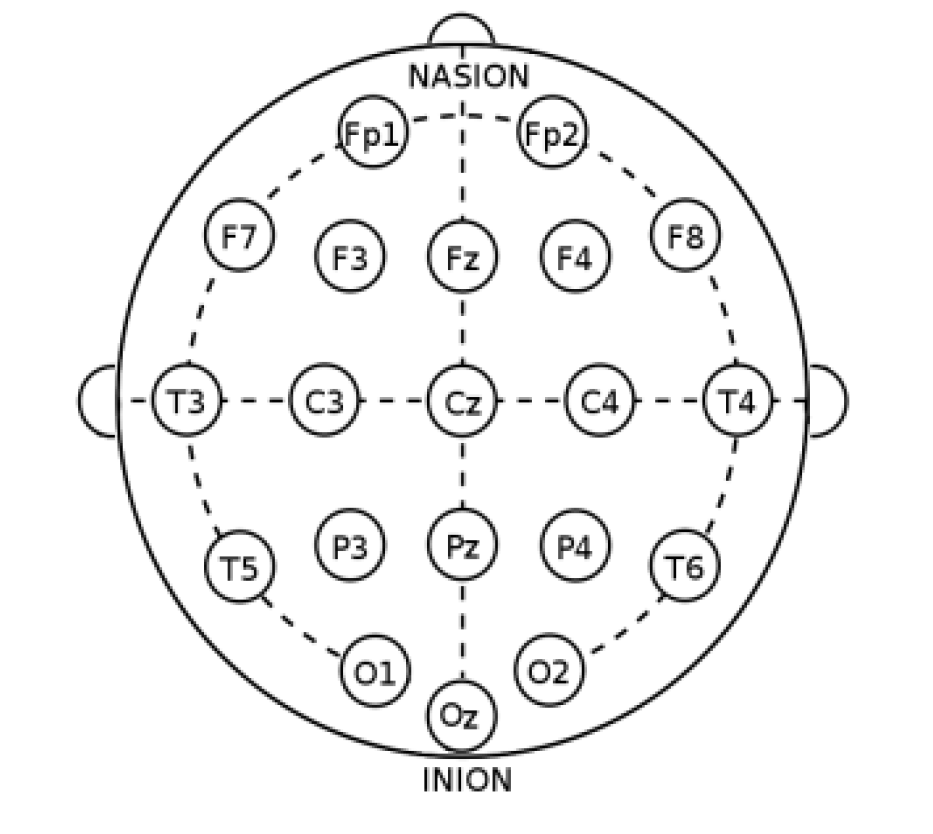
Table 5
Intervention parameters for different motor skill types"
| 运动技能 | 刺激强度/mA | 刺激时长/min | 电极尺寸/cm2 | 主要靶区 |
|---|---|---|---|---|
| 篮球 | 1~2 | 10~25 | 35 | M1、DLPFC |
| 高尔夫 | 1~2 | 5~20 | 25~35 | M1、DLPFC |
| 跆拳道 | 1.5 | 15 | 35 | M1 |
| 射击 | 2 | 20~25 | 25~35 | DLPFC、小脑 |
| 游泳 | 2 | 20~30 | 25~35 | DLPFC、M1、左颞皮质 |
| 足球 | 2 | 20 | 35 | DLPFC |
| 骑行 | 1.5~2 | 20 | 3.14~28 | M1、DLPFC、SMC、PMC |
| 赛艇 | 2~2.2 | 20 | 24~35 | M1、左颞皮质 |
| 冰球 | 2 | 15 | 35 | M1、小脑 |
| 电子竞技 | 0.5~2.1 | 19~20 | 9 | M1、DLPFC |
| 排球 | 2 | 15~20 | 28 | M1 |
| 跑步 | 2 | 20 | - | M1 |
| [1] | 仇乃民, 仇索. 运动技能习得:身体-大脑-环境的复杂动力模式[J]. 体育学刊, 2020, 27(5): 131-137. |
|
QIU N M, QIU S. Sports skill acquisition: a complex dynamic mode of the body-the brain-the environment[J]. J Phys Educ, 2020, 27(5): 131-137.
doi: 10.37359/JOPE.V27(1)2015 |
|
| [2] |
LANDI S M, BAGUEAR F, DELLA-MAGGIORE V. One week of motor adaptation induces structural changes in primary motor cortex that predict long-term memory one year later[J]. J Neurosci, 2011, 31(33): 11808-11813.
doi: 10.1523/JNEUROSCI.2253-11.2011 pmid: 21849541 |
| [3] | 王艳秋. 不同类型熟练运动技能对认知控制及背外侧前额叶-初级运动皮层联通性的影响[D]. 上海: 上海体育学院, 2021. |
| WANG Y Q. The effect of different types of sport proficiency on cognitive control and the functional connectivity between dorsal lateral prefrontal cortex and primary motor cortex[D]. Shanghai: Shanghai University of Sport, 2021. | |
| [4] | 李红伟. 开放性运动技能学习原则对警务实战技能训练"实战化"的启迪[J]. 公安教育, 2022(6): 20-23. |
| LI H W. Enlightenment of open-skill learning principles on the "real-combat orientation" of police tactical skills training[J]. Public Security Educ, 2022(6): 20-23. | |
| [5] | 张娜, 刘卉, 苗雨, 等. 经颅电刺激技术用于运动表现提升的研究进展[J]. 中国生物医学工程学报, 2022, 41(2): 214-223. |
| ZHANG N, LIU H, MIAO Y, et al. Advance of transcranial electrical stimulation for the improvement of motor performance[J]. Chin J Biomed Eng, 2022, 41(2): 214-223. | |
| [6] |
KUO M F, PAULUS W, NITSCHE M A. Therapeutic effects of non-invasive brain stimulation with direct currents (tDCS) in neuropsychiatric diseases[J]. Neuroimage, 2014, 85(3): 948-960.
doi: 10.1016/j.neuroimage.2013.05.117 |
| [7] |
QI S, LIANG Z, WEI Z, et al. Effects of transcranial direct current stimulation on motor skills learning in healthy adults through the activation of different brain regions: a systematic review[J]. Front Hum Neurosci, 2022, 16: 1021375.
doi: 10.3389/fnhum.2022.1021375 |
| [8] |
刘日华, 张娜, 乐天, 等. 经颅直流电刺激对运动员和非运动员体能综合效应的Meta分析[J]. 军事医学, 2025, 49(7): 519-528.
doi: 10.7644/j.issn.1674-9960.2025.07.006 |
| LIU R H, ZHANG N, LE T, et al. Meta-analysis of the global effects of transcranial direct current stimulation on physical performance in athletes and non-athletes[J]. Mil Med Sci, 2025, 49(7): 519-528. | |
| [9] |
EHSANI F, BAKHTIARY A H, JABERZADEH S, et al. Differential effects of primary motor cortex and cerebellar transcranial direct current stimulation on motor learning in healthy individuals: a randomized double-blind sham-controlled study[J]. Neurosci Res, 2016, 112: 10-19.
doi: S0168-0102(16)30086-4 pmid: 27349154 |
| [10] |
ZHU F F, YEUNG A Y, POOLTON J M, et al. Cathodal transcranial direct current stimulation over left dorsolateral prefrontal cortex area promotes implicit motor learning in a golf putting task[J]. Brain Stimul, 2015, 8(4): 784-786.
doi: 10.1016/j.brs.2015.02.005 pmid: 25857398 |
| [11] | 张娜, 魏运展, 衣龙燕, 等. 经颅直流电刺激对篮球运动员运动疲劳后运动技能习得的影响[J]. 中国运动医学杂志, 2024, 43(12): 939-947. |
| ZHANG N, WEI Y Z, YI L Y, et al. Effects of transcranial direct current stimulation on motor skill acquisition after sports fatigue among basketball players[J]. Chin J Sports Med, 2024, 43(12): 939-947. | |
| [12] |
MESQUITA P H C, LAGE G M, FRANCHINI E, et al. Bi-hemispheric anodal transcranial direct current stimulation worsens taekwondo-related performance[J]. Hum Mov Sci, 2019, 66: 578-586.
doi: 10.1016/j.humov.2019.06.003 |
| [13] |
WOODS A J, ANTAL A, BIKSON M, et al. A technical guide to tDCS, and related non-invasive brain stimulation tools[J]. Clin Neurophysiol, 2016, 127(2): 1031-1048.
doi: S1388-2457(15)01088-3 pmid: 26652115 |
| [14] |
TRICCO A C, LILLIE E, ZARIN W, et al. PRISMA Extension for Scoping Reviews (PRISMA-ScR): checklist and explanation[J]. Ann Intern Med, 2018, 169(7): 467-473.
doi: 10.7326/M18-0850 pmid: 30178033 |
| [15] |
CASHIN A G, MCAULEY J H. Clinimetrics: Physiotherapy Evidence Database (PEDro) Scale[J]. J Physiother, 2020, 66(1): 59.
doi: S1836-9553(19)30092-X pmid: 31521549 |
| [16] |
NITSCHE M A, BIKSON M. Extending the parameter range for tDCS: safety and tolerability of 4 mA stimulation[J]. Brain Stimul, 2017, 10(3): 541-542.
doi: S1935-861X(17)30622-8 pmid: 28456325 |
| [17] |
NITSCHE M A, PAULUS W. Excitability changes induced in the human motor cortex by weak transcranial direct current stimulation[J]. J Physiol, 2000, 527(3): 633-639.
doi: 10.1111/tjp.2000.527.issue-3 |
| [18] | DUTTA A, KRISHNAN C, KANTAK S, et al. Recurrence quantification analysis of surface electromyogram supports alterations in motor unit recruitment strategies by anodal transcranial direct current stimulation[J]. Restor Neurol Neurosci, 2015, 33(5): 663-669. |
| [19] | 于志华, 章建成, 黄银华, 等. 类比学习与外显学习的不同组合方式对不同性质网球技能学习的影响:从闭锁性和开放性技能的视角[J]. 体育科学, 2011, 31(5): 65-74. |
| YU Z H, ZHANG J C, HUANG Y H, et al. Effects of different combinations of analogy learning and explicit learning on tennis skill acquisition with different characteristics: from the perspective of closed and open skills[J]. Chin Sport Sci, 2011, 31(5): 65-74. | |
| [20] |
VELDEMA J, ENGELHARDT A, JANSEN P. Does anodal tDCS improve basketball performance? A randomized controlled trial[J]. Eur J Sport Sci, 2022, 22(2): 126-135.
doi: 10.1080/17461391.2020.1862306 |
| [21] | 刘洁, 孙伟, 张皓鑫, 等. 经颅直流电刺激对单手肩上投篮准确性影响的实验研究[J]. 当代体育科技, 2024, 14(25): 1-4. |
| LIU J, SUN W, ZHANG H X, et al. Experimental study on the influence of transcranial direct current stimulation on the accuracy of one-handed shoulder shot[J]. Contemp Sports Technol, 2024, 14(25): 1-4. | |
| [22] |
MOREIRA A, MOSCALESKI L, MACHADO D G, et al. Transcranial direct current stimulation during a prolonged cognitive task: the effect on cognitive and shooting performances in professional female basketball players[J]. Ergonomics, 2023, 66(4): 492-505.
doi: 10.1080/00140139.2022.2096262 |
| [23] |
MESQUITA P H C, FRANCHINI E, ROMANO-SILVA M A, et al. Transcranial direct current stimulation: no effect on aerobic performance, heart rate, or rating of perceived exertion in a progressive taekwondo-specific test[J]. Int J Sports Physiol Perform, 2020, 15(7): 958-963.
doi: 10.1123/ijspp.2019-0410 |
| [24] |
SHIRAVAND F, MOTAMEDI P, AMANI-SHALAMZARI S, et al. Effect of repeated sessions of transcranial direct current stimulation on subjective and objective measures of recovery and performance in soccer players following a soccer match simulation[J]. Sci Rep, 2024, 14(1): 20809.
doi: 10.1038/s41598-024-71701-y pmid: 39242725 |
| [25] |
ZHANG N, NITSCHE M A, MIAO Y, et al. Transcranial direct-current stimulation over the primary motor cortex and cerebellum improves balance and shooting accuracy in elite ice hockey players[J]. Int J Sports Physiol Perform, 2024, 19(10): 1107-1114.
doi: 10.1123/ijspp.2024-0041 |
| [26] |
TOTH A J, RAMSBOTTOM N, CONSTANTIN C, et al. The effect of expertise, training and neurostimulation on sensory-motor skill in esports[J]. Comput Hum Behav, 2021, 121: 106782.
doi: 10.1016/j.chb.2021.106782 |
| [27] |
FRIEHS M A, DECHANT M, VEDRESS S, et al. Shocking advantage! Improving digital game performance using non-invasive brain stimulation[J]. Int J Hum-Comput Stud, 2021, 148: 102582.
doi: 10.1016/j.ijhcs.2020.102582 |
| [28] |
PARK S B, HAN D H, HONG J, et al. Transcranial direct current stimulation of motor cortex enhances spike performances of professional female volleyball players[J]. J Mot Behav, 2023, 55(1): 18-30.
doi: 10.1080/00222895.2022.2090489 |
| [29] |
郑铭浩, 刘征. 重复经颅直流电刺激对大学生男性排球运动员运动表现的影响[J]. 沈阳体育学院学报, 2024, 43(6): 88-95.
doi: 10.12163/j.ssu.20240986 |
| ZHENG M H, LIU Z. Impacts of repetitive transcranial direct current stimulation on athletic performance of college male volleyball players[J]. J Shenyang Sport Univ, 2024, 43(6): 88-95. | |
| [30] | MAHDIPOUR R, NAMAZIZADEH M, BADAMI R, et al. A comparison of the effect of the transcranial direct current stimulation (tDCS) of vision and motor cortex on learning of basketball free throw skill[J]. J Sports Mot Dev Learn, 2020, 12(2): 153-168. |
| [31] | MAHDIPOUR R, NAMAZIZADEH M, BADAMI R, et al. Simultaneous effect of the transcranial direct current stimulation and observational learning on learning of basketball free throw[J]. J Sports Mot Dev Learn, 2022, 14(3): 55-67. |
| [32] | BAHRAMI A, MORADI J, ETAATI Z. The effects of transcranial direct current stimulation (tDCS) on mental fatigue and performance of basketball player[J]. Sport Psychol Stud, 2021, 10(35): 167-186. |
| [33] | MOUSAVI M S, AMINIAN F A, BAGHERI S R. Comparative study of effect of mental imagery and transcranial direct current stimulation (tDCS) on basketball shooting skill in non-elite basketball players: a double-blinded randomized clinical trial[J]. Koomesh, 2023, 25(4): 440-451. |
| [34] |
MOSCALESKI L A, FONSECA A, BRITO R, et al. Does high-definition transcranial direct current stimulation change brain electrical activity in professional female basketball players during free-throw shooting?[J]. Front Neuroergon, 2022, 3: 932542.
doi: 10.3389/fnrgo.2022.932542 |
| [35] | NAGHIZADEH Z, MOVAHEDI A, NAMAZIZADEH M, et al. Effect of transcranial direct current stimulation on performance of basketball two point field throws in skilled basketball players[J]. J Sports Mot Dev Learn, 2020, 12(3): 293-312. |
| [36] |
MANGAT B, TREMBLAY L, CHEN J L. Priming the primary motor cortex with transcranial direct current stimulation: effect on learning the golf putt[J]. PLoS One, 2025, 20(5): e0324983.
doi: 10.1371/journal.pone.0324983 |
| [37] | LEE J W, PARK J S. Comparison of golf putting performance on transcranial direct current stimulation[J]. J Korean Appl Sci Technol, 2021, 38(6): 1476-1484. |
| [38] | 张光宗. 经颅直流电刺激对女子高水平高尔夫运动员一号木杆击球效果的影响[J]. 体育科技文献通报, 2022, 30(7): 261-265. |
| ZHANG G Z. Effect of transcranial direct current stimulation on driver performance in elite female golfers[J]. Bull Sport Sci Technol, 2022, 30(7): 261-265. | |
| [39] |
PARMA J O, PROFETA V L S, ANDRADE A G P, et al. TDCS of the primary motor cortex: learning the absolute dimension of a complex motor task[J]. J Mot Behav, 2021, 53(4): 431-444.
doi: 10.1080/00222895.2020.1792823 |
| [40] |
HARRIS D J, WILSON M R, BUCKINGHAM G, et al. No effect of transcranial direct current stimulation of frontal, motor or visual cortex on performance of a self-paced visuomotor skill[J]. Psychol Sport Exerc, 2019, 43: 368-373.
doi: 10.1016/j.psychsport.2019.04.014 |
| [41] |
ROCHA K, MARINHO V, MAGALHÃES F, et al. Unskilled shooters improve both accuracy and grouping shot having as reference skilled shooters cortical area: an EEG and tDCS study[J]. Physiol Behav, 2020, 224: 113036.
doi: 10.1016/j.physbeh.2020.113036 |
| [42] |
KAMALI A M, NAMI M, YAHYAVI S S, et al. Transcranial direct current stimulation to assist experienced pistol shooters in gaining even-better performance scores[J]. Cerebellum, 2019, 18(1): 119-127.
doi: 10.1007/s12311-018-0967-9 |
| [43] | PANTOVIC M, MACAK D, COKORILO N, et al. The influence of transcranial direct current stimulation on shooting performance in elite deaflympic athletes: a case series[J]. J Funct Morphol Kinesiol, 2022, 7(2): 42. |
| [44] |
DE SOUSA FORTES L, FARO H, DE LIMA-JUNIOR D, et al. Non-invasive brain stimulation over the orbital prefrontal cortex maintains endurance performance in mentally fatigued swimmers[J]. Physiol Behav, 2022, 250: 113783.
doi: 10.1016/j.physbeh.2022.113783 |
| [45] |
VALENZUELA P L, AMO C, SÁNCHEZ-MARTÍNEZ G, et al. Transcranial direct current stimulation enhances mood but not performance in elite athletes[J]. Int J Sports Physiol Perform, 2018, 14: 1-20.
doi: 10.1123/ijspp.2018-0941 |
| [46] |
PENNA E M, FILHO E, CAMPOS B T, et al. No effects of mental fatigue and cerebral stimulation on physical performance of master swimmers[J]. Front Psychol, 2021, 12: 656499.
doi: 10.3389/fpsyg.2021.656499 |
| [47] |
HUANG L, DENG Y, ZHENG X, et al. Transcranial direct current stimulation with halo sport enhances repeated sprint cycling and cognitive performance[J]. Front Physiol, 2019, 10: 118.
doi: 10.3389/fphys.2019.00118 pmid: 30837893 |
| [48] |
FILIPAS L, GALLO G, MELONI A, et al. Effects of bilateral dorsolateral prefrontal cortex high-definition transcranial direct-current stimulation on time-trial performance in cyclists with type 1 diabetes mellitus[J]. Brain Stimul, 2022, 15(5): 1292-1299.
doi: 10.1016/j.brs.2022.09.005 pmid: 36126864 |
| [49] | 梁志强, 王亚杰, 刘稳进, 等. 多焦点经颅直流电刺激激活运动皮层对骑行耐力表现的影响[J]. 体育科学, 2024, 44(3): 41-50, 88. |
| LIANG Z Q, WANG Y J, LIU W J, et al. Effects of multi-focal transcranial direct current stimulation over the motor cortex on endurance cycling performance[J]. Chin Sport Sci, 2024, 44(3): 41-50, 88. | |
| [50] | 李凤, 毕嘉伟, 梁志强, 等. 经颅直流电刺激调控运动皮层对骑行递增负荷运动表现的影响[J]. 医用生物力学, 2024, 39(6): 1154-1159, 1211. |
| LI F, BI J W, LIANG Z Q, et al. Effects of transcranial direct current stimulation regulating the motor cortex on cycling performance with incremental loading[J]. J Med Biomech, 2024, 39(6): 1154-1159, 1211. | |
| [51] |
HANSON N J, MACERI R M, KOUTAKIS P. Transcranial direct current stimulation (tDCS) and cycling performance on the 3-minute aerobic test (3mAT): placebo and nocebo effects[J]. Sci Rep, 2024, 14(1): 24659.
doi: 10.1038/s41598-024-74941-0 pmid: 39428389 |
| [52] |
RAMOS L, RAMOS T A M, ALMEIDA R F D, et al. Acute anodal transcranial direct current stimulation improves the performance of professional rowers[J]. Front Sports Act Living, 2024, 6: 1310856.
doi: 10.3389/fspor.2024.1310856 |
| [53] |
LIANG Z, ZHOU J, JIAO F, et al. Effect of transcranial direct current stimulation on endurance performance in elite female rowers: a pilot, single-blinded study[J]. Brain Sci, 2022, 12(5): 541.
doi: 10.3390/brainsci12050541 |
| [54] |
DOS SANTOS L F, DOS SANTOS SILVA D, DE JESUS ALVES M D, et al. Acute effects of transcranial direct current stimulation (tDCS) on peak torque and 5000 m running performance: a randomized controlled trial[J]. Sci Rep, 2023, 13(1): 9362.
doi: 10.1038/s41598-023-36093-5 |
| [55] |
STAGG C J, ANTAL A, NITSCHE M A. Physiology of transcranial direct current stimulation[J]. J ECT, 2018, 34(3): 144-152.
doi: 10.1097/YCT.0000000000000510 pmid: 29877965 |
| [56] |
FREGNI F, NITSCHE M A, LOO C K, et al. Regulatory considerations for the clinical and research use of transcranial direct current stimulation (tDCS): review and recommendations from an expert panel[J]. Clin Res Regul Aff, 2015, 32(1): 22-35.
doi: 10.3109/10601333.2015.980944 pmid: 25983531 |
| [57] |
ANTAL A, ALEKSEICHUK I, BIKSON M, et al. Low intensity transcranial electric stimulation: safety, ethical, legal regulatory and application guidelines[J]. Clin Neurophysiol, 2017, 128(9): 1774-1809.
doi: S1388-2457(17)30212-2 pmid: 28709880 |
| [58] |
RIVERA-URBINA G N, NITSCHE M A, VICARIO C M, et al. Applications of transcranial direct current stimulation in children and pediatrics[J]. Rev Neurosci, 2017, 28(2): 173-184.
doi: 10.1515/revneuro-2016-0045 |
| [59] | 亓丰学, 张娜, 王立娟, 等. 经颅电刺激技术属于兴奋剂吗?[J]. 体育科学, 2023, 43(2): 60-69. |
| QI F X, ZHANG N, WANG L J, et al. Does transcranial electrical stimulation technology constitute doping?[J]. Chin Sport Sci, 2023, 43(2): 60-69. | |
| [60] |
ELIAKIM M, BODNER E, ELIAKIM A, et al. Effect of motivational music on lactate levels during recovery from intense exercise[J]. J Strength Cond Res, 2012, 26(1): 80-86.
doi: 10.1519/JSC.0b013e31821d5f31 pmid: 22067237 |
| [61] |
WANG B, XIAO S, YU C, et al. Effects of transcranial direct current stimulation combined with physical training on the excitability of the motor cortex, physical performance, and motor learning: a systematic review [J]. Front Neurosci, 2021, 15: 648354.
doi: 10.3389/fnins.2021.648354 |
| [1] | LI Hongwei, HUANG Binbin, ZHU Chuanhua, LI Wei. Effect of transcranial direct current stimulation on α-band brain connectivity in disorders of consciousness [J]. Chinese Journal of Rehabilitation Theory and Practice, 2025, 31(9): 1050-1056. |
| [2] | GAO Fei, LIU Lixu, HU Xueyan, WU Xiaoli, YANG Lingyu, YANG Yuqi, YE Changqing, DU Xiaoxia. Effect of unilateral or bilateral transcranial direct current stimulation on post-stroke dysphagia [J]. Chinese Journal of Rehabilitation Theory and Practice, 2025, 31(9): 993-999. |
| [3] | YE Lü, CHEN Yuelin, LIU Yufei. Cognitive neuroscience paradigms and advances in physical activity and brain health in children: a scoping review [J]. Chinese Journal of Rehabilitation Theory and Practice, 2025, 31(8): 889-895. |
| [4] | WU Xiaohui, JIANG Lei, ZHU Jingru, XIE Lihui. Deep learning for diagnosis of mild cognitive impairment in older adults: a scoping review [J]. Chinese Journal of Rehabilitation Theory and Practice, 2025, 31(6): 674-681. |
| [5] | PAN Yi, HOU Shuanglong, WEN Xiaoni. Transcutaneous vagus nerve stimulation for executive function in adults: a scoping review [J]. Chinese Journal of Rehabilitation Theory and Practice, 2025, 31(5): 520-528. |
| [6] | WANG Xiaoxiao, QU Lu, WANG Jiaxin, ZHAO Meiping, LI Muzi, LIU Qiaoyun. Structure, content and psychometric properties of assessment tools for interoceptive function: a scoping review based on COSMIN and ICF [J]. Chinese Journal of Rehabilitation Theory and Practice, 2025, 31(2): 172-183. |
| [7] | TIAN Fubao, LI Hongyu, TIAN Yang, XU Ning, LI Ke, BAI Chuanping, YANG Caijun. Effect of transcranial direct current stimulation based on bimodal balance model on upper limb dysfunction after ischemic stroke [J]. Chinese Journal of Rehabilitation Theory and Practice, 2025, 31(11): 1271-1278. |
| [8] | YAN Tiebin, XU Qi. Spatiotemporal effect and mechanism of the integrated traditional Chinese and Western medicine brain-limb coordinated rehabilitation [J]. Chinese Journal of Rehabilitation Theory and Practice, 2025, 31(10): 1117-1120. |
| [9] | XU Qi, ZHENG Dingzhao, NIU Zhenyuan, YANG Yaling, WEN Weiyou, XU Jingsheng, WU Longqiang, WU Fan, YAN Tiebin. Effect of transcranial direct current stimulation combined with seated Taijiquan Yunshou in different sequences on cerebral cortical activation in stroke patients with hemiplegia: a functional near-infrared spectroscopy study [J]. Chinese Journal of Rehabilitation Theory and Practice, 2025, 31(10): 1121-1127. |
| [10] | WANG Junwei, XU Qi, WANG Xinxin, HE Yiqi, WU Xinhong, ZHANG Yun. Effect of transcranial direct current stimulation combined with seated Taijiquan Yunshou in different sequences on cerebral cortical activation for healthy youths: a functional near-infrared spectroscopy study [J]. Chinese Journal of Rehabilitation Theory and Practice, 2025, 31(10): 1128-1133. |
| [11] | WANG Yingya, LI Taibiao, SU Ahong, LIN Youyi, ZHOU Xianhong, TIAN Lu, XIE Hongwu. Effect of single or combined transcranial direct current stimulation and functional electrical stimulation on grip strength and brain activation in young healthy individuals: a functional near-infrared spectroscopy-based study [J]. Chinese Journal of Rehabilitation Theory and Practice, 2025, 31(10): 1134-1142. |
| [12] | JIANG Changhao, JIANG Xianxin, HUANG Chen, ZHONG Xiaoke. Application of artificial intelligence in diagnosis and intervention in sleep disorder for older adults: a scoping review using ICF [J]. Chinese Journal of Rehabilitation Theory and Practice, 2024, 30(8): 922-929. |
| [13] | NIU Maolin, ZHAO Tan, LIU Xiaoli, GUO Feng. Effect of online and offline high definition transcranial direct current stimulation on finger motor skill learning in healthy adults: a randomized controlled trial [J]. Chinese Journal of Rehabilitation Theory and Practice, 2024, 30(8): 957-964. |
| [14] | CAO Yaping, LI Ju, HUANG Minghao, LI Zhongcheng, LANG Jian. Risk factors, health and rehabilitation intervention strategies for low back pain in adult golfers: a scoping review [J]. Chinese Journal of Rehabilitation Theory and Practice, 2024, 30(6): 657-664. |
| [15] | YANG Bin, LIU Mingyue, GAO Dan, LI Zhe. Application of transcranial direct current stimulation in stroke rehabilitation: a bibliometrics analysis [J]. Chinese Journal of Rehabilitation Theory and Practice, 2024, 30(6): 675-685. |
| Viewed | ||||||
|
Full text |
|
|||||
|
Abstract |
|
|||||
|
||
